

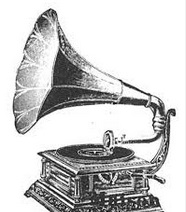
 I cranked up the music to prepare this post and was reminded of the sixties and seventies when I worked downtown San Francisco Monday through Friday. Saturdays were house cleaning days. I centered my Swan Lake record on the turntable and turned up the volume. By the time I was dusting and cleaning downstairs, I was rocking to West Side Story. To finish, I blasted Hair. Odd combinations, I know. But they worked for me . . . a satisfying way to completely clean the house and do laundry.
Sound. . . how do we incorporate sound in our writing?
But first, why do we want to use sensory detail in our writing? Sound can evoke strong memories: screeching tires, whining four-year-old, grinding gears when learning to drive a stick shift, songs from our teenage years, wedding songs, hymns, sing-song rhymes. When we employ sound in our writing, we transform language into sensory stimulation that the reader hears in his/her mind and transports the reader to the world we have created in our writing.
Poet Major Jackson says it this way, in the September 2015 issue of The Writer magazine:
I aim to write poems in which language changes into feeling. With hip-hop and rap music, the expressive medium of my generation, I learned to stylize language and to make language an experience for the reader — whether through an idiosyncratic simile or through an insistent use of repetition or some heretofore encountered combination of rhymes.
Right on . . . and sensory stimulation in writing offers readers a way to vicariously experience other worlds viscerally. It’s that visceral reaction writers seek . . . the strong emotional reaction when reading.
Notice all the sensory detail in the following excerpt from In the Time of the Butterflies by Julia Alvarez:
Usually, at night, I hear them just as I’m falling asleep.
Sometimes, I lie at the very brink of forgetfulness, waiting, as if their arrival is my signal that I can fall asleep.
The settling of the wood floors, the wind astir in the jasmine, the deep released fragrance of the earth, the crow of an insomniac rooster.Their soft spirit footsteps, so vague I could mistake them for my own breathing.
Their different treads, as if even as spirits they retained their personalities. Patria’s sure and measured step. Minerva’s quicksilver impatience. Mate’s playful little skip. They linger and loiter over things. Tonight, no doubt, Minerva will sit a long while by her Minou and absorb the music of her breathing.
Some nights I’ll be worrying about something, and I’ll stay up past their approaching, and I’ll hear something else. An eerie, hair-raising creaking of riding boots, a crop striking leather, a peremptory footstep that makes me shake myself awake and turn on lights all over the house. The only sure way to send the evil thing packing.
But tonight, it is quieter than I can remember.
Notice: Specific words that evoke sound: hear, crow of a rooster, soft footsteps, breathing, creaking
Phrases that evoke sensory detail: the settling of the wood floor, the wind astir, a crop striking leather,
And of course, the sense of smell: wood floor, jasmine, fragrance of the earth.
Your turn: What sounds evoke powerful memories for you? House cleaning sounds (vacuum cleaner)? How about: nursery rhymes, rock ‘n roll, thunder, gum snapping, crunchy foods, sirens, bells, whistling, animal noises, engine revving.
What about water: Running water, gurgling stream water, waves as they lap to shore and recede to the ocean. Or maybe it’s more of a stormy day and the water rushes toward the sand dunes, crashes into rocks and hurries back to the sea.
How about: Squawking sea gulls, the calliope of a merry-go-round, music boxes?
Remember songs from movies, television theme songs, commercial jingles?
What sounds bring up strong memories?
Choose a prompt and write for 12-15 minutes. Put sound sensory detail in your writing. Just Write!