Lara Zielin: The World Needs Your Stories

  • Lara Zielin: The World Needs Your Stories

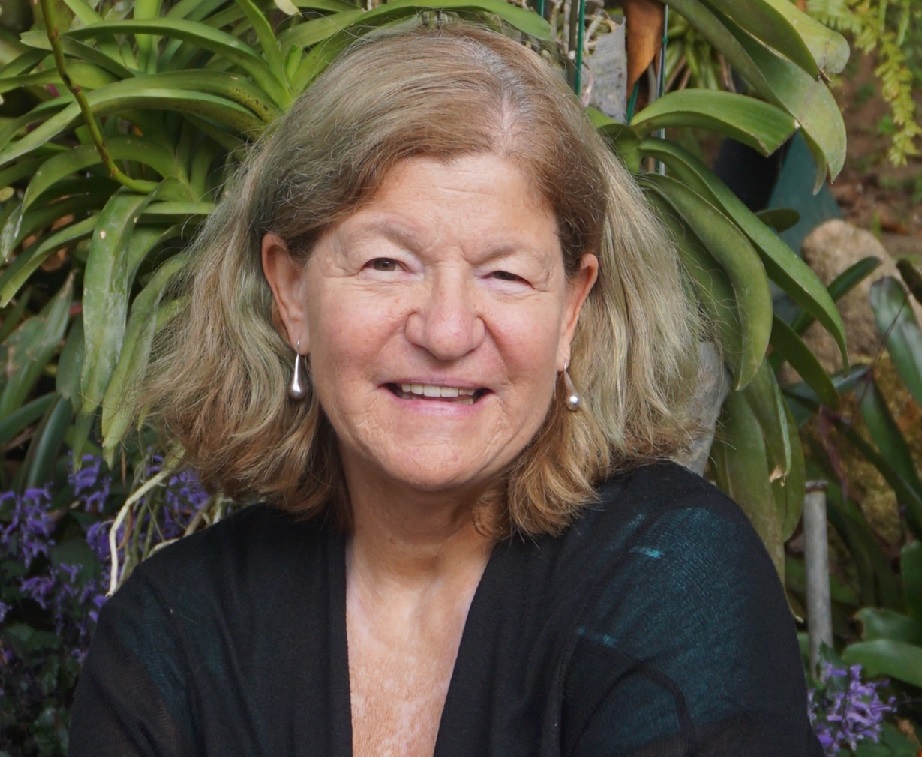
    Today’s Guest Post spotlight shines on Lara Zielin. When I first read her post (below), my hand went to my chest. I recognized those feelings. I felt those feelings.

    Last summer I experienced a similar situation that Lara describes. The difference though, is that while giving my presentation, I knew I was “off” and I couldn’t get back “on.” I felt like a runaway train took off with me barely hanging onto the caboose. I so wanted to do a great job. Someone recommended me to this group as a presenter. I wanted to make her proud. At the end, I was afraid I embarrassed her and I certainly embarrassed myself.

    And when I read what happened to Lara, I took a deep breath.

    Lara wrote:

    Several years ago, a colleague and I gave a presentation to the board of a national museum.

    In the moment, the presentation felt amazing. I had practiced, done truckloads of research, and I felt like I was on my game.

    But late that night in my hotel room, I sat up in bed from a dead sleep, feeling like I couldn’t breathe. My brain was re-playing the meeting in slow-motion, highlighting all the things that had gone wrong, all the ways I’d been rejected, all the mistakes I’d made. 

    I began crying, recoiling from this terrible movie in my head. I was hardly able to endure the shame. 

    I remember thinking, “What do I DO? How do I handle this?”

    Today, if I could go back in time, I’d have an answer for Lara. I’d be able to help her. 

    I’d remind her this was just an old story rearing its ugly head. This old story was pissed off and scared, because Lara had just done a big, brave presentation, and that didn’t fit with ideas of who this old story thought Lara was. 

    I’d counsel Lara to write her way into a better place. I’d help Lara generate warm, positive feelings for herself based on what she wrote. I’d give her the gift of getting through this awful place in an hour, instead of it taking a year. 

    Today, what gets me out of bed in the morning is the realization that there are people out there doing bold and brave things, whose old stories are rearing up trying to stop them in their tracks. 

    Specifically, I see people trying to finish writing projects and getting stopped again and again, whether it’s finishing a book, or starting a writing business, or launching a blog. 

    My dear authors, if we don’t do battle with our old stories, they win. And we can’t have that. Because the world needs to read what you have to write.

    ~ Sent as an Author Your Life email from Lara on December 10, 2019.

    Note from Marlene:  I know what went wrong with my presentation. Or, I should say the many things that didn’t go right. I decided to be grateful and use it as a learning experience.

    The lesson I learned from what I considered my less-than-stellar presentation: Be gentle with yourself. Sometimes you are on top of your game. Othertimes, not so much. But mostly, cut yourself some slack. You did the best you could. The next time things get derailed, pause, take a breath. Look around. Fix or change what you can. Smile and carry on.  

    Like Lara wrote, people are doing bold and brave things. Are you one of those people? I am, even when I’m not sure I’ll conquer the challenge.

    Lara Zielin is a published author, editor, and the founder of Author Your Life. Her debut young-adult novel Donut Days was selected to the Lone Star Reading List, and her romance novel And Then He Kissed Me (written as Kim Amos) was nominated for a Romantic Times Reader’s Choice Award. Her magazine articles have appeared in Writers Digest, Culture, Medicine at Michigan, and more. Her nonfiction book Author Your Life is about using the power of writing to create a better story for yourself. She lives in Michigan with her husband and dog, and her goal is pretty much to eat all the cheese. 
  • Understanding 4 C’s: Being a Successful Author

    Guest Blogger Joan Gelfand writes:

    I never set out to write a novel. I mean, really? I had cut my literary teeth on Simone de Beauvoir, Virginia Woolf, Willa Cather, Kurt Vonnegut, Gunter Grass and Wallace Stegner. I was satisfied being a poet, known to my local community.

    Writing a novel seemed terribly pretentious, a misguided idea. No. I did not start out to write a novel. I started out with a story that, after two years, and much encouragement from my writing instructor, grew into three hundred pages. I had written my first novel without planning to do so.

     It was with that first novel that I began to understand that becoming a successful writer wasn’t just about writing. It was several years after my first attempt to find a publisher for that first novel that I understood the business of writing.

    I learned that the letter I got back from an agent asking me to revise my manuscript was a serious request, not a rejection. And, I learned the hard way that without confidence, without commitment, and community,  I was never going to become a winning writer.

    While the 4 C’s approach encourages you to improve your craft, it also provides suggestions for the design of a productive work practice, recommends ways to cultivate a supportive network and gives clear and practical examples of how to build your confidence. What makes the 4 C’s approach unique is that the key is to develop all four skills at the same time.

    Does it sound like a lot of work? It is.

    Over the years, I’ve coached innumerable writers who start out insisting that they barely have time for the actual writing. Just getting to their desks, crafting a piece of writing, and finishing it is a tremendous challenge. And it is. But just finishing a piece of writing is not enough.

    After just a few sessions of working with me, these same writers find their priorities shifting as they begin to understand the importance of cultivating a network and building community. They realize that sending out their work one or even ten times is not enough. Soon, they find themselves more confident about every aspect of their work.

    The 4 c’s system: Imagine that your writing career is a stove with four burners: Craft. Commitment. Community. Confidence.

    Each burner has a pot on it that needs care and attention. Each pot is cooking up something tasty.

    Craft is bubbling while commitment is on a low simmer; you are out in the community, seen everywhere! That pot is on full boil. While you were out, confidence has scalded; that last manuscript rejection has you wondering if you’ve got what it takes. Who said you could write your way out of a boiling pot?

    As the Head Chef de Cuisine, your job is to fire up the burners, keep the grill hot, and tend to the ovens.

    Juggling is involved. Timing is essential. But this is your piece de resistance! You can do it.

    Joan Gelfand, MFA, Author, Coach is the author of the #1 Amazon Best Seller, You Can Be a Winning Writer (Mango Press).

    Joan’s three volumes of poetry and chapbook of short fiction have garnered over twenty awards and commendations. Joan’s novel, Fear to Shred, set in a Silicon Valley startup, will be published by Mastodon/C&R Press in March, 2020.

    Key publications include Los Angeles Review, PANK!, Rattle, Huffington Post, Poetry Flash, Prairie Schooner, Kalliope, Meridian Anthology of Contemporary Poetry, Chicken Soup for the Soul, and over 100 lit mags and journals.

  • Rachel Macy Stafford: Live Love Now


    Rachel Macy Stafford, Author of Hands Free Mama

    I recently started following Rachel Macy Stafford’s blog, “Hands Free Mama.”  

    If you are looking for wise words about life, I recommend “Hands Free Mama.”

    An excerpt from Rachel’s February 29 blog post:

    I can’t quite forget the publisher’s words: “We love the concept of the book, but the title needs work.”

    The title that encompassed the message of hope contained inside the book was rejected. Rejected. It is a harsh word, but it is the truth. 

    Suddenly, it comes to me; I will take the most powerful word of my rejected three-word title and I will write it on every blank slate in front of me.  

    Through tears of determination, I see a pattern:  

    Write your fears on green notes. 
    Write your triumphs on pink slips.
    Write your rejections on blank slates. 

    Put the notes in a jar.

    The question I asked young people at the end of my classroom talk as I passed out blank index cards:

    If you could give the world one message, what would it be? 

    I wasn’t expecting all the kids to participate, but they did.

    It was as if they were just waiting for someone to ask. 

    “We are all just waiting for someone to notice—notice our pain… notice our fears… notice our hopes… notice our dreams . . .”

    And when we see what is written, we see ourselves in a new, accepting, comforting light. 

    Thank God, we’re a mess, because that is what connects us and catapults us, so we can carry on. 

    Inspiration for Rachel’s book, Live Love Now:

    The index cards I collected over the years were the inspiration for my forthcoming book LIVE LOVE NOW. I put them into categories based on the students’ fears, worries, needs, hopes, and dreams. Those became my chapters, and they contain universal stressors we are all experiencing living in our modern world . . . but there is hope. I felt that hope so strongly while sitting in a tiny recording booth creating the audio for this book. The producer spoke encouragingly into my headset indicating that ALL of me was welcome to show up to deliver this critical message. He said things like . . . “beautiful emotion, keep going” . . . “you’ve drawn me in, Rachel” . . . “your waters run deep” . . . “this is going to be an incredibly rewarding experience for the listener.”

    I have never been so excited to share something I’ve created with you.

    Note from Marlene: Please scroll down for Rachel’s Special Offer.

    Rachel Macy Stafford, Author of Hands Free Mama Writes:

    Hello. I’m Rachel. To know me is to know my personal list of what really matters . . .

    *My daughters matter. My older daughter is 13. She is my brown-eyed girl with an enormous heart. I learned what matters in life by watching her walk right up to the suffering and extend her hand. “Because when you have the important things in life—like love, faith, and family—there is nothing you own that you can’t give away.”


    * My younger daughter is 10. She is my Noticer. She remembers where I parked the car and often leads me by the hand to the right spot. She notices friends’ new hairstyles and gorgeous sunsets before anyone else. She looks for the child struggling to sharpen his pencil or the one who’s off in the corner alone. She hops right up to offer her assistance. That’s probably what I love most about her noticing gift—she doesn’t just notice things, she notices emotion. Her way of life inspired these words: “We are all just waiting for someone to notice—notice our pain, notice our scars, notice our fear, notice our joy, notice our triumphs, notice our courage. And the one who notices is a rare and beautiful gift.

     *My husband matters. He provides me with the grace and love that I freely give others, but often neglect to give myself. His love constantly reminds me of the beauty inside me.  I am certain that his love has added an extra ten years to my life.

    *Writing matters. My second-grade teacher, Ms. Paluska, led me into the world of writing and it has been home to me ever since. Writing for others is my joy.

    *Teaching matters. Before I was a mom, I was a teacher to special education students. I can still remember all their names and wish I could see how each one turned out. I love sharing information in creative and inspiring ways to those who want to receive it.

    *Encouraging others matters, probably because so many people have encouraged me in my life. I remember the name of every person who encouraged me to publish my works so that as many people as possible could read my words.

    *Recognizing angels matters. I strive to notice the angels that come into my life when I need them, and then later telling them about it. Every single day, I want to be somebody’s angel.

    *Faith matters. I have faith that there is plan for my life. In this case, I believe that God chose me to have a revelation about how I want to spend my days here on this earth. And it is because of my faith that I understand why God chose me. I was chosen to tell this story because of what really matters to me. Being a mother, a wife, a writer, a teacher, and an encourager has prepared me to show others how to let go of their own daily distractions and grasp what really matters. Maybe through this blog, I can even become somebody’s angel.

    Which brings me to my last and most recent item that really matters to me . . .

    • Being Hands Free matters.  Before, I was holding on to the wrong things and missing out on life. Finally, I am holding on to what matters, and it has given my life new meaning. Come on and join me; grasp what really matters to you and then start living.

    Rachel’s book LIVE LOVE NOW:

    When you pre-order 2 books, it qualifies you for Rachel’s LIVE LOVE NOW 21-Day Self Care Audio Series.

    If you have pre-ordered a print copy and decide you want the audio book or a signed copy, you can redeem all of your pre-order bonuses and start listening to her self-care audio series today.

    Click here to pre-order from your choice of retailers & and/or redeem your gifts. LIVE LOVE NOW comes into the world in early April, 2020.

  • Finding Time to Write

    Guest Blogger Bella Mahaya Carter writes about:

    A Cure for Writer’s Block: Write without “Writing”

    Many of my students and clients tell me that they have a hard time finding the time to write. This is totally understandable. Our lives are busy. We have obligations and commitments we must fulfill, or face tangible consequences.

    Writing is not like this. Nobody knows or cares if we don’t write. 
     
    But people who have the urge (calling) to write and don’t act on it often experience dissatisfaction, even angst. They feel like they have an itch they can’t scratch. Part of the problem—what keeps people from sitting down to write—is their own imagination. They’ve made up stories about what “writing” is supposed to look like. They assume they need to carve out huge chunks of time. They believe that they have to feel energized or inspired. They might envision their writing hurting people they love. They may worry they lack talent. They’re convinced they have to know what they want to say, despite the fact that writers often have no idea what’s on their minds until they’ve written. 
     
    Drop Your Limiting Stories and Write Where You Are
     
    When you realize that these inner voices are keeping you from doing what you say you want to do—write—you get to show up exactly as you are. This means you accept yourself and your circumstances, and instead of feeling like you have to stretch into some impossible, imagined version of yourself as a writer, you take “writing” off its pedestal, cradle it in both hands, and invite it into your crowded, messy, busy life. 
     
    Ask yourself these questions: How can I make writing fit within the real world that is my life? How can I create just a little bit of space to write? Can I sit down and scribble in a journal for twenty or thirty minutes once or twice a week?  How about fifteen minutes once a week? Start small. 
     
    Some people don’t think this qualifies as writing, but experienced writers know better. Small efforts taken over time become large. Minutes become hours, so have at it: dump thoughts out of your head and onto the page. Romp around. Have fun. Take your shoes off. Strip naked. No one’s watching and there aren’t any rules. Until you start to take this process seriously, at which point you might want to hit the pause button
     
    Writing Is Not Heavy
     
    Author Jack Canfield tells a story about his spiritual teacher pointing to a boulder in the woods and asking, “Is that heavy?” Jack replied that of course it was, to which his teacher said, “It’s only heavy if you pick it up.” Trick question? Maybe, but it serves as a lesson for writers: Don’t pick up and carry heavy thoughts that prevent you from writing.
     
    If you show up for yourself in this way—even once a week—you’ll be writing without “writing,” and effortlessly developing a practice. I advise people to work by hand at this stage, which ignites the heart-hand connection. Intimacy flourishes when we bring pen to paper. Author Natalie Goldberg says, “Just because you can drive a car doesn’t mean you should stop walking.” Take one step at a time. Feel your way.
     
    Type and Edit Your Work 
     
    Once you’ve developed a “writing without ‘writing’” practice, you may want to expand that by devoting a small amount of time each week to typing up what you’ve scribbled, editing as you go. When you feel like you’ve shot your creative load with any given piece, set it aside. When you allow time to pass and come back to your work, you see it with fresh eyes. Edit some more. You’ve no doubt heard the expression “writing is rewriting.”
     
    Create Lists
     
    Keep lists of (a) journal entries that feel relevant or alive in some way that you’d like to develop, (b) typed and edited pieces in process, and (c) places to send your work when it’s ready.
     
    To recap, you’re basically just showing up a couple times a week to scribble and play in your journal, and also devoting one hour a week to typing, editing, and developing ideas that surfaced during your playtime scribble session. With these two practices in place you are “writing without writing.” But really, you’re writing! Congratulations! Keep going.
     
    My dad used to say, “If you love your work, you’ll never work a day in your life.” I’d like to add: If you don’t think of what you do as “Writing” with a capital “W,” if you shift your thinking about what it means to write and be a writer, and allow yourself to have a good, long scribble, rant, or rave, free from ego demands or expectations, you will be living the “writing without ‘writing’ life”—and loving it!

    Note from Marlene:

    The Write Spot Blog as over 475 writing prompts to spark your writing and places to submit your writing. Good Luck!

    Bella Mahaya Carter is an author, creative writing teacher, and empowerment coach, who helps writers (and others) experience greater freedom, joy, and peace of mind.

    She believes in the power of writing to heal and transform lives, and views publishing as an opportunity to deepen self-awareness, nourish meaningful connections, and delight in peak experiences while being of service.

    Bella has been teaching and coaching for over a decade. Bella coaches authors one-on-one who are ready to take a deep-dive into their writing, or need help with a book proposal, or are navigating publishing decisions, book launches, promotional activities, and more. 

    Her memoir, “Raw: My Journey From Anxiety to Joy” won a silver medal in the Mind, Body, Spirit category at the Benjamin Franklin Book Awards, sponsored by the Independent Book Publishers Association. Aspire Magazine selected Raw for its “Top Ten Inspirational Books” for June 2018, and Independent Publisher called it an “Indie groundbreaking book.”

    Note from Marlene: I highly recommend this book.

    Since the publication of her memoir, Bella has become an Anxiety-to-Joy coach. Readers reached out to her for help and she couldn’t turn them away.

    “This work has chosen me and it’s powerful. I’ve gone from being a person paralyzed by an anxiety disorder—afraid to leave my house—to someone who teaches others how to holistically heal anxiety! I never planned this; life unfolds in mysterious ways, and I’m both honored and grateful to be of service in this way.”
      
    Bella’s Blog explores intersections between the writing life, spirituality, and personal transformation and growth. She writes about how to stay sane and joyful as a writer, from inspiration to publication, and beyond. She is concerned with the whole-person—body, mind, and spirit. Her posts include information about self-care, nourishment, mental health (especially anxiety), and more. She is a healer.


  • Belinda Pollard: Personal Stories Enhance Your Writing

    Inspiration from Belinda Pollard on how to use memoir writing in any of your writing.

    Excerpt from “Putting Your Self Into Your Writing, Exercise 1,” by Belinda:

    Memoir is a popular genre these days, as people tell their personal stories and inspire others to overcome obstacles, cope with life, or laugh at someone’s funny antics.

    But personal stories go much further than memoir. They are great additions to many types of non-fiction, especially self-help. They are wonderful in travel narratives. How-to can also become more engaging and effective if you tell about your own ups and downs as you learned a particular skill.

    And your fiction writing can improve as you learn to tell your personal stories well.

    I’ve edited biographies and memoirs, and other types of books that use personal story. One of the elements that work really well is when the author finds a way to give readers the gift of experiencing the events in a rich and personal way.

    But how do they do this? And more importantly, how can YOU do it in your personal stories?

    Exercise 1: Time Travel

    This is one simple exercise to help you access the wonderful stories that live and breathe inside of you, and get them out of you and onto a page.

    1. Set aside 15 minutes when you won’t be interrupted. Keep the expectations reasonable and you’re more likely to do it! Plus, it can sometimes be quite draining, so keeping it short is wise.

    2. Settle in a safe and comfortable place, where you can be relaxed. It can be indoors or outdoors. You can be alone or there may be other people around, such as at a library, but it’s usually best if it’s quiet. Do whatever is comfortable and easy for you.

    3. Choose one story you would like to tell.  It might be related to the book you’re writing, or it could be a story you have chosen for this exercise. It might be from many years ago, or yesterday. If you have trouble choosing, just begin the exercise and get started, and a story will probably come into your mind. (If it doesn’t, don’t stress. Just try again another day.)

    4. For 5 minutes, close your eyes and imagine you are back in “that place” and “that time.”

    Let the “movie” of that event play in your mind.

    What happened? What can you see? Hear? Smell? Touch? Taste?

    How do you feel? What are the reactions in your body that occur as you experience these different emotions?

    How are other people interacting with you? Think about their voices and facial expressions, their dress and manner.

    How are places or buildings or vehicles or animals or weather contributing to what’s happening?

    5. Now, open your eyes and write for 10 minutes. Write fast. Don’t edit. Don’t question yourself.

    Don’t try to be neat if you’re writing by hand, or accurate if you’re typing.

    Ignore grammar, spelling and punctuation, just let the words flow!

    Write only for 10 minutes. Keeping the time limited makes it more likely you’ll do this exercise again!

    6. Later, take the piece you have written and examine it. The goal is to help you get in touch with the elements of writing that can help make a “scene” in your book come alive.

    Don’t be critical of your writing! It’s your story. Be glad you have that story inside you.

    Link to the entire article, “Putting your Self into your writing, Exercise 1,” by Belinda Pollard and her follow-up article, Exercise Two of Putting Your SELF into your writing.

    About Belinda Pollard:

    “I help people change the world, one word at a time.”

    • I’m a world traveller based in beautiful, sub-tropical Brisbane, Australia.
    • I began as a journalist, became a specialist book editor in the mid-90s, and a freelance publishing consultant in the early 2000s.
    • coach writers who are working out how to get their book together, and make it sing.
    • I’m also a speaker and love presenting practical workshops for writers, and inspirational speeches for readers.
  • Listen To Your Heart

    Today’s guest blogger, Nancy Julien Kopp, has been published in Chicken Soup for the Soul books 22 times! Her story:

    A good many years ago, I submitted to a Chicken Soup for the Soul  book for the first time. The story was a simple one, a childhood memory, that I thought might work for the Fathers and Daughters book. Maybe.

    I hesitated to send it. Why? My pride told me it was impossible because rejection hurts a lot.

    Experience added that I hadn’t been writing very long, and the Chicken Soup editors received hundreds, maybe even a thousand or more, submissions for each book. My chances were pretty slim. 

    Reason stepped in and sneered at me as it said it was pointless to submit this story. What would it matter to the rest of the world? Then they laughed and I whimpered.

    All three had ganged up on me, and then a funny thing happened. My heart whispered softly in my ear. Your story is something others can relate to. Go ahead and give it a try. You have nothing to lose and everything to gain. I pushed pride, experience, and reason out the door. I liked what my heart told me.

    I sent the story. Many months later, I received a notice that the story had made it to the finals. My heart did a happy dance. I waited a few weeks longer before learning that the story had made it into the book. What a thrill to hold the published book in my hand a few months later.

    That story was “Love In A Box,” about a Valentine box my dad made for me when I was in the second grade. At age seven, I suddenly realized that my hardworking father truly loved me. That fact came as a startling discovery, one that left a life-long impression on me.

    Apparently, readers related to it and responded positively, so much so that the story has been published multiple times in English and some foreign languages.

    What if I hadn’t listened to my heart? What if I’d let those three bullies push me into a corner?

    Have you ever had a project that you wanted to submit somewhere but held back for one or more of the reasons above? What kept you from sending it? Were those three bullies-pride, experience and reason-invading your space, too?

    Don’t let them push you around. Remind yourself that you wrote a good story or poem or essay and that it deserves a chance.

    Get the submission ready, hit the Submit button and laugh at the three bullies.

    Listen to your heart. Your heart knows you better than those three twerps who try to place blocks in your way.

    Remember this:  If you don’t submit, you cannot be published.

    Nancy Julien Kopp has been published in several anthologies including The Write Spot: Possibilities, newspapers, magazines and ezines. Her writing includes award-winning fiction for children, creative nonfiction, poetry, travel and personal essays. She was named Prose Writer of the Year in 2013 by the Kansas Authors Club.

    Check out what Chicken Soup for the Soul is currently working on.

    Study the Guidelines.

    Submit!

  • Bella Mahaya Carter & The Priority Pyramid

    Today’s guest blogger, Bella Mahaya Carter offers inspiration with a “Priority Pyramid.” The following is an excerpt from her original post.

    Last November, I worked with Dan Blank, author of Be The Gateway: A Practical Guide to Sharing Your Creative Work and an Audience. In his book, Dan recommends an exercise to help creative professionals get clear about their life and work priorities.

    If you’d like to try this exercise, get fifteen index cards and write down one word on each card indicating what’s important to you. Then prioritize your cards into a pyramid, with your most important priority at the apex, and work down from there. These cards are a wonderful reminder of what matters if you lose your way. Each person will obviously have different words on their cards.

    Here’s what mine looks like:

    For me, a deep spiritual connection with Self comes first. When I lose that I’m like seaweed tossing in the ocean, and life feels disorienting, even painful. After that my priority is my family and also my writing. While the importance of family is obvious, it’s not always been easy for me to explain why my writing holds such a high priority in my life. The best way to describe it is to say that writing enhances my connection with my True Self. It helps me remember who I am.

    Many of my students and clients tell me that writing is also foundational in their lives. It helps them navigate their days with greater clarity and grace, stay grounded, identify and release limiting thoughts, express joy, share stories, and reimagine what’s possible.

    It’s useful to look at priorities independently, but also in relationship to one another.

    I’ve added “I believe” statements to my “pyramid landscape” to remind me why I do what I do.
    I believe in the power of writing to heal and transform lives, and I view publishing and book promotion as opportunities to deepen self-awareness, nourish meaningful connections, and delight in peak experiences while being of service.
    I believe in authentic, creative self-expression.
    I believe that we all have access to unlimited creativity.
    I believe miracles happen when we consciously choose love over fear.
    I believe suffering is not the price of admission to a creative life.
    I believe that freedom and peace of mind are available when we look in the direction of our own innate wisdom.

    I agree with Natalie Goldberg, who, in her book, The True Secret of Writing: Connecting Life with Language, says “you can anchor your mind with your breath, but also you can anchor your mind with pen on paper.”

    But perhaps the most reliable “anchor” of them all is love, which, ironically, is also the ideal launching pad. The best of what gets created through us comes from love.

    This index card—the oldest of my bulletin board relics which I wrote around age six—sat for years beneath a sheet of glass that protected my mother’s mahogany sewing machine table. Mom put in long hours there. It was a palace of creation and love—and so was she!

    I had no clue when I wrote this all those years ago that as an adult I’d need to keep reminding myself to be guided by love rather than fear. Old habits may die hard, but they pass more peacefully—and lose their power over us—when we see them for what they are and let them go.

    Love is patient and kind, and it allows us to start over and reinvent ourselves. Again and again.

    As I sorted through the items I removed from my bulletin board, two of them went right back up. I wasn’t ready to clear these messages. One says, “Listen,” and the other says, “The only time is NOW!” I don’t know about you, but I need reminders like these.

    I’ve also left a lot of blank space on my bulletin boards to create room for what’s coming.

    Writing Circles begin January 29th. Enroll here.

    I have two openings for private coaching clients. Let me know if you’d like to work with me one-on-one.

    I wish you a new year filled with health, happiness, creative expression, and love.

    Thanks for being part of my journey.

    Blessings and gratitude, Bella

    Click to read Bella Mahaya Carter’s original post.

  • Jeff Goins & His System

    Today’s guest blogger, Jeff Goins, shares the system he uses to write books and blog posts. 

    Excerpt from Jeff:

    Most writers think writing is a one-step process . . . it’s a three-step process: coming up with ideas, turning those ideas into drafts, and then editing those drafts into publishable pieces.

    The Three-Bucket System . . . how I get my writing done.

    Bucket #1: Ideas

    Capture ideas [and keep] in a place where you can return to.

    Bucket #2: Drafts

    Pull an idea out from the first bucket and start writing. Save in a draft folder.

    At any given time, I have a whole bunch of half-finished chapters and blog posts on my computer begging to be edited and completed.

    The point of this system is to think as little as possible and just do the next thing.

    Bucket #3: Edits

    Pull out one of those drafts and edit it. Either schedule it for a blog post or tuck it away in another folder called “Finished pieces.”

    These are pieces of writing that are more or less ready for the world to see.

    Putting it together

    1. Collect Ideas. Shoot for five ideas. Write down a sentence or a phrase. Just enough to save the idea.

    2. Write and Save.

    When it’s time to write, pull one of those ideas out of that first bucket.

    When you’re done, put this piece in the “drafts” folder and save it for later.

    3. Edit and Publish.

    Edit the draft. Then move it to bucket three, maybe even publish it on your blog or wherever. Then go to bucket one to pull out a new idea and start writing again.

    Do this every day, and you’ll never run out of writing topics. You’ll never run out of things to edit and publish. You’ll never have writer’s block again.

    As long as you remember: writing is not one thing. It’s three things.

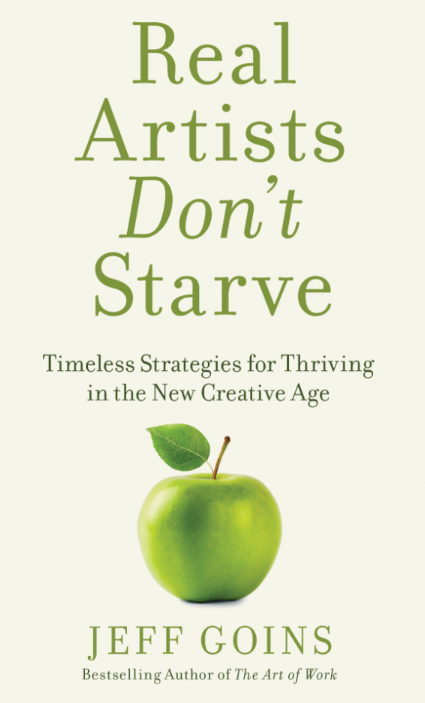
    Jeff Goins is the best-selling author of five books including the The Art of Work and Real Artists Don’t Starve. He shares his thoughts on writing, life, and creative work on his blog.

    Click here to read “The System I Used to Write 5 Books and Over 1,000 Blog Posts” by Jeff Goins.

  • Anne R. Allen & Indie Publishing

    The following is an excerpt from Anne R. Allen’s December 22, 2019 blog post. You, too, can be an indie-author. It helps to be informed with willingness to do the work.

    From Anne:

    In a few days we’ll be leaving the twenty-teens to enter the 2020s. We’ll be saying goodbye to a decade of wild upheaval in the publishing industry.

    It’s been quite a ride.

    On January 5th, [we hosted] agent Laurie McLean from Fuse Literary Agency, for her annual “Crystal Ball” predictions for publishing in 2020.

    But today I’m thinking about the decade that’s passing, and how it disrupted and radically changed the way authors approach publication.

    A lot of us got to behave like teens—experimenting with radical publishing ideas and trying on lots of new writing venues for size.

    Amazon’s Kindle had the right name. It fired up the writing community in a major way. Self-publishing became a viable, lucrative alternative to the soul-crushing process of breaking into traditional publishing.

    But now things are changing again. Sales of Kindles and other ereaders are way down. A lot of indie authors have disappeared.

    Is the Self-Publishing Revolution Over?

    Experts agree the “Kindle gold rush” is history.

    But self-publishing is still here.

    However, it has gone through drastic changes since 2010.

    In the early days, there weren’t many ebooks for Amazon to sell to their newly-minted Kindle owners. So they encouraged writers to publish their own work through their new “Kindle Direct Publishing” (KDP.)

    But then Amazon started its own publishing imprints like Montlake, Thomas and Mercer, Lake Union, etc. They wanted to market their own publishing companies.

    Then came Kindle Unlimited, the book service that allows unlimited reads per month for a flat fee.

    Indie incomes went down a lot more.

    A swarm of scammers, plagiarizers, and crooks learned to game the KU system and top the charts with stuffed, fake, and stolen books.

    Real indies lost out.

    Readers left Facebook’s privacy-invading machine. And new algorithms no longer let as many readers see our author pages.

    Indie incomes went down a bit more.

    E-books were the bread and butter of the self-publishing revolution, but as people started reading more on glaring tablets and phones, they rediscovered paper books.

    Big tech, which had once seemed so friendly to indie authors, became a minefield.

    But the Self-Publishing Revolution Didn’t Die

    It’s true that indie sales are more modest than they were mid-decade, and you’re not hearing about any new “Kindle Millionaires.”  

    But a lot of indies are still thriving.

    Many romance, mystery, and thriller writers who joined the self-publishing revolution are now making a good deal more than their trad-pubbed counterparts.

    Others are happily plugging along, not making a big income, but enjoying writing as a second job or hobby.

    Self-publishing is still an excellent way to publish. But it’s not the same as it was in 2010.

    Indies now need to have the training and capital to turn out a top-notch product and advertise it. They also have to be willing to learn the ropes of online marketing and put in the time with social media to build a following. They need to allot the time to put out a blog or newsletter.

    Self-publishing allows you to control your career. You’re not dealing with agents or editors who might ghost you, get fired, rope you into predatory contracts, or lose their marbles. (The majority of agents are honest and hardworking, but their incomes are falling with decreasing advances, and many simply can’t make ends meet without a second job.)

    My Advice

    Don’t choose self-publishing as the “easy” way to a writing career in the new decade. Choose it because you have an entrepreneurial spirit, enjoy social media and online marketing, and have the time to commit to running a business.

    Should You Plan to Self-Publish in the Next Decade?

    Only you know that. Do you write fast? Write in a popular genre? Have good marketing skills? Enjoy social media? Do you blog? Are you okay knowing you won’t be nominated for a prestigious book prize or get a review in The New Yorker?

    A “yes” to most of those questions would make you an excellent candidate. The only other big thing you’ll need is luck.

    So good luck to you. The 2020s may be the time your career soars!

    Click here for Anne’s full blog post with almost 100 comments.

    About Anne R. Allen

    My books are mostly romantic-comedy/mysteries. Maybe a little more comic than romantic. Since two of my favorite writers are Dorothy Parker and Dorothy L. Sayers, I guess it makes sense that I ended up writing a mash-up of the two “Dorothy” styles. Ruth Harris calls it “Chick Lit Noir.”

    I’ve been in the writing business long enough to have collected a pretty full set of mistakes. I blog in hopes of helping some of the new writers out there make better choices.

    In a former life I was an actress, bookseller, and the former artistic director of the Patio Playhouse in Escondido, CA. I last appeared in A Comedy of Errors at the Pacific Conservatory of the Performing Arts. I grew up in New England (Waterville, ME and various college towns in CT) graduated from Bryn Mawr College, and spent some time doing the hippie vagabond thing in several continents. Even got married once. All excellent adventures.

    I’m the author of 10 comic mysteries and a collection of short stories and poems. I’m also the co-author of a guidebook for writers, written with Amazon superstar Catherine Ryan Hyde, and I’ve written a new guidebook for author-bloggers: The Author Blog: Easy Blogging for Busy Authors.

    All my book-length works are detailed on my book page.

  • Nathan Bransford

    Guest Blogger Nathan Bransford reflects about this past decade with the constant of books by his side.

    The following is excerpted from Nathan’s December 30, 2019 blog post.

    So much can change over the course of a decade or two. Thank goodness the books we read and write will still be there waiting for us when we need them.

    When the clock struck midnight to ring in January 1, 2010, I was a literary agent with Curtis Brown Ltd. in San Francisco, I was married, and the ink was barely dry on my first book deal for the Jacob Wonderbar series.

    Little did I know that within a year and a half all that would change.

    Amid all this change, amid all of this upheaval and turmoil, there’s only one thing in my life that hasn’t changed.

    Books.

    The first time I visualized my current life was during a vacation in 2010 in Hawaii. I looked around and felt like a bolt of lightning hit me.

    I thought, “What if I just focused on helping authors with their manuscripts, wrote my own books, and worked remotely?”

    It took me a whole decade to achieve that dream. What if I’d leaped when I first had the idea?

    Regrets are pointless, lessons are valuable

    As much as we might want to change the past, the truth is that the past makes us who we are. (Something I explored at length in Jacob Wonderbar and the Interstellar Time Warp).

    I know I needed to go on my career odyssey to see what was out there, to learn new skills, to make new friendships, and grow as a person.

    I’ve definitely made some huge mistakes along the way. When I look back, the worst ones happened when I didn’t follow my own instincts, whether because I had talked myself out of what I was feeling or because I lacked the nerve to act on my gut.

    The comforting power of books

    In a world where things constantly change and often disorient us, there’s something comforting about the way books are stuck in time, artifacts of a particular moment and place. They provide that soothing certainty that we can return to them and they’ll be there, unchanged, ready for us to revisit.

    This especially applies to the books we write ourselves. It’s such a powerful and meaningful pursuit to write a book.

    Note from Marlene: I hope Nathan’s story inspires you to pursue your writing project.

    Click here to read the entire reflective post, including an endearing letter from Nathan to Roald Dahl.

    Nathan Bransford is the author of How to Write a Novel and the Jacob Wonderbar series. Nathan is dedicated to helping authors chase their dreams.

    Nathan’s blog has everything you need to know to write, edit, and publish a book. Can’t find what you need or want personalized help? Contact Nathan for help with your book.