Author: mcullen

  • One pearl is better than a whole necklace of potatoes.

    Constance Hale launches Sin and Syntax, How To Write Wicked Good Prose with:

    “The French mime Étienne Decroux used to remind his students, ‘One pearl is better than a whole necklace of potatoes.’ What is true for that wordless art form applies equally to writing: well-crafted prose depends on the writer’s ability to distinguish between pearls and potatoes. Only some words are fit to be strung into a given sentence. Great writers are meticulous with their pearls, sifting through piles of them and stringing only perfect specimens upon the thread of syntax. The careful execution of beautiful, powerful prose through beautifully, powerful words is guided by my five principles.”

    Hale’s five principles:

    • Relish Every Word
    • Aim Deep, But Be Simple
    • Take Risks
    • Seek Beauty
    • Find The Right Pitch

    Peruse Sin and Syntax to discover the pearls of wisdom of these principles and how to distinguish between words that are pearls and words that are potatoes. Read a review of Sin and Syntax, How To Write Wicked Good Prose by clicking here.

    IMG_1451

  • Klutz or dazzling . . . Prompt #54

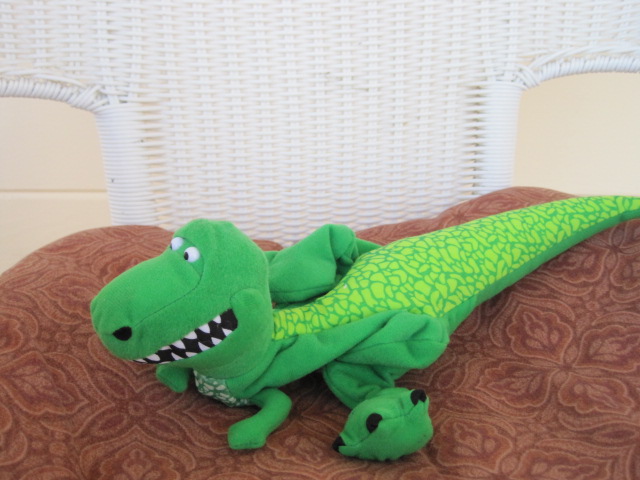
    Tell a story from your past that has something to do with being a klutz or a time you were dazzling.

    Green Thing

  • WriterAdvice seeks flash fiction, memoir, and . . .

    WriterAdvice seeks flash fiction, memoir, and creative non-fiction running 750 words or less. Enlighten, dazzle, and delight us. Finalists receive responses from all judges. First prize is $200. Submit to the 9th WriterAdvice Flash Prose Contest by April 18, 2014. Complete details at www.writeradvice.com

    advice

    Is Writer Advice’s Manuscript Consultation Service right for you?  Details here  Scroll down column.

  • Crafting scenes a reader can see—and sense by Constance Hale

    Crafting scenes a reader can see—and sense by Constance Hale

    Place looms large in all the work I do—whether in travel writing (when I’m trying to capture the essence of another country or culture), or in narrative journalism (when I often begin with a scene to draw my reader into the story), or even in Facebook status updates (when I try to sketch a place with a few poetic images).

    When crafting scenes, many writers make the mistake of loading up adjectives. But, as always, nouns and verbs do the best detail work. Take for example this description by the Indian writer Arundhati Roy, in The God of Small Things:

    May in Ayemenem is a hot, brooding month. The days are long and humid. The river shrinks and black crows gorge on bright mangoes in still, dustgreen trees. Red bananas ripen. Jackfruits burst. Dissolute bluebottles hum vacuously in the fruity air. Then they stun themselves against clear windowpanes and die, fatly baffled in the sun. The nights are clear, but suffused with sloth and sullen expectation.”

    Roy doesn’t shy from adjectives, but she starts out by grounding us in a specific time and place (May, Ayemenem). She fills the scene with concrete things (crows, mangoes, dustgreen trees, red bananas, jack- fruits, bluebottles), and she uses nouns to give us big ideas (sloth and expectation).

    William Finnegan relies on verbs in his 1992 New Yorker opus on surfing, “The Sporting Scene: Playing Doc’s Games.” He fills his entire story with sentences that use active verbs to make inanimate things animate, like this one:

    The waves seemed to be turning themselves inside out as they broke, and when they paused they spat out clouds of mist—air that had been trapped inside the truck-size tubes.

    These passages are taken from the all-new edition of Sin and Syntax, which also contains exercises and writing prompts.

    Laconic landscapes, and not so laconic ones

    In Bad Land, a book about the settling—and abandonment—of the Great Plains, Jonathan Raban uses extended metaphor to sketch a scene in Eastern Montana as he drives along in his car:

    A warm westerly blew over the prairie, making waves, and when I wound down the window I heard it growl in the dry grass like surf. For gulls, there were killdeer plovers, crying out their name as they wheeled and skidded on the wind. Keel-dee-a! Keel-dee-a!

    Raban recasts the plains as a seascape, with the wheat making waves, the wind growling like surf, and the killdeer plovers crying out like seagulls.

    To practice your own scene-writing muscles, try two of my favorite exercises. First, describe a vast and empty landscape—or a deserted street. Can you write about the scene so that it does not seem static or dead? Can you make it bristle with energy, even if human action is long gone?

    Second, situate yourself in a place that offers a symphony of sound. (A busy street corner? A screeching subway? A quiet courtyard in which each footstep registers?) Tune in to those sounds only. (Ignore the panhandlers, the change of the traffic lights, the people looking at you askance.) Find words that are onomatopoeic in some way, that suggest the sounds themselves. Write sentences whose rhythms evoke the sounds you are hearing

    The Raban passage and these writing prompts appear in Vex, Hex, Smash, Smooch, which is now out in paperback. If you’ve given these prompts a try and like what you wrote, please post your quick scene sketch in the comments section below. [After you register, posting can be done with a quick log-in.]

    Places that inspire

    For an opportunity to find inspiration in a scenic setting, and to be guided through exercises that will develop more of these muscles, join me at the Mokule’ia Writers Retreat from May 4-9, 2014. With the Waianae Mountains of O’ahu at your back and the blue ocean before you, learn from the masters, write in the shade of ironwoods, wander along the beach, salute the sun in morning yoga, and come to understand the essence of Hawaii through evening programs led by island composers, dancers, and musicians. The program includes daily workshops, private writing time, and one-on-one meetings with faculty. The theme, nā wahi ho‘oulu, acknowledges that a sacred spot like this will inspire us to explore other places— whether in the heart, in memory, or in the moment.

    If you live in the Bay Area, I’d like to invite you to the Petaluma Writers Forum on March 20, 2014. I will be appearing with my friend and travel-writing colleague Michael Shapiro, who has written a book titled A Sense of Place: Great Travel Writers Talk About Their Craft, Lives, and Inspiration. Needless to say, we’ll be digging into the craft of scene writing in our remarks.

    Finally, if you’d like more of this kind of thing, come visit my Web site, or sign up for my mailing list. (I also post on Facebook via the Constance Hale Scribe page.) I post regularly on how to straighten out your syntax, how to make your sentences sing, and how to survive and thrive in this sometimes difficult but always enriching writing life.

    CONSTANCE HALE is a fiend about the craft of writing and covers it at sinandsyntax.com. She also writes about style and language in her books: Vex, Hex, Smash, Smooch (the most recent), Sin and Syntax, and Wired Style. She has been an editor at the Oakland Tribune, San Francisco Examiner, Wired, and Health; her journalism has appeared everywhere from The New York Times and The Los Angeles Times to The Atlantic and Honolulu. She directed the narrative journalism program at the Nieman Foundation at Harvard and edits books, turning narratives about serious subjects into serious page-turners. She also runs writing retreats in Vermont and Hawaii.
    Hale, Constance


  • The nervousness of writing — Francisco Goldman

    “When you’re beginning a book, or getting back into a book, as I am now, you have to learn to deal with the nervousness and stress of it. The blank page or the stalled page is incredibly intimidating. And you have to turn that nervousness – rather than into something that blocks you, rather than into something that makes you try to over-think, that makes you feel that you can’t proceed unless you have a clear idea of where you’re going – you have to harness that nervousness, almost like a natural force, and make it work for you. You have to trust that you’re just going to get inside the page and get inside the sentences, and you have to release the desire to feel in control and just follow the writing where it takes you and have faith that you’re eventually going to find the way.  — Francisco Goldman 

    January 2014 issue of The Writer magazine.“Writers on Writing: Find the power to overcome writing fears.”

    The Writer magazine article written by Gabriel Packard

    Francisco Goldman

  • What I want to say . . . Prompt #53

    Today’s Prompt:  What I want to say . . .

    Post your writing and watch for comments.

    Tina-Turner-e03

  • I am from . . . Prompt #52

    Based on the poem, “Where I’m From,” by George Ella Lyon.

    Learn more about this woman, with the unusual name (for a woman):  George Ella Lyon.

    “In the summer of 1993, I decided to see what would happen if I made my own where-I’m-from lists, which I did, in a black and white speckled composition book. I edited them into a poem — not my usual way of working — but even when that was done I kept on making the lists. The process was too rich and too much fun to give up after only one poem. Realizing this, I decided to try it as an exercise with other writers, and it immediately took off. The list form is simple and familiar, and the question of where you are from reaches deep.”   George Ella Lyon

    Watch and listen to George read her poem.

    Note from Marlene:  I had the good fortune to first hear this poem at a writing workshop with Pat Schneider. I’ve written on this prompt many times . . . each time I feel closer to the family I inherited.

    I am from . . . Prompt #52

    tonga

    Prom, Tonga Room, Fairmont Hotel, San Francisco, 1965


  • Redwood Writers Anthology Accepting Submissions

    It’s a good idea to always have something ready to submit. You never know when a call for submission might be a perfect fit for your writing.

    Redwood Writers Anthology is open for submissions. . . deadline extended to April 1, 2014.

    Submission Guidelines  

    Members of Redwood Writers may submit up to two pieces in any genre, including short story, memoir, essay, flash fiction or poetry.

    You need to be a Redwood Writers Member to submit.

    Email your submissions to: anthology@redwoodwriters.org.

    Redwood Writers is a branch of the California Writers Club.

    tributaries-01

  • A roundup of freelance writing tips from Guest Blogger Michael Shapiro

    Guest Blogger and expert travel writer Michael Shapiro reveals his success with freelance writing.

    Every June, Michael Shapiro marks the anniversary of leaving his full-time job at CNET in SF. It’s been 15 years with lots of highs and lows, and he’s never regretted the decision to walk away from the rigidity of full-time work and hang his virtual shingle. Here are some tips that have helped him succeed in the world of freelance writing, especially travel writing.

    Making a Living as a Freelance Writer

    It’s not just an adventure, it’s a job: Travel writing can be romantic, but recognize it’s a job — don’t start out writing grand epiphanies about your summer vacation. Focus on service (consumer or advice) pieces, such as a story on five little-known museums in New York. You don’t have to be a superb writer to be a competent reporter.  By providing service pieces, you can develop relationships with editors that lead to more interesting assignments, including destination stories. A good way to break into magazines is by writing “front-of-the-book” features, which can be as short as a couple of paragraphs.

    Stick to a routine: Get up in the morning; take a shower, get dressed (including shoes), have breakfast and go to work. Slippers and a bathrobe don’t cut it. You can tailor your schedule to fit your personality. Be sure to carve out work-free blocks of time. I find it essential to take at least one full day off each week. Part of the attraction of freelancing is flexibility, so I give myself some leeway, for example to spend a couple of weekdays on a river trip or to take an occasional afternoon off.

    Accuracy first: Be a thorough and accurate reporter above all else — then strive to be an excellent writer. Clear and concise prose is important because editorial space is tight. You don’t have to write with the lyrical beauty of Pico Iyer to get published. You do, however, need to get the facts right. An editor will hesitate to give you another chance if you make significant errors. Most newspaper travel editors are too busy and don’t have the resources to fact-check, so double-check your facts before submitting. Use online resources to fact-check but be aware that not all info online has been vetted or updated. Confirm by phoning or seeking multiple sources for corroboration.

    Find a niche: Develop an area of expertise and work it. Only after choosing Internet travel as a niche was I able to make it as a full-time freelancer. My goal was to get editors to think of me as the Net-travel guy, so when they needed a story on this topic they’d contact me. This opened the door to more literary destinations stories. Because the Washington Post had run my Net-travel pieces, the editor there knew my work and published my Cuba by bike story.

    You don’t always have to travel: Not all travel writing involves travel. My SF Examiner story on frequent-flier programs won a Lowell Thomas award, and I didn’t leave the house.

    Send tips to editors: Help editors by sending them information or advisories without expecting compensation — keep yourself at the front of their minds —  they’re more likely to think of you when they need a story done. Think of it this way: You’re a brand and your own PR agency.

    Read editors’ stories: Read everything you can that’s written by prospective editors. When John Flinn became travel editor of the Examiner-Chronicle travel section, I read his work to get a sense of his style and what he might like. I even asked him who his literary heroes are (Tim Cahill and Bill Bryson) and read most of their books. Don’t try to copy another writer’s style — that would be a weak imitation. Be yourself, but tailor your stories to fulfill that editor’s requirements.

    Consider new publications: New magazines are generally more open to new writers because they don’t have a stable of regulars. Even if you don’t get in before the first issue, scan the magazine racks for new publications and query them.

    Pitch to a specific department: Your odds of success increase if you target a magazine’s regular department. Pitching a story for a department shows you read the publication, especially if you understand the requirements of the department. As a first-time writer for a magazine, don’t expect to land an assignment for a 2500-word feature. Your odds are much better if you try to write a short “front-of-the-book” piece or 750-word story for a department. Finally, pitch to a specific editor, not the editor of the magazine but an associate or deputy editor who’s more likely to read your query.

    Consider non-travel magazines: Travel stories appear in more than just travel magazines – you can often place articles in lifestyle and food magazines, to name just two examples. The wider you cast your net, the better your odds.

    Know when to pitch: Though this is not etched in stone, I usually pitch to newspaper editors on Thursday afternoons or Friday morning — this is after they’ve put the Sunday section to bed.

    Self-syndicate: Major metro newspapers typically pay $250 to $600 (sometimes you can earn more by selling photos) for travel features. It’s nice to get one newspaper to accept your story but before you pop the cork, send it to several newspapers as long as their circulation areas don’t overlap. If you submit a story to the Chronicle, don’t send it to the San Jose Mercury News unless the Chronicle rejects it.  Several newspapers, such as the Washington Post, require first national rights. So try to sell to them first and then to newspapers in Dallas, St. Petersburg, etc.

    Keep it tight: Editors have always appreciated brevity, but today space is tighter than ever. Try to keep stories under 1,500 words, 2,000 tops. A 750-word story has a much better chance of selling than a 2,500-word piece.

    Promote yourself online: Create a website featuring your published work, expertise, photos (if you shoot) and contact info. It’s essential to be able to refer editors to your site and much easier than sending them a sheaf of clips (though some editors may request hard copy). If you don’t have published work, you can publish online to show editors how well you can write. And be active on Facebook, Twitter and other social networking sites to build a community of interested readers.  * Please see note from Marlene at end about online publishing.

    Join a writers group: At best, a writers group is a supportive community offering honest feedback. Members also share strategies for getting published. But don’t take all criticism as gospel – listen to it, incorporate what feels right, but remember it’s your story.

    Consider joining a professional organization: During the first few years I tried making a living as a freelancer I shunned professional groups such as the Society of American Travel Writers (SATW). I figured that all they did was schmooze and booze – I wanted to be roughing it in Guatemala or Cambodia. In 1998 I was invited to lead an SATW workshop during the group’s annual convention in Jerusalem. I found that schmoozing could lead to story assignments.

    Define your goals: Do you want to make a living as a freelance travel writer or simply publish a story now and then? Either way, even if you don’t have an assignment, pick a destination, write a story with a narrow focus, and send it out. Be realistic about the time commitment required – you can’t make a living by viewing travel writing as a casual endeavor. Then again, you may not want to make a living; some writers want to keep their day jobs and write an occasional story. That’s probably a wise decision in the current journalistic climate.

    Rule of fives: Jack Canfield, author of Chicken Soup for the Soul, credits the Rule of Fives for his success. His theory is to do five things every day to sell or market your work. Start now and don’t expect instant results. Though it sounds hokey, this type of perseverance can help you succeed and make a living

    A final thought: Malcolm Margolin, a naturalist best known for The Ohlone Way said his ideal in his 20s was to be a poet and playwright. Early on he realized his chances for earning a living as a poet were slim, so he turned to natural history books because he thought they would sell reasonably well. Native American history and nature guides were his passion – he wasn’t writing them just to earn a dollar. Margolin, now the publisher of Heyday Books, said that his few attempts to create books for sales potential were flops and that the books he’s passionate about have sold better. Follow your bliss and be willing to sweat — the rewards make it worthwhile.

    Michael Shapiro’s article on Jan Morris’s Wales was a cover story for National Geographic Traveler. He also writes for American Way, Mariner, Islands, and The Sun – and contributes to the travel sections of the Washington Post, Los Angeles Times and San Francisco Chronicle. Shapiro is author of A Sense of Place: Great Travel Writers Talk About Their Craft, Lives, and Inspiration and wrote the text for the pictorial book, Guatemala: A Journey Through the Land of the Maya.

    A student at the first Book Passage Travel Writers Conference in 1992 and a 13-time faculty member, Michael has developed a productive freelance career by employing the techniques listed above. He has also worked with writers to develop, polish, and edit stories. He can help writers place articles in top publications.

    Contact Michael Shapiro for more information.

    *Note from Marlene: A way to publish online is to post your writing on this blog:  Post your writing in response to the Prompts. Contact Marlene if you want to be a guest blogger or book reviewer.  

    mcullen – at – comcast.net
    Book


  • That’s what life is. — Ellen DeGeneres

    I love stories that are inspirational yet have a lot of heartache, because I think that’s what life is.  Life is filled with struggles and yet there’s always beauty, and that’s what I get from films. —  Ellen DeGeneres, Parade Magazine, March 2, 2014

    JeffRose

    Photo by Jeff Cullen