Author: mcullen

  • Guest Blogger Patti Trimble asks, “Who cares . . .”

    Guest Blogger Patti Trimble asks, and answers, “Who cares if I write?”

    Sometimes I ask myself, “Who cares if I write, who basically gives a damn anyway?” Then I remember this is a real question that should be asked with a radical change of voice. Who DOES care if I write? Exactly who am I writing for?

    Writing is a mode of conversation: If I don’t know who I’m talking to, it hardly makes sense to speak.

    Once, on a beach, not in this country, I watched twenty men pull in a surf net. At least that’s what I thought they were doing. For several hours I watched them pull—knee-deep in surf, hauling in two fat ropes that disappeared into the sea. As they inched backwards up the slope, one man jumped up; then some young people ran down to help pull. The town was into it because it was good work, hauling in sustenance from the depths.

    I wouldn’t, couldn’t, write if I didn’t have someone—the whole town, or a few friends—helping me pull in stories and poems. I need my audience and I appreciate them. I ask strangers if they care about my topic—and why. I ask editors. I ask my mom. When I write, I address my audience. If I feel their enthusiasm, I want to write generous explanations, a funny line, a personal insight.

    I also need to be honest about audience. If I was writing for the Nobel Committee, I’d have arranged my education, marriage, work schedule, and publicity machine accordingly. When I’m writing a love letter, I lower my voice . . .

    Try it, try asking, “Who the hell cares if I write?” with curiosity and a sense of adventure. Make a list. Test a story on a friend. Write for someone who needs a laugh. Has your daughter heard about your 1980s hairdo? Does the city need your opinion on the asphalt plant? When your heart jumps at the flying geese, who’s jumping up to help pull out a poem? Is it your writer friends, next week’s slam audience, Mary Oliver, or your dad?

    I’m just saying that writing is a collaborative process, and assembling your team makes things easier.

    Patti Trimble is a freelance writer and widely-published poet. She often performs her lyric poems with music, and will have a new CD out in 2014. Patti teaches writing for Arcadia University in Sicily and also in the Bay Area, including an inspiring “mini-memoir” class that begins Jan 21 at Sonoma State Osher Program, and two spring workshops through Pt. Reyes Field Seminars.


  • It’s time to . . . .

    It’s time to leave behind the beliefs that limit us and embrace the creative beings we truly are. —Suzanne Murray 

    Join Suzanne in one of her many fabulous writing workshops, or personal coaching, or EFT.

     Yosemite Spring Retreat  April 4 – April 6

    Journey to the west of Ireland

    The Heart of Writing – a four week coaching package

    EFT (Emotional Freedom Techniques)

    Check out Suzanne’s Blog for ideas on writing, creativity and life coaching.


  • Twelve years old . . . Prompt #34

    Write about your favorite thing to do when you were twelve years old.
    You can respond from your personal experience, or answer as your fictional character would answer.

  • Blood Lotus online literary journal publishes gray area . . .

    Blood Lotus is an online literary quarterly established in 2006 and run by editors who refuse to believe everything has already been written, and who want to promote your best writing as proof.

    Blood Lotus accepts poetry, fiction and gray area.

    Every other Monday, we’ll post a poem/group of poems or a short story by a featured author for a two-week period. We hope this format will cast more of a spotlight on our deserving authors and generate more conversation on our blog. To that end, we’ll also offer commentary on every published piece: what we love about it and why it was chosen, directly from the co-editor who discovered and accepted it.

    Click here for guidelines.


  • Guest Blogger Bella Andre couldn’t stand it anymore, so she . . .

    Guest Blogger Bella Andre shares what it takes to get writing.

    In the workshops I give to writers, I talk a lot about blocking out the white noise (email, Facebook, phone calls, prolonged internet searches for information you don’t really need to know to write your first draft, etc.) and putting on blinders so you can really give your focus to your book. This advice is a lesson I personally relearn with every single book I write.

    That’s the quick and pretty version, but if you pull back the glossy cover, the past 30 months actually look like this:

    * Decide to start my new book.

    * Do everything but start the book.

    * Make more big plans to start the book, for real this time.

    * Freak out about not starting the book.

    * Tell myself that tackling the non-writing items on my enormous to-do list is important, necessary work, so really, how could I start the book yet?

    * Tick through non-writing items on my to-do list and get crankier by the day.

    * Force myself to sit down with my laptop and stare at the blank page and not get up until I’ve written at least 1,000 words.

    * Finally realize (yet again!) that the number-one thing to help both my career and my peace of mind is sitting down and writing. Every single day. From one book to the next.

    Today’s start of Sullivan #12 was no exception. I went through every one of the above steps during the past two weeks until I simply couldn’t stand it anymore. When I woke up this morning, I decided the to-do list could wait. Answering emails could wait. A walk could wait. Eating could wait.

    But the book could not.

    I truly believe that no matter where you are in your writing career, the book is always the most important thing. For a new writer, finishing your first book will likely require great focus and determination. All you want is to finally get to “The End.” But once your book is out in reader’s hands, the most important thing will always be your next book. I’ve seen again and again, in both my own career and others, that the surefire way to create ongoing success is to write the next book. And the one after that. And the one after that.

    Once I finally push myself to start a new book, I always find that’s when the focus finally comes. Fortunately, day by day as I sink deeper into the manuscript, it becomes far easier to block out that white noise and keep focus on the writing.

    Happy writing! Bella Andre.

    Visit Bella’s Facebook Fan Page.

    This “Pep Talk” originally appeared on National Novel Writing Month’s website, nanowrimo.org

    Having sold more than 2.5 million self-published books, New York Times and USA Today bestselling author Bella Andre’s novels have appeared on Top 5 lists at Amazon, Apple, Barnes & Noble and Kobo. After signing a groundbreaking 7-figure print-only deal with Harlequin MIRA, Bella’s Sullivan series are being released in paperback in a major global English language launch in the US, Canada, the UK, and Australia in continuous back-to-back releases from June 2013 through April 2014. Known for “sensual, empowered stories enveloped in heady romance” (Publishers Weekly), her books have been Cosmopolitan Magazine “Red Hot Reads” twice and have been translated into nine languages, and her Sullivan books are already Top 20 bestsellers in Brazil. Winner of the Award of Excellence, The Washington Post has called her “One of the top digital writers in America” and she has been featured by NPR, USA Today, Forbes, The Wall Street Journal, and most recently in TIME Magazine. She has given keynote speeches at publishing conferences from Copenhagen to Berlin to San Francisco, including a standing-room-only keynote at Book Expo America on her self-publishing success.


  • Guest Blogger Rachael Herron talks about the biggest failure . . .

    Rachael HerronGuest Blogger Rachael Herron talks about the biggest failure. . .

    Last night I went out with (as I think of her) my Young Writer friend. My favorite barista at my beloved but now defunct cafe, she has stars in her eyes about writing, and is applying to MFA programs all over the country. We ate sushi and talked about writing, and I remembered myself in her.

    When I was 25 — her age — I packed up my tiny Ford Festiva with its roller-skate wheels and headed to Mills for my MFA. I was going to light the world on fire with my prose. Or at least, I was going to write. And I lit a lot of things on fire, namely the cigarettes I was still smoking back then. I was giving myself two years in the ivory tower, two years to really focus on craft.

    Then, for those two years, I avoided writing as much as possible. I did the bare minimum, because that’s what we do sometimes, when it comes to what we love most, right?

    Artists don’t draw. Musicians don’t play. Writers don’t write. If we write, we fail (because when we’re learning something, DOING anything at all, we fail. Just part of the process). And as artists, we strive for perfection and failing is really not ideal.

    So we don’t write. I managed my 150 pages of a terrible novel for my thesis. I took an amazing dialogue class in which we read a book famous for dialogue every week and then wrote a three page scene in the voice of that writer (that did more for my skill with dialogue than anything else). I took a poetry class which almost killed me.

    Then I graduated and spent the next ten years also avoiding failure by not writing. Not writing = safe! Not writing = dreaming about the perfect words you’d string together if you just had time.

    What I didn’t realize was this:

    Not writing was the biggest failure of all. 

    No matter how spectacularly I screwed up in the writing itself (which I did! Still do! Spectacularly!), when I finally started to write everyday (thanks, NaNoWriMo 2006), I was succeeding!

    And seven years (JEESH!) later, I’m still writing, all the time. Every day. Even when I fail, I win.

    The job has gotten harder the more I learn. A rank amateur says LOOK I WROTE A BOOK YOU SHOULD READ IT OMG — a writer who’s spent years actively learning how to craft emotion out of words says, Well, you don’t have to read it. It’s the best I could do but it’s still not as good as Murakami. Maybe someday. *kicks rock* (Also known as the Dunning-Kruger effect *see below.)

    I’ve been both of those people. (Admission: I’ve been both of those people this WEEK.)

    But now, after publishing six books with two more on their way to shelves, I know I can do it. And I’ve changed my website a little bit because I want y’all to see that book up there to the left with its quotes and overview and all that because I’m proud of it and I’m excited for it.

    Pack Up the Moon. It’s literally the book of my heart, and it’s available for preorder right now. I’ll be releasing excerpts and reasons for you to preorder at my website, yarnagogo (gifts! prizes! kisses on the mouth if I see you IRL and you want one!) but the real truth is this: It’s a good book. It will make you cry, and then–I hope–it will help heal you a little bit. And maybe it will encourage you to write that book you have been wanting to write.

    I love the stars in my Young Writer friend’s eyes. The funny thing is I still have them, too.

    * “The Dunning–Kruger effect is a cognitive bias in which unskilled individuals suffer from illusory superiority mistakenly rating their ability much higher than average . . . Actual competence may weaken self-confidence, as competent individuals may falsely assume that others have an equivalent understanding.”

  • “I began these pages for myself . . .” Anne Morrow Lindbergh

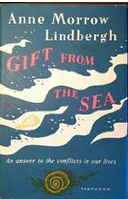
    Gift from the seaExcerpt from Gift From the Sea by Anne Morrow Lindbergh.

    I began these pages for myself in order to think out my own particular pattern of living, my own individual balance of life, work and human relationships. And since I think best with a pencil in my hand, I started naturally to write. I had the feeling, when the thoughts first clarified on paper, that my experience was very different from other people’s. (Are we all under this illusion?) My situation had, in certain ways, more freedom than that of most people, and in certain other ways, much less. . . .

    And so gradually, these chapters, fed by conversations, arguments and revelations from men and women of all groups, became more than my individual story, until I decided in the end to give them back to the people who had shared and stimulated many of these thoughts. Here, then, with my warm feelings of gratitude and companionship for those working along the same lines, I return my gift from the sea.

    Your turn . . . write snippets of your story. Just write!

  • What games did you play? Prompt #32

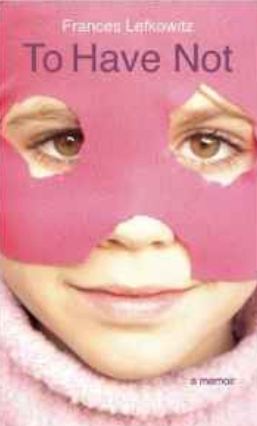
    Lefkowitz.To Have NotToday’s prompt is from To Have Not, a fascinating memoir by Frances Lefkowitz.

    When us kids used to walk down 16th Street to the schoolyard or across Sanchez to the corner store, we’d keep a lookout for cool cars. When one drove by – a red mustang convertible, a tiny MG, a black Jag with the silver cat ready to pounce off the hood – whoever saw it first would point and say, “That’s my car!” We could play this game anywhere, my brothers and their buddies and I, shouting the words loud and fast to drown out anyone else who might be thinking about claiming the same car.  You could even play it alone, whispering the three magic words while walking home from school or sitting in a window seat on the bus, leaning your drowsy head against the sun-warmed glass. Then the car would speed through traffic, carrying your dreams out of sight. You’d covet, grasp, and lose, all in a few quick seconds of shiny colored metal whizzing by.

    Frances blogs about writing, publishing, and footwear at PaperInMyShoe.com.

    Prompt:  What game did you and your friends or siblings make up? What does this say about your childhood?

  • Flash Fiction Online

    Frances Lefkowitz has been published in Flash Fiction.  Here’s what Flash Fiction has to say:

    Every month, Flash Fiction Online is proud to publish what we think is some of the best darn flash fiction (500 to 1000 words) there is. Each issue includes three original stories by both new and seasoned authors. Although many on our staff have a fondness for the speculative, we enjoy and select fiction in any genre. Founded by Jake Freivald in 2007, Flash Fiction Online has been published by Anna Yeatts since September 2013.

    We believe good stories should be free to readers—our goal is to help foster appreciation for short fiction. At the same time, we’re eager to support writers. We offer pro-rate payment for stories (as defined by the Science Fiction & Fantasy Writers of America, $0.05/ word). All our stories are read blind, with the author names and other identifying material stripped off, to ensure impartiality. At FFO, it doesn’t matter if you are a new writer or a seasoned pro–if we like your story, we’ll take it.  Submission guidelines