Writing prompts inspired from You Want Me To Do What? Journaling for Caregivers by B. Lynn Goodwin.
Prompt: Yesterday I believed . . . The truth is . . .
Writing prompts inspired from You Want Me To Do What? Journaling for Caregivers by B. Lynn Goodwin.
Prompt: Yesterday I believed . . . The truth is . . .
“This is a space for free wild mind writing that doesn’t need to be analyzed nor dissected. It’s about the practice of writing and tapping into that raw creative energy, just to keep our juices flowing.” — Christine Falcon
In a way, getting published, whether in article form or book form, is about finding the right fit. When you submit a piece you are looking for the perfect partner. In that sense it can be compared to modern dating or job placement. Both parties are looking for something — it is the match maker, recruiter or agent’s job to make sure everyone gets what they want. If you don’t have an agent, you must take on the role of match maker yourself, courting various editors and selling them on your story. Several months ago I found out about a woman in San Francisco turning old Muni buses into mobile showers for the homeless. It seemed like a brilliant idea and a perfect fit for a women’s magazine. I wrote a pitch highlighting the female innovation angle. My contact there loved it. Unfortunately, the editors above her did not. So I stored the story away and went about working on other pieces. I didn’t give up on it though. I knew it was a great story, it just hadn’t found the right home. I waited a while and then revised the pitch to fit a more general audience instead of a female focused audience and pitched it to Newsweek. They loved the idea and the result is The Great Unwashed. It took months for that short piece to get printed, but I am glad I didn’t give up on it. Sometimes in writing you just have to have patience that the right fit will come along eventually and step forward when it does. Just like in so many of life’s other searches.
Katya Cengel has written for National Geographic, Newsweek, Salon, Esquire and Sports Illustrated among other publications. Her University of Nebraska book “Bluegrass Baseball: A Year in the Minor League Life” was rated one of the top ten non-fiction books of 2012 by Shelf Awareness and was also a finalist for the 2013 Kentucky Literary Award.
Today’s prompt is inspired from You Want Me To Do What? Journaling for Caregivers (available on Amazon) by B. Lynn Goodwin, founder of Writer Advice, promoting authors through interviews. Writer Advice also publishes experienced and emerging writers, showcasing fresh ideas and high quality writing.
Prompt: Today I feel . . .
NaNoWriMo, www.nanowrimo.org, invites you to draft a 50,000 word novel in one month. I’m doing it for the second time, and I’m going for higher word totals than the 1667 suggested daily allotment. I just want this first draft out of my head. I want material to work with.
Not a fiction writer? You can still achieve a 30-day goal with memoir, biography, or any other form of non-fiction thanks to author and writing coach Nina Amir’s WINFIN, http://writenonfictioninnovember.com/about-2/. WINFIN (Write Nonfiction in November) is “an annual challenge to create a work of nonfiction in 30 days.”
The rules are simple: Decide what you’re going to complete and go for it. You can create “an article, an essay, a book, a book proposal, a white paper, or a manifesto” The program “operates on an honor system…no word counts logged in here. It’s a personal challenge, not a contest.” Simply describe the nature of your project and come back at the end of the month and say how you did.
Working on a memoir? Guest blogger Dennis Ledoux provides a day- by-day guide that conveniently runs for 30 days: http://writenonfictionnow.com/how-to-write-your-memoir-in-30-days-2/. November 1 is an arbitrary start date, of course. Pick your own starting day, but pick it soon, and commit yourself to working on the project for the next 30 days. Need weekends off? Commit yourself to working for the next 40 days.
The author of the bestselling How to Blog a Book: How to Write, Publish and Promote Your Work One Post at a Time (Writer’s Digest Books), Nina Amir is a nonfiction editor, proposal consultant, author and book coach, and blog-to-book coach with more than 34 years of experience in the publishing field.
The other day I thought about starting a National Journaling Month. Journaling primes the pump and greases the wheels. It gets writers started. It helps them dig deeper into their thoughts and find multi-dimensional truths. Participants in the National Journaling Month could record daily events, track their eating or exercising or arguing behaviors, analyze and resolve a decision about school or work or parenting, derail a negative thought pattern, or celebrate the joys of life. Journaling is an outstanding preparation for any writing project. It helps you figure out what you really want to say.
Journaling for 30 days can achieve its own set of miracles, just like completing a non-fiction project or even writing a 50,000-word novel. Set a goal. Then share it with a community of writers. You’ll never know what you can accomplish if you dream of writing instead of actually doing it.
B. Lynn Goodwin is the owner of Writer Advice, www.writeradvice.com, and the author of You Want Me to Do WHAT? Journaling for Caregivers, available on Amazon. Her stories and articles have been published in Voices of Caregivers; Hip Mama; the Oakland Tribune; the Contra Costa Times; the Danville Weekly; Staying Sane When You’re Dieting; Small Press Review; Dramatics Magazine; Career; We Care; Thickjam.com, Friction Literary Journal, and The Sun.
A former teacher, she conducts workshops and writes reviews for Story Circle Network and InspireMeToday. She’s working on a YA novel and brainstorming a memoir.
“The seeker embarks on a journey to find what he wants and discovers, along the way, what he needs.” —Wally Lamb, The Hour I First Believed
“Not all who wander are lost.” J.R.R. Tolkien, The Fellowship of the Ring
How to Stay on the Writing Path by Jordan E. Rosenfeld
I believe that most writers are also seekers. While we may have a larger-reaching goal to find an audience and be published, ultimately, the writers who stick out the hard times do so because there is gold to be found along the journey. Sometimes it’s the kind of gold that requires mining and panning and sweat and agony. Other times it comes silently, a gift in the night from a willing muse. But one thing is for sure: writing gives as much as it takes—and it takes a lot.
So how do you stay on the path of writing without falling off? How do you overcome the critical voices (internal and external) without giving up? Every writer soothes themselves differently, but sometimes soothing is in short supply, and it’s then you have to turn to other resources beyond yourself to find that boosting. And if you’re letting despair or discouragement drag you down, remember you don’t have to. You’re not alone! There are as many allies on the path as there are villains. It’s my goal to be one of your allies.
For this month, remind yourself that a writer’s life is a worthy endeavor, a high calling, an important purpose. For this month I ask you to put in place one new support for yourself, be it a quote of kind words over your desk, or a buddy who will hold you accountable.
Starting in the New Year I will be blogging the topics of my book in the works: A Writer’s Guide to Surrender. I chose the word surrender not to imply giving up, but instead, a settling in to what matters most. It’s also a concept I find immensely helpful when things are not going as we hope; when rejections roll in, when the writing isn’t flowing, when criticism stings. Surrender is, at root, a state of accepting your vulnerability and not letting anything harden you.
Let’s stay flexible and gentle with ourselves. But don’t get off the path. It’s your right to walk it!
Jordan E. Rosenfeld is author of the novel Forged in Grace, the writing guides Make a Scene: Crafting a Powerful Story One Scene at a Time, Write Free: Attracting the Creative Life (with Rebecca Lawton) and the forthcoming: A Writer’s Guide to Surrender: A Tool-kit to Build and Bolster a Lasting Writing Practice. Jordan’s essays and articles have appeared in such publications as AlterNet.org, Marin Magazine, Publisher’s Weekly, San Francisco Chronicle, The St. Petersburg Times, Whole Life Times, The Writer and Writer’s Digest magazine. Her book commentaries have appeared on The California Report, a news-magazine produced by NPR-affiliate KQED radio.
Learn more about Jordan and her writing wisdom at: www.jordanrosenfeld.net
 Get out some paper and a fast moving pen or set up your computer.
Set the timer for ten minutes.
Look at something in your room, anything, it doesn’t matter. Now write. Just write whatever enters your head.
Or, open your dictionary to a random page, run your finger down a column. Stop on a word and freewrite, using that word as your prompt.
Or, use one of the prompts in this blog.
Think of this as practice writing, just as a badminton player practices before an actual meet.
Follow Natalie Goldberg’s six rules of writing listed in a previous post.
Try it right now. Paper and pen or computer ready? Glance at your clock. Note the time. Or set your timer for ten minutes. Write for ten minutes about “trees.” After that, write for ten minutes, using “I remember” as your prompt. Now go with, “What I really want to say.”
Those first thoughts as you start thinking about the prompt is where the energy is. And that’s where you will find the good stuff. The nitty-gritty that means something. As Natalie Goldberg says, “The aim is to burn through first thoughts. Say what you want to say. Don’t worry if it’s correct, polite or appropriate. First thoughts have tremendous energy. First thoughts are the way the mind flashes on something.”
Keeping your hand moving is essential. If you stop to think, your inner critic enters the scene. Write quickly so there is no time to censor yourself. If you get stuck, just write the prompt again and go from there. New thoughts might come up. Or write “What I really want to say . . .” Or write, “the trouble started when. . . ” Keep going, trust the process, your mind will give you something to write about.
If you cross out, you are letting your editor take charge. There is time for the editor to work later, when you are revising. For now, invite the editor to sit this one out.
Do not worry about spelling, punctuation and grammar. You are the only one who will see this writing, unless you choose to share it. Don’t lose the thoughts that are propelling your writing energy by worrying about grammar.
Just write.
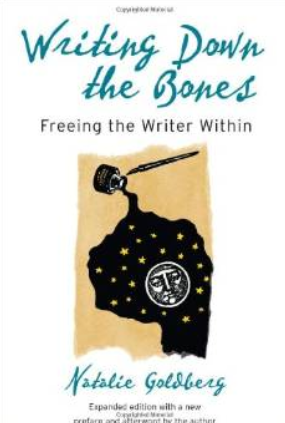 Natalie Goldberg’s Six Rules of Writing Practice from her books: Writing Down the Bones and Wild Mind
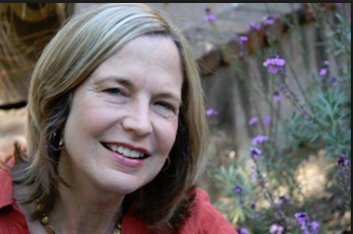 Susan Bono, Queen of Personal Essays suggests this prompt:
I’m trying to figure out how I feel about _________.
When you write, using the method of writing freely – called a freewrite – you can lose control with no worries about consequences. Writing in this style is for your personal enjoyment or to enhance your writing. This isn’t your final piece to be published. No one else has to read your writing, unless you invite them to.
When you freewrite, don’t think and don’t plan what you will write next. Just go with the moment’s energy. If you use a prompt that draws from your childhood, you will have endless material to write about.