Today’s writing prompt:
There is a character deep within me . . .
#justwrite #iamwriting #iamawriter
Today’s writing prompt:
There is a character deep within me . . .
#justwrite #iamwriting #iamawriter
Ideas for strong writing.
Use active voice rather than passive voice.
~From www.dailywritingtips.com – sign up to receive free daily emails with writing tips:
English verbs are said to have two voices: active and passive.
Active Voice: the subject of the sentence performs the action:
His son catches fly balls. Creative children often dream in class.
Passive Voice: the subject receives the action:
The ball was caught by the first baseman.
The duty is performed by the new recruits.
The dough was beaten by the mixer.
The mailman was bitten by the dog.
~From Manuscript Makeover by Elizabeth Lyon
Adjectives: Use sparingly and consciously. Overuse indicates a need to find more precise nouns and to show rather than tell.
Adverbs: Too often, writers use these to beef up weak verbs. Your goal should be to make verbs strong enough to do the work themselves and kill off your adverbs. You won’t be able to get rid of all of them, but circle each one in your draft and use a thesaurus to find strong verbs that characterize and carry emotions as well as convey action.
Paraphrased from Victoria Zackheim, author, editor, writing teacher
An adverb modifies a verb and clarifies the action. Avoid adverbs and use strong verbs instead, because adverbs “tell” rather than “show” the action.
Example:
“I don’t understand,” said the man angrily, his hands balled into fists. “Angrily” tells, and “balled into fists” shows that he is angry. So, “angrily” is redundant.
Avoiding adverbs that end in -ly: “The boy raced quickly along the sand.” If he was racing, we know it’s quickly.
Adjectives describe nouns. Try using strong verbs so adjectives aren’t necessary.
Examples:
“Tears came to her eyes and she looked away” rather than “Sad tears came to her eyes.”
“A nerve in his jaw pulsed and his fists were clenched” rather than “He was angry and a nerve . . . “
Verbs are the action words and can be scene stealers when used well. A verb that is used well rarely needs to be modified. Example:
“The bear responded angrily and he dangerously revealed his claws.”
Delete adverbs for a stronger sentence: “The bear growled and bared his claws.”
It’s almost never a good idea to use an adverb when writing dialogue. It takes away the reader’s delight to imagine the scene.
“Do this or I’ll kill you,” he said menacingly, can stand without that menacing adverb, since his comment is menacing.
There are times when an adverb enhances and clarifies the sentence. For example:
“The rain fell intermittently.” The adverb “intermittently” tells us that the rain fell off and on.
“He paid the bill occasionally.” In this sentence, occasionally is an important adverb.
Paraphrased from Writer’s Digest magazine, January 2006, “Pick Up the Pace”
Quick pacing hooks readers, creates tension, deepens the drama and speeds things along.
Picking up the pace increases tension. How to quicken the pace:
1. Start story in the middle of the dramatic action, not before the drama commences.
2. Keep description brief. This doesn’t mean using no description, but choose one or two telling, brief details.
3. Combine scenes. If one scene deepens character by showing a couple at dinner and a few scenes later they have a fight, let them have the fight at dinner.
4. Rely on dialogue. A lot of story can be carried by spoken conversation. Readers seldom skip dialogue.
5. Keep backstory to a minimum. The more we learn about characters through what they do now, in story time, the less you’ll need flashbacks, memories and exposition about their histories. All of these slow the pace.
6. Squeeze out every unnecessary word. This is the best way of all to increase pace. There are times you want a longer version for atmosphere, but be choosy. Wordiness kills pace and bores readers.
From Marlene: Use present tense rather than past tense for “real time” — so the reader travels along with the protagonist as they explore and discover together.
More on strengthening writing:
Vex, Hex, Smash, Smooch by Constance Hale
Sensory Details – Kinesthetic, motion in writing
What tips do you have for strong writing? Post your tips on my Writers Forum Facebook Page.

The New Verse News covers the news of the day with poems on issues, large and small, international and local.
It relies on the submission of poems (especially those of a politically progressive bent) by writers from all over the world. The editors update the website every day or two with the best work received.
What’s best?
A genuinely poetic take on a very current and specific news story or event.
TIPS FROM THE EDITOR
See the website for guidelines and for examples of the kinds of poems the New Verse News publishes. Scroll down to read thesubmission guidelines in the sidebar.
Paste your submission and a brief bio in the text of an e-mail (no attachments, please) to nvneditor [at] gmail.com
Write “Verse News Submission” in the subject line of your e-mail.
Unpublished poems only.
No payment.
No simultaneous submissions.
For an example of what is published, please read:
“Hope” by Sandra Anfang, founder and host of Rivertown Poets.

What did adults tell you when you were a child that you still struggle with?
#justwrite #iamwriting #iamawriter
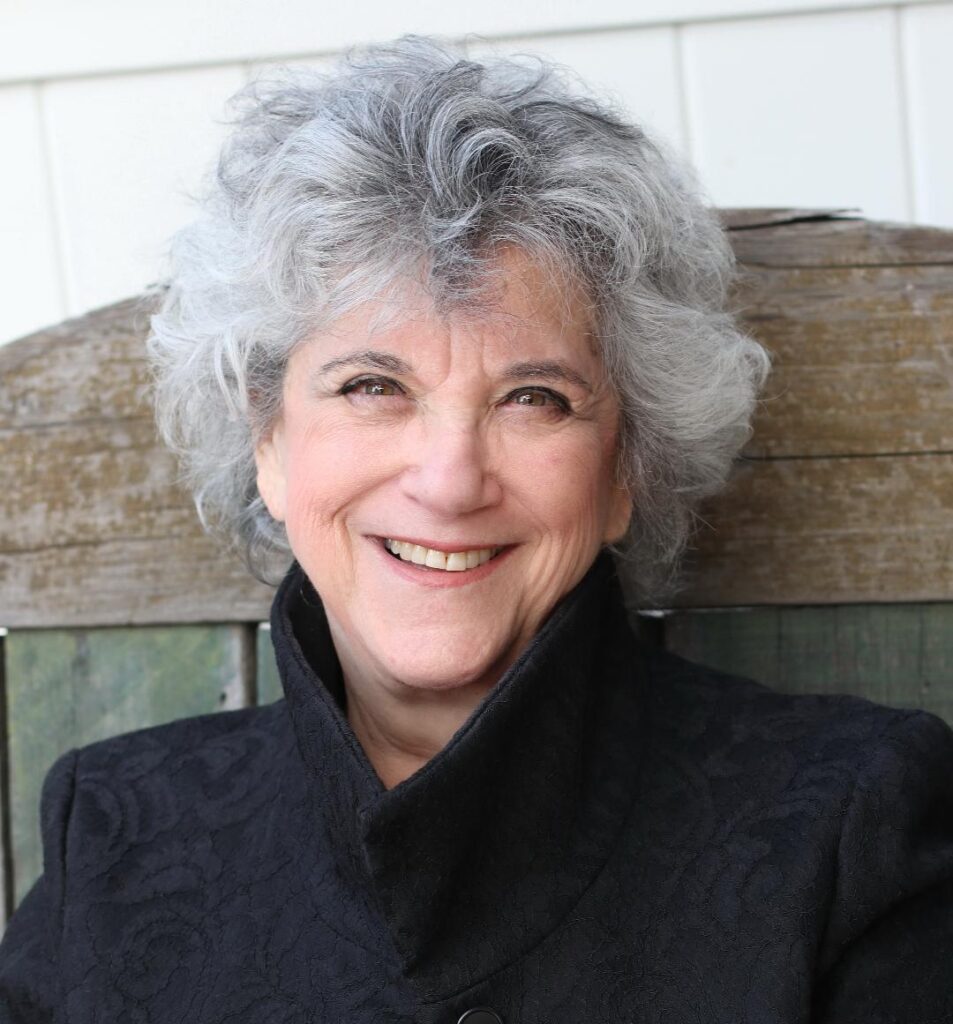
Today’s guest blogger, Victoria Zackheim, writes about how to keep up the energy, faith, and courage to write.
I recently walked into my newly built kitchen and discovered a large, grayish rectangular stain on the quartz counter. Had I placed a hot pan there? Not likely. Spilled bleach? Definitely not. I wiped, scrubbed, gently scoured… nothing helped. And then I lifted my arm and noticed a change in the shape of the stain. I had been trying to remove a reflection of light coming through the kitchen window.
This is the opening paragraph of an essay I wrote about aging. I smiled as I wrote what I expected to be the preface of my new book. However, I’ve been told by literary agents and several editor friends that writing about aging might be cathartic for me, the writer, but it doesn’t stir up much interest among the public. Really? In a country with an increasing elderly population? The last count put us at nearly 17%. That’s a lot of old people, and I’m willing to bet that a good many are readers.
Forget that we elderly are climbing mountains, running marathons and, in many cases, the country. We are a presence, a power, a voting force, and a major supporter of our county’s economy.
And we can write … but do we?
I often wonder how many of us older writers don’t write because we’ve been led to believe that no one gives a damn about what we have to say. I’m not talking about those gifted (and, by the way, older) authors who create exciting characters in literary fiction and mysteries, men and women who perform death-defying acts to catch the bad guy, or face society and its warped mores to find the truth about life. The work of writers such as Jeffery Deaver, Jane Smiley, Anne Perry and Caroline Leavitt sells like crazy, but they’ve spent years, decades, establishing their reputations both here and abroad. No, I’m referring to that world of writers who never get their place in the sun, and still refuse to give up.
And what about memoirs? The names that pop into my head are Abigail Thomas, Carrie Kabak, and Christine O’Hagan. They write with heart and soul, and they leave age behind.
Are you held back by age? By the who wants to read something written by someone my age? syndrome?
I teach Personal Essay in the UCLA Extension Writers’ Program, online classes only, and spend nine weeks working with students ages twenty to ninety, and who are motivated, excited, and energized by the joy and freedom to write. I also conduct workshops at writers’ conferences, which is where I learned a valuable lesson about age. I’ve had students in their sixties, seventies and eighties, but no one taught me more about the importance—and yes, the unimportance—of age, than a student who was about to celebrate his ninety-third birthday. At first, some of the younger students (mostly middle-aged) ignored him, until it was his turn to stand up and read the first draft of his essay. He stood, wobbled a bit, and then leveled those young whippersnappers with a poignant, beautifully written, and very funny piece, a vignette from his life. His writing was simple, straightforward, honest, and he didn’t give a damn about what he said, as long as he was telling his story. That was more than a decade ago. I hope he’s still writing.
So, how do we, as older writers, find the means to write? Or perhaps the real question should be: how do we keep up the energy, faith, and courage to write? My agent is pitching my first mystery novel. I have to wonder how many editors will Google me, discover my age, and then think, “Oh dear, oh my, at that age, we can’t nurture her along, and we certainly can’t count on sequels.” The responses to my agent have been “soft” rejections. Soft or hard, no is no.
Now, let’s look at another conundrum. As an older writer, what can you possibly write that anyone wants to read? Uh, hello! You have many more decades of life experience than up-and-coming (read: young) writers. Do they search for their glasses when they’re perched their head? Have they put their keys in the refrigerator, or tried to answer the phone with the TV remote? Or get frustrated when attempting to turn on the TV with their cell phone? When I do this, and casually mention it to my children or grandchildren, they smile. That is, they smile indulgently, hoping I don’t notice the pity or fear rushing through their hearts. But when I relate the same faux pas to friends of my age, I’m sure to get (1) a laugh and (2) a story about what happened to her/him that matches mine. We are a grand and wonderful people, we oldies.
So, what am I saying? I guess I’m suggesting that older writers need to forge ahead. Screw the age; write what you know. Write what you are. If you write what you think will sell, that’s fine, we all need to make a living. But be good to yourself and carve out some time where you can be you. Old. Wise. Funny. And, yes, even a bit tasteless! (You know, the stuff you don’t want your children to read until after you’re dead … or you’ve published under a pseudonym. My children still don’t know about the time I … never mind.)
Aging gracefully relies on accepting ourselves. If we don’t accept who we are, it will show up in our writing. Our older characters might be very well-behaved, pontifical, wise, which can be synonyms for dull. Create the characters first and see where they take you. I love Elizabeth George’s younger character, Barbara Havers, and Anne Perry’s new-series character, twenty-something Elena Standish. But I also gravitate towards the older and wiser. Is there a fictional character more fascinating and complex than Elizabeth Strout’s Olive Kitteridge? Or Wallace Stegner’s Lyman Ward in Angle of Repose? And I would be remiss not to mention Santiago, Hemingway’s memorable and haunting character from The Old Man and the Sea. (I seriously doubt that The Middle-Aged Man and the Sea would have received such acclaim.)
So, yes, we are older writers, but in no way does that mean we are old. And I ask you, what’s more exciting: creating characters and plot lines, or worrying about sleeping through the night and having regular bowel movements?
Carol Channing lived to ninety-seven. That gives me nearly twenty years to write, fall in love, manage crepey skin and liver spots, learn to make pasta on one of those machines, and write several sequels to the mystery that will be published one fine day.
What can you do to keep your creative juices flowing? Here are some ideas:
I have a dear friend, Aviva Layton, who is about to become eighty-nine. (Notice I didn’t say “turn eighty-nine” because that sounds too much like fruit going rotten.) She does Zumba twice a week and works around thirty hours a week editing manuscripts. Aviva believes that old age is absurd, but it also has its advantages. She can tell a gorgeously handsome and sexy man that he’s gorgeous and sexy without his thinking she has ulterior motives … even if she does. And she never has to hoist her luggage onto the overhead bin. If I’m putting together a new anthology that fits into anything relating to her life, she’s invited. Aviva’s work is passionate, funny, real and never sugar-coated. At this age, sugar-coating anything is a waste of time.
So, what can you do to bring joy and creativity to your golden writing years? Take your vitamins, try to exercise, wear your mask in public if you choose. And carve out quiet time. Not for resting, but for contemplating your next writing project.
Don’t be afraid to play with ideas. Play with scenes. Play with characters and plots. Play with fantasies about how to spend the royalties. But whatever you do, don’t play it safe.
Victoria Zackheim is the author of the novel, “The Bone Weaver,” and creator/editor of seven anthologies, including the international bestselling “The Other Woman,” that she adapted to theater and has been performed in several dozen theaters across the United States. She wrote the documentary “Where Birds Never Sang: The Story of Ravensbrück and Sachsenhausen Concentration Camps,” which aired nationwide on PBS.
Zackheim is a playwright and screenwriter, with two plays and a feature film now in development. She teaches creative nonfiction in the UCLA Extension Writers’ Program and is a frequent conference speaker and writing instructor in the US and abroad. She lives in Northern California.
Back in the day, what did you, or your parents, or your grandparents do in the evenings?
#imawriter #justwrite #iamwriting
Memorable writing that sparks imagination. Lean in. Hear the writer’s voice on the page.
My Secret Cottage
By Kathy Guthormsen
I open the back door to dew sparkling in the morning sun and hints of rainbows shimmering in the lingering mist. They let me catch a fleeting glimpse before their magic fades. Goosebumps raise along my bare arms as I race through the grass and turn to look at my wet footprints. The sun will soon erase this evidence of my footsteps. I won’t be followed as I skip through an imaginary forest to my secret cottage at the far end of an enchanted glade.
Rabbit hops along next to me hoping for the reward of a carrot. Cat slinks across the trail, hunting. She’d like to catch Rabbit, but he’s bigger than she is. And wilier. I raise my hand to shade my eyes and turn in a circle. Do I hear something stalking me? I look up and see Eagle soaring through the blue watching after me. I wave and continue along my path.
My secret cottage is just ahead. An abandoned pump house my father moved to our back yard. He made window boxes and added a covered porch. I swept cobwebs and evicted spiders. Dad carried out a child sized table and chairs. I brought toys and plastic dishes. This is my place. Where I hide from pirates and make friends with birds. Where I hold parties for my dolls and my much-loved teddy bear. Where I serve mud soup and rock cookies. Where adult voices are not heard; adult eyes are not allowed.
My cottage has faded into the mist of memories. The pump house is small, now derelict, with peeling paint and a warped plywood floor. But I can still visit in my dreams.
Kathy Guthormsen is the creator of “The Story of Jazz and Vihar.”
Her writing has been published in several The Write Spot anthologies.
These books are available from your local bookseller and Amazon.
You can meet Kathy, and possibly Poe and other birds:
May 21, 1:00 pm to 3:00 pm: Children’s Museum of Sonoma County, 1835 W. Steele Lane, Santa Rosa, CA
Date to be determined: Copperfield’s Books, 144 Kentucky St., Petaluma, CA
Growing up in Skagit Valley, Washington with its verdant farmland gave Kathy an appreciation for the promise and beauty of nature’s bounty. The Cascade and Olympic mountain ranges and old growth forests offered the magic of things unseen and fostered her fertile imagination.
When she isn’t writing, Kathy volunteers at the Bird Rescue Center in Santa Rosa, California, working with and presenting resident raptors as part of their education and outreach program. Walking around with a hawk or an owl on her fist is one of her favorite pastimes.
She maintains a blog, Kathy G Space, where she occasionally posts essays, short stories, and fairy tales.

Thanks to Guy Biederman for letting me know about Six Sentences.
It’s simple. Just write six sentences. Write anything you like.
Formatting: Six Sentences uses a paragraph format. Six consecutive sentences. No poems, no bullets. Be unconventional if using dialogue. Again, write anything you like, and tell a friend. Peace.
Guy is a prolific writer who regularly submits his writing to publications.
Join us to learn the inside story to Guy’s many successes: May 19, 6 pm PST, Free on Zoom, Recovery Writing of Idaho.

“Mama Always Said Life Was Like a Box of Chocolates. You Never Know What You’re Gonna Get.”—Forrest Gump
People are like that, too. You never know what people are going to do or say. Perhaps that was the inspiration for The 2022 Voices of Lincoln Poetry Contest.
Choose a category and Just Write!
People are . . .
Funny
Amazing
Changers
Unreasonable
Unpredictable
World
These are the categories for The 2022 Voices of Lincoln Poetry Contest.
Write your story and submit your writing.
Memorable writing that sparks imagination. Lean in. Hear the writer’s voice on the page.
Delicate as a Hummingbird’s Heart
By Noah Davis
This past Saturday, the fire burning on the north side of the river jumped a ridge and lit another hillside of drought-stricken timber, sending a plume so high that the air turned red with the seared skin of Douglas fir and larch.
At 5:30 that evening, in the diner booth across from my father and me, a young man and woman, both with shiny, smooth cheeks, sat drinking their waters in small swallows. He wore a collared, white button down with jeans and scrubbed cowboy boots. Her skirt was blue, like glacial streams, and her straight hair was the color of stacked wheat shafts when the sunlight isn’t choked with smoke. His bangs were still wet from the shower, comb marks straight as irrigation ditches. She ran her hands over her knees. He thumbed the crease of his collar. She had to lean in every time he spoke.
Years ago, I’d have thought this was a quiet, brave thing, here in our burning world: two people making themselves lovely for each other. But now having realized that the world has ended so many times before, this young couple’s effort became that much more vulnerable. Something as delicate as a hummingbird’s heart.
In the last week, a hundred million trees had perished before the girl leaned close to her mirror and blinked on mascara. In the last month, thirty skies had been choked to gray before the boy raised his hand to knock on her front door.
Noah Davis’ poetry collection Of This River was selected for the 2019 Wheelbarrow Book Prize from Michigan State University’s Center for Poetry, and his poems and prose have appeared in The Sun, Southern Humanities Review, Best New Poets, Orion, The Year’s Best Sports Writing, and River Teeth among others.
Davis earned an MFA from Indiana University and now lives with his wife, Nikea, in Missoula, Montana.
Originally posted on River Teeth April 4, 2022
#justwrite #iamawriter #iamwriting #iamapoet