Author: mcullen

  • What a good editor can do for you

    Thoughts from Elizabeth Austin.

    “A good editor gives feedback that feels less like judgment and more like a conversation—less ‘here’s what’s wrong’ and more ‘here’s where we can dig deeper.’

    There is something incredibly satisfying, almost magical, in those small, right-aligned edits that a good editor suggests. A word change here, a rephrase there, and suddenly the piece feels tighter, braver. One editor suggested I cut an entire paragraph detailing a painful memory I thought was essential to the piece. ‘The story feels stronger without this part,’ she said, and once I’d made the cut, I realized the rest of the piece came into sharper focus, allowing the heart of the essay to shine through.”

    About a difficult piece she wrote:

    “Going into these pieces alone would have felt impossible. I needed someone at the mouth of that cave, someone who could shine a light and pull me back if things got too dark. A good editor does exactly that. I couldn’t have written my most important pieces without knowing that support was there, without that trust.”

    Elizabeth Austin’s writing has appeared in HuffPost, Today.com, Thrillist, The Sun, Reactor Mag, and others. She holds an M.F.A. from Vermont College of Fine Arts and lives in Bucks County, Pennsylvania with her two children and their many pets.

    Note from Marlene:
    How to find a good editor? Email your ideas to me: mcullen – at – sonic.net

    Just Write!

  • Grandma Carrie

    Memorable writing that sparks imagination. Lean in. Hear the writer’s voice on the page.

    Grandma Carrie

    By Robin Mills

    I remember the scent of my grandma Carrie, slightly sour mixed with ivory soap. I remember the click of her heels, the kidney shaped metal cleat meant to prolong the life of shoe soles tapping on the cold hard tile floor of their Palm Springs apartment. I remember seeing the white hoop cheese she used to stuff her home-made blintzes, nestled between her front teeth when she leaned in to whisper something in my ear, and her thick toenails covered in shiny red polish.

    Grandma Carrie came across the ocean as a child with her mother, from Kiev, fleeing pogroms and leaving behind some of her ten siblings who would never follow, only to be lost to concentration camps. They settled, living in a New York walk-up, likely shared with more people than there were bedrooms. As a young woman she took secretarial courses and was a member of the American Socialist Party.  She married Morris in 1924, and they moved out west where the weather was friendlier.

    My parents often dropped my brother and me at their home and went off to have kid- free time around an oval shaped pool full of shimmery blue water, under the hot desert sun.  My mother, in her black and white zebra bikini and dark cat-eye glasses, lounged poolside in the quiet.

    Carrie toted us around the desert in her blue Buick, to air-conditioned malls, miniature golf and parks full of cool grass where we laid down under shade trees until the moisture soaked through our clothes.

    At night we slept on the fold out couch in Carrie’s living room, sleeping sideways to avoid the cold hard metal bar that otherwise poked our backs. In the morning, the earthy scent of cracked wheat hot cereal wafted from the kitchen. We sat at the round table covered in a sticky plastic tablecloth rimmed with roses. My grandfather Morris ate soft boiled eggs and read the newspaper, folding it longways in thirds, flipping from section to section. His days were spent hunched next to the radio listening to KCBS news and weather on the hour, wringing his hands or staring off into space. He suffered from “undiagnosed pain in the bones” and lived Palm Springs summers in a wool cardigan and hat.

    My father in passing once mentioned Carrie was married, before Morris. He had a name, Meyer Lesowitz, even pictures of this man. Pictures of them, hiking with friends, posing with her stylish short hair, head band and knicker hiking pants. They were often arm in arm, or close enough to be, atop a boulder or mountain peak.

    We were told it was a short marriage. A year. And that he had died in 1924, a young man.

    In going through boxes of photos and memorabilia I found an autograph book dated the year of this man’s supposed death where he was mentioned as a good friend and wished best of luck. And a College of the City of New York yearbook. And a letter in the New York Times, April 25, 1944 signed by Meyer Lesowitz Teacher of the Blind, 20 years after his “death”.

    My grandmother had all this in her box of memorabilia that was passed from her to my father to me.

    That autograph book still sits on my desk, waiting for me to find more mentions of him online, or a family member to surface and tell us everything of his life. So far, nothing.

    Robin Mills lives in Petaluma California. By day she is an American Sign Language interpreter. Her non-work hours are spent writing, swimming, hiking, photographing the world around her, traveling, playing in various art forms and swing dancing. She has work published in Underbelly Press, The 200 Word Short Story and The Write Spot and was a finalist for publication in Big Brick Review.
  • What are you tired of? . . . Prompt #842

    Writing Prompt:

    What are you tired of?

    #justwrite #iamwriting #iamawriter

  • Dastardly Deeds . . . Prompt #841

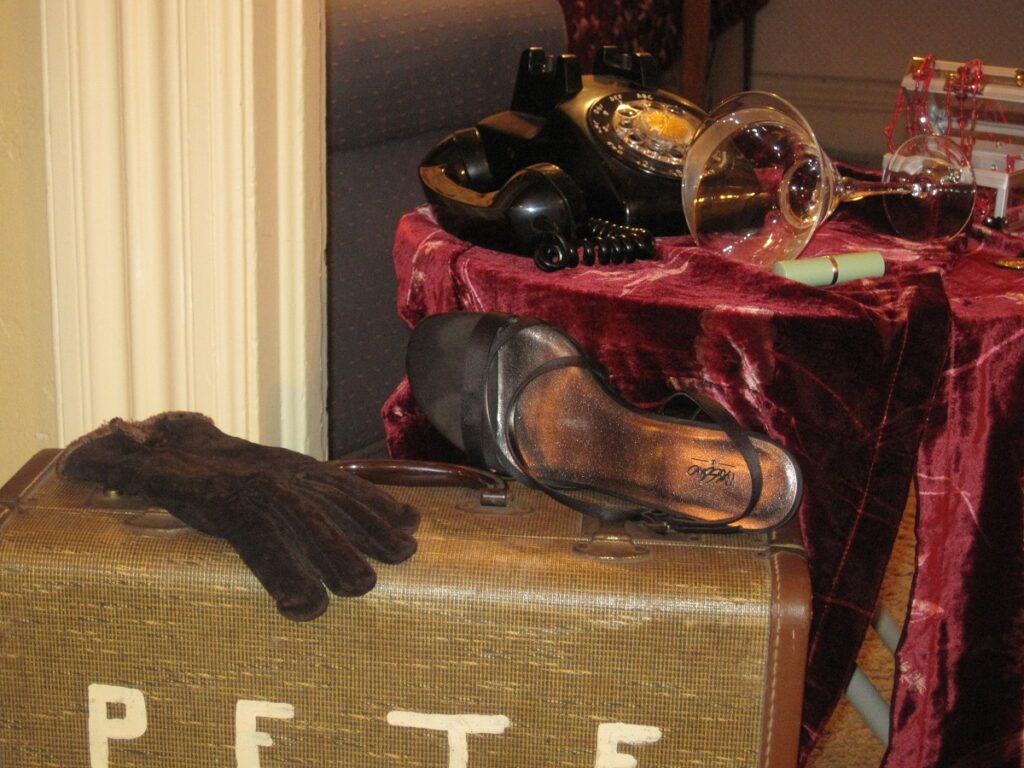
    Pete Suitcase

    Writing Prompt:

    Dastardly Deeds that someone did to you.

    Dastardly Deeds you did.

    Have you forgiven them?

    Have you forgiven yourself?

    Can you?

    What would it take to forgive?

  • Imagine

    An inspiring message from Gurdeep Pandher

    The human mind tends to focus on painful memories while letting positive ones fade. These distressing memories become our heaviest burden, causing ongoing emotional pain.

    How much of our past can we carry with us through life’s journey? This is a profound question that affects everyone in different ways. The past resides within our memories like a vast collection of stories, each one leaving its unique impression upon our consciousness. These memories manifest in various forms — from the radiantly joyful moments that warm our hearts, to the mundane yet comfortable memories of everyday life, to the deeply sorrowful experiences, and finally to those truly tormenting recollections that seem to pierce our very soul.

    When we carry these memories forward naturally, allowing them to exist without judgment, it should theoretically be manageable. However, human nature often leads us down a different path. We tend to automatically focus on the painful memories while letting the positive or neutral ones fade into the background. The heaviest burden we bear comes from those tormenting memories — the ones that inflict suffering, burden our hearts, and generate persistent emotional pain. Even as we experience significant personal growth and positive changes in our present circumstances, these fragments of our past, particularly the painful ones, create a barrier that prevents us from fully embracing and experiencing our current life.

    I’ve witnessed this unfold countless times in matters of the heart. Picture pristine relationships — couples painting their futures with vibrant strokes of hope, individuals discovering new love with fresh canvas in hand — only to watch as the shadows of their past gradually seep through, staining their masterpiece with doubt and fear. But here’s a fascinating thought that changed my perspective: our past is like a phantom theater, existing only in the projection room of our minds. Its power flows solely from the energy we feed it, like a ghostly performance that continues only as long as we keep the projector running. The moment we dim those lights, the show begins to fade, and we rediscover our power to write new stories.

    Like unwanted guests crashing a peaceful evening, memories have a peculiar way of barging into our minds uninvited. They pirouette through our consciousness — a carousel of faces spinning past: the high school friend whose laughter still echoes, the barista who knew our coffee order by heart, the stranger whose kindness touched us on that rainy afternoon. But it’s not just people who make surprise appearances in this impromptu theater of remembrance. The trees from our childhood playground, the cherished dog who died, the cat that once shared our lunch, the creaky garden gate that marked our homecomings — they all take their turn on memory’s stage, tugging at the curtains of our present with persistent hands.

    Imagine your mind as a traveler, carrying a weathered suitcase filled with memories. This faithful companion — your emotional baggage — accompanies you everywhere, from sun-kissed beaches to snow-capped mountains, its familiar weight a constant presence at your side. But what if we could transform this heavy burden into something lighter, something that enriches rather than exhausts? The answer lies not in attempting to abandon our past — for it is as much a part of us as our own shadow — but in learning to dance with it gracefully. Like a skilled alchemist, we must learn to transmute these memories, both golden and leaden, into wisdom. For our past, unchangeable as the stars above, stands as a silent testament to our journey. When we finally embrace this truth, accepting each chapter of our story without resistance, we begin to feel the weight of that old suitcase gradually lifting from our shoulders.

    Click “Our Past” to read the rest of this article posted on The Gurdeep  Magazine on Substack, April 23, 2025.

    Note from Gurdeep

    I’ve chosen to keep my articles free to ensure they remain accessible to everyone, regardless of their income. I don’t wish to create barriers for those facing financial hardship. If you have stable employment and a steady income, though, I trust you’ll read my articles as a paid subscriber.

    Gurdeep Pandher is a Bhangra dance artist. He creates dance videos in nature/outdoors and performances that bring people together. He is best known for spreading joy, hope and positivity during the pandemic.

    Note from Marlene

    Use Gurdeep’s thoughts as a springboard to write your story. Click on Healing for self-care ideas when writing about difficult topics.

    Just Write!

  • One word, one concept at a time

    Brevity’s Blog, “Worth the Climb: Self-Editing Secrets That Actually Work” by Allison K. Williams reveals creative ideas for revision as well as first draft ideas.

    I particularly like Allison’s suggestion about “converting similes to metaphors when possible—saying something is something else is more powerful than saying it’s like something else.”

    Complementing Allison’s recommendations is advice given to Anita Gail Jones, author of The Peach Seed about her use of “the.”

    Anita found where she overused “the,” there were other problems. Her evaluation of “the” led to stronger writing and improved her story telling.

    This advice reinforces Allison’s concept of focusing on one thing at a time when revising. 

    Another gem from Anita, “Beats: A unit of emotional measurement between people.” Harder to find than the single word “the,” but so important in creating a compelling narrative.

    Thank you to Susan and Patricia for helping me to remember what Anita said at her keynote address at Sebastopol’s Lit Crawl, May 2025.

  • Getting By

    Memorable writing that sparks imagination. Lean in. Hear the writer’s voice on the page.

    Getting By

    By Ken Delpit

    Success used to mean acing a calculus exam. Success now means increasing a recipe’s called-for two tablespoons by one-third.

    Success used to mean deking a defender and swishing a jumper as time ran out. Success now means changing direction on the living room carpet and not tripping over the cat toy.

    Success used to mean getting several Jeopardy! questions before the contestants did. Success now means remembering why it is I suddenly got up from the recliner and walked into the kitchen.

    Success used to mean handling a ten-digit long-distance telephone number that is to be called, a ten-digit telephone number that is to be charged, and a twelve-digit billing number, all from memory, while tapping into a pay phone and thinking ahead of what I intend to say. Success now means figuring out where I left my cell phone.

    Success used to mean measuring the time between, “Oh, I know that” and retrieving the answer from memory in split seconds. Success now measures that time in hours, sometimes days, and always long after it’s too late.

    Success used to mean deftly handling all those commonly misspelled English words. Success now means getting close enough that Siri can guess what I’m trying to say with four options or fewer.

    Success used to mean catching and righting myself after stepping in a depression on uneven terrain. Success now means choosing the softest possible landing spot before I hit.

    Success used to mean graduating all those TO-DOs on my list, one by one, into “Done” status. Success now means remembering where I put my TO-DO list.

    Success used to mean striving, achieving, accomplishing. Success now means getting by without further injury.

    Despite all evidence to the contrary, Ken Delpit often seems stuck in an earlier decade when it comes to aging. Faced with the truth, and in the spirit of better to laugh than to cry, Ken compares life now versus life then.

  • Write a letter to someone who . . . Prompt #840

    Someone took care of you when you were little. A mother, father, grandparent, aunt, uncle, sibling. Hopefully there was someone you could rely on.

    Someone who helped you learn things, how to navigate life.

    Most of us had someone we could count on. And if we didn’t have that, we learned to make-do, to take care of ourselves.

    Who helped you learn about life? Who gave you advice? Who could you turn to?

    Write a letter to that person.

    Something to think about when writing this letter:

    You can heal your life.

    Just Write!

  • A mother figure . . . Prompt #839

    Maybe you have biological children, or adopted children, maybe you were, or are, a mother figure to someone.

    Maybe you have taken care of, or are still, taking care of someone.

    Write about someone you are caring for . . . either as mother, grandmother, aunt, sister, spouse, partner, sibling, friend.

    Someone you are responsible for.

    Or someone you do things for. It could be big things: Cook, take to doctor visits, oversee finances.

    It could be little things.

    Write about a person who trusts you, who calls on you, who looks forward to being with you.

    A friend.

    Write about being a mother, a mother figure, a caretaker, or someone who other people depend on.

    If that doesn’t work, write about dreams you had . . . when you were a teenager, when you were dreaming of your future, what did you envision?

    Just write!

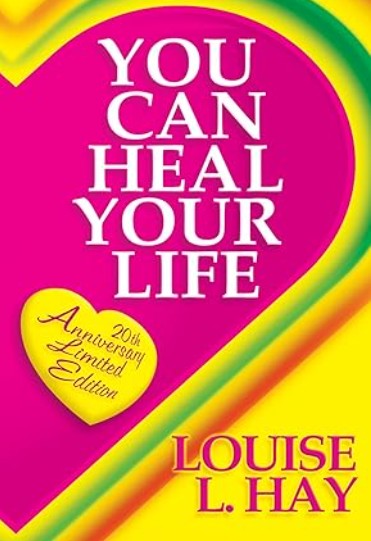
  • You Can Heal Your Life

    “How did we go from being a tiny baby who knows the perfection of itself and of life to being a person who has problems and feels unworthy and unlovable to one degree or another? People who already love themselves can love themselves even more.

    Think of a rose from the time it is a tiny bud. As it opens to full flower, till the last petal falls, it is always beautiful, always perfect, always changing. So it is with us. We are always perfect, always beautiful and ever changing. We are doing the best we can with the understanding, awareness and knowledge we have. As we gain more understanding, awareness and knowledge, then we will do things differently.”

    Excerpted from You Can Heal Your Life, by Louise L. Hay.