
Now vs then
What did success mean to you when you were in your twenties?
What does success look like to you now?
What did success mean to you when you were in your twenties?
What does success look like to you now?
Spring Cleaning time is here – will you be doing any cleaning?
How about cleaning up more than your living space?
Relationships?
Goals?
Write about Spring Cleaning.
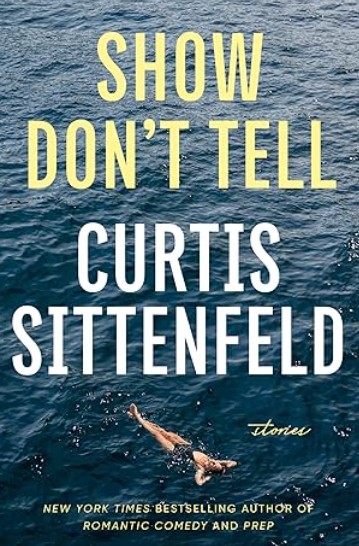
“Don’t write what sounds clever, write what’s true.” —Ethan Canin
Excerpted from “Novelist Curtis Sittenfeld Thinks Middle Age is Underrated,” by Lane Florsheim, The Wall Street Journal, March 1-2, 2025
Sittenfeld continued with, “That’s good advice for writing, but it’s also good advice for how to be a person. It can be hard to be sincere, but I think you have a much greater chance of connection with others if you are.”
Note From Marlene: You know what I say . . . Just Write!
But, what if you can’t remember what’s true?
“Write as honestly as you can about whatever it is.” Abigail Thomas
“Perhaps” is another blog post that might help when you can’t quite remember exactly what happened.
You know what to do . . .Just Write!
Writing Prompt: Write a break-up letter to something, or someone who brings tension into your life.
Prompt from Rebecca Evans and Gayle Brandeis, Musings & Movement Workshop.
Rebecca will be the Writers Forum Presenter on April 15 and April 22.
Free on Zoom
6:00 pm to 7:30 pm Pacific
Topic: Crafting Flash in Creative Nonfiction
“Unlock your superpower through conveying deep truths and universal human emotions in just a few short paragraphs.”
Note from Marlene: “Perhaps” is one of my favorite words. It’s an easy method of offering alternative ways of thinking. If you are writing a memoir and aren’t sure of the details, you could write, “Perhaps it happened this way.” If you are conjecturing, “perhaps” is a gentle way of saying, “It could have happened like this.”
Here’s what Guest Blogger Lisa Knopp has to say about “Perhapsing.”
At some point, writers of creative nonfiction come to a roadblock or dead end in our writing, where we don’t have access to the facts we need to tell our story or to sustain our reflection with depth and fullness. If only it was ethical to just make something up, we might think, or to elaborate a bit on what we know. But of course, then we wouldn’t be writing creative nonfiction. It might appear that our choices in such cases are to either abandon the topic or write a thinly developed scene or reflection.
In Woman Warrior, Maxine Hong Kingston offers another option. In the first essay, “No Name Woman,” Kingston’s mother tells her a brief, cautionary tale about her father’s sister in China, who became pregnant even though her husband had been away for years. On the night the baby is born, villagers raid the family’s house and farm. The aunt gives birth in a pigsty, and then kills herself and her baby by jumping into the well from which the family drank. Kingston’s father was so shamed by his sister’s behavior that Kingston was forbidden to ever mention her in his presence.
In order to write the essay, Kingston needed a deeper, fuller understanding of her aunt’s life and a clearer picture of what happened the night she drowned. Since the only information Kingston had was the bare-bones story that her mother had told her, Kingston chose to speculate an interior life for her aunt. I call this technique “perhapsing.” Notice in the following passage how Kingston uses perhapsing to imagine an identity for the man who impregnated her aunt (italics are mine):
“Perhaps she had encountered him in the fields or on the mountain where the daughters-in-law collected fuel. Or perhaps he first noticed her in the marketplace. He was not a stranger because the village housed no strangers. She had to have dealings with him other than sex. Perhaps he worked in an adjoining field, or he sold her the cloth for the dress she sewed and wore. His demand must have surprised, then terrified her. She obeyed him; she always did as she was told.”
The word perhaps cues the reader that the information Kingston is imparting is not factual but speculative. Kingston doesn’t need to use perhaps in every sentence, because we can see that one perhapsing leads to another. We can also see that when Kingston presents facts (“He was not a stranger because the village housed no strangers. She had to have dealings with him other than sex”), she does not begin those sentences with perhaps.
Elsewhere in the essay, Kingston uses other words and phrases to alert the reader when she’s moving from fact to conjecture:
“It could very well have been, however, that my aunt did not take subtle enjoyment of her friend, but, a wild woman, kept rollicking company. Imagining her free with sex doesn’t fit, though.”
She may have been unusually beloved, the precious only daughter, spoiled and mirror gazing because of the affection the family lavished on her.”
By perhapsing, Kingston offers motives, actions, justifications, and specific details that add richness, texture, and complexity absent in her mother’s account, without crossing the line into fiction. Kingston believed that by remaining silent about her desperate and defiant ancestor, she was participating in her aunt’s punishment. By perhapsing, Kingston freed both herself and her aunt from the traditions that bound them.
Perhapsing can be particularly useful when writing about childhood memories, which are often incomplete because of a child’s limited understanding at the time of the event, and the loss of details and clarity due to the passage of time.
Susan Griffin offers a fine example of how perhapsing allows a writer to bring detail and understanding to a memory of a long-ago event. In “Red Shoes,” an essay in her collection The Eros of Everyday Life, Griffin recounts a childhood memory in which her grandmother gave her a pair of red shoes that she coveted. This memory is essential to the essay because it serves as the springboard and touchstone for Griffin’s musings on such dichotomies as mind versus body, domestic versus private spheres, public versus private memories, and genre (fiction versus nonfiction; detached, intellectualized essay versus intimate memoir). In the following segment, notice the various ways in which Griffin signals her uncertainty as she presents her memory of being given the red shoes – if, indeed, she was given the shoes (italics and ellipses are mine):
“I was, I suppose, shopping with my grandmother in the department store with the X-ray machine that made a green picture of the bones in my feet. I have the vague feeling my grandmother finds red impractical. . . . I cannot remember whether or not my grandmother let me have those shoes. . . . Perhaps she did buy me those red shoes. I can see them now in my closet which was also her second closet, the closet of the black silk robe, the place where she kept her rarer treasures, her two fur coats, worn only on the most special occasions. . . . and, am I embellishing here, her sweater with the rhinestones on it, or were they pearls?”
When an author’s memories of concrete details are sketchy or absent, the technique of perhapsing not only allows her to recreate the scene effectively, it also helps establish her as a reliable narrator. Because Griffin admits what she doesn’t know and tells me when she’s speculating, I trust her to be a reliable narrator and follow her willingly through her other memories and complex, philosophical wanderings.
Writing Exercise:
Select a passage in one of your essays that could be made richer and fuller through the use of speculation. If your memory of the time you learned a family secret is fuzzy and incomplete, “perhaps” details and plausible dialogue. If the person you’re profiling can’t or won’t say why he began playing the banjo when his wife left him, “perhaps” some likely motives. If you and your family don’t know why your grandmother inserted such a peculiar clause into her will, “perhaps” plausible motives. In addition to perhaps, other words and phrases you can use include maybe, suppose, if, what if, might have/could have, possibly, imagine, wonder, perchance.
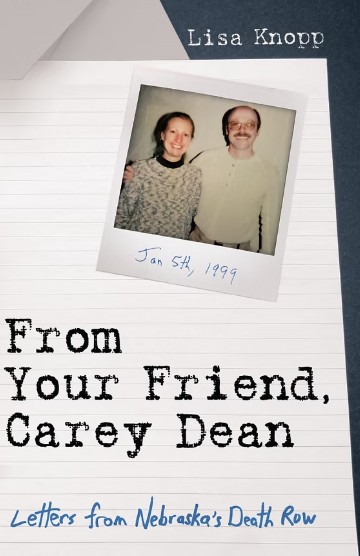
Lisa Knopp is the author of “From Your Friend, Carey Dean: Letters from Nebraska’s Death Row”(2022), a memoir/biography. When Lisa visited Nebraska’s death row in 1995, she couldn’t have imagined that one of the inmates she met that day would become a dear friend. For the next twenty-three years, through visits, phone calls, and letters, a remarkable, platonic friendship flourished between Knopp, an English professor, and Carey Dean Moore, an inmate.
Lisa was born and raised in Burlington, Iowa, a Mississippi River town. She was educated at Iowa Wesleyan College, Western Illinois University, and the University of Nebraska-Lincoln. Since 2005, she’s been a professor of English at the University of Nebraska-Omaha where she teaches courses in creative nonfiction, including food writing, travel writing, and a seminar in experimental forms
Knopp is an associate professor of English at the University of Nebraska-Omaha and a visiting faculty member in Goucher College’s low-residency MFA in Creative Nonfiction program in Baltimore.
Memorable writing that sparks imagination. Lean in. Hear the writer’s voice on the page.
By Diane Dupuis
Dancing can transport you as you get lost in the music and lyrics, simply connecting with the beat, and potentially learning how truly magnificent our bodies are. We are all born to dance. Look at children. They dance in their seats long before they can walk. They don’t even need music. Unfortunately, as we grow, we learn to be self-conscious or feel “not good enough.”
Many people stop dancing when the joy is gone, and all they feel is pressure. Added to that is the pressure of having the “perfect” form and the “perfect” dancer body.
Some dance classes can add the stress of competition or feeling the need to fit in.
Many studies have highlighted the amazing health benefits of dancing. Not only is it good for your heart and lungs, but it helps build your endurance and flexibility.
As we age, we need to find ways to improve our strength and balance. Dancing helps reduce joint pain and stiffness. The mental benefits of dance keep depression and dementia at bay.
Imagine always looking forward to exercising. We know how important it is to move our bodies and how wonderful those yummy endorphins feel afterwards. But many times inertia or our belief of not being a good dancer will stop us from getting up and trying. I have thankfully found GROOVE dance to be an amazing outlet for my energy and worries, allowing myself to get lost for an hour in the joy of dancing.
I am a single mother of an amazing son. Being an administrative assistant is what has paid the bills all these years, but dance is what pays my soul. I started dancing when I was three years old, but took a very long sabbatical from the age of six until my mid 40’s.
I wasn’t very happy with my life and went on a journey to find more things to bring joy. Every minute of every day is a choice. I decided to choose JOY and HAPPINESS!
In 2011 I found a local flash mob that was happening soon, so I signed up and went to classes to learn the steps. Just like that I was hooked on dancing again. When I reconnected with dance I realized how an hour can pass so very quickly when doing something I love. The leader of the flash mob happened to be the Master Trainer in Montreal of a movement called The World GROOVE Movement – which is a very simple dance exercise class with super easy steps that you get to do your own way. No more feeling like a dummy, like when I couldn’t keep up in other aerobics dance classes. I was quickly hooked and two years later became a facilitator, the day before my 50th birthday, allowing me to lead GROOVE dance classes in my hometown of Montreal.
The World GROOVE movement has five GROOVE truths which tend to spill over in our everyday lives:
I truly believe that EVERYbody can dance – making EVERYbody the perfect dancer.
I have dealt with several health issues over the years, including melanoma, migraines, arthritis, and fibromyalgia. Being able to move my body in a way that feels just right has been a life saver. Many exercise modalities believe in “no pain, no gain” but GROOVE is the opposite. Always respecting and listening to your body and allowing it to move in a way that feels best to you has been life changing.
I like to encourage self-love in my classes. I play lots of songs about love and encourage everyone to sing it to themselves first and foremost.
We are in the longest relationship of our lives with our bodies – let’s stop taking our body for granted and let’s show it love every single day!
Excerpted from “The Write Spot: Writing as Path to Healing,” available from your local bookseller, and as a paperback and ebook from Amazon.

I bet you do this and perhaps don’t know it has an official name, or many names . . .
Words that create new words when spelled backward are called: heteropalindromes, semordnilaps, semi-palindromes, half-palindromes, reversgrams, mynoretehs, reversible anagrams, word reversals, or anadromes.
The term “semordnilap” is a playful invention. Though the term is relatively modern, the concept has been used for centuries.
Lewis Carroll is known for creating “Semordnilap” (the reverse of Palindrome).
Examples of semordnilaps are found in the works of James Joyce, particularly “Finnegans Wake” (1939).
Joyce was known for his experimental use of language, and “Finnegans Wake” is filled with complex puns, wordplay, and linguistic tricks. Although the book primarily focuses on palindromes and complex word formations, it also features instances where words and phrases take on new meanings when reversed or rearranged. Joyce’s innovative approach to language helped cement semordnilaps as a legitimate and intriguing form of literary expression.
Semordnilaps have made their way into various forms of literature and pop culture, adding a layer of creativity and wit.
For instance, in the Harry Potter series, the mirror in the Room of Requirement, called “Erised,” spells “Desire” backward and reflects the deepest desires of those who look into it.
The above is excerpted from “Words Spelled Backwards to Form Other Words,” by Amandah.
Writing Prompt: Forwards and backwards.
Use these words in your writing
time – emit
spot – tops
bad – dab
hey – yeh
eh – he
not – ton
now – won
was – saw
straw – warts
bat – tab
brag – garb
buns – snub
decal – laced
deer – reed
desserts – stressed
draw – ward
drawer – reward
evil – live
flow – wolf
gab – bag
knits – stink
lap – pal
pool – loop
mood – doom
mug – gum
nuts – stun
part – trap
paws – swap
pets – step
pins – snip
snit – tins
tide – edit
Note:
A list of Palindromes on The Write Spot Blog
Memorable writing that sparks imagination. Lean in. Hear the writer’s voice on the page.
A Break-up Letter
By CM Riddle
Dear Time,
Forget You!
I am tired of the way you sneak up on me. Stealing moments and making plans that take forever to prepare, then the event flies by.
I long for the days of following the sun and the moon and using its rhythm to play my own tune.
You cause great stress upon me, as others in my life have depended on you so much that they expect me to follow you, too.
Timecards, appointments, luncheons, and for God’s sake, Christmas!
Give me a break, would you please? I mean, the way you slip through my fingers!
And as if the ticking tocks you whisper in my ear are not enough, you decided to line my face and give me grey my hair.
I need to get down and up slowly these days, and that is all because of you!
You promised me a life, a long life with plenty of time, but here you are, stealing the moments, tracking the calendar, and honestly, I feel thrown under the bus every time I cancel a plan or run late, or just abandon ship!
When did punctuality join this relationship? I am not into a threesome, but here we are. You, me,and having to be punctual. Well, screw that I say! Leave me to my internal clock, I don’t need you. I hate your face and the tattooed numbers around it. Every version of you brings stress and panic, fear, and internal mayhem.
It’s easier to say tomorrow or next week, next month – with you – you insist on an hour and minute, I know by the hands all over your smug face. It’s the truth and you know it.
I breathe easier without you clutching my wrist or when I “forget” to replace the battery in your giant face in the living room. I like it when you are disabled and oh-so-easy to forget!
I can go on all day, all night about my pitiful relationship with you, but you are a giant ass-hat and when we are through you will still march on. As if I didn’t even exist for one second.
Time heals, time repairs, time is order and time is fair. Oh, really? I don’t care.
I am through with you and don’t forget, you heard it here first, that you are nothing more than a curse.
You may not hear it every day. But there are sighs and cries, and dismay.
The only time someone has ever had anything good to say about time is THANK GOD THAT IS OVER! Whatever came their way has passed and that is the ONLY good thing about you.
Let’s not meet again.
Sincerely, the best person that ever came your way.
Bye , Bitch!
Read more of CM’s writing: Wild Man of the Hunt.
Tina Riddle Deason writes under the name CM Riddle. She is an author, creator, mother, grandmamma, and a High Priestess. She has published several articles and books, including those about rituals and ceremonies. Tina lives with her husband and “fur-babies” in Rohnert Park, CA.

Kali White VanBaale – Editor-at-Large of Past Ten:
Where were you on this day ten years ago? So often we’re told to “be present” and “live in the now,” but in reality we have to look to the past in order to understand and make sense of the present. What I love about Past-Ten is that it embraces this duality—that reflection of one’s past doesn’t have to be an act of regretful self-flagellation, but can instead be an act of self-discovery and hard-earned wisdom others can learn from. Perhaps “living in the now” isn’t a real thing, because now is inextricably tied to was, and both must be lived, and contemplated, simultaneously. Past-Ten aims to explore the beautiful and complex knots of personal histories.
Past Ten Guidelines (from their Submissions Page):
The Basics:
Tell us a story about where you were ten years ago on a specific date.
For your reflection, try to recall what you were doing at the time, focusing on emotion and sensory details.
How did you feel about yourself and your life at the time?
In that moment, could you have imagined yourself ten years later?
Presently, are you where you thought you would be?
Tell us a story that conveys how you feel now about the person you were then.
Your submission can be in prose or poetry, illustrations/paintings, or another form of visual art—or all of the above! Go bananas.
Guidelines:
