“It is a relatively little-known fact that over the course of a single year, about twenty million letters are delivered to the dead.”— “The Girl With No Shadow” by Joanne Harris
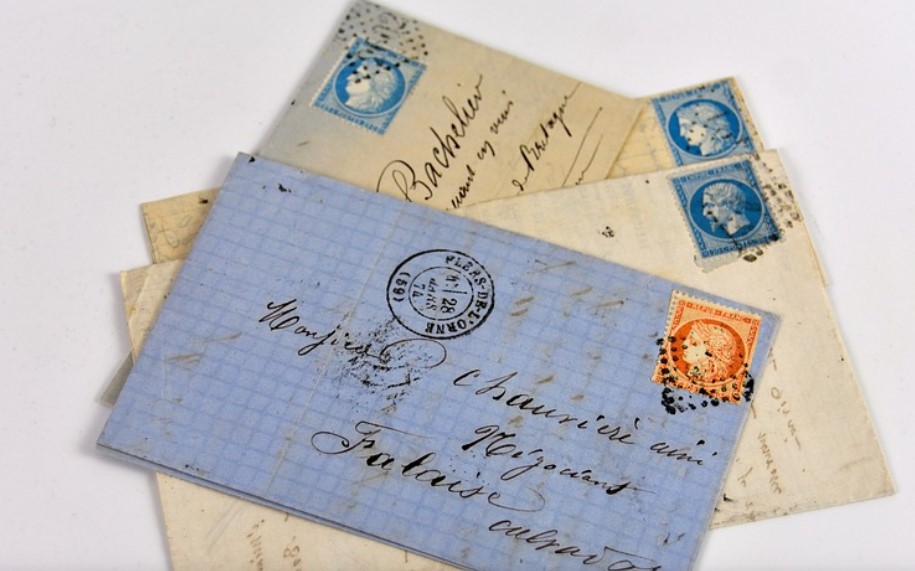
Prompt: Write about a letter delivered 25 years after it was written.
Or 33 years after it was sent.
Or 18 years.
You can write from the point of view of the recipient, the sender, or both.
Or write about the unintended recipient . . . the person who now lives at the address the letter was sent to.
Does the letter reveal disturbing or euphoric news?
You get to fill in the missing words. It’s sort of like Mad Libs.
For example:
More than one way to skin a cat becomes: More than one way to [verb] a [noun].
Ready? There are no wrong answers!
It’s [verb ending in “ing”] [noun] and [noun]
You can’t [verb] a [noun] by its [noun]
The [noun] [verb] always [adjective or noun] on the other [noun]
[Verb] your [noun] right
It’s an uphill [noun]
[Verb] between the [plural noun]
A [noun] is only as [verb] as its weakest [noun]
A [noun] and his [noun] are soon [verb, past tense]
A [noun] of a different [noun]
A [noun] of a [number] [verb] begins with the first [verb]
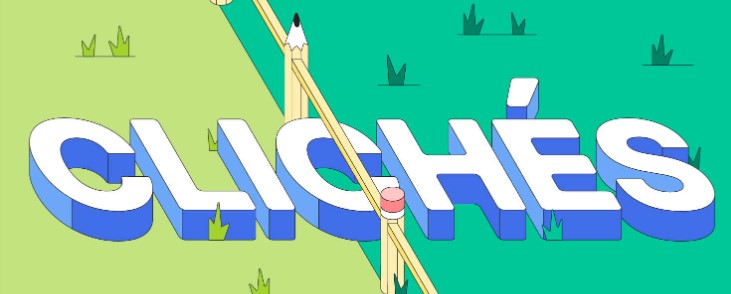
Whatever responses you came up are fine. Can you use any of your re-imagined cliches in your writing?
Clichés used:
It’s raining cats and dogs
You can’t judge a book by its cover
The grass is always greener on the other side
Play your cards right
It’s an uphill battle
Read between the lines
A chain is only as strong as its weakest link
A fool and his money are soon parted
a horse of a different color
A journey of a thousand miles begins with the first step
Definition of cliché
A cliché is a tired, stale phrase or idiom that, because of overuse, has lost its impact. What was once a fresh way of looking at something has become a weak prop for writing that feels unimaginative and dull. Clichés are what you write when you don’t have the energy or inspiration to think of a new way to express an idea.