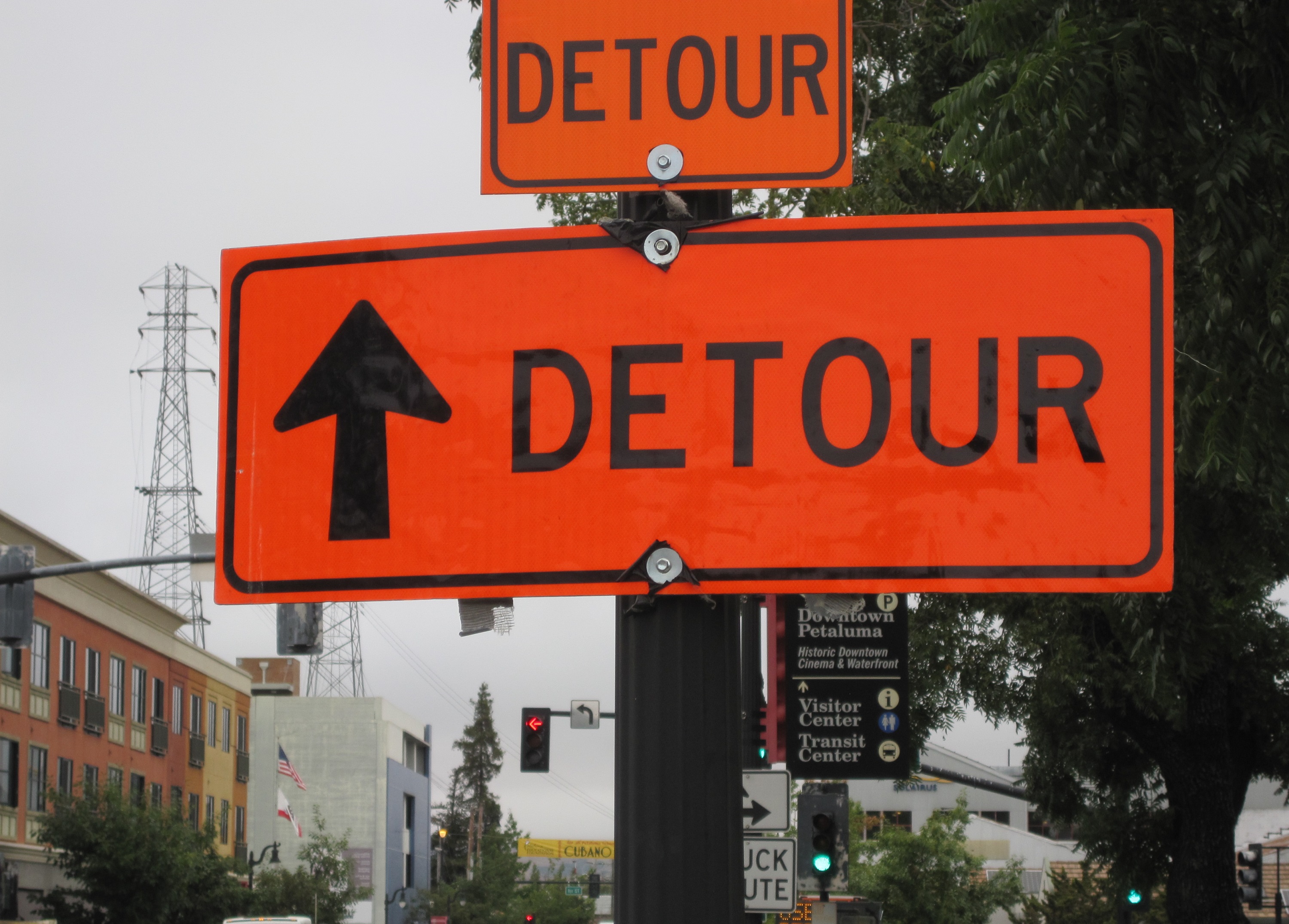
Write about a detour you have taken.
Or write about a detour someone you know has taken.
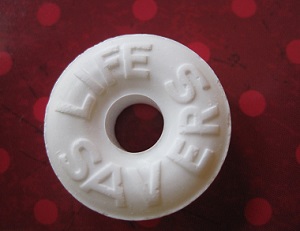 Write about saving a life. Someone’s life you saved, or someone who saved your life.
The save could be literal: CPR was performed, pulled from water, put out a fire, rescued from a snarling animal or a threatening situation.
The save could be inspirational: Something read in a book, a magazine, a placard, a wall hanging; a mental shift; a realization; an epiphany; something that was said; a behavior change; a belief change.
You get the idea . . . Saved. However you interpret this. Just write!
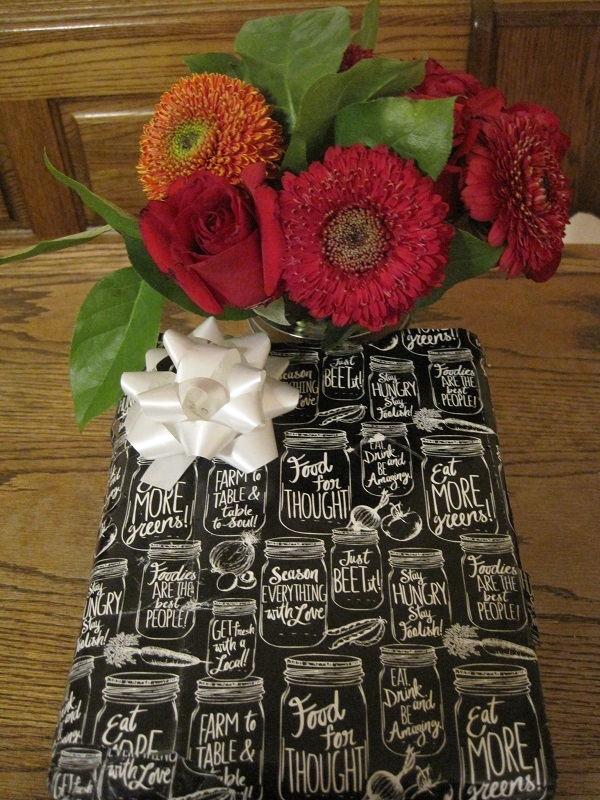 A friend delivered a gift wrapped in black and white paper with sayings on canning jars.
Today’s prompts are inspired from that gift wrapping paper. Choose one to write about. Or choose several:
Food for thought.
Foodies are the best people.
Season everything with Love.
Just beet it.
Stay hungry – Stay foolish!
Eat. Drink. And be amazing.
Eat more greens.
Farm to table & table to soul.
 Write about a dream you have or have had.
Could be a night time dream.
A day dream.
A dream of something you long for.
Turn your dream into a poem: haiku, pantoum, or any form of short piece that works for you.
Share your dreams. Writing them, posting them, might help shed light on questions you have.
Giving your dreams “air” . . . letting them see the light of day might help manifest them.
Go for it. Just write!
I bet you have heard “Show. Don’t tell.” What does that mean? And how does one do it?
Answer: Sensory detail.
As described in Imagery and Sensory Detail ala Adair Lara Prompt #277:
 Not interested in making a list? You are welcome to use any of the 33 ideas listed below to start sensory writing. Or just look around, choose items within your view, and write, using sensory detail, of course. Scroll to bottom of this post for links about using sensory detail in writing.
Expand these images into full sentences, using sensory detail. Write as if you had to describe these visions to someone who has never seen or experienced these things.
What do these things look like? How do they sound, taste, feel, smell? Answer these questions and that’s using sensory detail in writing.
Write a sentence using these impressions, expand into a paragraph, a short story, a poem.
Posts on The Write Spot Blog about sensory detail:
Sensory Detail – Sound
Sensory Detail – Smell
Sensory Detail – Taste
Sensory Details – Kinesthetic, motion in writing
The “Queen of Sensory Detail” explains how to how to describe a character that gets into the essential details of the person: Elizabeth Berg Shows How To Demystify Character
“Write five images every day, for seven days, using as many of the senses as possible.”— Adair Lara
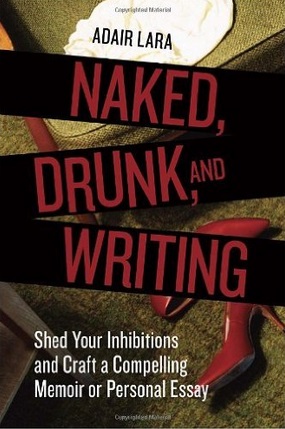
From Adair’s book, Naked, Drunk, and Writing:
“Writing is turning your thoughts, abstractions, generalizations, and opinions back into the experiences you got them from.”
Adair’s example:
“Not ‘women my age become invisible,’ but ‘they handed drinks around and forgot me, again.’”
Using imagery involves the details about what happened.
Show what happened so that readers can see the scene, hear the sounds, feel the sensations, taste the elements, and smell the aroma.
Adair advises, “. . . every time you write a sentence, ask yourself, How can I show this? Try to get image and detail into every sentence. ”
 Tidbits from Chapter Six, Using Images and Details:
“We want experience, not information. ‘Joan was distressed’ is information. ‘Joan looked away’ is an image. The reader notices Joan looking away, and has the pleasure of concluding for herself that Joan is distressed.”
Today’s writing prompt is the same one Adair assigned to her students on that hot August night in the octagonal room that served as her writing classroom, the room in the sunny yellow Victorian, where we had to walk up a gazillion stairs to reach the front door. I so want to add, . . . and where we were greeted by her tail-wagging, smiling pooch, but that would be too much, wouldn’t it?
Writing prompt: Write five images for seven days using as many of the senses as possible. Set aside to simmer.
Stir the imagination when re-reading your list, looking for images that call to you, that want to be sniffed out, that won’t fade away, images that linger.
Use that imagery to write whatever comes up for you.
For more creative and juicy writing ideas, pick up a copy of Adair Lara’s book, Naked, Drunk, and Writing, with over seven pages of “Suggestions for Writing” as Adair calls these writing prompts.
Writing Prompt #276 and my freewrite in that post were inspired from Adair’s assignment first encountered on that hot August night in the octagonal room . . .
What are vegetables good for, besides eating?
 Some gardens are bursting right about now with zucchini, green beans, summer squash, cucumbers, yellow squash, kale, rhubarb, patty pan squash, lettuce, have I mentioned squash?
Here in northern California, growing squash is easy and so abundant that we don’t leave our car doors unlocked, or we might find a bushel of zucchini on the seat.
Write about other things that vegetables can do.
Inspired from Adair Lara‘s writing workshop.
Write about new uses for vegetables.
 Write about something you do not want to do.
Will you end up doing it anyway? Will you be bitter, annoyed, resentful?
Will you do it with grace, composure? Or will you rant and rave the whole time?
Maybe you just won’t do it.
Maybe it’s too silly to even think about. Or too petty, not worth your time.
Write . . . just write about something you don’t want to do.
Excerpt from I Could Do Anything . . . If I only knew what it was, by Barbara Sher
Rescuing Your Past
Something inside you is too loyal to permit you to turn your back on everything you loved and simply walk away. No matter how many times people tell you to let the past go, it’s never possible. You’ll never move wholeheartedly into the future unless you take your beloved past with you. And that’s exactly as it should be.
There’s no reason to turn your back on a happy past. Sometimes we try to turn away from the past because we feel it somehow betrayed us. It’s as though we loved our past, but our past didn’t love us. So we go on strike and pretend we don’t care, as if to punish fate for being unkind. Fate never cares, of course, so we only hurt ourselves.
Prompt: What do you pretend to not care about?
I’m thinking about our connections with one another. This excerpt seems timely.
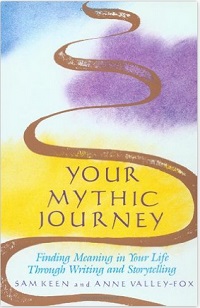 Excerpt from Your Mythic Journey by Sam Keen and Anne Valley-Fox
“Pre-modern people didn’t think of themselves as individuals — they were members of a tribe as well as of a family. Ancient philosophers knew that human dignity begins with ‘We are a people, therefore I am.’ Modern people are tribal too but we call our tribes by different names — churches, corporations, states, nations. Each of us was nurtured within and shaped by several corporate bodies, voluntary organizations and professional corporations that molded our values and behavior — schools, athletic teams businesses, clubs, temples, and local, national, and international governments.”
Prompt: I am from . . .
Or: What uniforms or emblems have you worn?
Or: What groups have you been a member of? Brownies, Blue Birds, Daisies, Girl Scouts, athletic groups, sorority, secret clubs.
