Blog

  • Re-visioning aka editing

    “An editor’s  job is to make you, the author, look good and save you from embarrassing mistakes.” — Unknown source

    Hiring an editor is like looking in a mirror before you leave the house, checking to make sure everything is where it should be and nothing is showing that shouldn’t be showing. — Marlene Cullen

    Editing is like a captain having a good crew to help steer the craft. — Marlene Cullen

    Let’s talk about editing. Or, as I like to think: Re-visioning.

    Some writers love to edit . . . making their writing better and better.

    Other writers loathe to edit . . . finding it tedious and nerve wracking.

    Some writers are in the middle, or elsewhere, on the continuum.

    The best scenario:

    Writers and editors work together as they dovetail their skills and expertise to come up with a product that is ready for publishing.

    It’s a collaborative effort. 

    Editors are totally valuable and necessary to fact-check, spot-check, double-check and to make you, the writer, look good.

    A brief overview of editing.

    The Revision or Critique Writing Group, working with peers, sharing manuscripts, helping one another to produce polished work.

    The Developmental Editor can act as a coach or personal cheerleader and looks for continuity, discrepancies, clarity, and overall story development in terms of character, setting, plot, theme, point of view. Once these areas are addressed, the manuscript is ready for copyediting

    Copy editing involves line-by-line checking for grammar, punctuation, spelling, formatting and consistency. A copy editor checks facts; is it likely someone would travel from Mill Valley to Oakland on the Golden Gate Bridge?

    Proofreading involves looking at the manuscript for typos, misspellings, inconsistencies in spellings or capitalizing.

    Editors and proofreaders want authors to look good and their manuscripts to be polished and professional.

    The Write Spot blog has many posts about editing.

      Articles about Editing

    3 Common Fears of Hiring a Freelance Editor by Hannah de Keijzer (on Jane Friedman’s Blog)

    Is It OK to Ask for Before/After Examples from a Freelance Editor? By Hattie Fletcher (also on Jane Friedman’s Blog)

    Jane Friedman’s Blog

    Do You need a developmental editor? By Shirin Yim Leos on The Write Spot Blog

    Doubt is the Devil by Matthew Felix. also on The Write Spot Blog

    The Write Spot Blog

    Best wishes for smooth sailing with your writing and with re-visioning. 

    #justwrite  #iamwriting  #iamawriter
  • Passions

    Going through an old (paper) file folder, I found something I wrote around 2011:

    I am passionate about writing. It is my joy to find the exact right word for what I’m looking for.

    Some people work crossword puzzles for a hobby. If there was such a hobby for finding precise words, that’s what I would do.

    Well, it is what I do!

    Grant Faulkner also appreciates discovering the right word, as described in his Substack essay, “A Grab Bag of Trinkets, Flotsam, Jetsam, Doo Dads, Dad Doos, Rusty Objects, Found Objects, Attempts at Erudition—and More (but not less):

    “Words have halos, patinas, overhangs, echoes.” —Donald Barthelme

    “I steal “frotteur” from James Salter, who said, “I’m a frotteur, someone who likes to rub words in his hand, to turn them around and feel them, to wonder if that really is the best word possible.”

    As a frotteur of words, I love this quote, because a word is never a definite thing. A word holds textures and nuances and surprises. It’s erotic, shape-shifting, enticing, and elusive.” — Grant Faulkner

    Back to me: Yes! Simply yes.

    Your turn: Write what you are passionate about.

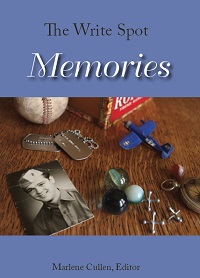
    Note: “The Write Spot: Memories” was carefully curated to make sure all the words are “just right.”

    #justwrite #iamawriter #iamwriting

  • Lyric Essays

    “A lyric essay is a type of creative nonfiction that fuses personal essay with poetry to tell a powerful story or reinforce a primary message.”

    “A meditative essay encourages contemplation, wonder, and curiosity.”

    Example: “The Death of a Moth,” by Virginia Woolf.

    A collage essay is a collection or patchwork of thoughts, of found things, that together point to a greater whole.

    Example: “Going to the Movies,” by Susan Allen Toth.

    A braided essay weaves multiple strands together with the goal of creating a work that becomes greater than the sum of its parts.

    Example: “A Braided Heart” by Brenda Miller.

    The hermit crab essay takes on the form of the content type it inhabits.

    Examples:
    Solving My Way to Grandma,” by Vivian Wagner, written as a crossword puzzle.
    Son of Mr. Green Jeans,” by Dinty W. Moore is written as a glossary.

    In a counterpoint essay, the writer alternates between two narrative strands to convey a larger truth.

    Example: “The Search for Marvin Gardens,” by John McPhee.

    Excerpts from “5 Ways Into Your Lyric Essay,” by Kate Meadows. Writer’s Digest magazine, Jan/Feb 2024.
    Your Turn. Choose a prompt and write a lyric essay.

  • Write What You Know: What Does That Mean, Exactly?

    Guest Blogger Dixie Somers writes:

    If you’re a writer, you’ve no-doubt heard the phrase “write what you know” in every workshop you’ve attended. But what does that actually mean? Should you only write about your personal experiences? Do you have to be an expert on a topic to write about it? Not necessarily! To get a better grasp on this common writing tidbit, I’m here to break it down and help you find what you “know.” So grab your pen and paper (or keyboard) and let’s dive into this together.

    What is “Knowing?”

    To start, let’s define what it means to “know.” The Merriam-Webster dictionary defines it as having a clear perception or understanding of something. So when we’re told to write what we know, it means writing about things that we have a good grasp on and can easily convey to others. This can include personal experiences, but it doesn’t have to be limited to just that.

    This also doesn’t mean that you should restrict yourself to writing about your everyday life. If that were the case, nearly all of our novels, movies, and TV shows would be about waking up, going to work, and grocery shopping. Not the most gripping content, for sure. While these activities are no less real, needful, and common, it doesn’t mean that “writing what you know” should be restricted to just the mundane. In fact, the more you transform “what you know,” the more potential you have!

    Personal Experiences

    Writing from personal experience is one way to incorporate the concept of “writing what you know” into your work. Your unique perspective can make for powerful and relatable storytelling. Bear in mind that you don’t have to limit yourself to just your own experiences, either. You can also draw from the experiences of those around you, such as family stories, or even the latest research and learn about new topics to incorporate into your writing.

    By incorporating personal experiences into your writing, you add a touch of authenticity to your words. Personal experiences hold emotions, details, and moments that can be difficult to fully capture unless dictated. This also allows readers to connect with your writing on a deeper level, as they may have gone through similar experiences themselves. Some examples could be the death of a loved one, a moment of clarity you’ve had, or an unforgettable experience. Adding personal touches in your writing can make your words more engaging for readers, so don’t ever think your life is “too boring” to draw from. No two people’s lives are the same: embrace that variety that makes your life yours.

    Research and Imagination

    Another way to write what you know is through research and your own imagination. Take the time to dive deeply into a topic that interests you, whether it be through books, articles, or interviews with experts. Then use your imagination to put yourself in different scenarios related to that topic and see where it takes you. Combining knowledge gained through research with your own creativity can lead to compelling and well-informed writing that’ll reach out and grab anyone who comes across it.

    While these two topics aren’t the be-all-end-all, science fiction and fantasy hold tremendous potential for cultivating your imagination. These genres often take real scientific concepts or historical events and add a creative twist, resulting in rich and intricate worlds. Authors such as J.R.R. Tolkien (with The Hobbit and The Lord of the Rings), Ursula K. Le Guin (Tales from the Earthsea), and Mary Shelley (Frankenstein) have crafted entire universes based on their own extensive research and imagination. They’ve shown that by incorporating what you know with your creativity, you can create captivating stories that transport readers to new and exciting places.

    Another way to write what you know is through your own dreams! Dreams can be an intriguing, if not bizarre, source of inspiration and can often reveal deep-seated thoughts, fears, and desires that you may not be aware of in your waking life. But by paying attention to your dreams and incorporating them into your writing, you can add layers of depth and complexity to your work. As any writer knows, there’s nothing greater than seeing the ideas in your head come to life on a page.

    Emotions and Empathy

    Writing what you know also means tapping into your emotions and empathy. Even if you haven’t experienced something firsthand, you can still write about it by putting yourself in someone else’s shoes and trying to understand their perspective. By connecting with readers on an emotional level, you can create powerful and impactful writing that comes from a place of understanding.

    To better connect with emotions and empathy, try some creative exercises. These can include writing from the perspective of a different gender, age, or cultural background than your own. You can also try writing in different genres to challenge yourself and explore new perspectives. By continuously practicing these exercises, you’ll not only improve your ability to write what you know but also strengthen your understanding and empathy towards others.

    Next time someone tells you to “write what you know,” don’t feel limited or stuck. Instead, think about all the different ways that you can apply this concept to your writing. Draw from personal experiences, research and imagination, and emotions and empathy to create work that is meaningful, authentic, and uniquely yours. Remember, there’s no one way to “know” something—it’s all about finding your own perspective and using it to connect with others through your writing. Happy writing!

    Dixie Somers is a freelance writer who loves to write for business, health, and women’s interests. She lives in Arizona with her husband and three beautiful daughters. You can find her on Twitter (X) and Facebook.

  • Pick Up The Pace

    Quick pacing hooks readers, deepens the drama, creates and increases tension.
    How to pick up the pace:
    1. Start story in the middle of the dramatic action, not before the drama commences.
    2. Keep description brief. This doesn’t mean using no description, but choose one or two telling, brief details.
    3. Combine scenes. If one scene deepens character by showing a couple at dinner and a few scenes later they have a fight, let them have the fight at dinner.
    4. Rely on dialogue. A lot of the story can be carried by spoken conversation. Readers seldom skip dialogue.
    5. Keep backstory to a minimum. The more we learn about characters through what they do now, in story time, the less you’ll need flashbacks, memories and exposition about their histories. All of these slow the pace.
    6. Squeeze out every unnecessary word. This is the best way of all to increase pace. There are times you want a longer version for atmosphere, but be choosy. Wordiness kills pace and bores readers.

    Paraphrased from Writer’s Digest magazine, January 2006, “Pick Up the Pace.”

    Just Write!

    #justwrite #iamawrite #iamwriting

  • Failures as Opportunities

    “Life is trying things to see if they work.” — Ray Bradbury

    Guest Blogger Suzanne Murray:

    I recently met a man in line for coffee who works for a company that offers technology for grade schools that allows learning to be personalized to the level of the individual student so each can get the specific support they need. I love hearing about such innovative practices.

    As we talked he mentioned a report about why gaming is so popular among the young. Even though they experience an 85 to 90% failure rate as they play, they learn from their mistakes and get better in the process. “It gives them a safe place to fail” he said.

    I love that idea. “That’s exactly like creativity,” I responded. It’s why as a creativity coach I encourage people to fall in love with the process. Just like the experience of gamers, when we relax and play with the process we learn and grow and that feels really good. It’s also the only way we can create something new, original and authentic.

    Our culture and educational systems teach us that mistakes aren’t okay; that there are real negative consequences to making mistakes; that we actually can fail. Yet the only way we learn is by our willingness to fail, and discover what works and what doesn’t.

    So how do we give ourselves a safe place to fail, when the world around us doesn’t support that. What if our heart and soul know the value of failure. What is the safe place to fail is the love, kindness and encouragement we can extend ourselves from that deeper place of knowing regardless of how the world sees it?

    From my own years of writing I have had countless pages of stories and poems that never really took off and were never finished. I always instinctively knew that this was part of the learning process of being a writer. Enjoying the process without being attached to a particular outcome gave me a safe place to learn and grow. This allowed me to finish pieces that gave me a deep sense of satisfaction.

    I love the story of Steve Jobs, who after being fired from Apple, went to work for Pixar films and entered into one of the most creative times in his life. Rather than seeing it as a failure he saw it as an opportunity. Can we learn to do that for ourselves? What does our safe place to fail look like? How can we create that to ourselves?

    Wishing you the joy of playing with your creativity, Suzanne

    Originally posted on Suzanne’s Blog, Creativity Goes Wild as “Giving Yourself A Safe Place to Fail.”

    Suzanne’s many talents: Creativity Coaching, Writing Process Coaching & EFT Sessions

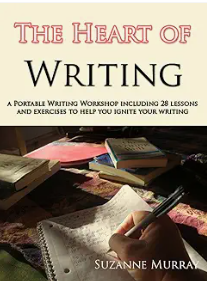
    THE HEART OF WRITING COACHING

    Do you want to ignite your creativity and show up to your writing on a regular basis or go deeper into the process and craft?

    Suzanne offers online coaching to support you and coach you through any resistance or problems along the way. She holds the space of unconditional acceptance and support to nurturing your unique voice and work on the stories that are important to you.

    The Heart of Writing eBook

    Jumpstart the Process, Find Your Voice, Calm the Inner Critic and Tap the Creative Flow

    CREATIVITY COACHING

    Suzanne offers practical, emotional, and soulful strategies to help you uncover your creative gifts and support you in expressing them.

    EFT (Emotional Freedom Techniques)
    Combining Western psychology with Chinese acupressure, EFT works to rewrite subconscious patterns and limiting beliefs that keep us stuck.

  • Faulkner: Intimations

    “ . . . our primary drive as humans is to be understood, be seen, and writers use words, these tools of precision and imprecision, to make ourselves understood, to make life understandable—to try rather, to endlessly try.” —Grant Faulkner

    To read more about Grant Faulkner and why he started his Substack platform “Intimations:  Writer’s Discourse,” click on Intimations.

  • Hope . . . Prompt #802

    Today’s Writing Prompt:

    Hope

    #justwrite #iamwriting #iamawriter
  • Time Machine . . . Prompt #801

    If you had a Time Machine, what day, what month, what year would you like to travel to?

    Why that time?
    Who do you want to be there with?

  • It Happened So Fast

    Memorable writing that sparks imagination. Lean in. Hear the writer’s voice on the page.

    It Happened So Fast

    By Robin Mills

    It happened so fast. A visit to the doctor. A diagnosis. A very quiet drive home, my mother, my father, my brother, and me.

    “I am so glad I just had my teeth cleaned” my mother said.

    Then six weeks later, just like the doctor said, it was over.

    Those six weeks were the fastest and the slowest.

    At first, she was awake, up, not in bed.

    She sat in her comfortable chair.

    We gathered around, talked, shared.

    Soon, she was tired, too tired.

    She got in bed. Initially sitting up, legs out, blankets over her legs, cats over the blankets.

    Then, soon again, she slid down, head on a pillow, blanket clutched up at her chin, cats on her stomach or riding the side of her body as if they were balancing on a fence or ridgeline.

    Mostly, she slept, but sometimes she wanted to sit in front of the full-length bathroom mirror. Sit, with a pink Afghan her mother had knit over her shoulders, clutched at her sternum by her bony fingers.

    She just sat and looked herself in the eye.

    Sometimes she wanted to sit outside in the coldness of early spring, snow still on the ground.

    We helped her out onto the porch into a beam of sun, wrapped her in blankets, a hat on her head.

    Let her sit, just sit, looking out over the garden she had perfected over the many years, out to the stream that ran in front of the home she designed and supervised in its construction, out across the meadow and up to the majestic mountains that rose to 10,000 feet above us.

    Then, again too soon, so soon, she just slept.

    Slept and spoke in her dreams to her parents and others.

    Sometimes she slapped at the air speaking to her mother or father as a small child who didn’t want to do whatever they wanted her to do.

    In the night from my room across the hall, I could hear her breathing.

    In the morning, the first sound I listened for her irregular breaths in, with sometimes a long hold, then out.

    I would wait to see if she would breathe in again.

    She did.

    Until the six weeks came.

    And at that moment, I sat next to her.

    Breath in, breath out, then nothing.

    It happened so fast.

    But at least, at least I was there.

    Robin Mills lives in Petaluma California. By day she is an American Sign Language interpreter. Her non-work hours are spent writing, swimming, hiking, photographing the world around her, traveling, playing in various art forms and swing dancing.