Blog

  • “Not only is it OK to risk failure; it’s necessary.” Anthony Doerr

    Anthony DoerrAnthony Doerr, winner of the 2015 Pulitzer Prize for fiction, believes “We need to live with the fear that we will stink, that no one will pay any attention, that we will fall like trees in an empty forest: the fear that we are going to take our glorious, flawless, nebulous ideas and butcher them on the altar of reality.”

    “Not only is it OK to risk failure; it’s necessary.”

    Marlene’s Musings: Feel better now? If a Pulitzer Prize winner can think it’s okay . . . no, it’s necessary to fail. . . then let’s all fail. No worries about your writing. . . Go for it. Just Write!

    Quote from “Costume Drama,” Real Simple magazine, October 2014.

  • Every day I fail.

    “I’m a novelist. Every day I fail. My drafts — when I complete them, which is not often —are inevitably shadows of what I had hoped they would be.” — Anthony Doerr

    Sound familiar? Writers often experience failure. . . whether it’s receiving rejection notices or failing to complete writing projects. But . . . to not try, really, is to fail. So, if you have unfinished short stories, plays, poems, manuscripts. . . dig them out, blow off the dust and see if you can get back into this project. If not. . . move on to a new piece of writing.

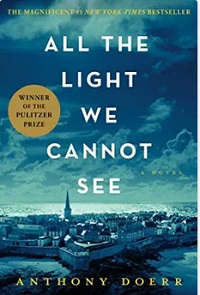
    Doerr.All the light we cannot seeAnthony Doerr was awarded the 2015 Pulitzer Prize for fiction. And yet, he has doubts about his writing, just like the rest of us. “I can’t ever fully execute the glorious and inarticulable dreams in my head. Even on my best days, I just manage to cobble together the failures of many other days and assemble an imitation of the original vision. Only months later, once something is published, does it become plain to me how many failures I needed to accumulate to arrive at something that feels remotely complete.”

    Marlene’s Musings: I know it’s hard to sit in chair sometimes and keep writing. But if you are a writer, or a want-to-be writer, that’s what you have to do. Get organized, get your water, settle yourself and . . . Just Write.

    Quotes excerpted from “Costume Drama,” Real Simple Magazine, October 2014.

  • Why should you submit to literary journals?

    Why should you submit to literary journals?

    June 2015 issue of The Writer magazine answers:

    “Even though many don’t offer payment, literary journals are a great way to get your writing’s foot in the editor’s door. Some writers may overlook smaller publications to concentrate on bigger projects, but doing so could be a mistake. Whether you’re looking to apply to an MFA program or want to build your publishing portfolio, publication in a literary magazine or journal can be a useful first step toward your dream career.”

    For the next few Saturdays, I’ll post information about literary journals as places you can submit your writing. I welcome your comments and suggestions.

    ~Marlene

  • Tweak, form, shape and sculpt . . . Prompt #161

    Choose one topic from below, these are prompts that have recently been posted here on the Write Spot Blog:

    Prompt #158: If pets could talk

    Prompt #159: Unforgettable

    Also Prompt #159:  Strange But True

    Prompt #160: Only in America

    Also Prompt #160:  Happy Endings

    Today’s writing prompt:  After you have written a freewrite (from above list), write one line for every four sentences from that freewrite. Take out all unnecessary words.

    Condense or distill your writing to the most important aspects.

    Tweak, form, shape and sculpt until you have a poem.  Then . . .

    Submit to The Voices of Lincoln Poetry Contest.

    WinnerNo fee to enter. You don’t have to be a resident of Lincoln to submit.  Send by July 25, 2o14  Go for it!


  • Suffering from a creativity dry spell? Look to your nighttime dreams.

    Guest Blogger Susan Audrey writes:

    I didn’t begin paying attention to my nighttime dreams until my dreamscapes started showing up in my waking life.

    The first instance was fairly benign: I dreamt of a man with dark hair, wearing a white, button-down shirt, standing to my right and talking on a pay phone (yes, this was awhile ago). And the next morning, after I dropped my kids off at daycare, I saw this exact scene: the same man, same hair, shirt, and pay phone. This really got my attention!

    I found out later that these are called precognitive or premonition dreams –– they show you the future. I wasn’t sure why this was happening at this time in my life. I was in my thirties and a single mom of two grade schoolers. It wasn’t until years later that I learned that our nighttime dreams are more abundant and more easily remembered during difficult and transitional times.

    Curiosity inspired me to read about, research, and train in dreamwork in the upcoming years, and most importantly, to keep a dream journal. I discovered that by exploring the images, metaphors, and feelings that emerged through my dreams, I had access to a wondrous, self-revealing and self-empowering stream of wisdom. One that’s always there –– and free! And, using this simple approach to cultivating “inner knowing” has helped me to better navigate my life and to get my creative juices flowing for all kinds of creative endeavors, including writing.

    Dreamwork helps us to jumpstart our creativity and keep it flowing in several ways. One is by providing a sort of emotional and physical house cleaning. The messages from our dreams can give us clues about how to work through emotional baggage we may be carrying, remedies that can heal our physical ailments, and ways we can let go of beliefs that may no longer serve us –– freeing us up to give our full attention and energy to embracing our creative sides. If we’re not obsessing about a love we lost or worrying about what to try next to soothe a backache then we’re more present when we sit down at our computer to write or in front of a canvas to paint.

    Our nighttime dreams also offer us an amazing resource for creating –– both as actual themes to work with or, metaphorically, as clues for how to proceed with our work. When we take actual images from our dreamscapes and write about or draw them, they come to life in ways we could never have imagined, revealing things about us we may have never considered. Yet, as we dive in to explore further, either with words or through visual art, what emerges can often feel quite familiar, like switching the light on in a forgotten room of a home we’ve always known. And rather quickly, we can find ourselves in that delightful and precious flow state from which our best creative work emerges.

    Viewed metaphorically, our dream images can also guide us in choosing subjects and approaches for our business writing and projects. We just need to do a little more digging to unearth these gems. For example, if you need to write a promotional piece or an article, you can “seed” your dreams the night before to discover how to start. This is an exercise in which you clearly ask for the information you are seeking by writing your request on a piece of paper and placing it under your pillow before you go to sleep.

    I know that to some, this may sound like an exercise in wishful thinking (one you might share with a child), but through years of experience working with dreams and much research in the approaches of renowned philosophers, psychologists, and authors, including pioneering dream analyst, Carl Jung, I’ve come to trust this process whole-heartedly and have seen amazing results transpire for clients and dreamwork circle participants as well as for myself. The answers to these nighttime inquiries will come, and they arrive in the form of metaphors, symbols, and, sometimes, strong emotions.

    For example, perhaps you’ve asked your dreams to tell you which approach you should take in writing a piece for a client, and a tiger walks through your dreamscape, slowly and methodically circling you. As you learn to work with your dream images and to trust the insights your dreams bring, you’ll learn to view such a scene as a clue, a suggestion as to how to proceed with your writing… slowly, methodically and going around and around your subject to see it at all angles. Or, the tiger itself could suggest the tone of your piece –– should it be colorful, lean, and wild? Should it be written from a hunter’s point of view (metaphorically, of course). You’ll know. Your gut and an inner aha! will be your guides.

    Dream images have led me to the best remedies for physical and emotional challenges; they’ve helped me to change my perspective about a situation to one that is more beneficial for all involved; they’ve provided a heads-up on future traumatic events, so that I could handle them with greater ease and skill, and they’ve kept my enthusiasm for life (and it’s many dimensions) alive. And, they continue to provide me with access to the infinite flow of creativity hidden in my unconscious and just waiting to break free.

    You can learn much more about dreamwork and how it can jumpstart your creativity at Susan’s Writers Forum presentation, “Learn How to Access Your Infinite Creative Flow Through Dreamwork,” on June 18, 2015, in Petaluma.
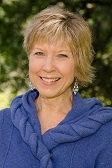
    Susan Audrey Susan Audrey is a multi-disciplined Dreamwork Practitioner who specializes in guiding individuals and groups through the fascinating and transformative journey of discovering the wisdom of their dreams. She has also worked as a writer and editor for various forms of media for over 20 years and is currently a writer for The Shift Network located at The Institute of Noetic Sciences in Petaluma.

    You can find out more about dreamwork at Susan’s Blog, The Night Is Jung.

     

  • Only in America or Happy Endings. Prompt #160

    Today’s Writing Prompt is either/or.

    Write about “Only in America.”

    Or write about “Happy Endings.”

    Today’s prompts are inspired by Voices of Lincoln Poetry Contest. Deadline: July 25, 2015.

    You don’t have to be a resident of Lincoln to submit to this contest, sponsored by Lincoln Public Library.

    Lincoln Library Poetry Contest

  • Inside myself is a place where . . .

    Inside myself is a place where I live all alone and that’s where you renew your springs that never dry up. — Pearl S. Buck

    Marlene’s Musings:  And that’s where writers come alive. . . from your imagination, you spin tales that inform, entertain, enhance and make life enjoyable. Keep writing!

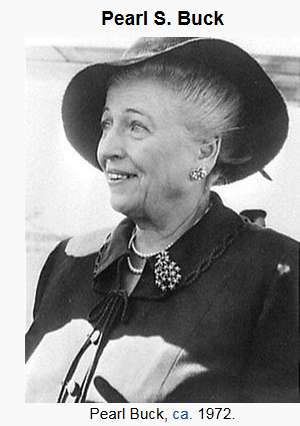
    Pearl S. BuckSomething I just learned: Pearl Sydenstricker Buck, also known by her Chinese name Sai Zhenzhu, was an American writer and novelist. As the daughter of missionaries, Buck spent most of her life before 1934 in China. Thanks, Wikipedia!


  • What is a freewrite and what is a writing prompt?

    So. . . what is all this talk about freewrites and writing prompts? What does it all mean?

    A freewrite is a style of writing that is . . . well. . . freeing. The writer hears or reads a word, or a phrase, and just starts writing. Often a timer is set, so there is the “under the gun” feel of a deadline, a limited time to write.

    Click here for more information about freewrites.

    I post writing prompts writing prompts, on The Write Spot Blog. Sometimes the writing prompts are fun and playful. Sometimes they inspire memoir type writing. Other times they work well for fiction writing.

    Mostly the prompts are what you make of them. . . you can go light and stay on the surface, skating on the edge, or you can go deep.

    This type of writing is an opportunity to explore and perhaps come up with ideas for writing or . . . for solutions to situations. . . or for personal growth and transformation.

    Shed your ideas about what perfect writing means.   Give yourself permission to be open to whatever comes up. Writing isn’t always about talent, it’s about practice and going into another dimension. Rather than write for an audience, write from an instinctual level.

    Creative writing is an act of discovery. Immerse yourself in writing. Let go of your worries and write. Write to a satisfying inner desire to go to a meaningful place.

    Go deeper into the recesses of your mind and really write. Write from the well that stores the fears. Let the tears come, let your stomach tie up in knots. It’s okay to write the story that is difficult to tell.

    Get through the barriers to go to a deeper level. See your story and tell it.

    Want to practice this freewrite type of writing? Right now? Ready? Here ya go:

    Sorrento.Street

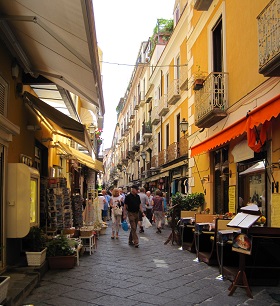
    Take an imaginary walk through your hometown and see what people and what places pop up. Take a few minutes to remember the smells, and notice what feelings come up as you walk through your town.

    Write what you remember about your town. Just write.


  • McSweeny’s Internet Tendency wants your humor

    McSweeny’s Internet Tendency is in the market for short, conceptual humor. “We strongly recommend reading through our archives to get a sense of the style of writing we’re after.”

    Editor Christopher Monks says, “We want to draw you [the reader] in quickly with a funny title and an easy-to-latch-onto concept.” Monks “looks for a mixture of lowbrow and highbrow humor, with reference to pop culture and current events.” — The Writer magazine, June 2015

    Length: 1,00 words is ideal

    Send: In the body of the email

    Payment: “There will likely be none. If there is any, it may come very late or in unusual currency.”

    Why you should submit to Tendency: “Writers don’t get rich writing for Tendency; however they often find their work reprinted on other literary websites.”

    Click here for submission guidelines.

  • Unforgettable, or Strange But True . . . Prompt #159

    Another prompt inspired by Voices of Lincoln Poetry Contest. Deadline: July 25, 2015

    Writing Prompt:  Unforgettable . . . or . . . Strange But True

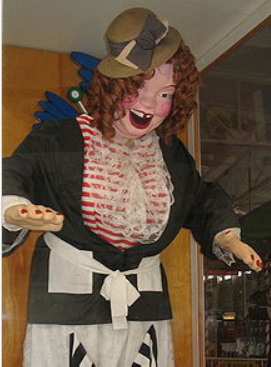
    Laffing SalLaffing Sal is “one of several automated characters that were built primarily to attract carnival and amusement park patrons to funhouses and dark rides throughout the United States. Its movements were accompanied by a raucous laugh that sometimes frightened small children and annoyed adults.”  Wikipedia

    One version of Laffing Sal currently resides at Playland-Not-At-The-Beach, which I had the “pleasure” of seeing and hearing recently at a friend’s birthday party.

    She definitely scared me as a child. I tried to avoid her when my family went to Playland-at-the-Beach in San Francisco, California.