Blog

  • Flesh out your characters. Prompt #131

    You can use this prompt for fleshing out your fictional characters or for characters in your memoir.

    In works of fiction, we think of characters. When writing memoir, we think real people. But, when you write about real people, they become characters in a story.

    With this prompt, you can create character profiles for the real people in your life and for your fictional characters.

    Prompt: Make a three-column list. Label the first column “What I know,” the second, “How I know it” and the third, “How I show it.”

    First column – create a list with one or two-word descriptions about the character. Second column – write down how you know the particular characteristics.

    For example, if the person is known to be cheap, in column 2, you could write, “brings own teabags to restaurants.” Or, “carefully saves paper bags for lunch, been using the same bag for six months.”

    Third column, How I Show It: Jot down short notes about how you might convey the characteristics to a reader. In the case of the cheap friend who brings his teabag to restaurants, you might write, “Scene: character pulls out several teabags from jacket pocket, just before entering restaurant.”

    Your turn: Bring your characters by showing vivid details about their everyday habits.

    This prompt was inspired from The Writer magazine, June 2005, “Frank Talk About Writing Your Memoir,” by Sol Stein

    Sidewalk artist                      Street kids                 Laundry machines and legs

  • Guest Blogger Clara Rosemarda – writing with depth and clarity

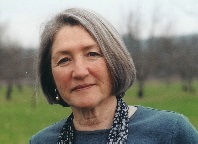
    ClaraGuest Blogger Clara Rosemarda reveals how to write with depth and clarity.

    Clara writes:

    Many years ago I took voice lessons from a master teacher. He worked with people
    who believed they were tone deaf. I was one of those people. My voice seemed flat as the ground I walked on, and I was too embarrassed to sing unless I was in a group large enough to swallow the sound of my voice.

    My teacher, robust and powerful, sat opposite me on the floor of his music studio. With full-bodied fingers born to make music he plucked the strings of his tambura going up and down the scale. Then he sounded a note and had me repeat it. At first I couldn’t reproduce the exact sound, but after a few tries and great concentration, I was able to. He told me I had a good voice which was a surprise to me. Once I got the hang of it, whenever I missed a note, he looked straight at me with his burning brown eyes, and asked where I had gone. Then he’d have me try again, and again, until I finally got it.

    These few lessons taught me that the problem was not with my voice, but my inability to stay focused and present. Although I was capable of deep concentration in many other areas, the life-long belief that I couldn’t sing disrupted my ability to listen and to replicate what I heard. Frightened that I would get it wrong, I tried to think my way through instead of trusting that if I listened I would be able to repeat the sound.

    Even though I don’t plan on giving a recital in Carnegie Hall or anywhere for that matter, I do enjoy singing now for the pure pleasure of it. Most importantly, I no longer consider myself tone deaf. I have developed the ability to concentrate when I’m singing, to listen deeply, and to be present with the sounds. When you are of two minds, neither one can be used to its fullest.

    The same is true with writing. When your mind is concentrated on a single thought or image, when you ARE the writing, and not jumping ahead of yourself, or thinking of HOW you are writing, you will write with depth and clarity.

    In the initial creation, all that is required is that you put pen to paper and keep your hand moving. Stay with your original thought, rather than allowing the editor to sit on your shoulder telling you not to say that, or how stupid this is, or what makes you think you’re a writer? To sound a clear note, you cannot be of two minds; your mind must be fully present and focused on a single point.

    EXERCISES:

    1. “His reflection in the mirror … ” Write for 1 0 minutes.
    2. “Walking through … ” Write for 15 minutes.
    3. “When I woke up that morning … ” Write for 20 minutes.
    4. Read these pieces aloud to yourself, listening mindfully, as if someone else had
      written them. What did you, the reader, hear that you didn’t hear as you were writing?

    CLARA ROSEMARDA M.A. is an evocative writing teacher, poet, memoirist, intuition counselor, and workshop leader. She has been in private practice in Santa Rosa, California for over thirty years where she works with beginning as well as mainstream writers. Clara teaches workshops at Santa Rosa Junior College and internationally. In her private sessions as well as her teaching she helps people connect to and act from their most authentic selves. She was co-creator and coordinator of the popular writers’ program, The Writer’s Sampler, of the Sebastopol Center for the Arts. Her prose and poetry are published in literary journals and anthologies. She is co-author and co-editor of the anthology, STEEPED: In the World of Tea (Interlink Publishing, 2004). Clara has two poetry chapbooks: “Doing Laundry” (a letterpress limited edition, Iota Press, 2013) and “Naked Branches” (WordTemple Press, Small Change Series, 2014).

    Note from Marlene:  If you have a chance to take a workshop with Clara. . . do it!  I did and it was a transformative experience.

  • Revealing Conversation . . . Prompt #130

    People talkingPretend we’re at a party, sitting together talking quietly. Then you see someone you know and you want to tell me about that person. They can’t hear us. What will you tell me about that person?

    Or: Imagine any two people having a conversation about a third person.

    With this prompt, you can practice writing dialogue, revealing more about the conversants than the object of their discussion.

    Remember what Ted A. Moreno said in yesterday’s quote, “Making a pronouncement, judgment or criticism about someone else reveals little about them, but reveals much about you.”

    We’ll expand upon these characters with the next prompt on The Write Spot Blog.


  • Making a pronouncement, judgment or criticism about someone else . . .

    “Making a pronouncement, judgment or criticism about someone else reveals little about them, but reveals much about you.”   — Ted A. Moreno

    Note from Marlene: I agree with Ted. Watch what you say and how you act, because your words and your actions reflect more about you than about the other person.

    However. . . this can also be used as a way to reveal your character’s traits (fictional character or real person). I know this isn’t what Ted had in mind . . . but it’s such a profound idea. . . I thought sharing it here, on a writing blog . . . might also be helpful as a way to reveal characters’ personalities.

    Watch for tomorrow’s blog post, where we’ll explore this concept as a method for character development.

    Ted A. MorenoTed A. Moreno, C.Ht.

    Creator of the Moreno Method for Life Transformation

    Hypnotherapist and Success Performance Coach

     Check out Ted’s book:

    “The Ultimate Guide to Letting Go of Negativity and Fear and Loving Life”

    Offices in South Pasadena and Covina

    (626)826-0612 / (909) 257-8260

    Phone Sessions Available

    Ted A. Moreno helps people quit smoking, let go of fear and anxiety, and create personal and business success.

  • Gemini Magazine Short Story Contest is open for submissions.

    Gemini Magazine Sixth Annual Short Story Contest is open for submissions.

    Open to any subject, style, genre or length. Send your best unpublished work.

    Grand Prize: $1,000

    Second Place: $100

    Three Honorable Mentions: $25 each

    Entry fee: $5

    Deadline: March 31, 2015

  • If you didn’t care what anyone thought . . . Prompt #129

    Sail SF BackgroundToday’s prompt:  If I didn’t care what anyone thought . . .

    Gather your supplies. Pen, pencil, paper and/or computer fired up.  Set your timer for 12-15 minutes and write.  Go for it!


    Photo by Breana Marie


  • Avoid clichéd characters. . . and more, from Guest Blogger Daryl Hajek

    Guest blogger Daryl Hajek discusses a writer’s journey.

    I was taught to learn to read and write at a young age, even before kindergarten. My parents had told me, because of my deafness, they were determined that I was going to learn to read and write. That was the beginning of my journey into reading and writing.

    As Stephen King says, “Read a lot, write a lot.”  I do this by reading two or three books (or ebooks) concurrently, but that’s a quirk of mine.  I also write at least one hour a day, up to eight hours, depending on my mood or how I’m feeling.

    Learn as much as you can about writing.  Take a writing course or two.  Get how-to books on writing.  Join a book club.  Network with other authors/writers online via social media.

    Get a professional editor which is an absolute must, no exceptions whatsoever.  Otherwise, unedited works show and may cause long-term regrets and embarrassments.  It’s most important to learn from your editor, as well.  I gained a healthy bit of edification from my editor such as eliminating redundancies and not repeating the same descriptive adjectives or adverbs in your narration, especially within the same sentence or paragraph.

    Keep expositions to a minimum so as not to drag the story down and bore the reader.

    Omit  the following dead/boring/over-used words:  was, actually, literally, quite, virtually, got, things, stuff, just, really, very, a lot, and action verbs ending in “-ing,” such as “running,” “skating,” “dancing,” and so on.  Instead, use action words like “he ran,” “she skated,” “they danced,” and so forth.  The reason is that these words weaken the author’s writing (in the narration), but it’s okay to use them in character dialogue because that’s how people talk.  Equally, leave out clichés, idioms, and slang from the narration except for character dialogue.

    Another thing to cut from writing are speech tags, such as “Gary muttered quietly,” “Melissa said bitterly,” and “Carl barked angrily.”  They also make for weak writing.  Stick with the traditional “he said/she said” way of writing.  In fact, “he said/she said” is practically invisible to the reader’s eye.  If the author needs to use speech tags, I’d recommend using them sparingly.

    Avoid clichéd characters, such as the typical black-cloaked villain with those smoldering eyes or the golden-haired Miss Goody-Two-Shoes.  Rather, make your characters realistic, like the average person, such as the guy next to you.  But, don’t make those characters boring.  Give each character a little something intriguing, add a certain idiosyncrasy (i.e., a nervous tic) or a condition (i.e., deafness or Asperger’s Syndrome).

    As a first-time deaf author of general mainstream mass-market fiction, if I can do it, so can you!

    Daryl Hajek is the author of Blood Blossom.  He is currently at work on his next novel.

  • Color. Prompt #128

    RainbowToday’s writing prompt:  Color.

    Write about color. Or, match an emotion with a color. Write about it.

  • Sometimes you just want to sit down and write.

    Sometimes we just want to sit down and write. No particular place to go. Nothing in particular to write about. Just enjoy the feel of pen across paper, or fingers flying atop keyboard. Sometimes it’s fun to have a writing prompt to play with. There are two places to explore on The Write Spot for writing prompts. One is here, on The Write Spot Blog. The other is here on The Write Spot Website. On this one, read the prompt on the plaque. Click on the plaque to read what others have written on the prompt.

    IMG_1904Follow your heart, let your mind wander, trust your intuition.

    Select a prompt. Set a timer for 12-15 minutes and just write.

    Discover where your writing path takes you.

    Photo by Breana Marie


  • Coffee House Press

    cup of joeCoffee House Press publishes literary novels, full-length short story collections, poetry, creative nonfiction, book-length essays and essay collections, and the occasional memoir. CHP does not accept submissions for anthologies. CHP also does not publish genre fiction such as mysteries, Gothic romances, Westerns, science fiction, or books for children.

    CHP looks for writing that instructs, inspires, and/or entertains the reader, and that does so with a unique voice. CHP currently publishes fourteen to sixteen trade titles annually.

    During the next reading period (March 1 – 31, 2016), Coffee House Press will accept electronic submissions through their online submissions manager.