Blog

  • Live in the world of your imagination and take young readers with you.

    Want to write books for children or young adults?  Here are some ideas for you.

    Excerpted from “Child’s Play,” Yvonne Coppard and Linda Newberry, March 2014 issue of The Writer Magazine.

    An author must find his or her own voice and style and use them to express concerns that are passionately felt and imagined. Good writing for children has the same qualities as good writing for any age group: What stands out is authority, the confidence to be what it is. It tells the reader that the journey will be worthwhile. To write well, an author must have an ear for rhythm, control of pace and awareness of what drives a story and engages a reader.

    The author needs the knack of evoking universal experiences from the particular, inviting the reader to share the trials and triumphs of the viewpoint character. There are no right ways to do this, and no wrong ways, either. What it takes is the commitment to live in the world of your imagination and the skill and persuasiveness to take young readers with you.

    Click here for information about: Writing Children’s Fiction: A Writers’ and Artists’ Companion (Writers’ and Artists’ Companions) by Yvonne Coppard and Linda Newberry

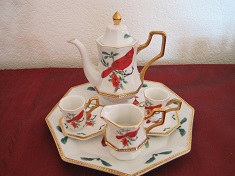
    child's tea setFor practice with this kind of writing: Write about a game you played as a child – Prompt #32, or An imaginary gift – Prompt #35 or an imaginary party – Prompt #64.

    Set your time for 12 minutes. Now, write. Just write.

  • Imagine you are invited. . . Prompt #64

    You're invited 2.2

    Imagine. . . . You receive an invitation to a party.

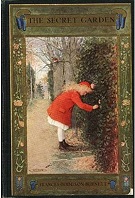
    The Secret Garden Book.1

    You are invited to dress as a character according to the book you are currently writing or reading.

    OR, you are invited to the type of party you’ve always wanted to be invited to . . .1950s cocktail? 1880’s garden party? Costume party? Bon voyage party? 


    Garden Party

    Options:

    ~Write about the invitation you received.

    ~Your thoughts, or your fictional character’s thoughts, as you or he/she anticipate the party. You're invited 1.1

    ~Write about a party you have attended.

    ~Write about a party you would like to give or attend.

    Invite.1

    Prompt: Imagine you are invited to a party . . .

    Invite.2

  • 3Elements Review seeks submissions using three specific elements . . .

    3Elements Review was founded to spark imagination, to provide a unique creative challenge, and to allow writers and artists a bit of fun with our three element prompts.

    We aim to distinguish ourselves from the typical literary journal through our unique approach to the creative process. Each issue begins with the posting of three elements and ends with a journal filled with the imaginative ways in which each writer and artist transformed those elements. We provide both emerging and established writers and artists a platform to share their unique voices and visions with the world.

    CURRENT THREE ELEMENTS: Carnival, Residue, Maudlin

    Submissions due by June 1, 2014, September 1, December 1 and March 1

    Click here for 3Elements Review submission guidelines.

    Brief Submission Guidelines for 3Elements Review:

    We appreciate good writing in any genre. We especially like edgy writing that offers insight into darkness. We prefer character-driven stories as opposed to plot-driven ones.  We relish a piece with a great deal of heart and more than a little bit of Truth (note the capital “T”).

    We want to read a story that makes us feel edified or philosophical or amused or creeped out or angry or melancholy or inspired or, best yet, all of these things together. We want to read a story we simply can’t put down.

     3Elements Review is a themed literary journal, hence the three elements, and All THREE elements  given for the submission period must be included in your story or poem for your work to be considered for publication in 3Elements Review;  NO EXCEPTIONS WHATSOEVER.

    You can craft any story or poem that you would like, but keep in mind, the three given elements for the submission period become part of your story or poem and it is up to you, the writer, to expand upon those elements and breathe life into your piece. Please keep in mind, your story or poem doesn’t have to be about the three elements or even revolve around them; your story or poem can be about whatever you choose it to be.

    eArtwork and photography: If you decide to submit any artwork and/or photography, we only require that you capture or depict the essence of one element, however, creating something that represents all three elements will really impress us. In addition, when you submit artwork or photography, please describe your process and tell us what medium you used. Also, please give a brief explanation as to how you feel your artwork or photography represents the element(s), as this will accompany your piece should we choose to publish it.


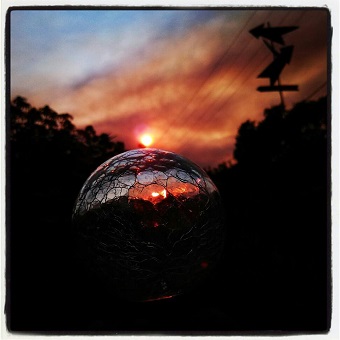
    “Smokey Sunset”       Photo by Laura Plunk Davis

  • Guest blogger Nina Amir brainstorms how to go from idea to book.

    The following is from Nina Amir’s Blog, Write Nonfiction Now. Nina posts writing prompts on Fridays.  I really enjoyed Nina’s Prompt #10 and thought you might like it, too.  These ideas can also work for fiction writing.

    Create Book Ideas to Support Your Goals: Nonfiction Writing Prompt #10 by Nina Amir.

    Nina writes:

    If you want to write and publish books, the first step involves developing ideas. You may be a nonfiction writer with just one book idea or with many. However, if you have nonfiction writing goals, your book ideas should support your goals.

    I have many book ideas. Despite the fact that some of them really excite me, I have put quite a few on hold. I have them queued up in a logical order, one following the other so they help move me toward my goals.

    Sometimes those goals could be simple, such as get a traditional publishing deal. That may not sound “simple,” but, for example, I put aside some projects of mine that were outside my area of expertise to pursue that goal. I used my expertise to accomplish it. With traditionally published books under my belt that have performed well—a track record—I can move into other categories more easily, should I want to pursue traditional publishing for my other ideas. I can also pursue self-publishing now more successfully.

    Your goals could be to:

    • Attract more clients
    • Make more money
    • Develop authority
    • Tell my story
    • Serve others
    • Teach
    • Build a business around a book
    • Get more freelance assignments
    • Become a professional speaker

    Whatever your goals, it’s time to develop book ideas that support them.

    Write down your top two or three nonfiction writing goals. For each goal, also write down one or two reasons why you want to achieve that goal. Here’s an example of what that might look like:

    what are your writing goals

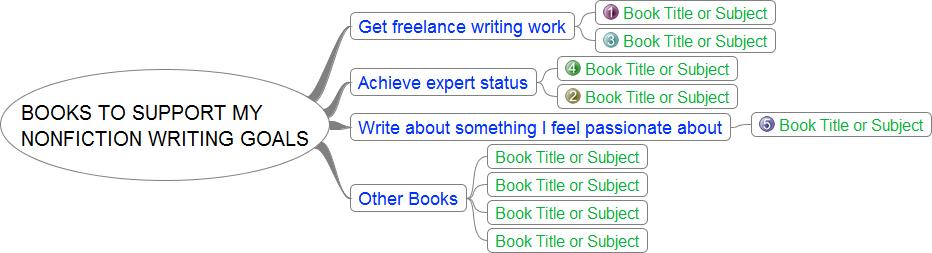
    Next, brainstorm tentative titles or subjects for books that would support those goals. Come up with at least one, preferably two for each goal. Prioritize them based on which will help you achieve your goal fastest. Here’s an example (without actual titles or subjects):Books for NF Writing GoalsIf you come up with other nonfiction book ideas you’d like to write during this process, write them down as well, but put them away for later. That’s what the “Other Books” category is for.  

    Nina’s newest book, The Author Training Manual is now available.  Be one of the first to own a copy of The Author Training Manual : Develop Marketable Ideas, Craft Books That Sell, Become the Author Publishers Want, and Self-Publish Effectively.

    Nina Amir Nina Amir, author of How to Blog a Book and The Author Training Manual, transforms writers into inspired, successful authors, authorpreneurs and blogpreneurs. Known as the Inspiration to Creation Coach, she moves her clients from ideas to finished books as well as to careers as authors by helping them combine their passion and purpose so they create products that positively and meaningfully impact the world. A sought-after author, book, blog-to-book, and results coach, some of Nina’s clients have sold 300,000+ copies of their books, landed deals with major publishing houses and created thriving businesses around their books. She writes four blogs, self-published 12 books and founded National Nonfiction Writing Month, aka the Write Nonfiction in November Challenge.


  • Discover, flaunt, and celebrate your authentic assets. — Dame Edith Sitwell

    Discover, flaunt, and celebrate your authentic assets. — Dame Edith Sitwell

    “Her early work was often experimental, creating melody, using striking conceits, new rhythms, and confusing private allusions. Her efforts at change were resisted, but, as the New Statesman observed, ‘losing every battle, she won the campaign,’ and emerged the high priestess of twentieth-century poetry.”    Poetry Foundation

    Edith Sitwell.1

    Dame Edith Sitwell

  • Standing in a doorway . . .Prompt #63

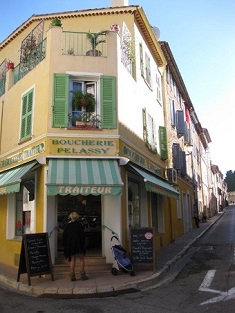
    Today’s prompt:  Standing in a doorway . . .

    French Market


        Photo by Jim C. March

  • Write short? Write long? Write strong!

    The following is an excerpt from “When every letter counts,” by Kevin Cullen (no relation to me that I know of). —  March 2014 issue of The Writer Magazine.

    Kevin writes:

    I have been in the newspaper game for more than 30 years, which qualifies me as a card-carrying old fart.

    I have tried to embrace new technologies and platforms pushed upon us by enthusiastic, young tech geeks who talk about Facebook and Twitter with the zeal of evangelicals. Online is where it’s at, even though we still  make most of our  money from the dead tree version.

    But what has all this meant for writing? Because, let’s face it, the biggest advantage all forms of written journalism have over the immediacy of TV and radio is the ability to deliver depth and strong, evocative writing.

    Writing short and writing long require different disciplines. It’s the differences between writing a poem and writing a short story. When you tweet, every letter counts. When you write for the web, enjoy the freedom.

    Note from Marlene: Ideas for strong and evocative writing posted on The Write Spot Blog. Click on titles below for inspiration for strong and evocative writing.

    Crafting scenes a reader can see — and sense

    Watershed Moment Prompt #57

    The Power of Place

    Essence of You Prompt #45

    Pen


    What to do?  Just write!


  • A room from your childhood. Prompt # 62

    Sit back, relax. Take a few deep breaths.  Relax into your breathing.

    Think about rooms from your childhood. Let your mind wander around various rooms:

    Your bedroom

    Your parents’ bedroom

    Your grandparents’ bedroom

    The room where you ate your  meals . . . kitchen or dining room

    Your grandparents’ dining room.

    Here’s an excerpt from Lynn Henriksen‘s book, Give The Gift of Story, TellTale Souls’ Essential Guide*, page 58, excerpt written by Robin.

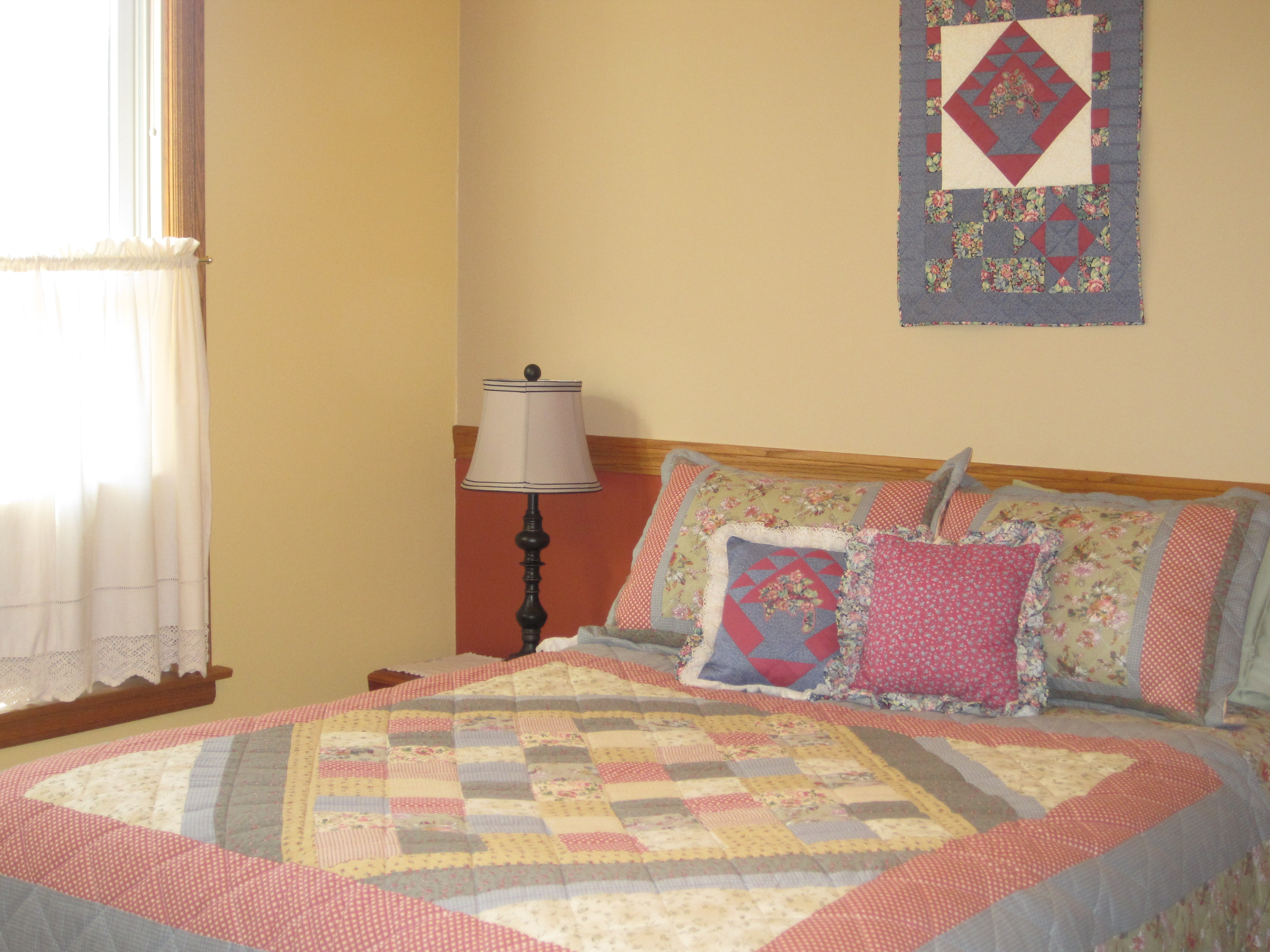
    IMG_1899

    Jamie and I would crawl into our cozy little bed between the softest apple-green sheets that matched the apple-green carpet and the apple-green walls. We took turns as to who had to be squished against the wall and who was to be on the outside nearest Grandma.  We always took turns with everything at Grandma’s house, I figure that’s how she kept the peace.

    Now, settle into a room from your childhood.  Look around. Really look around.  Start from the doorway and move around the room. . .  write about what you see, what you remember. Include color, smell, texture. What did this room feel like? Who decorated this room?  What influenced the decorator?

    Prompt:  Write about a room from your childhood.

    * Give The Gift of Story, TellTale Souls’ Essential Guide is now out of print. Lynn’s latest book, the “new and improved model,” as she writes, TellTale Souls Writing the Mother Memoir: How to Tap Memory and Write Your Story Capturing Character & Spirit is available at Amazon and Book Passage in Corte Madera, California.

  • Two places to submit your poetry

    Sonoma County poet Nancy Dougherty has recently joined the editorial staff of California Quarterly, a journal devoted to poetry. Since this journal is small and currently off-line, the likelihood of getting published is pretty good.

    Nancy says, “The California Quarterly truly has a lot to offer in contests and as a link to other state poetry societies, which have similar journals and contests.”

    The California Quarterly is published four times a year. Submissions are accepted year around.

    Guidelines:  Submit up to 6 poems at one time, include name and address on all pages, self-addressed stamped envelope (SASE) for response. Submit unpublished poems only. Simultaneous submissions accepted.

    Send submissions to: CQ Editors, PO Box 7126, Orange, CA, 92863

    The California Quarterly is sponsored by the California State Poetry Society, a non-profit organization founded over thirty years ago. It is dedicated to the adventure of poetry and its dissemination. Although located in California, its members and contributors are from all over the U.S. and abroad. All those interested in poetry are welcome to join

    For information on membership, contests and publishing opportunities with California State Poetry Society (CSPS), please write to the above address.

    Another opportunity to publish your poetry:  “Digging Our Poetic Roots.” A project by Sonoma County Poet Laureate Katherine Hastings. For information: please go to The Write Spot News by clicking here (scroll down the News page until you get to the Poetry Corner).


  • Guest Blogger Lynn Henriksen asks, “Who is this woman you call Mother?”

    Guest Blogger Lynn Henriksen invites you on a journey.

    Who is she, really—this woman you call Mother? What could be more important than looking at your mother as an individual unto herself? Come along with me on a journey into the heart of the Mother Memoir to write a true and telling tale by answering this question:

    “If you could tell just one small story that would capture your mother’s character and keep her spirit alive for years to come, what would it be?”

    Moving your ego aside and searching purposefully for your mother’s intrinsic character can take some time to put into practice, but it is so worth your energy to discover valuable insights. Do you know what makes (made) her tick? What buoyed or drowned her hopes and dreams? What inspired her joy, tugged at her heartstrings, or thrilled her to the depths of her soul? What enlivened her spirit or dashed it to smithereens?

    As The Story Woman, I’m here to encourage you to find the answers to these questions and create a stirring bio-vignette. My mother died several years ago, but afterwards I wrote my short memoir honoring her, and I believe she felt it. I know my family appreciated it; it provided them a glimpse into her spirit that only I could pass on from my vantage point—one that could never be portrayed in mere photographs.

    It could be that you don’t even like your mother. Ouch! Perhaps, on the other hand, she’s so special to you, you’re so close to her, that you can’t bring yourself to see her as someone distinct in her own right—someone separate from you. Maybe you don’t want to look…too scary, too sad, too poignant, too intimate. As I see it, these are all valid reasons why it is essential for you to write a true story about Mother—one that embraces a special kind of memoir that peers into the heart and soul of your very first relationship.

    The beauty in writing the Mother Memoir is about honoring this most basic relationship. Whether your connection with your mom was good or bad, filled with light and happiness, or misery and regret, it is an avenue toward better understanding in all its forms. Through the process of writing your telling tale, a multitude of feelings and emotions are to sure surface. Be prepared for tears and laughter, while experiencing joy, sadness, anger, thanksgiving, angst, relief, or forgiveness and appreciate this process as a path toward healing and/or a forum for celebration. With an open heart, give thanks for the wisdom you will come to realize as the journey unfolds, since history lives within us despite the passage of time.

    Although her character is multifaceted and her inner make up complex, you’ll look for certain aspects of her personality that stand out and echo her distinct qualities. Begin by locating that one memory or cluster of events that in the telling would impart a genuine impression of the character and spirit of your mother as seen through your eyes. What aspect of her being, what specific quality, action, or anecdote can you draw upon to bring the essence of her character to light in a short memoir? You won’t trace her history in this bio-vignette or look for earth-shaking events as a basis for your story. It’s the real-life, day-to-day occurrences that connect us and often bring us to our knees.

    Once you have found the memory you want to shape into memoir, take a good, long reflective break from the well-formed picture you have formulated about your mother as it relates to this happening or string of events. Let go your assumptions—all of them—as you look for truth and honesty and discover buried under layers of façade the reasons why she acted or reacted as she did. You may be surprised by what you see and how you feel. You may experience an awakening or a shift in perception after distancing yourself from the event and applying maturity mixed with the willingness to look at your mother as an individual in her own right, from the inside out.

    Although the idea of writing a memoir can be overwhelming, remembering Mom through writing your Mother Memoir is doable. It calls for memories to be energetically crafted into words to make her spirit come alive in just a few pages creating a short, true story that has the power to reveal her essential spirit. You will come to understand its impact as you move through this process and join the ranks of TellTale Souls.

    Henriksen photoLynn Cook Henriksen, The Story Woman™, is the founder of “TellTale Souls,” an enterprise promoting writing memoir creatively through workshops, classes, speaking presentations, and her award-winning guidebook, TellTale Souls Writing the Mother Memoir: How to Tap Memory and Write Your Story Capturing Character & Spirit.  As an intuitive leader, Lynn discovered a profound way to keep spirits alive after witnessing Alzheimer’s disease ravage her mother’s mind. As an author, teacher, and entrepreneur, she has helped hundreds of people from 9 to 90 capture the memories and feelings they never thought they could record.  Lynn is a member of California Writers Club, Marin and past president of the Women’s National Book Association, San Francisco.

    Lynn will be the April 17 Writers Forum Presenter in Petaluma, California..