Blog

  • Just Looking

    Memorable writing that sparks imagination. Lean in. Hear the writer’s voice on the page.

    Just Looking

    By Ken Delpit

    What’s in a look?

    Quite a lot, actually. Consider looks in their simple verb forms, for instance.

    The meanings range from imperatives to advisories to admonitions to out-and-out warnings.

    Look away. Look up. Look over there. Look down. Look around. Now, look here! Look sharp! Look out! Look at you!

    Or, consider the noun forms. As with its cousin verb forms, noun looks span a range of meanings, from complimentary to critical to probing to mysterious.

    Let’s take a quick look. That is a bad look for him. They kind of gave me a funny look. We need to take a deep look. Now, that is a good look for you. I was left speechless when she gave me that look.

    Or, consider “ing” forms to describe appearances and states, from transitory to reputational to habitual.

    Looking tired. Looking confident. Looking like a winner. No thank you, just looking. Looking surprised. Looking smug and haughty. Looking like you’re enjoying yourself. Looking Good!

    In short, if you find yourself stranded on a desert island, and you have only a few words at your disposal, you could survive pretty well if “look” is among them. Well, that and a solar-powered satellite cell phone.

    Thank you, Ken, for this fun take on the word look.

    Ken Delpit has been writing for quite a while, that is if you count computer programming and technical documentation as “writing.” Since leaving those professions behind, Ken has discovered an exciting new world of creative writing. He is now giddily exploring new devices, such as adjectives, subtlety, mystery, and humans with emotions and feelings.

    Aternatives for the word look, from Daily Writing Tips:

    “Look, it’s perfectly acceptable to use the verb look, but don’t hesitate to replace this fairly ordinary-looking word with one of its many more photogenic synonyms. Many of these substitutions come in especially handy when it comes to finding one word to take the place of look-plus-adverb or look-plus-adjective-and-noun, as the definitions demonstrate.”

    1. Blink: to look at with disbelief, dismay, or surprise or in a cursory manner
    2. Browse: to look at casually
    3. Consider: to look at reflectively or steadily
    4. Contemplate: to look at extensively and/or intensely
    5. Dip (into): to examine or read superficially
    6. Eye: to look at closely or steadily
    7. Fixate (on): to look at intensely
    8. Gape: to look at with surprise or wonder, or mindlessly, and with one’s mouth open
    9. Gawk: see gape
    10. Gawp: see gape (generally limited to British English)
    11. Gaze: to look steadily, as with admiration, eagerness, or wonder
    12. Glare: to look angrily
    13. Glimpse: to look briefly
    14. Gloat: to look at with triumphant and/or malicious satisfaction
    15. Glower: to look at with annoyance or anger
    16. Goggle: to look at with wide eyes, as if in surprise or wonder
    17. Leer: to look furtively to one side, or to look at lecherously or maliciously
    18. Observe: to look carefully to obtain information or come to a conclusion, or to notice or to inspect
    19. Ogle: to look at with desire or greed
    20. Outface: to look steadily at another to defy or dominate, or to do so figuratively
    21. Outstare: see outface
    22. Peek: to look briefly or furtively, or through a small or narrow opening
    23. Peep: to look cautiously or secretively; see also peek (also, slang for “see” or “watch”)
    24. Peer: to look at with curiosity or intensity, or to look at something difficult to see
    25. Peruse: to look at cursorily, or to do so carefully
    26. Pore (over): to look at intently
    27. Regard: to look at attentively or to evaluate
    28. Rubberneck: to look at in curiosity
    29. Scan: to look at quickly, or to look through text or a set of images or objects to find a specific one
    30. Skim: see scan
    31. Stare: to look at intently
    32. Stare (down): to look at someone else to try to dominate
    33. Study: to look at attentively or with attention to detail
    34. Watch: to look carefully or in expectation
    35. Wink: to look at while blinking one eye to signal or tease another person
  • Cagibi

    CAGIBI is versatile in its purpose and mission to readers and writers. The journal centers on literature in which character conflict, ultimately story, is tied to place. 

    Nicole R. Zimmerman succeeded with what CAGIBI looks for in a story. Read “Autumn Inferno” by Nicole R. Zimmerman, an example of exceptional, extraordinary writing, an unforgettable story told in an illuminating format.

    Cagibiqu’est ce que c’est? What is a cagibi?

    American phonetic transcription: /kä’jēbē/

    A cagibi, from the spoken French, is versatile in its purpose: it may be a shed, a cubbyhole, a cupboard.

    It is a space to store tools or personal items for safekeeping: shovels, love letters, suitcases, pails, heirlooms, tchotchkes.

    It is a space too low for grown-ups but perfect for children to hide and play.

    It is that snug space under the stairs just large enough to fit a small writing desk.

    It is a space that isn’t quite a room, usually windowless, but also door-less, a space that is at once intimate and yet open to the world.

    It is any shelter, no matter how tiny, that allows for big imaginings to take shape.

    CAGIBI is invested in sharing the universal human experiences to be found in works of prose and poetry set within places unfamiliar to readers; thus, our expressed interest in international—or world—literature, and works in translation. 

    Journal in Print and Online

    CAGIBI’s journal is bundled online in quarterly issues, with one print issue each year.

    Cagibi publishes an annual print issue.

    Online, the quarterly online issues are published in January, April, July, and October. Each issue publishes stories, essays, poems, and art.

    We welcome non-traditional and emerging writers, as well as minority and marginalized viewpoints.

    Publishing Between Issues

    Cagibi Express is a separate online section: a space between issues.

    Submit your writing to Cagibi.

    #amwriting #justwrite #creative writing #creative nonfiction

  • Choose a scene . . . Prompt 607

    Choose a scene and write.

    Scene 1

    You are sitting at your kitchen table. The morning sun lights up the room. You wrap your hands around a mug of warm, steaming, fragrant [type of drink]. What are you daydreaming about?

    Scene 2

    You are sitting on a porch, looking out at [wherever you are]. A movement catches your eye, reminding you of . . .

    Scene 3

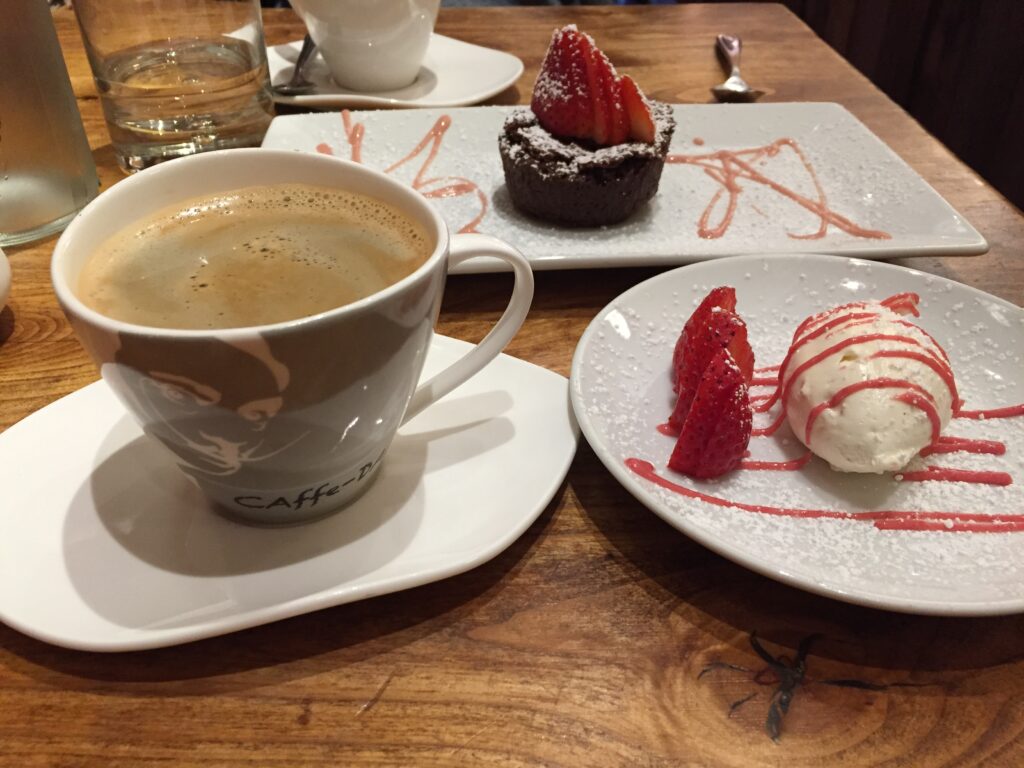
    You and (name of dinner partner) are enjoying dessert. You are surprised by . . .

    Scene 4

    There you are, in the middle of [something]. What are you thinking about?

    #amwriting #justwrite #creativewriting

  • Ekphrasis . . . Prompt #606

    Ekphrasis: Art describing other art.

    Created by the Greeks, the goal of this literary form is to create a word-painting, so the reader can envision the item described as if it were physically present.

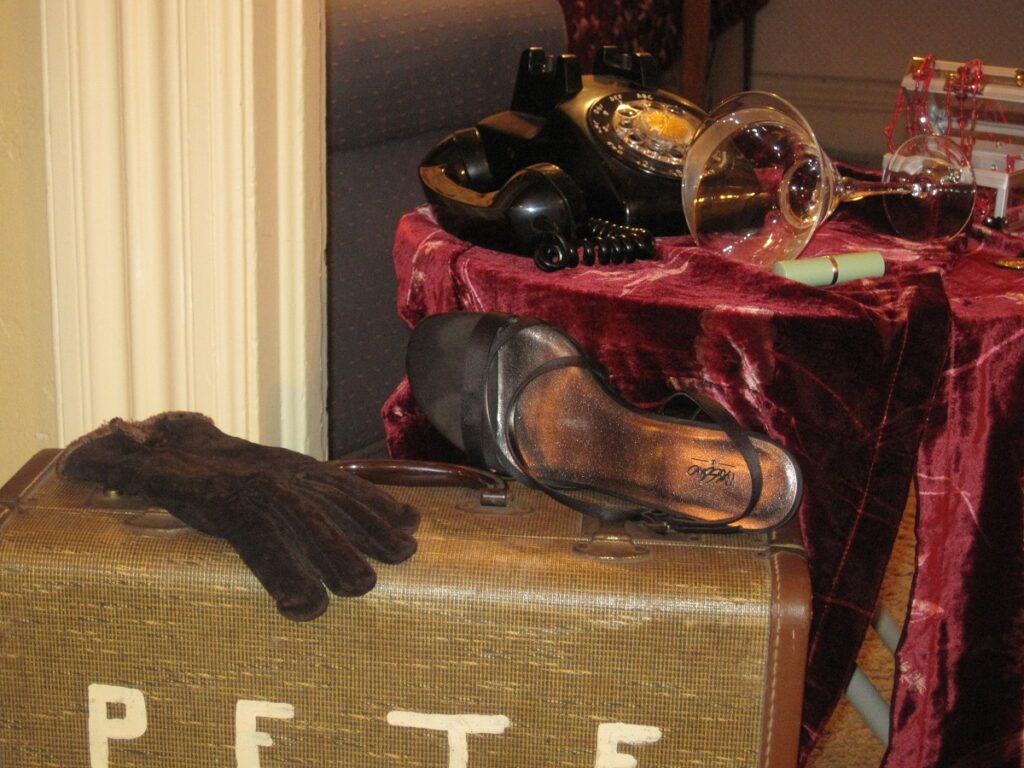
    Write whatever the image conjures up.

    You can see ekphrasis art at the Artists’ Co-op of Mendocino, a collaboration between writers and visual artists where writing is paired with visual arts. Writing was nspired by art as well as art that inspired writing:  2021 Ekphrasis X Exhibition.

    #just write #amwriting #ekphrasis

  • Weave narrative, dialogue, and action . . . Prompt #605

    Have you read something that feels “off?”

    Or been bored with the sluggish, plodding plot?

    Do you wonder why the novel isn’t moving along?

    It could be the lack of balance between narration, dialogue, and action.

    As a writer you want to keep your story moving and engaging.

    Weaving

    “We want to balance our scenes using three elements of fiction: dialogue, action and narrative. This is one reason you want to put your character in a scene with other characters as often as possible: Scenes that weave together these three elements engage the reader at an emotional level much more effectively than scenes that are only dialogue, only narrative or only action.” —Gloria Kempton

    One at a time

    Sometimes you want to focus on one aspect. Use dialogue, for example, to show a character’s personality and motives.

    “If you want to highlight a particular character trait in your viewpoint character . . . you don’t want the scene cluttered, the reader distracted or the pace slowed by action or narration.” —Gloria Kempton

    Pacing

    If your scene involves conflict, dialogue alone can work to show emotions.

    Or, you might want to use narration to indicate what the character is thinking and to avoid dialogue that could sound contrived.

    Action is best when you want to propel an intense scene forward and when characters wouldn’t be talking during a powerful situation.

    What to use and when

    Dialogue: Speed things up.

    Narration or dialogue or a combination: To provide background information.

    Action or narration: When too much dialogue is clumped together.

    Ready to experiment?

    Choose a scene from your work in progress or write a new scene.

    First round: Write scene in dialogue only.

    Second round: Write same scene using narration only.

    Third round: Write same scene using all action.

    Last round: Weave all three styles for a three-dimensional effect.

    —Excerpts from “Weave Action, Narrative and Dialogue,” by Gloria Kempton, Nov/Dec 2010 Writer’s Digest

    #amwriting #justwrite #dialogue

  • Passion is the engine . . .

    Photo by Thirdman on Pexels

    Robert Crais:

    Passion is the engine that has to fire the whole thing.  

    Successful writing is all about passion, to create a world that’s full and complete and engrosses the reader. First and foremost, the reader is you.

    If you’re writing about a world in which you need to research to learn about it, then feel passionate about it. If you’re not passionate about what you’re writing, you’re writing the wrong thing.

    You want heat, you want fire. That’s what we gather around and warm our hands with.

    Excerpted from “Fired Up,” by Jessica Strawser, Writer’s Digest, Nov/Dec 2016

    #amwriting #justwrite #creativewriting

  • Claudia

    Memorable writing that sparks imagination. Lean in. Hear the writer’s voice on the page.

    Claudia

    by Nona Smith

    We held our wine glasses up and tapped their rims together. Clink.

              “Do you know why that’s done?” Claudia asked.

              “I have no idea,” I said.

              “The French began the custom centuries ago. It’s to make us appreciative of all five of our senses.”

    Claudia had a treasure trove of that kind of information.

     “Ahhh, les Francais; ils savent tout,” she added.

              She spoke three languages fluently and had enough vocabulary in others to find bathrooms in foreign countries and order wine in restaurants. Born in Germany and well-travelled, Claudia had European sensibilities and a sophisticated sense of style. Her hair was cut by a Sassoon-trained stylist, she wore only Italian-made shoes, and the walls of her dining room were painted Chinese red, seasons before that trend appeared in Architectural Digest. She owned a few expensive, elegant gold pieces, but most of her jewelry was purchased during her travels from local artisans or at art fairs at home. It was this we bonded over.

              On her first day working as a travel agent at Trips Out Travel, I admired her earrings: thumb-nail size, straight-back chairs, crafted from black metal. Definitely not gold, but certainly expensive. Something she might have found in a museum gift shop.

              My compliment caused her to tuck a strand of red hair behind her ear and caress her earlobe. “I found them in Taormina. I had to sort through all that cameo crap they sell there before I found anything interesting.”

              Claudia had opinions. Very firm opinions. About food and clothing and what was worth spending money on. Her generous smile drew people to her; her sharp tongue sent them away. She possessed a quirky, wicked sense of humor and had a flare for the dramatic. She’d once been married and had a son Adam she adored, but when I met her, Claudia was living alone in a one-bedroom gem of a house secreted into the Berkeley hills. She took her cockapoo Milo, a yappy attention-grabbing dog, with her almost everywhere. And Claudia was devoted to the game of What If… What if you weren’t a travel agent; what else would you be? What if you didn’t live in this country; where else would you like to live? What if you knew how to play a musical instrument; which one would it be?

              Milo was not with us the afternoon we dined at our favorite dim sum restaurant in the City. We’d already polished off a bamboo steaming-basket of shrimp dumplings and a platter of al dente Chinese broccoli with oyster sauce when Claudia nodded to the waitress rolling another dim sum-laden trolley towards us. “We’ll have the shu mai and the pork buns,” she said with authority.

              We held our wine glasses up and tapped their rims together. Clink.

              “What if,” Claudia began, “you were on Death Row and going to order your last meal; what would it be?”

              I don’t recall what I answered, but Claudia’s answer came quickly and definitively. She waved her chopsticks over the bountiful table. “This is what I would order.”

              Late the next morning, Adam called. “It’s bad news. It’s Mom. She died yesterday.”

              “Oh, Adam,” I said. Tears sprang to my eyes.

              He continued to speak, “… alone in the house … Milo was with her … brain aneurism …”

              I heard his words, vaguely, but the picture in my mind was of Claudia, her chopsticks held aloft, pronouncing the dim sum her last meal of choice.

    “Claudia” by Nona Smith is one of the featured pieces at the Artists’ Co-op of Mendocino, Traditional and Contemporary Fine Arts 2021 Ekphrasis X Exhibition, where writing is paired with visual arts. You can see the artwork inspired by “Claudia” and the other winning entries at 2021 Ekphrasis X Exhibition.

    Ekphrasis: Art describing other art. Writing is paired with visual arts.

    Nona Smith is the author of Stuffed: Emptying the Hoarder’s Nest and numerous short stories, humorous personal essays, and bad poetry. She was a long-time board member of the Mendocino Coast Writers’ Conference and currently sits on the board of the Writers of the Mendocino Coast and is editor of the club’s annual anthology. Nona lives with her patient husband Art and two demanding cats.

    Her writing is featured in many anthologies including The Write Spot: Musings and Ravings From a Pandemic Year. Available at Gallery Books in Mendocino, Rebound Books in Mill Valley, Book Passage in Corte Madera, at Amazon, and through your local bookseller.

  • Lies, humiliation, secrets . . . Prompt #604

    Memoir is similar to many elements of fiction: Careful scene setting, pacing, tension, conflict.

    Seduce the reader with a confiding tone.

    Reveal secrets. The best secrets are those that the author reveals or learns about self in the process, “Ah, did I really think that?”

    Readers are interested in your conflicts.

    It’s important to modulate good times and bad times.

    “The best memoirs explore and reveal conflict in a way that illuminates and startles.” —Kat Meads

    Consider the scope of your memoir. It’s not necessary to start from when you were born and work your way up. Don’t try to write about everything. Take one aspect. The year you were in Paris, for example.

    If you go with a chronological way of telling, share just the important events that shaped you.

    The idea is to look objectively at your life to write a richer subjective memoir.

    Part of writing memoir is reacquainting ourselves with ourselves.

    Ways to delve into writing your memoir:

    Your childhood home

    ~Draw a picture of a house you grew up in. If you grew up in more than one house, pick one at a time to write about.

    ~ Write three memories that took place in this house.

    ~Put an x on those rooms where the memories took place.

    ~Write a paragraph about an early memory that took place in this house.

    An eventful day

    ~Pick a significant day in your life. Write a brief paragraph about what the event was and why it was significant

    ~List five or eight details about that day

    Time capsule

    ~ Write about five items that would define you to put into a time capsule

    Lies, humiliation, secrets

    Write about a lie you told. What were the circumstances surrounding that lie? What prompted you to tell it? What were (or are) the consequences of that lie? Did you get away with it? What effect has it had on you?

    Sentence starter: “The day that _________ humiliated me.”

    What is your longest kept secret?

    “You must not tell anyone, my mother said, what I’m about to tell you.” —Maxine Hong Kingston

    If you were going to start a memoir with that sentence . . . what would you write next?

    This blog post is inspired from a writing workshop with Kat Meads.

    More about writing memoir:

    Write Memoir in Voice of Narrator

    Memoirs as text books

    What is Memoir Good for?

    #amwriting   #justwrite   #memoir  

  • Seeing the scene from character’s point of view . . . Prompt #603

    “The goal of description is to create a well-designed set that provides the perfect background for your characters—a setting that stays in the background without overwhelming the scene or interrupting the story.” —Moira Allen

    In real life, we explore our surroundings through our actions and experience them through our senses. Create a structure for your characters to do the same.

    Craft your descriptions so details unfold as your character moves through the scene.

    Know which details your character would notice right away and which details will register more slowly.

    Suppose, for example, your heroine is a secretary of humble origins and has just entered the mansion of a millionaire.

    Let her notice how soft the rich Persian carpet feels underfoot, how it muffles her footfalls, how she is tempted to remove her shoes.

    Don’t mention how soft the sofa is until she sinks into it. Let her smell the leather cushions. Bring in other smells as she scans the room: A bouquet of dahlias, a rich pipe tobacco smell.

    Mention the heavy, marble center table your hero has to detour around to look at the bronze statue on the credenza. Show him blinking as he looks at the glittering light reflected from the crystal chandelier.

    Do not mention the masterpieces on the walls if your character doesn’t know who Klimt or Vermeer are. Go with what your character would know and notice.

    A fisherman would notice different details about the sea and beach than an accountant with limited coastal experiences.

    Writing Prompt

    Think of a character to write about. This character could be imagined or based on a real person or a based on a fictional character.

    Write a scene from that character’s point of view.

    Setting could be:

    ~ A sea coast

    ~A carnival

    ~A classroom, perhaps an alma mater

    ~ Farmer’s market in a villa

    ~ Cruise ship

    ~A bustling coffee shop in a big city

    ~A quiet coffee shop in a small town

    ~A basement

    ~A bookstore

    Choose a character, choose a setting, and Just Write!

    Adapted from “How to Bring Your Settings to Life,” by Moira Allen, The Writer magazine, March 1999

    #justwrite #amwriting #scenesetting

  • When I write, my self disappears.

    white paper
    Photo by Pixabay

    “When I write, my self disappears.” —Natalie Goldberg