Blog

  • I knew I wanted to write . . .

    Natalie Goldberg The Art Of Writing Practice:

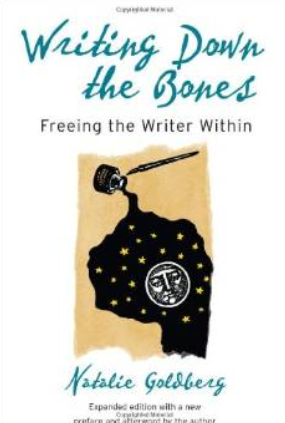
    “By my early twenties, I knew I wanted to write and I knew I couldn’t learn to do it through traditional writing classes. I had to begin with what I knew, something no one could tell me I was wrong about. And so, I studied my mind. As I wrote, I would discover things about my mind, how it would move, wander, settle.

    I began teaching writing from the inside out. Usually, writing teachers tell us what good writing is, but not how to get to it . . . in 1986 [when “Writing Down The Bones” was published] people were starving to write, but they didn’t know how, because the way writing was taught didn’t work for them. I think the idea of writing as a practice freed them up. It meant that they could trust their minds, that they were allowed to fail, and this helped them develop confidence in their own abilities. But that wasn’t all, I also told readers, ‘Pick up the pen, take out a watch, and keep your hand moving.’”

    — Excerpt from The Sun November 2003, “Keep The Hand Moving,” by Genie Zeiger

    More about writing practice from Natalie Goldberg.

    Join Writers Forum on Saturday afternoons in October, 2021, to practice. Free on the Zoom platform. October 2, 9, 16, 23, 1-3 pm (PST).

    #amwriting #justwrite #nataliegoldberg #practicewriting @freewriting

  • Poetry

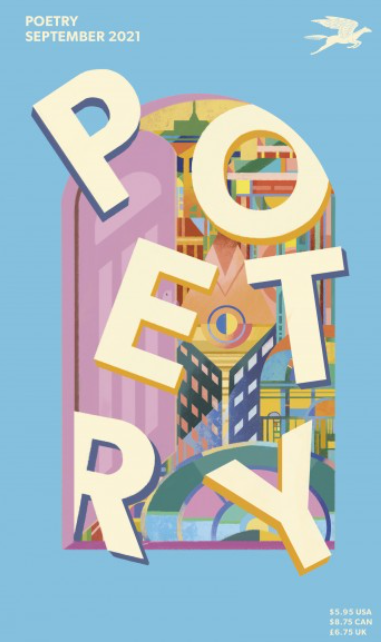
    Founded in Chicago by Harriet Monroe in 1912, Poetry is the oldest monthly devoted to verse in the English-speaking world.

    Poetry wants “Unique poems that are surprising” and Poetry welcomes book reviews and other poetry-related prose.

    Explore Poems

    Featured Bloggers

    Submit

    #amwriting #justwrite #poetry

  • Barbara’s Braid

    Memorable writing that sparks imagination. Lean in. Hear the writer’s voice on the page.

    Today’s Sparks is a pantoum.

    Barbara’s Braid

    By Karen Ely

    Weaving strands of amber honey

    Over, under, around and through

    Silky locks of shimmer sunlight

    Plaited patterns, three by two


    Over, under, around, and through

    Brush strokes cultivate the threads

    Plaited patterns three by two

    A tapestry of golds and reds


    Brush strokes cultivate the threads

    Silky locks of shimmer sunlight

    Plaited patterns, three by two

    Weaving strands of amber honey


    Karen Handyside Ely was born and raised in Petaluma, California. She delights in difficult crossword puzzles, the Santa Rosa Symphony, and traveling with her husband, James.

    Karen has been published in The Write Spot to Jumpstart Your Writing: Discoveries, The Write Spot: Reflections, The Write Spot: PossibilitiesThe Write Spot: Writing as a Path to Healing, and The Write Spot: Musings and Ravings From a Pandemic Year.  All available at Amazon and your local bookseller.

    Discoveries is on sale for $6.99 at Amazon for a limited time.

    Writers Forum hosts Saturday afternoon writing for the month of October 2021. Free on the Zoom platform.

  • A time you fumbled. Prompt #602

    Photo by Daniel Olah on Unsplash

    The prompt:  Write about a time you fumbled or stumbled or faltered.

    Or: Write about a kindness you have done or would have like to have done.

    Here’s the backstory:

    December 2016

    Occasion:  Nobel Prize ceremony, Stockholm, Switzerland.

    Patti Smith delivered an emotional rendition of Bob Dylan‘s “A Hard Rain’s A-Gonna Fall” at the Nobel Prize ceremony in Stockholm, Sweden, December 2016.

    She sang for a few minutes, faltered, stopped singing, and said, “I’m sorry. I’m so nervous.” Then she continued in her beautiful, transportive way.

    We’ve all been there, haven’t we? Awkwardly faltering. But usually, we don’t want to admit what we perceive as a weakness.

    January 2017

    I’ve had a lot to think about these past few days. Extreme highs: Watching granddaughter perform as rat and a camel in her church Christmas pageant and as a soldier in the Nutcracker. Celebrated with son, his wife, and her family as his term of mayor ended. All in one day!

    Came home to a bare fridge. Trudged to the grocery store. Trudged? Oh, such a drama queen. I drove in my comfy, warm car. Picked up a Starbucks Skinny Mocha to fortify myself for a massive grocery shopping. Bought more items than I intended.

    Filled my pantry with ingredients for meals over the next few days, reflecting on the news that spewed from my car radio. A young woman in Aleppo described how she didn’t want to leave her country, but there was no choice. A man said, “They gave us two choices only — leave or die. You leave your friends. You leave your house. You leave your history.” People knew they would soon be killed.

    I ask, “Why?”

    Why do people treat one another horribly based on skin color, religious beliefs, cultural identity, border disputes, and other reasons that make no sense to me. I’m saddened by world events. I have no appetite for dinner. I hate that I have all this food and others have nothing. I would share if I could and feed all those who are hungry, homeless, country-less.

    What I can do is continue my small acts of kindness. And appreciate those who give with no expectation of receiving anything in return for their kindness.

    Looking at the audience and the orchestra members at the Nobel Prize Ceremony . . . different ethnicities, a variety of countries represented, varied beliefs I’m sure . . . sitting together. That sense of togetherness, in the same room, watching the same performance. Hope for tomorrow.

    There’s always hope.

    Maybe tomorrow I’ll have an appetite.

  • Ascension Garden

    Memorable writing that sparks imagination. Lean in. Hear the writer’s voice on the page.

    Ascension Garden

    By Stacy Murison

    The first time, you drive by yourself. You have some idea you are going there, but are still surprised that you know the way, without her, through the turning and turning driveways. Left, left, left, left. Park near the rusted dripping spigot. The wind blows, unseasonably warm for November.

    You bring the candy bar, her favorite, the one from the specialty chocolate shop, the one with the dark chocolate and light green ribbon of mint. You try to eat yours, but instead, stare at hers, unopened, where you imagine the headstone will go and sob without sound while the wind French-braids your hair just as she would have, and that’s how you know she is here.

    She is still pushing cicada shells off white birch trunks with her toes, dancing around pine trees with roses garlanded in her hair, singing of her love of tuna and string beans, of percolated coffee, of lemon waxed floors, of gelatin molds, of cherries, of lilacs, of chicken soup, of kasha, of home sweet home, of you.

    “Ascension Garden” was published August 16. 2021 in River Teeth, A Journal of Nonfiction Narrative.

    Posted with permission.

    Stacy Murison’s work has appeared in Assay: A Journal of Nonfiction Studies (where she is a Contributing Editor), Brevity’s Nonfiction BlogEvery Day Fiction, Flagstaff Live!, Flash Fiction MagazineHobartMcSweeney’s Internet Tendency, River TeethThe Hong Kong Review, and The Rumpus among others. 

  • River Teeth, A Journal of Nonfiction Narrative

    River Teeth is a biannual journal combining the best of creative nonfiction, including narrative reportage, essays and memoir, with critical essays that examine the emerging genre and that explore the impact of nonfiction narrative on the lives of its writers, subjects, and readers.

    River Teeth: An Introduction by David James Duncan

    When an ancient streamside tree finally falls into its bordering river, it drowns as would a human, and begins to disintegrate with surprising speed. On the Northwest streams I know best, the breakdown of even a five-or six-hundred-year-old tree takes only a few decades. Tough as logs are, the grinding of sand, water and ice are relentless; the wood turns punk, grows waterlogged, breaks into filaments, then gray mush; the mush becomes mud, washes downriver, comes to rest in side channels which fill and gradually close; new trees sprout from the fertile muck.

    There are, however, parts of every drowned tree that refuse this cycle. There is in every log a series of cross-grained, pitch-hardened masses where branches once joined the tree’s trunk. “Knots,” they’re called in a piece of lumber. But in the bed of a river, where the rest of the tree has been stripped and washed away, these knots take on a very different appearance, and so deserve a different name. “River teeth,” we called them as kids, because that’s what they look like. Like enormous fangs, ending in cross-grained root that once tapped all the way into the tree’s very heartwood.

    They’re amazing objects. A river tooth’s pitch content is so high that some, sawed in half, look more like glass than wood. Too dense to float, many collect in deep pools and sandbars, and many more migrate along the river bottom, collecting by the thousand in coastal estuaries. The oldest teeth, after years of being shaped by the river, look like objects intelligently worked, not just worn: sculptures of fantastic mammals, perhaps, or Neolithic hand tools. And they all defy time. I have found spruce river teeth, barnacle-festooned in the estuaries, that have outlasted the tree they came from by centuries.

    I’d like to venture a metaphor:
    Our present-tense human experience is like a living tree growing by a river. The current in the river is the passing of time. Our individual pasts are like the same tree fallen in the river, drowned now, and disintegrating with surprising speed. We resist time’s flow with our memories and language, with our stories. Our pasts break apart even so. Entire years run together. We try to share a “memorable experience” with a friend and end up arguing about details that don’t jibe. Once key parts of our past become impossible to weave into any kind of narrative; other parts, though we narrate them accurately for decades, become so rote that they cause our listener’s eyes to glaze. So we stop telling. We let the filaments of memory wash downriver. The past decomposes. New life, and new stories, sprout from the fertile silence.

    There are, however, small parts of every past that resist this cycle: there are hard, cross-grained whorls of human experience that remain inexplicably lodged in us, long after the straight-grained narrative material that housed them has washed away. Most of these whorls are not stories, exactly: more often they’re self-contained images of shock or of inordinate empathy; moments of violence, uncaught dishonesty, tomfoolery; of mystical terror; lust; joy. These are our “river teeth”-the knots of experience that once tapped into our heartwood, and now defy the passing of time.

    Almost everyone, I believe, owns scores of these experiences. Yet, perhaps because they lack a traditional narrative’s beginning, middle and end, I hear few people speak of them. I resist this hesitancy. Fossils; arrowheads; adobe ruins; abandoned homesteads: from the Parthenon to the Bo Tree to a grown man or woman’s old stuffed bear, what moves us about many objects is not what remains but what has vanished. Let go of what can’t be saved. Honor what can. Share with us your river teeth.

    —River Teeth

    River Teeth Submission Guidelines

  • Dance . . . Prompt #601

    Writing Prompt: Dance

    Write about the last time you danced.

    Or write about a memorable dance experience.

  • Chuckstable

    Memorable writing that sparks imagination. Lean in. Hear the writer’s voice on the page.

    Chuckstable

    By Lynn Levy

    Dana cracked her gum and then smoothed it against the roof of her mouth. She pushed her tongue through, making that all-important thin membrane that would become the bubble, and Bobby watched, thinking that the gum made her tongue look as pink as the boa she was wearing. Which was saying a lot.

    There was no explaining, really, why Dana was wearing a boa at all, but Bobby knew her better than to ask. Dana had on a boy’s tank top, cut-off jeans, and Goodwill Kiva sandals with one of the straps broken. She also had a scab on her left knee that grossed out the toughest kid in the neighborhood, and a thin white scar on her right arm from the time she’d fallen out of the big old oak on a dare that she could climb higher than the boys. The bone had stuck through, but Dana didn’t cry. After that she made her own rules, and nobody stopped her. If she wanted to wear a pink boa to catch snapping turtles, that’s what she did.

    Dana blew the bubble and popped it, and used her tongue to pull the broken film back into her mouth.

    Bobby pushed his old safari hat down over his forehead, hoping the shadow would hide his eyes. If Dana caught him staring, he was sure he’d shrivel up and die, though he wasn’t sure why. He wasn’t even sure why he was staring, actually, it was just that over this last summer, somehow Dana had gotten really … interesting.

    While he watched, she took a couple of quick lithe leaps across the flat stones, until she was in the middle of the creek, cool water riding over her feet, making the creek surface a different shape right there, two smooth glassy bumps that no longer looked like feet. Dana crouched and looked down into the water. She let her fingers dangle just below the surface, the current drawing little wakes around each one. She didn’t seem to notice the ends of the boa dipping into the creek, the feathers shrinking with wet.

    Bobby jumped a little when she squealed. “It’s a big one!” she called. Then, annoyed, “Are you gonna come help me or what?”

    Bobby ambled over to the creek bank as if he was just himself, instead of how he felt, like he was someone meeting Dana for the first time and shy because of it. He’d known Dana since their Mommas had let them play out in front of the trailers, in undershirts and no pants.

     “What do you want with them snappers, anyway?” Bobby asked.

    “I wanna put one in Duane’s outhouse,” she said. “On accounta what he said about Chuckstable.”

    Chuckstable was Dana’s dog and the love of her life. He was also the ugliest thing God ever put together. What Duane had said was actually pretty funny, but didn’t bear repeating unless you liked the taste of soap.

    “His Pa finds it, he’ll just kill it,” Bobby said. Dana looked up at him, squinting. The light caught her eyes, and the browns and greens flickered just like the creek bottom.

    “Ya think?” Dana asked.

    “Uh huh,” Bobby said.

    Dana sighed, and leaned forward, reaching into the water to stroke the turtle’s shell once, carefully, from behind. Bobby noticed the way the knobs of her spine pushed against the tank top, and had the weird thought that she’d be safer in life if she had a shell too.

    “You’re right,” she said, standing. The wet ends of the boa came out of the water and clung around her knees. “But it was fun to think about.”

    Originally published in The Write Spot to Jumpstart Your Writing: Discoveries, print version available for $6.99 for a limited time at Amazon.

    Lynn Levy’s writing has also been published in The Write Spot: Possibilities and The Write Spot: Musings and Ravings From a Pandemic Year. All available in print ($15) and ereaders ($3.49) at Amazon. E-reader available with Kindle Unlimited.

    All the Write Spot books are also available through your local bookseller.

    Lynn Levy lives in Northern California with her husband, an endless parade of wild birds, and one dour skunk who passes by nightly. She and the skunk have an understanding.
  • Descant Literary Journal

    A forum for fiction and poetry, descant seeks high-quality work in either innovative or traditional forms. Fiction is usually 5000 words or fewer, poems sixty lines or fewer. We do, however, occasionally accept submissions exceeding these lengths. descant specifies no particular subject matter or style.

    Submit!

  • Look on the bright side . . . Prompt #600

    Today is a banner day!

    Celebrating my oldest granddaughter’s twelfth birthday.

    And my favorite daughter and her husband’s ninth wedding celebration.

    Also celebrating 600 writing prompts on The Write Spot Blog!

    I’m taking a moment to take that in. Six hundred writing prompts.

    How did that happen!!?? One writing prompt at a time.

    The first prompt, “I remember . . . ” posted on September 24, 2013.

    And now I invite you to jump in, remember a story, and Just Write!

    Today’s writing prompt: Look on the bright side!