Blog

  • Qi Gong To Calm The Mind and . . .

    . . . might help with your writing.

    Note from Marlene: I have wondered why we humans seem to easily focus on the negative and sometimes have difficulty seeing the positive.

    The following from Qi Gong teacher Lee Holden explains why we tend to think about things that cause stress and anxiety:

    The nature of the mind is to dream and wander. Even when the present moment is completely perfect, it’s normal for thoughts to run off into the past or future.

    Sometimes, daydreaming can provide valuable insights that lead to joy. However, most of the time, the mind isn’t quite so generous. More often than not, the mind’s natural tendency is to ruminate on thoughts that produce stress or anxiety.

    Luckily, Qi Gong provides powerful tools for calming the mind and returning to peace. In this article, we’ll discuss the nature of human thinking, as well as share three techniques to quickly calm your busy mind.

    Understanding the Human Mind

    Why is it that humans tend to think about things that cause stress and anxiety? Why can’t we naturally gravitate toward thoughts that bring us to a place of joy?

    Back when humans faced life-threatening situations on a regular basis, it was helpful to have a mind that could quickly identify unwelcoming circumstances. As such, the mind evolved to constantly look for signs of danger and plan for the worst. 

    For hunter-gatherers who lived in cold climates, it was necessary to consider how much food they needed to gather before the winter. Without thinking about the future, they might not reach the spring. Naturally, this created a tendency for the mind to constantly search for possible threats. 

    In modern life, most of the threats we face aren’t nearly as severe as those of our ancestors. Instead of fighting off jaguars, our stressors usually take the form of traffic lights, long lines at the grocery store, work meetings, and getting our kids to school on time. However, internally, we still respond to these “threats” in a similar way as we do to those that are truly life-threatening.

    While it’s certainly a good idea to get your kids to school on time and prepare for important work meetings, most of the stress and busy thinking we experience doesn’t actually help us.

    More often than not, stress and busy thinking make it harder to concentrate and cause emotional fatigue. Not only does this feel uncomfortable, but it also reduces our ability to function at a high level.

    In order to experience inner peace and outer resilience, it’s important for us to not let stress and busy thinking get the best of us.

    Fortunately, as conscious creatures, we can choose to work with our mind and body to let go of patterns of stress and overthinking. 

    Three Qi Gong techniques to Quickly Calm Your Busy Mind 

    1. Slow Deep Breathing

    In Qi Gong, the breath is seen as an important gateway between the mind and body. Breathing is an opportunity to use the intention of the mind to work with the body, and the presentness of the body to work with the mind.

    The quality of your breath is closely linked to your level of stress and the busyness of your thoughts. When feeling stressed, breathing becomes quick and shallow.

    When you’re relaxed and calm, it slows down and becomes deep and full.

    One of the quickest ways to calm a busy mind is to take slow, deep breaths. 

    To start, sit upright in a chair. Bring your full attention to your breath and inhale slowly through your nose, allowing your abdomen and chest to fill up with nourishing oxygen.

    At the top of your inhale, hold your breath for two to three seconds.

    Then exhale slowly through your nose until your lungs are completely empty.

    At the bottom of your exhale, hold your breath for another two to three seconds.

    You can do this simple breathing exercise for as short or long as you’d like. If you’re busy, perhaps just take five to ten breaths in this manner.

    If you have more time, follow this breathing practice with some physical activity. 

    2. Engage Your Body

    Just as breath and thinking are closely connected, your body and mind often reflect the quality of one another. 

    When your mind is racing with busy thoughts, the body often becomes tense and tight. In turn, this causes energy to stagnate, which creates additional discomfort and propels the cycle of busy thinking. 

    When you move your body, you’re able to release tension and tightness, which allows your mind to relax and become calmer. 

    There are many different kinds of physical activities you can do — hiking, running, walking, pickleball, or… Qi Gong.

    3. Focus on Physical Sensations

    In addition to moving your body, it’s often helpful to focus on the physical sensations that you experience in order to calm your mind. 

    Why? 

    Your body is always in the present moment, but your mind is not. By focusing your mind on physical sensations, you’re able to use your body as an anchor to bring your mind back to the present moment.

    Focusing on physical sensation can take many forms. One way is just to sit still, take some deep breaths, and pay attention to whatever you’re feeling in your body. 

    Another way is to practice Qi Gong, which combines all three of these qualities to help calm the mind. 

    In Qi Gong, we often start with slow, deep breathing to relax the body and bring our attention to the present moment. Then, we work with a variety of movement exercises to release tension and circulate energy throughout our entire being. And throughout the entire practice, we cultivate a deep awareness of the physical sensations we’re experiencing.

    Lee is offering Qi Gong free video classes.

    Lee Holden has devoted his career to helping people learn the powerful principles of Qi Gong for over twenty-five years.
    Anybody, at any age or fitness level, can use these moving meditation techniques – not only to improve physical fitness, but also to assist in recovery from injury and illness, to achieve a deeper sense of calm, and to relieve tension and stress.
    Through my DVDs and Public Broadcasting television specials, in-person workshops, and teacher training, I have helped more than 10,000 students:

    Heal from injury and disease

    Slow the aging process

    Feel better than ever

    Maximize their energy

    Many people tell me they don’t have access to a Qi Gong teacher in their area, or that classes aren’t at a convenient time. That’s why I’m now offering fresh classes streaming online, every week. Now, thanks to the internet, you can finally take my classes from home, whenever it’s convenient for you.
    It’s also why we’re producing brand new Healing Series programs to help you solve your most pressing problems.
    Whether you’re just getting started, or have years of practice under your belt, I’m confident that you’ll find my style of Qi Gong practical, effective, and harmonious.
    Looking forward to working with you!

    Lee Holden

  • The good thing is . . . Prompt #597

    Writing Prompt:

    The good thing is . . .

  • The Bachelors

    Memorable writing that sparks imagination. Lean in. Hear the writer’s voice on the page.

    The Bachelors

    By Nicole R. Zimmerman

    My father migrated from Cleveland to San Francisco in the mid-1960s with several boyhood friends. A decade later, my parents played occasional weekend tennis with my “uncle” Vic and his wife at Mountain Lake Park. Uncle Vic would bring us piroshki in thin paper bags, purchased from Russian bakers in the foggy avenues where they lived with their son in an Edwardian walk-up. The smell of the ground beef and onions wafting through the steam always made my mouth water, and the doughy pocket left a greasy stain. While our parents remained on the courts, we climbed rooftops and ran—just my older brother, our young friend, and me. There was a rope swing that swept over the lake from a muddy bank, but nobody jumped in or swam; it wasn’t that kind of water. Sometimes we ventured across the street to a mom-and-pop corner mart for ice cream. Pulling apart the plastic seam around an IT’S-IT, I would rotate melting mint or cappuccino on my tongue before crunching into the dark chocolate–covered cookie. It is mostly the freedom of those long afternoons that I remember, playing together outdoors for hours, never bored, our parents always trusting in our return.


    In the early ‘80s, newly single, my father kept a nearly empty refrigerator at his apartment in the Cow Hollow neighborhood. Among the dill tomatoes, horseradish, and Gatorade there was gefilte fish swimming in gelatin in a jar—the cold, colorless substance sticking to the pockmarked whitefish. Aside from fried hot dogs and root beer floats, salami and eggs were about all he knew how to make, which we ate on chipped, metal-rim dishes after the divorce. Sometimes he took us to Original Joe’s where we watched the line cooks move fast pans over the flames from our counter stools. Otherwise it was Tommy’s Joynt on Van Ness or the Jewish deli on Polk where I’d order a block of cream cheese wedged between two halves of a bagel. For my father: corned beef on rye, a little yellow mustard but otherwise dry.

    After high school I held a summer job working the register at a shop selling souvenir T-shirts at Fisherman’s Wharf. It’s mostly the smell I remember. Sea lions basked on the docks, their fetid scent mixed with the aroma of steaming crab set alongside the sourdough bowls, a tangy delicacy to which I sometimes treated myself. In the early mornings the restaurant owners hosed the sidewalks, all the detritus from the asphalt accumulating in gray puddles in the gutter, then washed down among the sewer rats, which scurried under the grates.

    I continued to live with my father for a couple of years after college, serving potato-and-egg skillets and coffee in a carafe to yuppies who inhabited the neighboring Marina District. On Saturday nights they frequented bars and hollered from motorized cable cars that ferried them along Union Street, claiming territory no longer mine. Later, I waited tables at Uno Pizzeria on Lombard, packing leftovers into a cardboard box to take home. With my brother long gone, I often sat, alone, on the metal slats of the fire escape. A cluster of yellow windows glowed from Pacific Heights like fishing boats bobbing in the harbor. While my father watched weekend sports from the swivel chair at his desk inside, I’d listen to the echoes of a foghorn lullaby, biding my time.

    Soon, I made my own migration. It was Uncle Vic who introduced me to the Mission District, including its culinary delights. In this sunny southern neighborhood across the city, cathedral bells chimed and green parrots hung upside down from palms lining Dolores Park, where children licked tropical popsicles purchased from a paleta vendor. He took me to a taquería, speaking Spanish to the ladies in line while I slurped agua fresca for the first time. Like my father, I still didn’t know how to cook. After moving, I subsisted on grilled open-face tacos topped with melted cheese and avocado—newfound comfort food devoured on the front stoop of the Victorian flat I rented. My roommates said I ate like a bachelor.

    Previously published in Issue No. 40 (Food & Memory) of Still Point Arts Quarterly (https://www.shantiarts.co/SPAQ/SPAQ40/files/zimmerman.pdf). A shorter version was originally published in the Readers’ Notes section of Ruminate.

    Nicole R. Zimmerman holds an MFA in writing from the University of San Francisco. She was a 2019 recipient of the Discovered Awards for Emerging Literary Artists, produced by Creative Sonoma and funded, in part, by the National Endowment for the Arts.

    Her writing has been nominated for a Pushcart Prize and for the Best American Essays series, and her work appears in Sonora Review, The Rumpus, Hypertext Review, About Place Journal, Halfway Down the Stairs, Birdland, Origins, Creative Nonfiction, and the Los Angeles Times, among other publications.

    Nicole lives with her wife on a farm near Petaluma and leads women’s writing workshops that follow the Amherst Writers & Artists (AWA) method.

    You can learn more about her writing and workshops at https://www.nicolerzimmerman.com/.

  • Roanoke Review

    Roanoke Review was co-founded in 1967 by Roanoke College student Edward A. Tedeschi and teacher Henry Taylor, who went on to win the Pulitzer Prize in poetry for The Flying Change in 1986.

    In its half-century of existence, Roanoke Review has established itself as an accessible read, intent on publishing down-to-earth writers with a sense of place, a sense of language, and—perhaps most importantly—a sense of humor.

    The Review is also known for its fine cover art.

    Roanoke Review accepts poetry, fiction, creative non-fiction, photographic essay, and visual poetry.

    Submissions 

    September 1 through December 1.

    Fiction and non-fiction submissions up to 5,000 words and poetry submissions up to 100 lines.

    Roanoke Review is part of the creative writing community at Roanoke College in Virginia. 

  • I am struggling with . . . Prompt #596

    Writing Prompt:

    I am struggling with . . .

  • All Summer Long

    Memorable writing that sparks imagination. Lean in. Hear the writer’s voice on the page.

    All Summer Long 

    By Deb Fenwick

    All summer long, busy house sparrows flit in the eaves of our house. Each morning, they collect tiny twigs and things I rarely notice from the ground and end up making a life with them. Seedlings sprout and reach toward a warm, welcoming sky.  Children ride bikes and screech with delight. No hands! Look at me! Watch! When the sun sets at nine o’clock, those same children, liberated from the rigidity of school night routines, line up for ice cream with wide, wild eyes as fireflies send signals across the garden. The crickets just keep chirping. 

    All summer long, there’s lake swimming in midwestern waters that have been warmed by the sun. And better still, there’s night swimming where a body, unfettered by the weight of gravity,  gets its chance to remember what it’s like to glide through dark mystery. 

    My feet don’t touch the bottom of blue-black water, and it’s just the right amount of uncertainty. I plunge into the cool deep and open my eyes to see almost nothing. Almost. Everything is opaque—shape-shifting while bubbles rise to the surface and my body moves through muffled sound. Everything I think I know in the daytime fades away under the water’s surface. When I come up for air, my eyes squint and adjust to July moonlight. Soft water splashes as I rise to stand on coarse sand. Maybe I’ll hear a screech owl. Not children screeching. They’re all asleep now. The flies send signals, and the crickets just keep chirping. 

    Deb Fenwick is a writer from Oak Park, Illinois, who spent many years learning and teaching in public school settings.

  • All Summer Long . . . Prompt #595

    Writing Prompt:

    All Summer Long . . .

  • Help might be where you least expect it. Just ask.

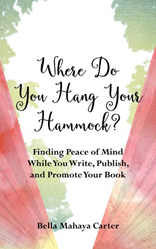
    Excerpted from “Where Do You Hang Your Hammock?: Finding Peace of Mind While You Write, Publish, and Promote Your Book” by Bella Mahaya Carter.

    When you’re out there promoting your book, you’ll have to ask for all sorts of things. This might feel hard. You may make up stories, such as I don’t want to “bother” people or be a nuisance. You may feel as if you have no right to ask for what you want. You may even feel, deep down, as if there’s something wrong with asking.

    Of course, nobody likes rejection, either. We don’t want to hear the word “no.” But how people respond has more to do with them than with you. If you can blow by the nos, you’ll pick up enough yeses along the way. So don’t let that stop you.

    Those stories running through your head, that make asking for what you want seem unsavory, doesn’t mean your ask will not be welcomed or even appreciated. I have had this experience too many times to count. Sometimes when I’ve struggled to ask a person for something, he or she is in fact happy to help. Here’s an example.

    Years ago, I received an email from Jack Grapes, my old writing teacher and mentor, who published my poetry book in 2008. Jack is a well-known and beloved literary figure in Los Angeles and has been teaching for more than four decades. His email promoted an upcoming writing workshop offered by a former student of his. I wonder if he’d do the same for me, I thought, in the midst of putting together my fall writing classes.

    The next day, I put “email Jack” on my to-do list. It didn’t get done. The following day, I wrote it again. Usually when I carry over an action item from one day to the next, I cross it off my list on the second day. Not this time. For a week straight, the directive “email Jack” continued to appear on my list. Why is this so hard to do? I wondered. I knew Jack loved me. I knew he respected my work. Still, asking him to do this for me felt monumental.

    A week later, feeling uneasy, I forced myself to just do it.

    Ten minutes after I hit the send button, I heard back from him. “I’d be happy to do that,” he responded.

    A few days later, while exploring in my journal why writing and sending that email had been so hard, I realized the heart of the matter: shame. Deep down, I felt as if I shouldn’t need help, which created embarrassment and shame about asking. I worried that my request might seem needy or inappropriate. And from there, the sorry old I’m not good enough voice, a close sibling of I’m not worthy and therefore don’t deserve this, found its toehold and sprang into action, hoping I’d take the bait and fall. Once I realized that my reluctance to ask had stemmed not from a fear that he’d say no but rather from this feeling of unworthiness, something inside me released and I felt free.

    How many times have you been reluctant to make a request of someone you perceived as more established, successful, or powerful than you? How often have you felt like you didn’t have the right to “bother” or “intrude upon” them? How many times have you reproached yourself, saying you shouldn’t need to ask for help? How many times have you berated yourself, thinking, I should have my shit together and not need anyone else—especially when it comes to my career?

    Talk about “should-ing” all over yourself. Let’s agree right here and now to quit feeling crappy!

    For years, I believed that one of the things writers needed most to succeed was chutzpah. Google defines this Yiddish word as “shameless audacity.” Some of its synonyms are “nerve,” “boldness,” and “temerity.” Hispanics use cojones, or “balls.”

    I used to think writers needed balls of steel. Had my dilemma with Jack been a reminder that I needed to grow a pair, or toughen up the metaphorical ones I had?

    And then it hit me: Instead of bigger balls, instead of fighting, I needed to drop down into myself, to connect with that place where absolute tenderness for and faith in myself and others reside. The key, I realized, was to be shameless in the sense of understanding that we are all worthy and that there’s nothing wrong with asking for what we want. There’s no shame in it; in fact, it’s a blessing. None of us lives alone on this planet. We are part of a community, a web of loving, supportive relationships. We all give and take all the time; these are reciprocal energies, regardless of our professional accomplishments (or perceived lack thereof). Thomas Jefferson once wrote, “Remember that no one is better than you, but that you are better than no one.”

    In order to ask for what you want, you have to know what you want. Sometimes this is clear. Other times, you have inklings and intuitions. Trust your worthiness, even when you can use a little help. Especially then.

    Posted 6/1/2021  on Jane Friedman’s Blog, “Writers Ask for What You Want.”

    Amazon / Bookshop

  • Redivider

    Redivider is a literary journal produced by the graduate students in the Writing, Literature, and Publishing program at Emerson College in the vibrant literary hub of Boston.

    Published digitally in the autumn and spring, Redivider welcomes fiction, nonfiction, poetry, and graphic narrative submissions from emerging and established writers.

    “And if you’re wondering about the name—it’s a palindrome!”

    “Each year, we host the Blurred Genre Contest and Beacon Street Prize. Winners of these contests receive cash prizes, and their work is featured online in a subsequent issue of our journal.”

    Recently, Redivider shifted to a digital platform. Publishing issues online allows the voices of contributors to reach more readers as web content is free for all.

    Submission Guidelines

  • If only . . . Prompt #594

    Writing Prompt:

    If only I had or hadn’t . . .