Blog

  • Using a book as your how-to textbook.

    Choose a book you like and in the genre you want to write as your how-to-write manual.

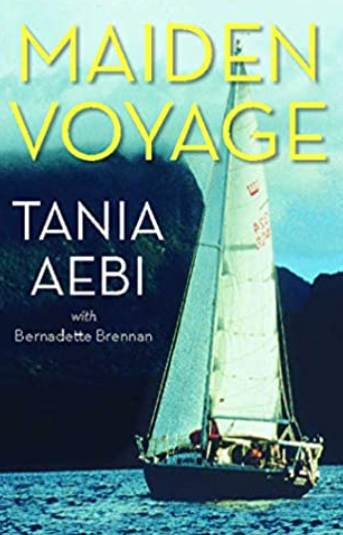
    For example, Maiden Voyage, a memoir by Tania Aebi:

    Aebi starts her story on her 37th day at sea, at a point when she is terrified. Rather than give us the back story of how all this began, she starts at a high action point.

    She describes her immediate situation: Because of strong winds and choppy waves, she hasn’t been able to eat, sleep, relax, or think.

    We get the sense of imminent danger. And then, to build suspense and tension, she reveals, “The weather can only get worse.”

    We hear a little about her emotional and mental state. She wants to go home to her family. ALL this, on the first page.

    Still on page 1, we get a “visual” – seeing her as she gets into her foul weather gear. There is action. She’s doing something about her immediate situation—she can’t change the weather nor sea conditions, but she is capable and we get a sense of history—she’s been sailing for quite a while. With this information, there is a slight moving away from the immediate situation, as if the camera is moving back a little, giving a broader perspective, or a wider range of view.

    Your turn:  Get a copy of a book you like and you don’t mind writing in. Either underline or  highlight places where there is action, dialogue, narration. You can use a different color for each category. Note how much narration is used versus dialogue versus action.

    If the book you want to write is contemplative, there will be more narration, or hearing the main character’s thoughts.

    If your book is a suspense/action book, of course there will be more action scenes.

    If it’s a mystery book, there may be more dialogue.

    These are some ideas for you. The main thing is: Just Write!

  • The Bigger Picture … Life is more than me.

    Memorable writing that sparks imagination. Lean in. Hear the writer’s voice on the page.

    The Bigger Picture . . . Life is more than me.

    By Christine Liles

    What I’m about to say is my own opinion and my personal thoughts about Life. I don’t expect everyone to feel the same way or believe the way I do. I’ve experienced quite a bit in my life that’s led me to feel the way I do. Life is magical. It’s mysterious and unpredictable but also glorious and such a gift. I will say that I do believe in God. I believe we are all here for a reason. 

    To me, Life is like a chain of reactions. Think of your life. Think of everyone you currently know, everyone who has seen you do something, and everyone who you’ve come in contact with by doing a kind gesture or even a fender bender.

    Take all your life events and imagine all the people in it and what their lives would be like if you never existed. Imagine that you were never born. How much of an impact on those people’s lives have you made? Most of those people will never know what difference you’ve made, but it could be a positive one. I bet right now you are wondering where I’m going with this . . . right?

    For a while now, and I know I’ve mentioned this before on my blog, Living On O2 for Life, I’ve really thought about my life as a whole. The Bigger Picture. I’ve thought about the people I meet briefly and I feel a little guilty that I don’t remember them . . . though they certainly remember me. I think about my family and what their life would’ve been like if I hadn’t been born. 

    I often question myself when I’m out of the house doing my errands, in doctor’s offices, or just out to dinner … Why do people remember me? Sure I use oxygen. But it wasn’t until I went to my pain management doctor, I started wondering about all of this seriously. He looked at my chart with all my health problems and we talked a bit. He said that he saw that I’ve been through so much and I seem to be such a pleasant, vibrant person who can smile despite what I’ve been through. Then, he said that I’ve been blessed, truly blessed. I was truly at a loss for words. This is not me tooting my own horn. I just don’t know if I see myself that way. So, I often wonder why people do see me in such a kind light.

    There are two reasons why I am the way I am. I’ll be the first person to admit to you that I am NOT perfect. I don’t believe anyone is. Though, I tell my husband that I’m perfect in every way. *Wink* I do have days when I struggle with life. However, the core instinct in me wants to spread joy (that’s what I call it) because it makes me feel good and alive and I hope with all my heart that it makes someone’s day better as well. I don’t want to have to imagine what my life would be like if I couldn’t find a reason to smile. So, I wonder sometimes what it would be like if I was never born. And in wondering this, comes the HOPE that I have made a positive impact on someone’s life. 

    Life is more than me. It’s about all of us. We are all interconnected and we need each other.

    My name is Christine Liles and I blog about living on oxygen for life. I’ve used oxygen since I was 17 years old. 

    Note from Marlene:

    Christine shares her stories on her blog, Living On Oxygen for Life. I have enjoyed her blog posts for years. I love her upbeat and sparkling personality. We have never met in person, but I feel like I know her (from her stories on Living On Oxygen).

    About Christine:

    I was born as the middle child of two sisters. Both are healthy . . . thank goodness! Growing up, I was restricted from certain gym class activities; things like running, jump roping, or anything that made me breathe hard from exerting myself too much. What was so great was that my family, especially my sisters never treated me like I was a fragile flower. In a way, that made me stronger inside. Even though I was born with serious heart and breathing problems along with the scoliosis that had me wearing a Milwaukee brace, I was still a kid who rode a bike chasing after the ice cream man, played two years of girls’ league baseball (wasn’t very good), and I was even in a bowling league. I’m sure wasn’t suppose to do all that because of my health but my parents tried to let me experience life as close to normal as possible. There were times where I had to sit out from the fun because it was just too beyond my capability.

  • Day Tripping

    Memorable writing that sparks imagination. Lean in. Hear the writer’s voice on the page.

    Day Tripping

    By Karen Handyside Ely

    As we enter the trailhead from Shell Beach, brisk and bracing winds swirl hair and chill bones. Am I crazy, wearing only shorts and a t-shirt?

    We begin our ascent, turning backwards often as we inch up the hill so that we can soak up the panorama that unfolds behind us. Sunshine shimmers on the Pacific, making it glitter as the waves undulate, achingly alive. Light on water, is there anything more beautiful? As we crest the first hill, we stop one last time to feast our eyes. Mine fill with tears. It overwhelms me, this hushed moment in the sea breeze. Immersed in this timeless vista there is such peace in knowing how long this view has been here, and always will be. The echoes of eternity, the promise of constancy. We continue on.

    I’m no longer cold. The climb has loosened my muscles. We have entered a new world as we bid a loving farewell to the sea. We follow the trail that takes us through scrub brush and into a verdant meadow. Periwinkle lupin and amethyst iris stand out in stark contrast to the pale green of the grass. This is a world of muted colors and modest foliage; an in-between space, stunning in its simplicity. The endless sky is open and clear without a single cloud to ripple its stillness… and then we hear it… the screech of a hawk, like the opening hymn in Earth’s grand cathedral. We stop again to absorb the majesty.

    We come to a fork in the trail and opt to take the low road. We pass from meadow into forest and are enfolded in a tapestry of vivid color. Cyprus and Pine line the path, and ferns become abundant as we wade deeper and deeper into the jungle magic. We have transcended time, finding ourselves awash in a primordial forest. Redwood trees reach towards heaven, congregating in faerie rings amidst the velvet redwood sorrel. The air has become heavy and we can almost hear the trees breathing in the silence. We have stumbled across a sacred space. We feel like the only two people on the planet.

    Our senses are tenderly bombarded. The pungent, mossy forest floor settles comfortably in our nostrils. The quiet hangs like a blanket around our shoulders, occasionally interrupted by the groan of a tree or the hum of an unseen insect. The sun streams in long rays of filtered light, warming our skin. This grove is a banquet of emerald, sage, juniper, and moss – every shade of green imaginable – all framing the deep glow of redwood bark. We stroll into the empty campground and spread our little picnic on a bench near the trickling creek. We have arrived.

    Karen Handyside Ely was born and raised in Petaluma, California. Upon graduating from UC Davis, she worked in San Francisco and New York City in corporate finance. After a 30-year career as a mom and “professional” volunteer in Scottsdale, AZ, Karen returned to her beloved hometown in Sonoma County.

    She delights in difficult crossword puzzles, the Santa Rosa Symphony, and traveling with  her husband (of 35 years) James.

    Karen has been published in The Write Spot to Jumpstart Your Writing: Discoveries, The Write Spot: Reflections, The Write Spot: Possibilities, The Write Spot: Writing as a Path to Healing, and The Write Spot: Musings and Ravings From a Pandemic Year.  All available on Amazon in paperback and as ebooks.

  • Belong. Prompt #584

    The characters in the Broadway show and the movie, In The Heights, chase their dreams and ask: “Where do I belong?”

    West Side Story is also about finding one’s place, illustrated in the song “Somewhere:”

    Someday, somewhere
    We’ll find a new way of living
    We’ll find a way of forgiving
    Somewhere

    There’s a place for us
    Somewhere a place for us
    Peace and quiet and open air
    Wait for us somewhere

    Prompt:

    Write about a time you felt out of place.

    A place where you didn’t belong, but there you were.

    What did you do? What did you feel?

    Have you found Your Place?

  • It

    By Cheryl Moore

    It’s as slick and slippery as an eel living in a low walled enclosure, searching all the crevices to find bits of debris that didn’t find their way to the long, dark tunnel at its root. It spends most of its days and nights resting against the hard, upper ceiling except at meal times when it is an important assist in processing the food, or when in company its primary function is to express thoughts into language.

    So many kinds of languages it helps to express — the hard, umlauted words of German, the soft shushes of Portuguese or Polish, the rapid clip of Spanish or Italian, even the clicks of Khoisan, and of course, the vast vocabulary of English which has borrowed from all over the world.

    Such a useful organ, the tongue, it may even be aware of when to hold its peace.

    When Cheryl Moore came to California in the early 1960’s, she realized she’d found her home. Then moving to Petaluma in the 70’s, she was as close to paradise as she’d ever be.

    Travel has taken her to Europe and the Middle East. She has written on these memories as well as on the flora and fauna of the local river and her own garden.

  • Voices

    By Ken Delpit

    Individual voices are fascinating. They reflect uniqueness.They involve specific characteristics and abilities, both physical and mental. In tone and in lyric, they express specific perspectives and emotions. They can be soft; they can be harsh. They can be musical to some, grating to others. They can be up-lifting, but also down-putting. Voices may not define us completely, but they certainly represent us while the rest of us waits backstage.

    But voices rarely come just one to a customer. Multiple voices can reside in a single person. This is certainly true for writers. Each fictional character, partially invented and partially native, taps into its writer’s own voice box. Voices within propel writers’ fingers, and shape their stories.

    With few exceptions, it is also true that everyone has multiple voices, whether writer or not. Anyone who hides true feelings or conceals real intentions uses a voice convenient for the deceit. Anyone who senses that they could inflict emotional damage may give their real voice the hook, and push a kinder understudy out as stand-in.

    United voices can swell the heart. They project multiplied energy.They promote commonality. They express hope and desire in ways that are much greater than the sum of their individual parts. And in a good way, they reduce us. They reduce us to not-so-different beings, with both interests and purposes in common.

    Then, too, united voices can be daunting. When assembled spontaneously, they can give birth to future planned gatherings. When unanimous in pain, they can startle us into action. When joined in purpose, they can change societies. When unified in anger, they can erupt in revolution.

    Voices. Both calming and rallying. Both music and weapon. Take care of your voice, as you would a fine French horn. Be careful with it, as you would a loaded revolver. And, remember to let it be silent much of the time. Absence of voice can often be the most commanding, and most harmonious, voice in your repertoire.

    Hearing voices” is sometimes a sign of losing it. While that may well be true in his case, Ken Delpit clings to the notion that being fascinated by the many voices that surround and lie within us helps with his writing. Ken hopes to promote himself beyond his technical background (computers, mathematics) into credible and imaginative science-fiction novels.

    “Voices” was inspired by Baba Yetu, Prompt #583 on The Write Spot Blog.

  • What’s in a letter?

    Guest Blogger Emily-Jane Hills Orford writes:

    No, I’m not talking about the twenty-six letters of the English alphabet. And I’m not talking about emails, text messages, private messages and whatever electronic form of letters and messages are out there on any current platform. I’m talking about the REAL letter: the one you write in longhand (you know cursive writing, the secret code of a previous generation), fold carefully, tuck into an envelope, seal it, address it, place a postage stamp on its corner and drop it in the nearest mailbox (the snail mailbox variety, varies in color depending on what country you live in).

    Letters have long been the most poignant written form of communication in any language: a means to share stories, convey important (or unimportant) messages, or, basically, just to connect. Have you written one lately? Or, perhaps you are the lucky recipient of a letter in your mailbox.

    I remember, as a child, being fascinated with the pile of mail dropped through the front door slot on a daily basis (well, weekdays, that is). Mom always set aside unwanted flyers, calling them ‘Emily mail.’ I had fun opening the envelopes and pulling out the stuffing, reading the literature of countless items I would never understand let alone be interested in, and then filing them in what we used as a recycle bin in the 1960s: the fireplace. Once it was clear that I enjoyed receiving mail and actually reading it, my grandmother, fondly called Granny, and my godmother, Aunt Peg, started writing to me and I would write back. Both lines of correspondence continued well into my adult years, until the loved one passed away – Granny in 1995 and Aunt Peg, at the age of 101, in 2021. Even when these loved connections couldn’t write to me, I wrote to them – weekly at the least.

    One of the most cherished letters my godmother enjoyed in the past few years was one I wrote about a recent acquisition for my garden: a Rodgers flower. Her son, Roger, was her letter-reader and he informed me that they enjoyed a chuckle over my revelation of the Rodgers flower addition to the garden that sparked the quippy comment from one of my adult children: “What’s Uncle Roger doing growing in our garden?”

    So, what’s in a letter? Connectivity and love, the solace of a few written words to make someone feel special in a world gone mad, which ours definitely has. It’s also a release for the writer, to unburden the soul on paper, slowly, precisely, carefully, in elegant (or, in my case, not so elegant) script. Simply put, writing letters is an excellent way to hone one’s skills as a writer. It could be a small note on the back of a postcard, where the message has to be tight, succinct and to the point without taking up too much space. Or, it could be multiple pages of narrative and even some dialogue to carry the message to the reader in an entertaining manner.

    As a writer who enjoys working in several genres, I value the art of letter-writing. I have several author friends who feel the same way and we exchange letters on a regular basis. One of these author friends lives less than a mile away and yet we still exchange letters on a weekly basis. Writing letters not only touches others and shows our appreciation, it also enriches our writing skills. So, next time you think you have writer’s block, write a letter. Or, don’t even wait for that feeling; write a letter anyway. There’s someone out there who will appreciate it and your writing will be all the better for the exercise.

    Emily-Jane Hills Orford has published several books, creative nonfiction stories mostly about her family. Growing up in Toronto, then Hamilton and finally London, Emily-Jane has lots of family stories to warm the heart.

    In her most recent novels, “Mrs. Murray’s Ghost,” “Mrs. Murray’s Hidden Treasure,” “Mrs. Murray’s Home,” and “Mr. Murray’s Gun” (all part of the “Piccadilly Street Series”), the author returns to her roots and the fond memories and dreams, growing up in a haunted old Victorian mansion in London, Ontario Canada.

    The Picadilly Street Series of books is available on Amazon.

    Note from Marlene: You can also use letter writing as a warm-up to your project writing.
  • Baba Yetu . . . Prompt #583

    “Baba Yetu” sung in Swahili by the Stellenbosch University Choir.

    The Prompt: Listen to this amazing choir. Then write whatever comes up for you.

    Or: Write about a musical experience.

    Or: Write about connections.

  • A Safe Place

    By Kathleen Haynie

    When did I feel safe?

    I can’t remember ever feeling safe. I search. Maybe I felt safe at Ocean Beach—only strangers around and I could keep my distance. A place to run to on the “N” Judah street car. Run from the fighting, run from hurt, run from the anger. Run to feel away, to feel unfettered, to yell at the ocean where no one could hear my voice drowned out by the Pacific roar.

    I could hide in the open expanse of sand and waves and roar and motion and cry, the tears running.

    Running.

    Run into the cold fog, run into the bits of sand in the air, run with the pull of the earth. Drawn into the pull of the receding water, losing itself/myself into the empty of personality, empty of emotion. Fleeing and dissolving into the pull back into self.

    Self-drained with fast breathing, salt saliva falling from the corners of my mouth, legs shuddering. Walk into the empty, let down, rhythm, constant, certain, constantly coming in, constantly leaving and blending, losing.

    Safe in the roar, safe in the pull, safe in the empty.

    Kathleen Haynie. This City Girl turned into a Sonoma County Horse Girl, and then retired from decades as a professional in health care. She is now acting out a latent inclination for the dramatic arts as a drama student and cast member of Off the Page Readers Theater.

    Surprisingly, the journey continues into the newly found delight discovered in written expression. Kathleen felt honored to have her work, What They Did to Alice, performed at the 6th Street Playhouse 2020 Women’s Festival. She has decided that dark chocolate is perfect with a full-bodied red wine.