Blog

  • Telling Your Truth

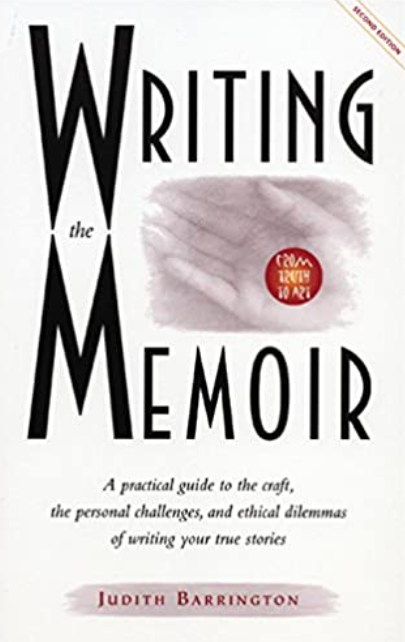
    “Telling your truths—the difficult ones and the joyful ones and all the ones between—is a big part of what makes for good writing. It is also what brings you pleasure in the process of writing. Most people who create and tend a garden don’t spend time on their knees pulling weeds just for the perfect end result—the gorgeous display of flowers that others will exclaim over. They pore over gardening books, order bulbs, water a sickly shrub, arrange the flagstones to make a pleasing path, all because they enjoy the doing of it. So, too, it should be with your writing. You want to see your writing grow, to find your daily work absorbing, to discover you can do better on the page than you could three years ago. None of this will happen if you shy away from the truth. The rewards that you seek are the rewards that go with courage: you take the risk and you feel the satisfaction of becoming a better writer.” —Writing the Memoir, by Judith Barrington

    Using the freewrite method of writing, you are free to write whatever you want with no worries about the outcome.

    Click on the links below to learn more about freewrites.

    Freewrites

    What, why, how . . . freewrites

    Freewrites: Opening Doors to Discoveries

    Just Write!

  • Looking For A Silver Lining

    Reader’s Digest is looking for stories with a silver lining:

    If you wished 2020 had a fast-forward button, you’re not alone.

    In spite of the challenges, many of us discovered unexpected reasons to be grateful this year.

    Perhaps you discovered a new skill—or a new friend?

    Did you learn something wonderful about yourself—or about a neighbor or even a stranger?

    Write about the best thing to come out of your year and Reader’s Digest might publish your story.

    Write and submit!

  • Never The Same . . . Prompt #533

    Today’s prompt is inspired by a poem I wrote in response to the fires that ravaged Northern California, October 2017 and to the devastation throughout the world.

    The sentiments seem true today, especially “adjusting to a new normal” and the feelings of frustration, anger, and hope.

    October 10, 2017

    by Marlene Cullen

    Sonoma, Napa, Solano, Santa Rosa will never be the same.
    Las Vegas concert goers will never be the same.
    Hurricane victims will never be the same.
    This City, That City . . . the list too long.

    new perspectives
    new fears
    new ways of thinking

    frustrated with nature
    angry with wrong-doers
    angry with bureaucracy
    angry in general

    now we know what we don’t want to know
    the unimaginable can happen
    there are no guarantees

    what will we take away
    what have we learned
    what do we need

    we need time to process
    we know the five-year drought
    and the heavy rains
    made tinder that caught sparks
    fueled by heavy winds
    creating flying embers

    but the why lingers—why this devastation
    our beautiful Northern California landscape
    disfigured by ash and rubble
    looks like war was fought
    in its yards and parks and on its hillsides

    this scarring of the earth
    the inconceivable, unthinkable
    happened

    how can so many people lose everything
    I am affected emotionally and spiritually
    I have my house, my belongings
    but do I have my right mind

    tears spill down weary cheeks

    we carry on, adjusting to a new normal
    trying to make sense of that
    which cannot be understood

    there is the before
    and now—the after
    the camaraderie and sense of community
    the amazing goodness of people

    my writing partner asks if I’m okay
    I answer, no, but I will be

    Writing Prompt: Write about the mood or theme of the poem, a stanza, a line, a word. Just start writing and follow whatever comes up for you.

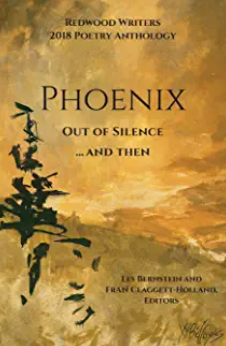
    October 10, 2017was published in Phoenix Out of Silence . . . And Then. Redwood Writers 2018 Poetry Anthology, edited by Les Bernstein and Fran Claggett-Holland. Available through Amazon.

  • Chug, Chuff, Hiss, Squeal, Off We Go

    Today’s post is inspired by Nancy Julien Kopp’s blog post about using sound in writing.

    Nancy wrote:

    This morning, I was catching up on email when I heard the whine of a train whistle, blown several times. I wondered if it was the historic Union Pacific train, known as Big Boy, making its way across Kansas this week in celebration of 150 years of the Transcontinental Railroad. It was due to stop here in our town at 9:30 a.m. 

    The sound of that whistle made me stop and listen. I always liked to hear train whistles when I was a child. We lived across the street from the railroad tracks, so we were treated to that arresting sound on a frequent basis. I can remember being in bed on a summer night, windows open, hoping for the train to come by and announce its presence. When I did hear it, I wondered where it was going. My own world in those days was quite small, but I knew a train went to many places.

    What do you think of when you hear a train’s whistle? Does it trigger any memories for you? Do you think of it as mournful or cheerful? Is it different at nighttime when the train moves through the darkness than it is on a sunny day? 

    Readers knows what a train whistle sounds like, so you don’t need to write “The train blew its whistle.” You can enlarge that thought to make it more interesting: The train’s whistle whined loudly as it passed by the crossing gates, growing dimmer and dimmer as it sped down the track. 

    Write a sentence or two for each of the items below, using sensory detail.

    jet plane

    waves on the shore

    ball hitting a baseball bat

    washing machine

    school bell

    air brakes on a bus

    popcorn popping

    crying child

    church bells

    piano

    cow mooing

    birdsong

    Note from Marlene: Adding sensory details enhance the story and help readers “see” the scene and the characters.

    The Magic of Sensory Words by Enchanting Marketing.

    Write Spot Posts about sensory detail:

    The neurological impact of sensory detail.

    Imagery and sensory detail ala Adair Lara Prompt #277

    Sensory Detail – Sound

    Sensory Detail

    Using sensory detail in writing.

    See more posts about using the senses in writing by typing “sensory detail” in the Search Box on The Write Spot Blog.

  • Under the Gum Tree

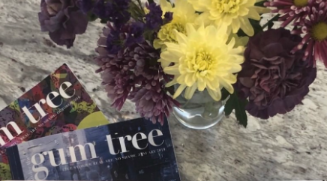
    Sonoma County author Nicole Zimmerman’s “The Nature of Beginnings” was recently published in Under the Gum Tree.

    This Sacramento-based, reader supported, quarterly literary arts magazine publishes creative nonfiction and visual art in the form of a micro-magazine.

    Under the Gum Tree

    What does it mean to “tell stories without shame”?

    “Imperfections are not inadequacies; they are reminders that we’re all in this together.” —Brené Brown

    Under the Gum Tree has been championing the mantra of telling stories without shame since 2011. We see our mission as sharing stories that remind readers of our shared humanity. Too much of the human experience gets hidden behind constructed facades based on what we perceive the world expects from us. Stop hiding. Live a story. Tell it without shame.

    If you write true stories, also called creative nonfiction, (and literary nonfiction, by some) and you’re taking storytelling to a level beyond “I was twelve years old when my mother died,” then you might be ready to submit to us.

    We publish personal essays, memoir, and creative nonfiction stories that:

    reveal authentic vulnerability. These are stories that you’re embarrassed or afraid to share because you’re more worried about how people you know will react than what you learned and how it changed you. Those are the most powerful stories because you’re risking something for the sake of helping someone else.

    provoke conversation. The stories that are the hardest to tell inevitably make at least one person say, “Wow. Me too. And I thought I was the only one.” The stories that are the hardest to tell give others permission to tell their hard stories, and it perpetuates a cycle of storytelling.

    examine a universal truth. Most people keep the hard stories to themselves out of fear—fear of how others will react or judge them—but once a story gets shared, we finally realize how common the human experience really is. Sure, everyone’s individual experience is unique. (Isn’t that what makes a good story?)  But we can always relate to things like love, forgiveness, perseverance—you know, the stuff that everyone encounters no matter their circumstances.

    We consider submissions (2,000 words or more) for the following departments:

    Features: Longer features may explore a department topic or any other unspecified topic.

    Stomping Ground: This department is for stories about family—and we use that term liberally, because isn’t the friend you’ve had since you were eight, almost nine, years old, more like a sister?

    Sound Track: This department is for stories on interacting with music and how it interacts with us. Is there a specific song, group or artist that has had a significant impact on your life? Have you had a meaningful live-music experience? Are you a musician who also writes about how music affects the human experience?

    Fork and Spoon: This department is for stories, and even recipes, on how food, cooking, eating and drinking affect life. The dinner table means different things to each of us—it can be a comfortable place that facilitates intimate communion, but to someone else it might be an awkward place of forced conversation. These food interactions shape us more than we know.

    24 Frames A Second: This department is for stories on film, perhaps one of the more powerful storytelling mediums. Is there a specific film that has changed you in some way—caused you to think differently or see the world from a new perspective? Are you consistently moved by the work of one particular actor or director?

    Those Who Wander: Tolkien wrote, “Not all those who wander are lost.” Travels are from one neighborhood to another, one state to another, one country to another; on vacation or a pilgrimage, for family or for work, so many of these changes in our physical locations trigger meaningful reactions in us and the way we view the world around us. This department is for stories about travel and the individual ways moving around this globe affects us.

    Flash: Every issue includes a flash feature, which is a short-short piece of creative nonfiction, under 1,000 words.

    Visual Art: We consider submissions of visual art and photography. Every issue features two artists: a photographer and a visual artist. Art should be recent, no more than 2 years old, and should be previously unpublished in literary magazines or journals.

    Submission Guidelines

    Under the Gum Tree accepts submissions on an ongoing basis, and all submissions will be considered for one of our quarterly issues. To submit writing, photography or art to be considered for publication, please read and follow the guidelines.

    Please don’t email with questions until you have familiarized yourself with these guidelines and the details on this page.

    Submit

    With the submission fee, you receive the current issue (digital—a $7.99 value!) FREE. 
  • Boost Dialogue with Beats . . . Prompt #532

    Too much dialogue can be boring to read. Interspersing action with dialogue makes a story interesting.

    In real life, we don’t talk without movement, neither should characters on a page. Plus, action gives clues to the character’s personality, habits, status and more.

    For example:

    “I dunno,” Remy said.

    Well, kind of boring. But what if detail were added:

    “I dunno,” Remy said, polishing the top of his boot along the back of his jeans.

    Readers can “see” this action and learn more about Remy’s character.

    Beats

    “Dialogue benefits from variety. A good way to maintain reader’s interest is to insert a variety of beats into dialogue. Beats are descriptions of physical action that fall between lines of speech.” —“Amp Up Dialogue With Emotional Beats,” by Todd A. Stone, Nov/Dec 2010 Writers Digest

    Facial Expressions

    Facial expressions signal emotions.

    “When a character raises an eyebrow or furrows his brow, this action, or beat, interrupts the dialogue and telegraphs a change in the character’s emotional state. As an exchange progresses and the emotional intensity rises—as the character’s dissatisfaction grows into anger, for instance—a character might set his jaw, bite his lip or narrow his gaze. His eyes may darken, his face may redden, his nostrils may flare and so on.

    Watch a TV show with the sound off. See how actors use facial expressions to signal emotions.”

    Physicality

    Of course, facial expressions aren’t the only way to physically show emotions. Body language can indicate a range of emotions.

    “Characters can point, steeple their fingers, clench hands into fists, pound tables, hold their hands up to surrender, cross their arms in front of their chests, throw up hands in resignation or despair.”

    Movement

    “Characters can cross the room, push back from a desk or table to get physical and emotional distance from a heated conversation, an intimate moment or another character. They can move in closer to become more threatening or more intimate, or to drive a point home. Use movement to support and enhance your dialogue.”

    Bigger Moves

    “If it fits your character, use big actions: Throw a fit, throw a plate or throw a punch. If your character has a hair-trigger temper, bypass eyebrow raisings and go straight to breaking furniture.

    Make sure the actions are consistent with the character’s traits. Every action should be a reflection of the character’s objectives and emotions, and of the scene. If the character seldom shows emotion, focus on small details that show true feelings, a tightening around the eyes, a deliberate forcefulness in each step as he walks across the room, a tense grip on a pen.”

    If you have a work in process see where you can add beats to dialogue.

    Prompt: Recall a recent conversation. Write it out, including physical gestures, facial expressions, and movement. Write as if you are writing a scene for a character to act out.

  • Multiply Your Energy

    “Keep watch for the energy vampires. Stay with people who multiply your energy.” —Jon Batiste

  • Strategies For Stress Reduction

    By now, many of us know the drill to stay safe during the 2020 pandemic: Wash hands, wear a mask, and social distancing. But what about our mind, body, and spirit?

    “My lab’s study found the best recipe for dealing with everyday stressors is to try to simultaneously plan ahead about what you can control and stay in the moment mindfully.” —Shevan D. Neupert, Ph.D, “How to Soothe Your Soul,” August 2020 Consumer Reports

    The activities listed to soothe your soul in this article are the same as the restorative activities in the resource section of The Write Spot: Writing as a Path to Healing.

    ~ Prepare and plan. “Tasks that distract you now but also benefit you in the future are wonderful.” — Joyce A. Corsica, Ph.D, “How to Soothe Your Soul,” August 2020 Consumer Reports

    If you are working on a writing project, plan for the result. If you are submitting your writing to a publication, start with a projected date, then work backward to establish goal dates.

    Use the same strategy if you are publishing a book. Target a date for completion to send to an agent, or to self-publish. Work backward to set need-to-finish-by dates.

    First draft completed, revision completed, beta readers, proofread, ms to editor, etc.

    If you want to write, but haven’t started a project, start with a freewrite. Choose one of the prompts on The Write Spot Blog and just write.

    ~Just write freely with no worries about the outcome.

    ~ Nurture in nature. Walk outside. Open your door and breathe in fresh air, if you can. Look at nature out a window . . . a tree, a lawn, a garden. Go on a virtual tour of national parks.

    ~ Listen to music to soothe your soul or put on lively music.

    ~ Dance or move with the groove. Check out The World Groove Movement.

    ~Stretch.

    ~ Yoga. There are many free yoga youtube instructions.

    ~ Emotional Freedom Technique (EFT).

    ~ Hypnotherapy for relaxation and stress reduction.

    ~Searching for “help with stress” online resulted in 899,000,000 results. Overwhelming, yes. But you might find something to help with stress that you hadn’t thought of.

    Good luck with managing your stress during these turbulent times.

    I’m hanging in there with you.

  • Failure is an option.

    “You have to be able to fail until you achieve what you want to be.” —Jon Batiste

  • What energizes you? Prompt #531

    What motivates you to get out of bed in the morning?
    What do you look forward to?

    What energizes you?