Blog
-
Today I celebrate . . . Prompt #500

Today I celebrate Prompt #500 on The Write Spot Blog.
That’s a lot of prompts!
I didn’t know what would happen when I started this blog September 24, 2003. That seems so long ago, and yet it’s only 17 years. A life-time for some, a blip for others.
Since that first blog post, my daughter married, both my sons married, two granddaughters were born, we renovated our yard, bought tons of groceries, did umpteen loads of laundry, and so much happened locally, state-wide, nationally, and internationally.
And I learned to Zoom.
There are 1,252 posts on The Write Spot Blog: Places to submit your writing, book reviews, quotes, and guest bloggers sharing their thoughts about writing. Hopefully some of the posts have been inspirational to help you and your writing.
Since 2003, five Write Spot anthologies have been published.
I’ve given talks about freewrites, blogging, and how to write about traumatic events at workshops, college classes, and writing communities.
I continue to read about writing and attend writing workshops, furthering my education about writing.
Yep, I am passionate about writing.
Today, I celebrate you.
I’m raising my glass in a toast to you.
I hope you are writing and keep writing.
If you want to write, but haven’t started yet, maybe you will find inspiration in one of these Write Spot posts.
Here are some prompts that might inspire your writing.
What happened for you these past seventeen years?
What will you celebrate today?
What will you celebrate in the future?
-
Fiction. Nonfiction. Creative nonfiction.

What are you writing these days? Some people find it difficult to concentrate. Others are filling pages with poetry, fiction, nonfiction, and creative nonfiction.
It might be a perfect time to chronicle what is going on in your life . . . if you write this as a journalist would . . . just the facts, that’s nonfiction.
If you add vignettes and personalize your story, that’s creative nonfiction.
Here’s what guest blogger Nancy Julien Kopp says about fiction, creative nonfiction, and fictional narrative.
Most people are aware of the difference between fiction and nonfiction. Fiction is made up, nonfiction is true.
There is, however, a differentiation between nonfiction and creative nonfiction. Nonfiction is generally expository in that it describes, explains or is informative. If you wrote about leaves in a forest in Montana, your readers would probably learn a great deal about the topic. You would write it as straightforward as possible after doing some research and using your own knowledge of leaves in this part of our country.
Creative nonfiction is true, can be informative, and written in story form using fiction techniques. It would probably include some dialogue, description of the place and people and relate a story—a true story.Memoir writers are writing creative nonfiction. So are those who write Family Stories. Inspirational writers might use this form, too.
I was reading an article about writing for children recently. They used a different term for true stories told with fiction techniques. They called it ‘Narrative Fiction.’ It is a way of teaching children factual material by telling stories. For instance, if a children’s author wanted to write about the Chicago Fire of 1871, incorporating stories of real people who had experienced that tragic event, it would bring the facts to life for any child reading it. Writing nothing but the facts would make the piece strictly nonfiction, but telling about a boy who helped someone during the fire brings it into narrative form and heightens interest.
I’ve written countless family stories, and many of you have, too. They are far more than just reporting the facts of what happened. We want to show the people, the place, and what occurred. By adding dialogue, we bring the people to life, and we add feelings which helps the reader relate. We’re writing creative nonfiction.
I like to think of Creative Nonfiction as telling a true tale with the human element first and foremost.Nancy Julian Kopp lives in Manhattan, KS where she writes creative non-fiction, fiction for children, personal essays, articles on the craft of writing, and poetry. She has been published in 22 Chicken Soup for the Soul books, newspapers, magazines, and ezines, and several anthologies including The Write Spot: Possibilities (available in both print and as an ebook at Amazon).
Nancy was Prose Writer of the Year in 2013 by the Kansas Authors Club.
She blogs at Writer Granny’s World With Nancy Julien Kopp with tips and encouragement for writers.
-
What works for you? Prompt #499
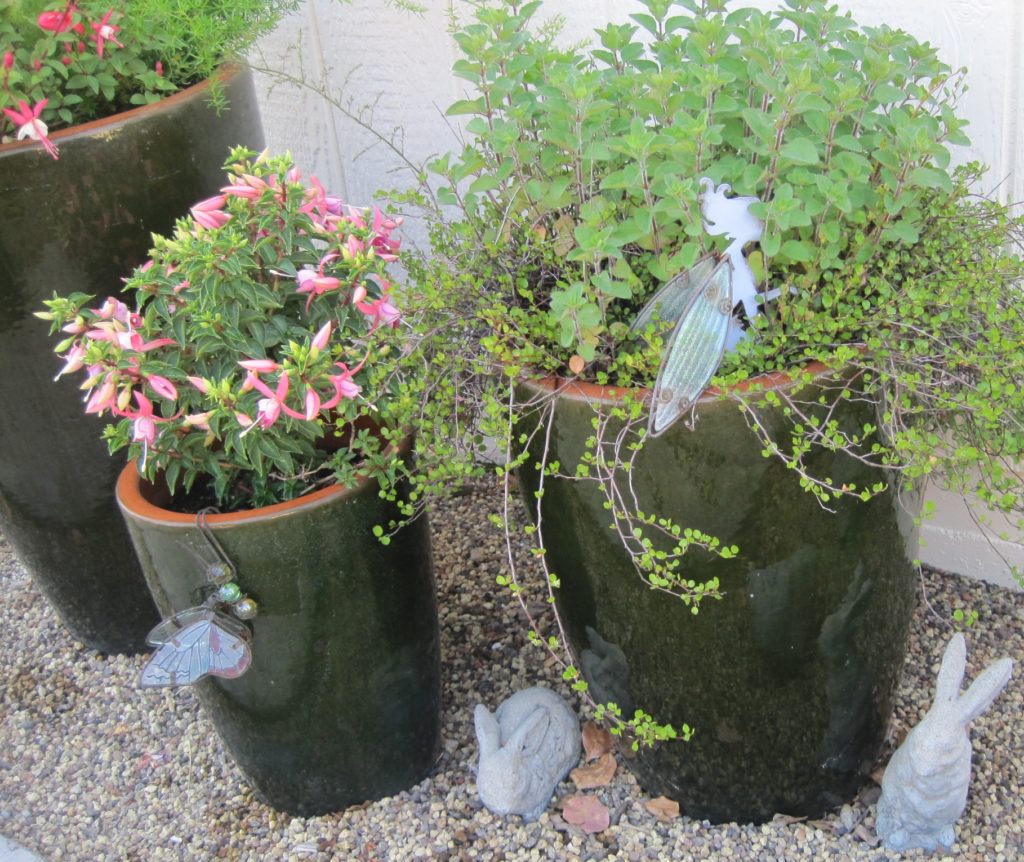
“Everything that slows us down and forces patience, everything that sets us back into the slow circles of nature, is a help. Gardening is an instrument of grace.” — May Sarton
During this shelter in place, have you discovered what works for you as an “instrument of grace?”
Or:
Are you feeling you should be doing something differently than what you
are doing?Today’s prompts are inspired by the article “Gardens deemed ‘essential,’” — David Templeton, April 30, 2020, Petaluma Argus Courier.
-
An Award . . . Prompt #498
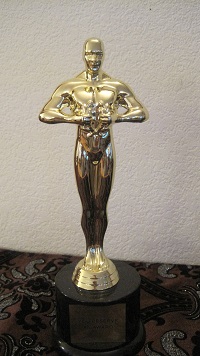
Write about an award you received or a recognition you achieved.
Or write about a goal you accomplished.
-
Writer’s Block While Sheltering in Place

Guest Blogger Kathy Guthormsen shares her writer’s block woes while sheltering in place. Perhaps you can relate.
Shelter in Place Writer’s Block
Sheltering in place has taken all the words from my brain
Inspiration has disappeared
My muses are sheltering elsewhere
I am numb
I sit at my desk
I start my computer and open three works-in-process
I drink my coffee
I eat my breakfast
I read the paper
I work the sudoku puzzle
I stare at the word jumble trying to make sense of the randomly arranged letters
I read my works-in-process and make some edits
I write a few sentences on a new document
I work an online sudoku puzzle
I check email
I check Facebook
I write items on my to-do list
I delete the sentences I wrote earlier and beg my muses to speak to me
I look at writing prompts
I make more edits to the works-in-process
I write random phrases on the new document
I sigh
I do a load of laundry
I go for a walk, wearing a mask
I go to the grocery store, wearing a mask
I clean out the chicken coop and the cat box and realize I should be wearing a mask for those tasks
I look at recipes and decide what to make for dinner
I sit at my desk again and type a few more sentences
I save all the open documents
I decide not to post anything on my blog – again
I realize what’s wrong
I miss people
I miss hugs
I miss my muses
I long to get lost in writing again
I want my characters to take me to unexpected places again
I ask the magic of writing to visit me again
Kathy Guthormsen
Growing up in Skagit Valley, Washington with its verdant farmland gave Kathy an appreciation for the promise of nature’s bounty. The Cascade and Olympic mountain ranges and old growth forests offered the magic of things unseen.
Occasionally her magical muses refuse to talk with her. She fills those times with gardening, books, chores, puzzles, and lists.
Kathy’s work has been published in The Write Spot: Memories and The Write Spot: Possibilities, available both in print and as ereaders at Amazon.
You can see more of Kathy’s creative writing on her blog, Kathy G Space, where she posts essays, short stories, and fairy tales.
-
Today I wish . . . Prompt #497
What do you wish for?
If you could have a wish come true today, what would it be? -
This or that. Just do it!
Guest Blogger Ruth Harris writes about the realities of trying to write while sheltered in place.
You might have thought because you’re staying at home that you’d have more free time to start/finish a book or take an on-line yoga class. But in reality, because we’re all spending so much time at home, much of that time is consumed by eating which means food prep and cooking (which means there’s a kitchen to clean and dishes to be washed), bathrooms to be cleaned and tidied plus, of course, more toilet paper to be purchased (if we can even scrounge up a few rolls somewhere), laundry duty, garbage and trash removal, dusting, vacuuming and, of course, sanitizing.
As one day melts seamlessly into the next, and we can’t tell Sunday from Tuesday, weekdays from weekends.
Our moods whiplash between “This sucks” and “It could be worse.”
We’re bored, anxious, and tired. We’re having trouble sleeping and concentrating. Much less writing.
“A lot of us are mentally exhausted, because the energy it takes to mentally manage everything that’s happening is very draining,” says Vaile Wright, director of clinical research and quality for the American Psychological Association. “The habits we’ve worked to develop over time to keep us healthy and productive can fall by the wayside.”
It’s not just you.
Feeling overwhelmed by an Everest of laundry or frustrated by a cranky TV remote even as we are bombarded by relentless reports of death and disease, does not contribute to creativity.
Instead of fighting what can feel like an unwinnable battle with the lack of inspiration, let’s consider what we can do that does not take the same level of intense concentration as writing.
Why not take advantage of these strange days to focus on ways we can improve our skills or acquire new ones?
1. Author Platform Care And Maintenance.
Use this Covid-19 pause to reconsider and refresh the elements of your author platform.
2. Better Blurbs For Better Living.
Are your (book) blurbs OK?
As we’ve been told over and over, the cover is the first thing that grabs the reader’s attention. The cover tells him/her what kind of book s/he is looking at: romance (sweet or steamy), women’s fiction, mystery, thriller, horror, sci-fi.
The blurb (also known as the sales pitch, cover copy, or on Amazon, the “product description”) is the second.
But once you grabbed/seduced/lured the reader, then what?
Then you have to make the sale—and that’s where the blurb comes in.
At a time when you’re finding it difficult to write, refreshing an existing blurb can be a productive use of your time, a satisfying outlet for your creativity and an opportunity to increase your sales.
3. M Is For Metadata.
Review your categories.
David Gaughran tells us that “KDP is now explicitly stating that we are permitted TEN categories for each of our books.”
If you haven’t already signed up for DG’s newsletter—he keeps a sharp eye on publishing and is generous about sharing info—now would be a good time.
Revisit your keywords.
Out with the old. In with the new—and more relevant.
Dave Chesson’s Publisher Rocket does the tedious work of searching for keywords (and does ditto for categories) that will help make your book more visible to browses and readers.
4. Brainstorm for Brilliance.
When you can’t write, maybe you can brainstorm, which is, after all, the fun part. When you let loose, when you forget about sparkling prose, passive verbs and adverb infestation, who knows what brilliant thoughts are just lurking in your subconscious, waiting to be unleashed?
5. Liberate Your Inner Artist.
If your sales—and income—have been hit by Covid, DIY art and graphics are more appealing than ever. Learning your way around on-line art sites can be fun that yields practical results.
Maybe you’d like to try making a cover even though you’re not a designer.
Perhaps you could jazz up your blog, Instagram feed, or FaceBook page with a new banner.
Or refresh your ads, create a new business card or bookmark.
6. Orphaned Books. You Know, The Kind That Don’t Spark Joy.
If you’re stuck at home, but, like so many of us, the words won’t come and you can’t write, perhaps this period of enforced down time is ideal for you to revisit unfinished and abandoned books. Maybe the solutions to the problems that once stopped you in frustration, will become apparent now that some time has passed.
Plot holes—they’re not forever.
Janet Evanovich’s simple method of not-exactly-outlining might help you figure out where you’ve gone wrong and how to go forward.
7. Strengthen Your Characters.
If the plot’s OK, but the characters are wooden (or maybe plastic—and you’re not writing sci-fi), now might be the right time to pay them a visit and give them a pulse.
Here are 8 suggestions about how to create a memorable character.
8. Embrace That Crappy First Draft.
Typos.
Clichés.
Passive verbs.
Banal descriptions.
Lapses in logic.
Adverbs!
We’ve all committed these sins (and more because we’re creative), but, because we take our work and our readers seriously, we don’t give up.
Henry Guinness at the NYT calls himself “a big fan of awful first drafts” and shares a useful trick about how to use that embarrassing first draft to move toward a finished product you can be proud of.
9. Learn to Self-Edit.
Harry Guinness goes on to explain: “The secret to good writing is good editing.”
As a long-time editor, I would go even further and say that good editing is (almost) everything. Obviously, you have to get the words down first, but, after that, multiple rounds of editing will help you clarify your thinking and lead to a polished work in a way that can seem (almost) magic.
Another plus is that several rounds of self-editing before you unleash your work on the public or on your editor will save you one-star reviews and your editor time. Which will consequently will save you money.
10. How to Feel like a Real Writer.
If none of these ideas appeal to you or if you’re just feeling generally blah, why not do what real writers do?
Procrastinate. 🙂
Excerpted from Anne R. Allen’s Blog… with Ruth Harris by Ruth Harris.(@RuthHarrisBooks) April 26, 2020
Click here to read the entire blog post, which is chock full of gems.

Ruth Harris is a New York Times and Amazon bestselling author and a Romantic Times award winner. Ruth’s emotional, entertaining fiction has topped Amazon’s prestigious Movers and Shakers list and her highly praised novels have sold millions of copies in hard cover, paperback and ebook editions, been translated into 19 languages, sold in 30 countries, and were prominent selections of leading book clubs including the Literary Guild and the Book Of The Month Club. In their e-book editions, Ruth’s novels have been featured on Ereader News Today, Pixel of Ink and Kindle Nation Daily.
Ruth writes about strong, savvy, witty women who struggle to succeed and, when sometimes they don’t get what they want, they find something even better along the way. Critics have compared Ruth to Nora Ephron and Joan Didion and called her books “brilliant,” “steamy,” “stylishly written,” ”richly plotted,” “first-class entertainment” and “a sure thing.”
-
Today I feel . . . Prompt #496
How are you doing?
How are you feeling today? -
What are you noticing? Prompt #495

No matter where you live, you most likely are experiencing Shelter in Place, or SIP.
Where I live, Northern California, it looks like we’ll have another month of SIP.
Our first day of SIP was March 17, 2020. Today is Day 44 of Shelter in Place. It’s an interesting time, isn’t it? Weird. Surreal. You probably have many adjectives you can use to describe this experience.
Writing Prompt: What are you noticing?