Blog

  • Bartenders make the best allies

    Guest Blogger David Templeton’s tips for successful writing.

    I gave a talk as part of the monthly Writers Forum series sponsored by The Write Spot and Copperfield’s Books in Petaluma, California. Specifically, I was asked to talk about the craft of writing plays, and to share any tips and suggestions I may have picked up along the way.

    I have learned a few things over the years, which I happily shared Thursday night with the assembled crowd. But later that night, as I was chatting with some friends, it dawned on me that I’d completely failed to mention one tip that I meant to share.

    I’d even written it in my notes, and then somehow skipped over it during the actual talk.

    It’s one of the most important things I’ve ever learned as a writer.

    It is this: Bartenders make the best allies.

    It doesn’t have to be bartenders, of course. It could also be a barista, a restaurant wait staffer, or an ice rink snack-bar counter worker.

    The important part is — and this is something I learned as an 18-year-old wannabe writer in southern California — a restaurant counter, or a bar, or any spot where stools belly up to a slab of wood behind which servers are working, is a great place to get some writing done.

    And the best way to be made to feel welcome when you pull out a notebook or a laptop or a script festooned with multicolored post-it notes is to make the people who work there your ally.

    There are many good ways to do this.

    The most effective, of course, (and the quickest), is to earn a reputation as a decent tipper.

    As a teenager frequenting coffeeshops in Downey, where I grew up, I soon learned to calculate tips, not on a percentage of my overall bill, but on how many 30-45 minute periods I was occupying that stool. It was one generously conversational woman who worked at a coffeeshop called Jon’s, a short walk from my house, who pointed this out. She explained that for someone like her, someone who counted on tips to pay the rent, a frequent and regular turnaround of customers was vital. If my butt on the seat extended past 30 or 45 minutes, then I was taking up space another tipping customer could be occupying.

    “So if you’re planning on tipping me two dollars for that first 45 minutes, it’s only fair that you add another dollar or two with every extra 45 minutes to sit there writing in your notebook,” she smiled. “Fair is fair, right honey?”

    This was one of those coffee shops where the wait staff called people Honey.

    “And here’s another tip, Honey,” she added. “You can always just come in when it’s slow. When the place is empty, you stay as long as you want. Keeps me from getting bored. And if you turn out to be interesting to talk to, well that’s just gravy.”

    And so began my lifelong appreciation of coffeeshop workers and, eventually, bartenders.

    I know, I know. I could always work at home. And I do.

    But home is so full of distractions. When you are working on a writing project at the bar of a restaurant, it is not acceptable to pop up, wander around, flop on the couch, surf the television or go into the kitchen to root through the refrigerator. When you are working at a bar, you tend to stay in place and keep working.

    One of my favorite writing spots in Petaluma is the far corner of the bar at Seared restaurant downtown. I call it “the magic corner,” right up against the old brick wall. I’m not the only one who likes that corner – it’s often occupied when I arrive — but when I do manage to score a seat there, I like to think it means my writing is going to go especially well.

    One of the bartenders at Seared, Chris, always makes sure to ask how various projects are going, of late showing interest in my most recent play “Galatea.” Chunks of it were written in the magic corner.

    Among the many great things about bartenders is that, once they know you are working on something like a play, they really can become your ally. They can skillfully dissuade other patrons from distracting you with questions about what you are doing. They can serve as ready sounding boards when you need some instant feedback on something you’ve just written.

    There used to be a classy upstairs bar in Santa Rosa where, for some reason, very few people congregated between its 4 p.m. opening and around 8 p.m., when it began to fill up. Once or twice a week, that was my time. The place was quiet, the staff was genuinely supportive of having a resident playwright at the end of the bar, and I got quite a bit of writing done there. Upon completion of one particular project, understanding that part of the process of developing a play is hearing it read out-loud for the first time, the management of the place offered to host a private first reading. About 30 invited folks showed up one late afternoon to hear a team of actors read the thing, sitting on stools on the venue’s tiny stage. The attendees all bought drinks, of course, so it was mutually beneficial, and a great way to kick off a project.

    Several years ago, at the time I was working on a novella-length fiction piece called “Mary Shelley’s Body” — a scary story about the ghost of the author of “Frankenstein”— my favorite writing spot was Grafitti, in the Petaluma Theater District, where Ayawaska is now. In its Graffiti days, the staff there was all-in on my various writing projects, eagerly discussing whatever scene I might be working on, cheering me on as I grow closer and closer to the final page. As it so happened, since that story was set in a graveyard, I occasionally had need of names for my tombstones. As a kind of “Easter egg,” I began embedding the names of the staff into the story as names on various graves and tombs.

    One particular bartender (and articulately knowledgeable movie fan) named Josiah Nickerson Knowles IV (yes, that’s his real name) gladly lent me the family moniker for the book. It ended up in a passage where Mary Shelley’s wandering spirit says, “And who is this over here, beneath this crumbling tomb with the ancient stone angel, its head long removed? Josiah Nickerson Knowles IV. ‘A gentleman in the face of all adversity.’ Well, Mr. Knowles. I hope that wherever you are, your gentlemanly head is better attached than the one that once rested on your little angelic guardian here.”

    When I happened to mention this little fact to another patron one afternoon, the guy delightedly called across the room, “Hey, Josiah! I hear your name is on a tombstone!”

    “It’s actually on a few tombstones,” he called back. “I am Josiah Nickerson Knowles the Fourth, right?”

    Eventually, “Mary Shelley’s Body” was published as part of the anthology “Eternal Frankenstein,” by Petaluma’s Word Horde Books. Josiah and many of the other Graffiti staff made sure to get copies, whimsically appreciative of the odd circumstance that placed their names in the story in such delightfully gothic fashion.

    A few months ago, while completing the aforementioned “Galatea” — about robots on a space station — I found myself working in a number of local spots as I approached my deadline. A scene in which my main robot character learns a shocking truth from her therapist (yes, in my play, robots have therapists) was written at River Front Café. The fictional “mission statement” of a secret organization of robot designers was crafted while sitting at the large community table at Acre Coffee on Petaluma Boulevard. And the climactic final scene, in which all storylines, robotic and otherwise, come together, was finished while sitting right there in Seared’s magic corner.

    “Is that it? Is it done?” Chris asked as I took a breath, typed in the words “End of Play,” and somewhat ceremoniously closed my laptop. “It’s done,” I nodded, accepting Chris’s celebratory high five gesture, and returning my computer to its bag.

    It’s a little corny, but kind of nice — and this is another thing I forgot to mention during my talk last week — to live in a town where such personal writerly milestones take place regularly. I can go about my business, and suddenly recognize that, over there, I started such-and-such a project. At that table over by that window, I got a bit emotional writing a particular death scene and the waiter brought tissues gently saying, “Was it someone real or someone fictional?” (True story!) In that corner right there I finished my robot play and got high fives from the bartender.

    Bartenders really do make the best allies. And when you finish a play, they can even serve you a drink to help you celebrate.

    “Playwriting, coffee shops, bartenders as allies” was originally published the February 17, 2020 issue of Argus Courier.

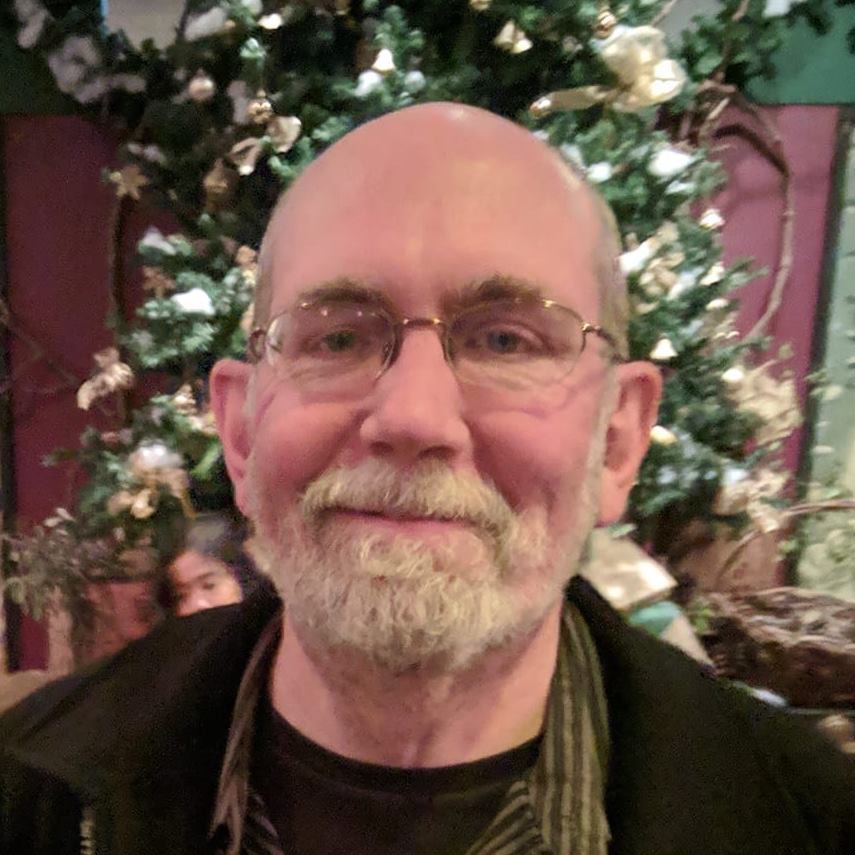
    David Templeton is a Bay Area playwright and award-winning arts journalist best known locally for his work with the Petaluma Argus-Courier and the North Bay Bohemian.

    As a playwright, he’s won awards for his writing of Wretch Like Me, which had runs at the San Francisco Fringe Festival and the Edinburgh Fringe Festival in Scotland.

    In addition to Polar Bears, his other plays include Pinky, Drumming with Anubis, and Mary Shelley’s Body, adapted from his novella of the same name, published in the 2016 anthology Eternal Frankenstein.

    David’s next play, “Galatea,” which was to have had its world premiere at Spreckels Performing Arts Center in March, will now be staged at Spreckels as part of its 2020/2021 season. He is currently at work on a collection of twisted Christmas stories, hopefully to be published in November of 2020.

    “Playwriting, coffee shops, bartenders as allies” was originally published February 27, 2020 in the Argus Courier.

  • Memorize. Prompt #490

    Imagine you are sitting on a lovely porch. It could be your porch where you live now. Or a porch you remember. Or a porch you imagine.

    See yourself sitting on a porch, perhaps in a rocking chair, or a wicker chair, or a cushy upholstered chair.

    You have been asked to memorize something while you relax on your porch. What do you memorize and why?

  • 2020 Lincoln Poetry Contest

    Inviting You To Enter 

    ✤ The 2020 Voices of Lincoln Poetry Contest 

    Message from Alan Lowe Coordinator, 2020 Voices of Lincoln Poetry Contest:

    Wishing you good health and peace during these difficult times. Looking on the bright side , April is National Poetry Month and the time to begin the 16th Annual Voices of Lincoln Poetry Contest. 

    There are five new categories: 

    ~What Do I See When I Look in The Mirror  

    ~I See You in My Dreams   

    ~You Should Have Seen What I Saw Today   

    ~ See A World with Many Opportunities  

    ~See If I Can Make You Laugh  

    Poets may submit a maximum of three poems, no more than one in each of three of the five contest categories.

    Everyone (over the age of 18) is encouraged to enter the contest. Poets do not have to live in Lincoln, CA, to be eligible.

    Rules and Entry Form

    Information (Scroll down)

    All poems must be received no later than Saturday, July 18, 2020, at the address on the Entry Form.       

  • One word from your heart. Prompt #489

    For this prompt . . . let’s get comfortable. Settle into your chair. Make any adjustments you need to make to feel relaxed.

    Take a deep breath in. Hold. Let your breath out.

    Repeat: Deep breath in. Hold. Relax breath out.

    Put your hand over your heart. Deep breath in. Hold. Release breath.

    Think of one word from your heart. The uppermost feeling or thought you are experiencing right now. Just one word.

    When I remember where I originally saw this idea, I’ll give credit here.

    The second part of this prompt is thanks to my amazing friend and writing teacher, Susan Bono.

    The quiet of knowing

    The song of regret

    The taste of heartbeat

    Prompt: Make a list using that pattern.

    If you want, you can incorporate your one word from when you had your hand over your heart.

  • Crissi Langwell shares her Facebook Expertise

    A guide for authors just starting out with a Facebook business page.

    Guest blogger Crissi Langwell gives us a crash course on using your Author Facebook Page as effectively as you can, even if you feel awkward in the beginning.

    What Should Authors Post on Their Facebook Page?

    If you’re a newly published author, or striving to be one, congratulations! You’ve done the hard work of writing a book! Now it’s time to get word out about your book, which is where social media comes in.

    But before you start spamming your friends with posts to buy your book, let’s take a step back and make a plan, starting specifically with Facebook.

    If  you don’t have a Facebook business page, it’s easy to create one, this tutorial will help.

    Once you have a FB page, then what?  I’m sure it’s daunting to look at that blank page, the status bar telling you to write something, but you don’t know what. It’s especially hard when you don’t have many fans (except one, hi Mom!) who will even read what you write.

    Note from Marlene:  Having an author Facebook page might be scary, but it can be fun. As Crissi says, “Don’t give in before you’ve even started.

    Show Them Who You Are

    First things first, make sure you have a profile picture and a cover photo. Your profile can be you, or it can be your book. On my own author Facebook page, I like to use my own photo most of the time. But when I’m getting ready to release a new book, I’ll change it to show my book cover.

    For the cover photo, you can choose scenery, a collage of your books, or anything that gives readers another clue as to who you are. But make sure the cover image is big enough to fit in that space. Nothing looks more unprofessional on a Facebook page than a pixelated image for the cover photo. The exact dimensions are 820 X 312 pixels.

    Hint: Go to Canva.com and create your Facebook cover there. This is a design website that offers easy templates that make all your designs look fun and professional. Here’s an easy tutorial to learn how to use it.

    Personalize Your Page

    Make sure your Facebook page URL is the exact name you want it to be. In your “About” section, go to the “General” area and edit your Username. Otherwise, your URL will add a bunch of numbers to the address, making it look clunky.

    Finally, fill out your “About” section with your bio, your website, and anything else you want readers to know about you. This section is checked more often than you think, and can be readers first impression of you.

    What to Post!

    Posting Rules

    • Be authentic. Be yourself.
    • Don’t spam your readers with “buy my book” posts
    • Refrain from politics or hot button issues (unless your books are about politics or hot button issues)
    • Post at least once a day, if possible
    • But don’t over-post, or you’ll lose readers

    Ten things you can post about on your Facebook page:

    1. A blog post you’ve written
    2. A quote from your book
    3. What you’re reading now (NOT your own book)
    4. Something funny that happened today
    5. Something in current events or pop culture that your readers would be interested in
    6. A quote from another author or influential person. Go to canva.com and create an image.
    7. A top 10 list of books your readers might enjoy knowing about
    8. News of a book event you’ll be attending
    9. News about your book release, or a sale on your book
    10. A photo of you writing, living life, or having fun

    Please note, only two of these ten items are directly about your book. A good rule of thumb is to follow the 80–20 rule: 80% of your posts are NOT about your book, and 20% of your posts are.

    It’s a good idea, before you post anything, to think about what your readers are like. What kind of person would like to read the things you write? What other things would they like besides your books? Keep these things in mind with everything you post, because what you’re really trying to do is build an audience that is interested in YOU, because this will be part of your platform.

    Your page views will be small in the beginning. Don’t stress about that number. Keep posting content that people will want to like, comment on, or share, and that number will go up. You just need to be consistent.

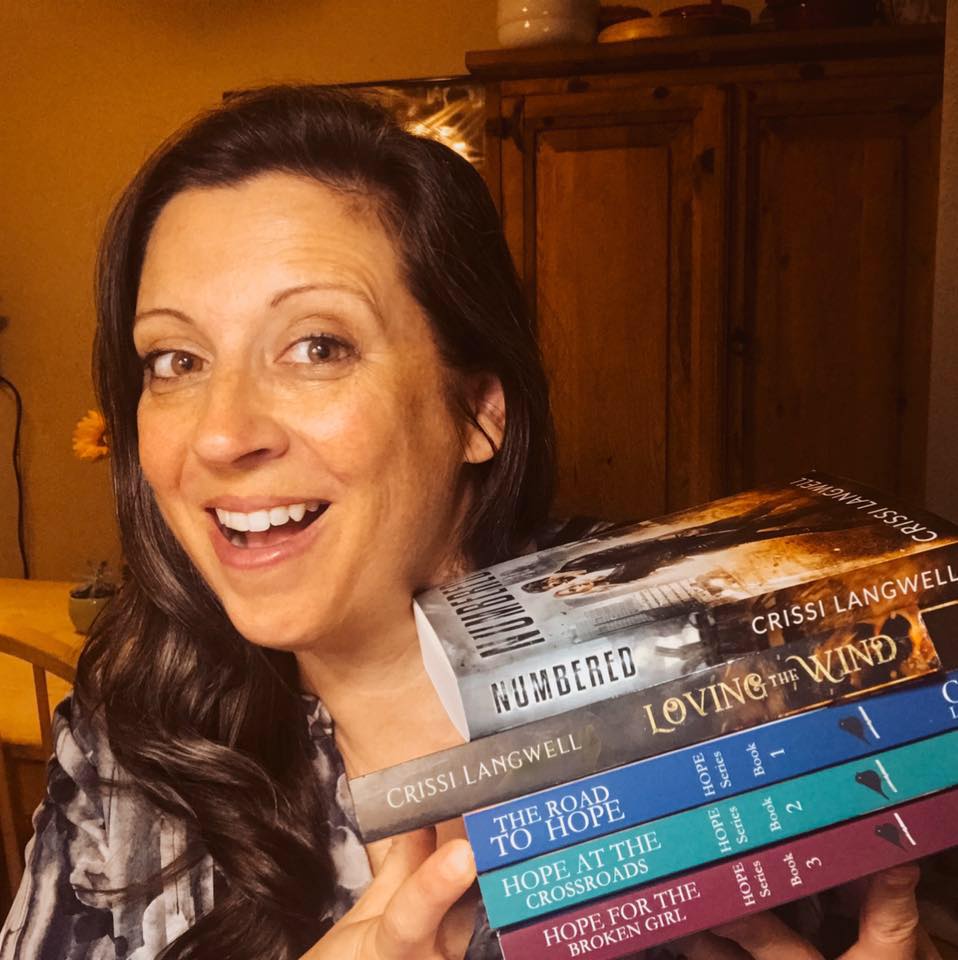
    Crissi Langwell is a romance author in Sonoma County. Her passion is the story of the underdog, and her novels include stories of homeless teens, determined heroines, family issues, free spirits and more.

  • What do you miss? Prompt #488

    What, or who, do you miss?

  • Favorite Things. Prompt #487

    Write about your favorite things.

    Whenever I hear the phrase “favorite things,” I think of the song in “Sound of Music,” . . . “My Favorite Things,” sung by Julie Andrews.

    Write about some of your favorite things.

  • On Top Of Your Game

    My dear friend, Nancy Julien Kopp blogs at Writer Granny’s World by Nancy Julien Kopp.

    Last year, Nancy posted:

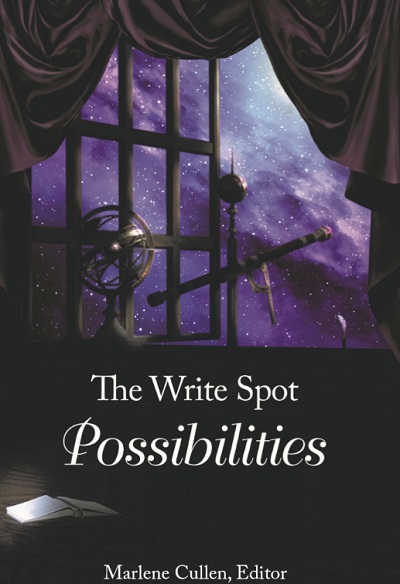
    In mid-November, I posted a review of The Write Spot: Possibilities.  The anthology consists of stories, essays, and poems by several writers. At the end of each offering is a prompt that might have inspired what they wrote and also a paragraph or two of advice for writers.

    Ahhh, advice. It can be given, but is it always accepted? Not by a longshot. Sometimes, we read the advice of other writers with a shield in front of us. The attitude can be Go ahead, teach me something I don’t already know. At other times, we’re wide open to any advice given. We want to soak it up like water in a sponge. 

    I’ve been skimming through the book again looking at the advice the writers offered. I consider it a gift to us, the writer-readers. I’m not going to quote from the book but have chosen bits and pieces of the advice that was given to share with you. Many of the writers repeated similar advice. I find that, when multiple people advise the same thing, I’d better pay attention.

    Advice from other writers:

    Don’t be afraid to share your work

    Join a writing group

    Write!

    Try different mediums of writing

    Never stop growing as a writer

    Find a special place to write that is your own

    Learn from your failures

    Nearly every one of those pieces of advice has appeared on my blog at some time, and often more than once. The suggestions for writers to heed is important enough to bear repetition. 

    One of the reasons I especially liked this anthology for writer-readers is that it offers more than the stories, poems, and essays. The prompts are excellent help for writing exercises, and the advice is worth a great deal. These writers put in a nutshell what some need an entire book to explain. An additional plus is the short bio of each writer. 

    The pieces of advice in The Write Spot: Possibilities and on my blog are simple things. Nothing so technical or intricate that others scratch their heads when they read them. Do all those little things, and you’ll be on top of your game. 

  • Want vs Need . . . Prompt #486

    Write about wants versus needs.

    Have you discovered something you thought you needed, but found out it was really a “want?”

    Are there things you now know you can do without?

    Write about how your “wants” change in different circumstances.

  • Gratitude . . . Prompt #485

    What are you grateful for?