Remember math word problems? If x = a + c, then what does b equal?
If Johnny and Tony want to end up at the same place and at the same time, why didn’t they just travel together?

Prompt: Word problems
Remember math word problems? If x = a + c, then what does b equal?
If Johnny and Tony want to end up at the same place and at the same time, why didn’t they just travel together?
Prompt: Word problems
Today’s guest blogger, Frances Lefkowitz, writes about the importance of family stories and keeping memories alive.
Telling stories ‘round the table, can increase well-being, reduce anxiety and depression, reinforce feelings of closeness among family members, and build resilience for navigating life’s normal ups and downs.
Stories about something good coming from something bad are particularly therapeutic.
When something bad happens, but you find a way to use it to your advantage, you redeem (and transform) the negative experience.
The tales need to be structured, with a beginning, a middle, and — most crucial — an end, a conclusion that makes sense of the situation and gives it meaning.
Tips for getting the storytelling started:
1. Share photos: Albums, yearbooks, holiday photos, loose photos in shoeboxes.
2. Start and continue traditions. Rituals contribute to stories.
3. Share stories during mealtimes.
Frances Lefkowitz has spent over twenty years writing and publishing.
The author of two biographies and a memoir, To Have Not, about growing up poor in 1970s San Francisco.
Frances leads popular writing workshops, and has developed a self-editing technique that she teaches to writers so they can revise and edit their own work. As founder and director of the grant-funded Community Memoir Project, she brings free memoir-writing workshops to public libraries and community centers, and publishes anthologies of these under-represented voices.

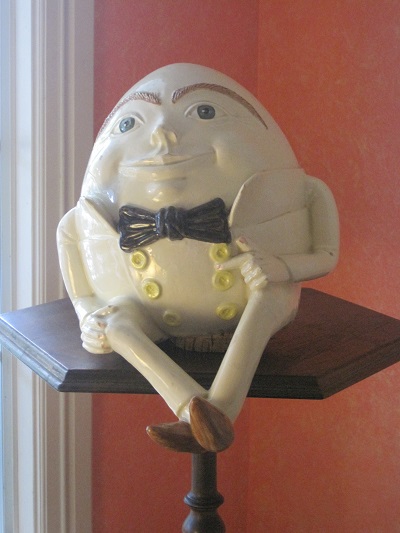
Write about a time you faced your fears.
Or a time you could have faced your fears, and didn’t.

Today’s writing prompt: In the light of day . . .
Lynn B. Goodwin is the creator and producer of Writer Advice.
Writer Advice’s Flash Fiction Contest 2019 Submission Information
Writer Advice seeks flash fiction of 750 words or less.
“Open our eyes. Help us see the world as your characters do.”
Finalists receive responses from all judges.
Everyone receives a detailed response from award-winning author B. Lynn Goodwin.
What is Flash Fiction?
For Writer Advice, it is a story of 750-words or less that has a protagonist, a conflict, a setting, excellent use of language, and an ending that we didn’t predict when we read the first line. We enjoy stories with a discovery, complex characters, lovely language, and a tone that rings true.
PRIZES: First Place earns $150; Second Place earns $75; Third Place earns $40; Honorable Mentions will also be listed.
The contest closes on June 1, 2019.
Excerpt from “Submission Control” article about submitting your writing to publications, in the March/April 2019 issue of Writers Digest magazine, by Dinty W. Moore.
Sending your work to literary magazines puts you at the whim of editors—but there’s more in your power than you may realize.
Every few months, ask yourself why you’re doing this [writing]. If writing, waiting, and facing rejection make you truly miserable, maybe you should stop.
But if you don’t want to stop, if writing is necessary, like breathing, then change your way of thinking. The long wait, the long odds, the sometimes inscrutable aesthetic taste of the editorial staff: You have to put all of that aside and write new poems, essays and stories.
And that’s a good thing.
Because the more you write, the better you get.
Dinty W. Moore is the author of the memoir Between Panic & Desire, the writing guide Crafting the Personal Essay and other books. He is the editor of Brevity, a journal of flash nonfiction.
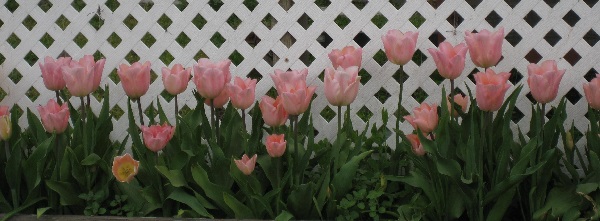
Spring is . . .
. . . The true harbinger of spring is not crocuses or swallows returning to Capistrano, but the sound of the bat on the ball. — Bill Veeck
. . . The world is mud-luscious and puddle-wonderful.— E.E. Cummings
. . . a heart full of hope and a shoe full of rain.
Your turn . . .
Spring is . . .
Just Write!
Guest Blogger Rachael Herron writes about one of my favorite topics: Revision:
I’m in the middle of revision of a book, and I’m swimming in the water I love.
What I adore about revision is this: I know the world. I invented it, after all! When I open the document, I’m right in the middle of something I understand. It’s much easier, for me, to drop in for hours and rest on the page. It’s also easier to come out of, to shake off.
First drafts remain torture for me. Many writers love first drafts, and I can admit that sometimes, the writing of new words is glorious.
You surprise yourself with a turn of phrase that you’re pretty sure is genius and has probably never been said before. The plot bends and a tree you wrote about comes to life and points a branched finger in a direction you never saw coming. Inspiration flows, hot and heavy.
But maybe I’m just more of a down-to-earth gal. I love falling in love, but I love remaining in love more. Give me a passionate kiss before you take the trash out—that’s happiness to me. I like the comfort of What I Know. I like to tuck my feet under the thighs of my manuscript as we cuddle on the couch. I love knowing my manuscript likes the lights on till sleep-time, even though I prefer to read in the dark.
Revision is both comfortable and exciting, like a sturdy marriage. Oh, I love the word sturdy. It’s prosaic, but it’s so me. My legs are sturdy. My emotions are, too. I love my books to be sturdy enough to lean on.
And lean on them, I fall into them, really. Revisions are getting in the bed you made out of words and pulling up the covers. Then you roll around, making those words better, cleaner, more focused.
Revision is when the REALLY big ideas show up. Then you have to move parts around, like those flat puzzle toys you slid pieces around on to make a picture, to make those new ideas fit. You might have to pry out some pieces and manufacture new ones. But then you click one piece left, and another one right, and suddenly, you’re looking at it. The whole picture. Your book.
Ahhh. I’m reveling.
Note from Marlene: I love Rachael’s enthusiasm about revision. If you dread revising, here’s a positive way to look at it: It’s an opportunity to look at your writing with new eyes; a prospect to improve your writing; to be sure your writing is clear, concise; to make sure you are saying what you really want to say.
Best wishes with your revision projects.
Rachael Herron is the internationally bestselling author of more than two dozen books, including thriller (under R.H. Herron), mainstream fiction, feminist romance, memoir, and nonfiction about writing. She received her MFA in writing from Mills College, Oakland, and she teaches writing extension workshops at both UC Berkeley and Stanford. She is a proud member of the NaNoWriMo Writer’s Board.
Links to other guest posts on The Write Spot Blog by Rachael Herron:
Reviews for Rachael Herron’s books on The Write Spot Blog. Type “Rachael Herron” search box for reviews about her books.

What would you do if you weren’t afraid?
What makes you smile?