Tag: John Fox

  • Infuse Your Writing With Earth Imagery . . . Prompt #448

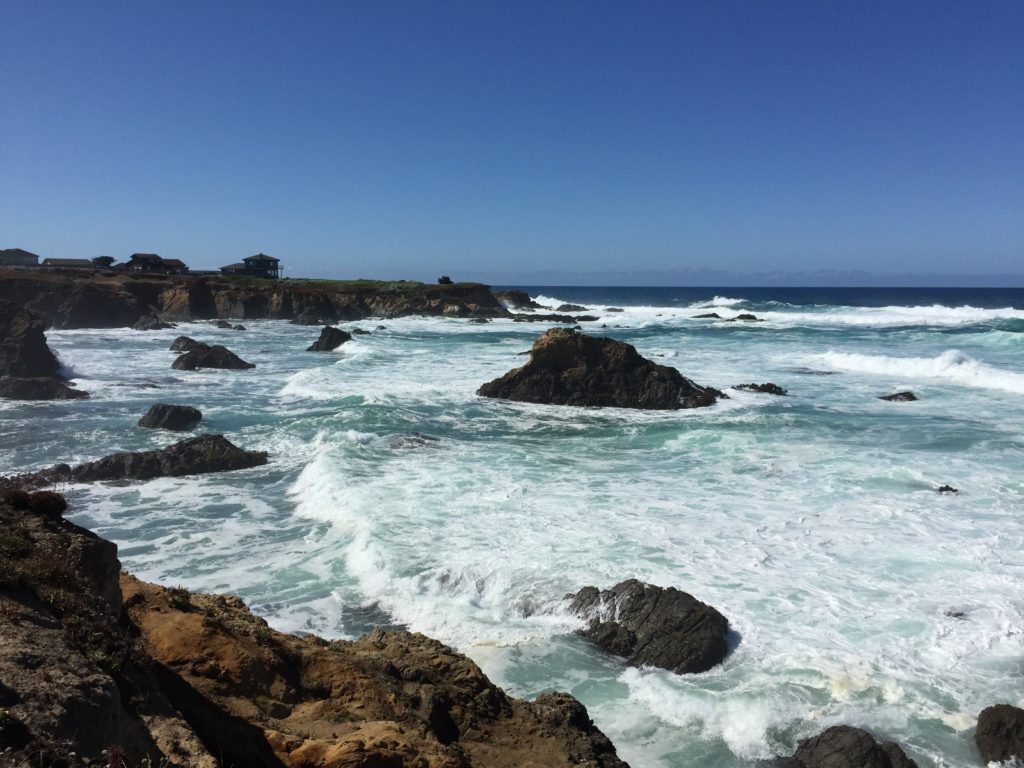
    Photo by Marlene Cullen

    Excerpt from Poetic Medicine, by John Fox, “Giving Yourself Permission to be Wild and Magnificent”

    Earth offers us powerful images and metaphors with which to tell our stories. Rather than thinking of the earth’s resources as commodities like oil and wood . . . consider the more intangible qualities which nature offers us, such as beauty and spectacle, turmoil and order, mystery and predictability.

    A sense of beauty – wild and terrible or lovely and breathtaking – can be healing.

    Infusing your writing with earth imagery will help reveal your unique voice and imagination. The stories of earth – and our stories – are interwoven, constantly changing in the cyclic process of birth, growth and death. A language for expressing these deep changes in your life can be found by tuning to the language of the earth.

    Poem-making and the natural world give you permission to be wild and magnificent. Your poetic musings of connection with the earth can take you beyond conventional ways of looking at yourself.

    We are often so busy conforming to traditional notions of success that we miss this joyful opportunity to cut loose and feel our lives – to express our highest potential and explore our true legacy.

    Prompt:  Using inspiration from the natural world present an outrageous, yet honest, picture of yourself . . . or paint a word picture about anything you want, perhaps something that happened over the weekend, or during this past week.


  • The Healing Power of Images Prompt #139

    Today’s prompt is inspired from Poetic Medicine by John Fox, “The Healing Power of Images.”

    Morning glory“A morning glory at my window satisfies me more than the metaphysics of books” — Walt Whitman

    “Images are drawn from sensory experience and help us to feel what the writer or speaker is communicating. Whitman is more satisfied by the morning glory because it is real and alive, it communicates something to him about reality that is particular, clean and unmistakable. Images offer us direct experience. They can show themselves to us through any of the senses.”

    Think about the house you grew up in, or where you spent most of your childhood. Or, if you want to write from your fictional character’s point of view. . . picture a place where the protagonist spends a lot of  time.

    Petaluma MuseumNow, think about routes you routinely took . . . to school. . . or the library. . . a store . . . or playground

    Travel back in time, or to your imaginary place, and see the sights and scenery. If you are working on fiction. . . use this prompt to visualize your story’s setting.

    Owl.3Zoom out like an owl and observe the activity below. Perch on a rooftop or a pole or a high wire.

    Let’s have the owl observe something on your daily route, or your character’s. A place that evokes a strong memory for you.

    Take a moment and picture this place. . . an intersection, in front of a store, a front yard, a back yard, an untamed place or a place filled with human or animal activity . . . a familiar place, either from real life, or make it real with your imagination.

    Zoom down, get closer to the action. Perch where you can clearly see details of the place you have selected.

    Prompt: Describe as precisely as you can, the images and direct sensations you see, hear, feel, intuit, smell.

    Use sensory detail: Smell, sound, taste, touch, visual: a vendor’s food cart, sewer sour milk smell, wind chimes, brakes screeching, popcorn, hot dogs, brittle wood on telephone pole, dirt, yard ornament, cigarette butts.