Tag: Journal Writing

  • Writing Your Parents’ Stories

    Guest Blogger Laura Zinn Fromm writes:

    A few days ago, one of my students emailed. She had read an essay I’d just published about my father—dead now 19 years but still giving me plenty of juice to write about.

    The essay was about how volatile my Dad had been, and how loving—a love I rediscovered in letters he’d written to my mother at the end of their marriage. My mother had given me the letters during the pandemic, while she was cleaning out her house. I knew my parents had once loved each other fiercely and unambiguously, but the memory was an ancient one that predated my birth, and by the time I started to pay attention to how they treated each other, it was clear that love had been undone by disappointment and grief. They’d had a stressful marriage, and eventually moved on to other people—my father remarried, adopted a baby, divorced, became engaged to two other women and raised my half-sister alone; my mother moved in with another man for ten years, then left him and married someone else. Scads of boyfriends, girlfriends, semi-siblings and step siblings came and went; the only one I still talk to is my delightful half-sister.

    But my father’s letters to my mother, written in the middle of their marriage and then at the end, showed that there had been layers to their relationship. My father had been bipolar, suicidal and often cruel to my mother, but the letters gave me insight into his loneliness, confusion and remorse over what had happened between them.

    My student wrote:

    I loved your piece about your father. I wish I could get to the point where I can balance my mother’s flaws and good points in a balanced, detached way. Did you achieve your clarity and equanimity mostly through therapy? Any suggestions? When you get a chance. 

    This was an excellent question. Had I actually achieved clarity and equanimity? And if so, how?

    Of course, therapy helped—I’m 59 and had started seeing my therapist when I was 31; we had spoken about my parents at length. But it wasn’t just therapy that allowed me to consider my father from different angles. In addition to the letters, my mother also gave me journal entries my father had left behind, and home movies she had transferred to a thumb drive.

    The movies showed my parents when they were young and carefree, chic on safari in Africa, cavorting on beaches in Tahiti and the Jersey Shore. There was my father in swim trunks, sticking out his tongue and doing handstands on the beach, there was my mother looking like Audrey Hepburn, gorgeous in a red bikini and sunglasses. Long after their divorce, these props allowed me to imagine what they felt as they reveled in each other and the countries they explored together. I could hear my father teasing my mother, and my mother laughing and saying, “Oh, Steve!”

    The letters and movies allowed me to piece together what they had savored and surrendered.

    Some of the journal entries were hard to read (my father had some choice things to say about their sex life) and it took me three-plus years to write the essay I recently published. I would read a journal entry, squirm, then put it away, sometimes for months. When I finally returned to the letters and journal entries, I set a timer and wrote for 15 minutes, just enough time to reread and maybe write a few challenging sentences. Eventually, I was able to write for longer stretches and finish the story. Telling my parents’ story allowed me to exert some control over it, unlike the powerlessness I had felt as a teenager, watching their marriage implode at the dinner table.

    There was something else too that allowed me to write about the difficulties of love: meditation.

    I meditate 30 minutes every morning, sometimes outside. All the volatility I experienced as a kid melts away as I close my eyes, repeat my mantra, and reset my central nervous system. Meditation allows ideas to bubble up to the surface and is the most effective way I know to self soothe. Plus, it’s free. You don’t even need an app. I just set a timer on my phone and silently repeat my mantra (ima, Hebrew for “mother”), while thoughts ricochet around my brain and finally dissolve into something resembling clarity.

    I wrote back to my student:

    Yes, of course, therapy helps, but I think meditation and writing about my parents in a focused way helped even more. Just the process of thinking about them in a calm way (through meditation) allowed me to detach from how I felt about them and let me “observe” them from a safe distance. And then writing about them, and wrestling with their challenges but also forcing myself to find a way to deliver some message of hope and insight for the reader, also helped. So, I guess the short answer is yes, therapy helped, but meditation and focused writing helped even more. 

    My student wrote back: “Thank you for sharing what helped you with your parents. Writing is definitely therapeutic. I still have to try meditation.”

    If you are tackling difficult subjects, I recommend it all.

    Originally posted on August 26, 2024 Brevity as “Writing About My Father.”

    Check out our Substack: Sweet Lab Writing Workshops x Culture Vultures

    Laura Zinn Fromm is the author of Sweet Survival: Tales of Cooking & Coping (Greenpoint Press, 2014). She has an MFA in fiction from Columbia University and teaches fiction and creative nonfiction workshops through her company, Sweet Lab Writing Workshops.

    She has also taught at Columbia, Montclair State, the New York Public Library and through Kelly Writers House at the University of Pennsylvania.

    A former editor at Bloomberg Businessweek, she is a winner of the Clarion Award and the Newspaper Guild’s Page One Award for Labor Reporting. Her work has appeared in The New York Times, Huffington Post, Bloomberg Businessweek, The Forward, the Girlfriend, the Opiate, and elsewhere. 
  • Writing Through a Book’s Mushy Middle

    “Advice on Writing Through a Book’s Mushy Middle” By Judy Bolton-Fasman

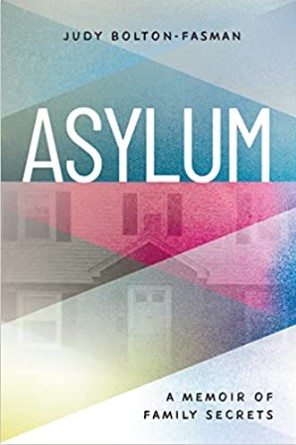
    A eulogy I wrote for my father expanded into journal entries and eventually my book, “ASYLUM: A Memoir of Family Secrets.” I long dreamt that those loose collection of journal entries might become a book, but for many years they were arc-less and therefore not coalescing. There was no discernible beginning, middle, and end. But those entries, the impetus to start a writing project—I wouldn’t dare call it a book at the time—formed my literary North Star. 

    As Emily Dickinson wrote: “I am out with lanterns looking for myself.” I searched for myself in every corner of my memory, soul, in every rare photo I had, in every journal entry I wrote, and in notes I jotted down. In that process, I found profound, surprising things about myself and the other protagonists in my life story. 

    One of the best pieces of advice I received from a friend was this: Find people who knew your father back in the day. I won’t give away the secret at ASYLUM’s core but researching my father’s life blew my memoir open. My nascent book was no longer all situational—I had a story to tell. 

    So, I threw away many pages of false starts and bruised prose. Then, armed with knowledge from my research, I began to write again. A word about research. In my case, there was little or no paper trail about my father so, I learned about him in his university library. There I read his alumni magazine class notes beginning in 1940. I sussed out facts casually mentioned, which led to an astonishing connection. But mostly, I talked to people. Many of them claimed to remember nothing. However, their foggy memories did not deter me. I gently asked questions and found gold to mine in those conversations. 

    And research—don’t be daunted by it. For me, it was the skeleton key that opened submerged parts of my family history. Research takes many forms. It can be as accessible as reading someone’s favorite book or rereading your favorite book. The bottom line is we are the experts on our stories. Only we can tell a particular story. Bearing that in mind sustained me in slogging through my book’s “mushy middle.” And when I reached the other side, I found my research had buoyed my story. 

    The importance of ongoing note-taking sparked memories and ideas. Again, this doesn’t have to be daunting. For my next project—notice superstitious me is hesitant to call it a book—I’m keeping an ongoing hodgepodge of notes on my Notes app. I did that to some extent while writing ASYLUM, particularly when I needed to keep track of who I had to talk to, where I had to go to find my father. Write everything that pops into mind. Those words, those lines will beckon again and enable you to go deeper into your book. 

    In the mushy middle, all kinds of characters will be vying for attention to include them. Invite them into the book—it doesn’t mean they will stay. But getting to know a crowd of characters enabled me to know myself better. I love this Joan Didion quote: “I think we are well advised to keep on nodding terms with the people we used to be, whether we find them attractive company or not. Otherwise, they turn up unannounced and surprise us, come hammering on the mind’s door at 4 a.m. of a bad night and demand to know who deserted them, who betrayed them, who is going to make amends.”

    Didion’s observation is a manifesto for the memoir writer. 

    A character, usually not the writer, constantly lurks and then threatens to take over the narrative. My mother is necessarily a major character in ASYLUM. But, my goodness, she threatened to hijack the book at so many points. And maybe she did occasionally. In the mushy middle, give the characters and yourself permission to roam around the narrative. That’s what revision is for. And speaking of revision—do not go down the revision rabbit hole in this tender middle. Instead, generate, generate, generate material with which to sculpt. Nothing is wasted—think of it as literary compost to enrich the writing, the story, yourself. 

    A few words about the last part of the book: the ending is embedded in the narrative, it’s embedded in you, the writer; it always has been. You will realize it was hiding in plain sight. I wrote my ending at what felt like the last moment. But it wasn’t the last moment; it was a cumulative moment for me and my book. 

    I’ll be more specific—I end with returning to where my parents were married and say the Kaddish for my father there. This worked in that my parents’ marriage is front and center in the book and saying the Kaddish—the Jewish prayer of mourning—was central to the stages of grief I went through. It was also a significant strand in the book. 

    And last words of advice—no matter how tempting, and I know the temptation well—do not abandon your book. It needs you and you need it. This is your story, your moment. You’re important, and so is your story. Keep taking notes even if it is on the back of a restaurant menu while your dinner companion is in the loo. Those bits will happily surprise you as you come upon them again and welcome them into your writing.  

    And journal your way out of conundrums. Free write, and if possible, handwrite in a notebook. It makes a keen impression on the mind, on memory. Truths and images and insights will inevitably emerge. And remember, you did not write to bury anyone but to bring them to life. 

    “Advice on Writing Through a Book’s Mush Middle,” first appeared on Brevity’s Nonfiction Blog on August 25,  2022.

    Judy Bolton-Fasman is the author of “ASYLUM: A Memoir of Family Secrets” from Mandel Vilar Press (2021).

    Her essays and reviews have appeared in major newspapers, essay anthologies and literary magazines She is the recipient of numerous writing fellowships, a two-time Pushcart Prize nominee and a Best of the Net nominee.