Tag: National Novel Writing Month

  • Cavorting With Words

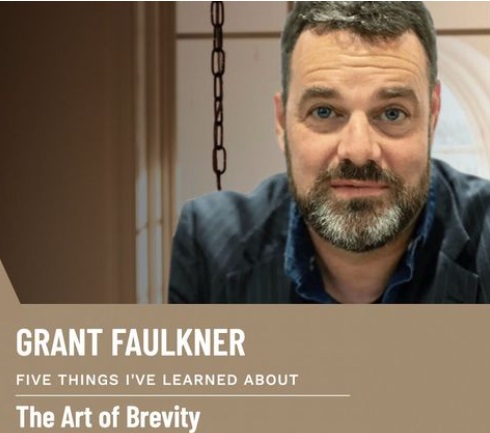
    Guest Blogger Grant Faulkner:

    Since it’s National Novel Writing Month, I wanted to share my thoughts on the creative process that is at its core: writing with abandon. This is a reprint of an essay that originally appeared in Poets & Writers.

    A few years ago I grappled with a simple question I had never before bothered to ask myself: Did I decide on my writing process, or did it decide on me?

    Despite an adult lifetime of reading innumerable author interviews, biographies of artists, and essays on creativity, I realized I’d basically approached writing the same way for years. And I didn’t remember ever consciously choosing my process, let alone experimenting with it in any meaningful way.

    My approach formed itself around what I’ll call “ponderous preciousness.” I’d conceive of an idea for a story and then burrow into it deliberately. I’d write methodically, ploddingly, letting thoughts percolate, then marinate—refining and refining—sometimes over the course of years. It was as if I held a very tiny chisel and carefully maneuvered it again and again through the practically microscopic contours of my story world.

    I distrusted the idea that anything of quality could be written quickly. A story, a novel, or even one of my pieces of flash fiction had to be as finely aged as a good bottle of wine in order for all of the nuanced tannins and rich aromas to fully develop. My writing moved slowly from one sentence, one paragraph, to the next, and I often looped back again and again with the idea that I needed to achieve a certain perfection before I could move forward.

    But as I hit middle age, the golden age of reckoning with all things, I decided I needed to shake things up, just for the sake of shaking them up. If I viewed myself as a creator, I needed to approach my own creative process with a sense of experimentation and outright dare.

    And, truth be told, my writing had veered toward being as much of a job as my day job. My publishing goals had stifled any sense of playfulness. My stories hewed to narrative rules as if I was trying to be a good citizen in a suburban neighborhood where I felt like an outsider.

    I thought back to the reason I became a writer in the first place: that ineffable impulse to explore matters of the soul, the need to put words to the hidden spaces of life, the desire to probe life’s mysteries. I concluded that my labored approach had smothered my verve. I wanted to cavort through words again, to invite the dervishes of rollicking recklessness back into creation.

    Cavorting with words

    Around this time a friend invited me to join him in National Novel Writing Month: the annual challenge to write a fifty-thousand-word novel during November. I knew about the event, but had never thought it was for me. The object was to write faster than I was accustomed to—to produce approximately seventeen hundred words per day for thirty days straight, a word count at least double what I was used to.

    I feared writing a novel littered with unconsidered words and loose connections. I feared writing something flimsy.

    Note from Marlene: You can read the rest of this article, posted 11/5/23, originally titled “Writing With Abandon,” at Grant’s Substack: Intimations: A Writer’s Discourse.

    Grant Faulkner:

    As a boy, I spent my allowance on all sorts of pens and paper, so there was never much question I would become a writer. I received my B.A. from Grinnell College in English and my M.A. in Creative Writing from San Francisco State University.

    It seems like I should have other degrees, such as an MFA in Novels about People Doing Nothing But Walking Around, a PhD in Collages and Doodles and Stick Drawings of Fruitless Pursuits, or a Knighthood in Insomniac Studies, but I don’t.

    I have published in many publications. My stories have been nominated for the Pushcart prize and included in such collections as W.W. Norton’s New Micro: Exceptionally Short Fiction and Best Small Fictions 2016.

    By day, I’m the Executive Director of National Novel Writing Month, Co-founder of the lit journal 100 Word Story, Co-founder of the Flash Fiction Collective, a member of the National Writing Project Writers Council, a member of Lit Camp’s Advisory Council, and a member of the Aspen Institute’s Aspen Words’ Creative Council. I also co-host the Write-minded podcast.
    Grant Faulkner Bookshop

  • Tips To Unlock The Book Only You Can Write

    Guest Blogger Jenn Gott writes about 3 Inspiring Ways to Unlock the Book Inside You.

    Does this sound familiar: You’ve always been drawn to writing and have a mind brimming with ideas. You’ve always loved the idea of holding a book you have written — but somehow, despite all your best intentions and New Year’s Resolutions, it just hasn’t happened.

    Or maybe you’re a writer who has started a thousand writing projects, only to abandon them all within a few pages. Perhaps you’re not even sure if you want to be a writer, but you’ve always wanted to write a children’s book for your kids.

    Maybe you’re a poet, or a copywriter, or a journalist, and there’s a book you know you could write, if you just find the right words inside you.

    Maybe, maybe, maybe. One day.

    The trouble with “one day” is that it doesn’t exist — each day, there’s only today. Which is why I’m bringing you the three best practices that I’ve found to unlock and supercharge creativity. It doesn’t matter whether you’re a beginner who has always wanted to tell your story, or a seasoned pro who’s gotten mired in delays, worries, and self-doubt. Either way, these habits will have words flowing in no time.

    1. Find your community

    From National Novel Writing Month (NaNoWriMo) participants to your local writer’s group to authortube, it’s important to find your people wherever you can. Support is everything on your journey toward finishing a book, and it will inspire you more than anything else. To start, identify what kind of groups appeal most to you. Would you prefer to interact online,where you can hang out in your pajamas and reply at your leisure? Or would getting out of the house and seeing people face-to-face reinvigorate you? Are you interested in a classroom setting, a critique circle, or just some supportive friends who will provide lively discussion? Do you want to learn from people who are much more experienced than you, or strive together with peers at your skill level?

    Don’t feel you need to limit yourself to only one group. There’s nothing to keep you from making writer-friends on Twitter, and in person at bookish events, and through workshops. In fact, the more avenues you explore, the more likely you’ll find “your people.” Consider going to conferences, book signings, and events at your local library.

    Your community doesn’t need to be all writers. While it’s important to know some — to understand exactly what you’re going through, and bounce ideas off each other — a supportive and understanding friend or partner can go a long way. As you seek out connections, make sure to you surround yourself with people who believe in you. Remember, helpful and constructive criticism is good — how else can you learn the skills you’ll need to edit your book to perfection? But ragging on you and your work is toxic for everyone involved.

    2. Fill your creative well

    Sometimes the reason we’re not writing is simply that we’re emotionally tapped out. There are many factors that can cause creativity to dry up — everything from stress to poor mental health, to overwork, fatigue or illness, and creative burnout. And while it may feel silly to take time off to recharge if you haven’t been writing lately, sometimes that’s exactly what you need to do. Think of it like an arrow: pulling back first, in order to shoot forward.

    It’s important to make sure you’re recharging the right way, though. Scrolling through social media may be satisfying, but is it really going to inspire you to sit down at your laptop and write? Or would that time be better spent going for a walk, seeing a play, or reading an exquisitely written book?

    If you’re having trouble writing, take a minute to sit down and make a list of the things that energize you — physically, mentally, and creatively. Maybe plays aren’t your thing, but poetry is. Maybe a walk exhausts you, but yoga centers your mind. It really doesn’t matter what it is (truth be told, sometimes a movie or a video game inspires me). You just need to walk away from it refreshed, rejuvenated, and ready to tackle your big creative project.

    However, be careful not to let this turn into further procrastination. Remember, the point of these activities is to inspire you, not consume you. Always take a few minutes afterward to reflect on which parts of the experience spoke to you, and how you might use similar themes, moods, or ideas and blend them into your own work — or which mistakes you’ll want to avoid.

    3. Create your own writing retreat.

    Of course, we’d all love to go to a week-long retreat at a fancy cabin in the woods, but for many of us that simply isn’t an option. Luckily, there are ways to recreate the retreat feeling without venturing far from home or taking a lot of time out of your busy schedule.

    First, start by identifying any and all locations near you that might offer some peace and solitude. This can be as simple as locking your bedroom door, or as elaborate as a nice hotel nearby where you can book a room for a night or a weekend. Coffee shops, parks, or trains, and subways can do the trick, especially with a good pair of headphones! The point is to find someplace where you can block out thoughts of the outside world, including all your daily responsibilities. If you’re lucky enough to have a home office or a “room of one’s own,” try to find someplace else for your retreat — someplace you don’t work in every day.

    Next, consider what approach would best make that space feel more “writerly.” Would music help you, and if so, what kind? Would you feel more soothed with a soft blanket, a hot water bottle, or a big glass of wine? Candles, fairy lights, or other mood lighting can also help set the stage of your imagination. Remember, the point of this is to feel pampered, so don’t skimp on the creature comforts.

    Once you’ve identified where you’re going to take your “retreat” and how you’re going to cozy it up, the final step will be scheduling. This is, admittedly, the hardest part of your task, but with a bit of effort you can make it work. Try to block out a whole day, although even a few hours will be a huge boost.

    For magically productive people, just showing up might be enough to get the words flowing. For the rest of us, it might take a little more work, and a few handy tips and tricks. If you find yourself frozen at the prospect of getting started, consider freewriting as a warm up.

    Still unsure what to write about? Writing prompts might just be the kick your brain needs.

    Whatever you do, don’t stress out if your first “retreat” isn’t as fruitful as you’d imagined. Any progress is still progress, and the more often you repeat the writing habit — in any environment— the faster your creativity will kick into gear.

    Above all, remember: only you can tell your story. So, what are you waiting for? Get out there and tell your story. Today.


    Jenn Gott is an indie author and a writer with Reedsy, so she basically spends all her time either writing books, or helping people learn how to write books. She firmly believes there is no writing skill you cannot learn with practice and the right guidance. When she’s not working, she enjoys keeping up with the latest superhero movies, reading, and swimming.

  • NaNoWriMo-Is it for you?

    Have you heard of NaNoWriMo? National Novel Writing Month.

    “NaNoWriMo believes in the transformational power of creativity. We provide the structure, community, and encouragement to help people find their voices, achieve creative goals, and build new worlds—on and off the page.” —NaNoWriMo website

    “A month of NaNoWriMo can lead to a lifetime of better writing.” Grant Faulkner, founder and creator of NaNoWriMo.

    NaNoWriMo

    National Novel Writing Month began in 1999 as a daunting but straightforward challenge: to write 50,000 words of a novel during the thirty days of November.

    Each year on November 1, hundreds of thousands of people around the world begin to write, determined to end the month with 50,000 words of a brand-new novel — but that’s not all that NaNoWriMo is!

    NaNoWriMo is a nonprofit organization that supports writing fluency and education.

    It’s a teaching tool, it’s a curriculum, and its programs run year-round.

    Whatever you thought NaNoWriMo was, it is more than that. — NaNoWriMo website

    The following is excerpted from an article by Grant Faulkner, Nov/Dec 2016, Writers Digest magazine.

    “Wharton professor Katherine Milkman and her colleagues found that we’re most likely to set new goals around ‘temporal landmarks’: a birthday, a holiday, the start of a new semester—or a new month, such as National Novel Writing Month. These milestones create a new ‘mental accounting period’ (past lapses are forgiven, and we have a clean slate ahead of us) and prompt us to turn our gaze toward a better vision of what we want for ourselves and how we can achieve it.

    NaNoWriMo invites you to generate many new ideas—to rip through failures, learn from them and build on them.

    “I like to think of Nano-ing as excavating. You uncover different things at the 30,000-word mark than you do at 10,000,” says Erin Morgenstern, who wrote the rough draft of The Night Circus during NaNoWriMo.

    A sense of playful wonder is important for writing mastery, and NaNoWriMo teaches you to trust the gambols of your imagination, to test your ideas on the page. When you stop demanding perfection of yourself, the blank page becomes a spacious place, a playground. So what if your writing feels a bit sloppy? It’s just a first draft.

    NaNoWriMo gives you the opportunity to reflect on your writing, to understand what creative approaches work for you, and to develop the grit, resilience and can-do gusto of a true master.

    How to find time to write when you have no time.

    Need ideas for when your stuck? How about doing a 15-minute freewrite as a warm-up before your writing? You can use writing prompts for freewrites and they might just end up in your novel, or help you get your characters from Point A to Point B.

    Just Write!

  • Guest Blogger Bella Andre couldn’t stand it anymore, so she . . .

    Guest Blogger Bella Andre shares what it takes to get writing.

    In the workshops I give to writers, I talk a lot about blocking out the white noise (email, Facebook, phone calls, prolonged internet searches for information you don’t really need to know to write your first draft, etc.) and putting on blinders so you can really give your focus to your book. This advice is a lesson I personally relearn with every single book I write.

    That’s the quick and pretty version, but if you pull back the glossy cover, the past 30 months actually look like this:

    * Decide to start my new book.

    * Do everything but start the book.

    * Make more big plans to start the book, for real this time.

    * Freak out about not starting the book.

    * Tell myself that tackling the non-writing items on my enormous to-do list is important, necessary work, so really, how could I start the book yet?

    * Tick through non-writing items on my to-do list and get crankier by the day.

    * Force myself to sit down with my laptop and stare at the blank page and not get up until I’ve written at least 1,000 words.

    * Finally realize (yet again!) that the number-one thing to help both my career and my peace of mind is sitting down and writing. Every single day. From one book to the next.

    Today’s start of Sullivan #12 was no exception. I went through every one of the above steps during the past two weeks until I simply couldn’t stand it anymore. When I woke up this morning, I decided the to-do list could wait. Answering emails could wait. A walk could wait. Eating could wait.

    But the book could not.

    I truly believe that no matter where you are in your writing career, the book is always the most important thing. For a new writer, finishing your first book will likely require great focus and determination. All you want is to finally get to “The End.” But once your book is out in reader’s hands, the most important thing will always be your next book. I’ve seen again and again, in both my own career and others, that the surefire way to create ongoing success is to write the next book. And the one after that. And the one after that.

    Once I finally push myself to start a new book, I always find that’s when the focus finally comes. Fortunately, day by day as I sink deeper into the manuscript, it becomes far easier to block out that white noise and keep focus on the writing.

    Happy writing! Bella Andre.

    Visit Bella’s Facebook Fan Page.

    This “Pep Talk” originally appeared on National Novel Writing Month’s website, nanowrimo.org

    Having sold more than 2.5 million self-published books, New York Times and USA Today bestselling author Bella Andre’s novels have appeared on Top 5 lists at Amazon, Apple, Barnes & Noble and Kobo. After signing a groundbreaking 7-figure print-only deal with Harlequin MIRA, Bella’s Sullivan series are being released in paperback in a major global English language launch in the US, Canada, the UK, and Australia in continuous back-to-back releases from June 2013 through April 2014. Known for “sensual, empowered stories enveloped in heady romance” (Publishers Weekly), her books have been Cosmopolitan Magazine “Red Hot Reads” twice and have been translated into nine languages, and her Sullivan books are already Top 20 bestsellers in Brazil. Winner of the Award of Excellence, The Washington Post has called her “One of the top digital writers in America” and she has been featured by NPR, USA Today, Forbes, The Wall Street Journal, and most recently in TIME Magazine. She has given keynote speeches at publishing conferences from Copenhagen to Berlin to San Francisco, including a standing-room-only keynote at Book Expo America on her self-publishing success.


  • Twelve Steps to Successful Writing

    Are you the type of person who needs to clear your desk before getting down to the business of writing?  Me, too. I have to pay the bills, sort, organize, stack things on my desk.  Satisfied, but not ready to get to writing, I look around. Oh, I really need to do the laundry, clean the bathroom, clean the floor, check the refrigerator, look outside, get a drink of water. Sometimes it seems I’ll do everything except write.

    One year I participated in NaNoWriMo for the month of November. I loved it. This year I’m going to participate in Write Nonfiction in November (WNFIN), founded by Nina Amir. But I know I’ll only be successful if I plan ahead.

    Here are Twelve Steps to get to that writing we so want to do.

    1. For the next two weeks, get caught up. Get organized, file those pieces of paper that clutter your desk, your counter, your life.

    2. For the next two weeks, spend extra time crossing things off your actual or mental to-do list. Whatever you’ve been putting off doing. . . do it now.

    3. Plan ahead. What do you usually do in November that you can do now? Put all the Thanksgiving and holiday items in a box (tablecloth, napkins, decorations, plates, etc).

    4. Get a box ready for all the incoming stuff. . . mail and paperwork that can wait until December.

    5. Get another box for important, don’t-want-to-forget items. As things arrive, put them here. Then, once a week in November, take care of business. . . spend as little time as possible. Just get this stuff done so you can get back to writing.

    6. Plan snacks. Make a list of perishable snacks you want to have on hand, so you don’t have to think when the time comes to purchase the snacks. Just take your list to the store. Then get back to writing.

    7. Plan meals. Same as above. Keep meals really easy. Soup and sandwiches. Simple salads.

    8. Purchase whatever you can now for your food needs/wants/cravings. Yes, you will have cravings. Plan for them. Don’t agonize over this. Keep your mind deep in the Land of Writing. But you will need motivation to keep going, not a reason to sneak off for ice cream.  Fill freezer, pantry and cupboards with food stuff you know you will want.

    9. Tell your friends and family whatever you want. . . you have a contagious disease, you have laryngitis, you’re on deadline (you are) . . . but you aren’t accessible to babysit, carpool, lend an ear or a shoulder. This is Your Time to write.

    10. Have everything lined up that you will need . . . paper, pens, ink cartridges, list of writing prompts as daily warm-ups, ashtray (just kidding, unless you really do smoke), water, snacks.

    11.  Turn your phone off, do not look at Facebook until the end of the day, do not get distracted with tweeting, twittering, looking, sneaking, freaking, or any of the many things that will tempt you to distraction.

    12.  Set up your good luck charms, talismans, touchstones, candles, lucky rabbit’s foot . . . whatever it takes to remind you . . . for the month of November. . . You Are A Writer.

    Write that on a post-it note. Post it prominently. Look at it. Remember it. Believe it. You Are A Writer.

    What helps you to keep focused on your writing? What steps would you add to being a successful writer?