Tag: Rachael Herron

  • Writers are incorrigible thieves. — Rachael Herron

    The excerpt below is from the Conversation Guide at the back of The Ones Who Matter Most.

    Question: What might surprise a reader of The Ones Who Matter Most?

    Author Rachael Herron answers:

    Writing the scene in which Abby is scrabbling through the rolltop desk’s drawers was a special treat. Writers are incorrigible thieves, stealing bits and pieces of their lives to provide sparkle and heft. We can’t help populating our books with parts of ourselves. I share Abby’s optimistic naiveté as much as I do Fern’s ruthless practicality.

    But beyond the stolen personality pieces, we steal actual objects.

    Herron's deskThat’s my desk in Scott’s office. As Abby explores the many small drawers, Abby wonders why they aren’t being made useful. They could hold hair bands and gum and those wonderful yellow Paper Mate pencils. In my office, those drawers do hold those things. Found in an antiques store in a defunct chocolate factory in Oakland, my desk waited for me to stumble over it.  As my eye fell on it, a solo spotlight hit its polished oak highlights and a heavenly choir sang one high, perfect note. I hadn’t been looking for a rolltop desk, especially not one as unwieldy as a drunk cow. It was in my office the next day.

  • Writing settles my soul —Rachael Herron

    Today’s “Just Write” post is an excerpt of Holly Robinson’s interview of Rachael Herron. (Edited for brevity. Click on Huffpost link below to read entire interview.)

    Holly Robinson writes:

    One of my favorite things about being a writer is having the chance to meet other writers whose books I admire. I probably admire few books as much as I do Splinters of Light, my new friend Rachael Herron’s powerful, poignant, and surprisingly comic novel inspired by a People magazine article about the impact of early-onset Alzheimer’s on a woman and her family.

    In the hands of another writer, this topic could be dreary and depressing, but Rachael spins a story of resilience and love that leaves you believing in the healing power of family and forgiveness. Splinters of Light is a reading experience you won’t soon forget. Here’s a look at how Rachael works — she’s a prolific author of romance novels, women’s fiction, memoir and essays.

    Give us a peek at your workspace. (I’m imagining lots of animals milling about, baskets of yarn, an unfinished sweater.) Do you have any special foods or drinks that keep your butt in the chair as you write?

    I recently found the desk of my dreams, a roll top behemoth with cunning pigeon-holes and drawers for everything. I literally have a drawer for lip balm, one for beach glass, one for hair ties (all very important in the writing process, of course). I do have baskets of yarn around and usually have a cat or two on my lap, but what keeps me in my chair is having nothing else in front of my gaze but my computer and a mug of coffee with cream. Moving my desk away from the window was one of the best things I ever did for myself, productivity-wise.

    Splinters of Light is both one of the most joyful and one of the most devastating novels I’ve ever read, partly because you do such a wonderful job of tapping into the worst fear we all have as parents: that we will somehow fail our children. What was the inspiration for this novel, and for the brave, wonderful, and touchingly resilient character of Nora Glass?

    The inspiration for the novel came from, of all places, a People magazine article about a young teen-aged boy taking care of his mother who’d been diagnosed with early-onset Alzheimer’s. This was before Still Alice, before many of us had ever heard of this disease, and I was transfixed by the thought of a parent having to teach their child how to be an adult so long before it was time. Nora herself comes from a good mix of my sisters and my mother, the strongest, bravest women I’ve known.

    You do a stellar job of writing from the point of view of a resentful but loving teenager in Splinters of Light. Was that difficult?

    Should I admit it was easy? I’m forty-two, but I was a terrible teenager. When I was turning seventeen, Ellie’s age in the book, I thought I hated my mother. I couldn’t stand to be in her presence. Everything she said grated on my nerves, and I couldn’t understand how we could possibly be related. Of course, when I turned nineteen or twenty, she suddenly “became” much smarter and more interesting (go figure!), and by the time I was twenty-five, she was my best friend and stayed that until the day she died. I really regret what a pain in the ass I was to a phenomenal woman. Ellie is, in a small way, an apology for that (and maybe a beacon of hope to mothers of teen girls—they do snap out of it).

    You’re originally from New Zealand. How did you end up living in the U.S.? And what do you think being an “outlander” contributes to the fiction you write set in the U.S.?

    Actually, I’ve always been a half-and-halfer. My mom was Kiwi, my dad an Arizonan. I have dual citizenship, and I had the New Zealand accent until I was seven (I still remember embarrassing myself in first grade for asking for the cello-tape). Living on the imaginary border gave me a really good place to stand growing up. My mother never became an American, and national holidays like Thanksgiving were celebrated, of course. But we also pulled the thrippence out of the flaming plum duff on Christmas and I knew more about Maori myth than Native American. My parents let us choose our identity, and I’m happy to say that all three of us girls are proud of both heritages.

    Prior to Splinters of Light, you authored a memoir. Was the process of writing nonfiction very different from your fiction writing process? Which do you prefer?

    Nonfiction is so much easier! You’re limited to the truth (or as close as you can come to it, years later) so the only big choice is how you frame the storytelling. For that book, I chose to look at my life as seen through the sweaters I’d knitted, from the first one I attempted at eleven in an attempt to bond with my entrepreneurial father to the dress I failed to knit for my wedding. I love creative nonfiction, but I have to confess, while novels are more difficult, I find a bigger sense of satisfaction in their completion.

    As a writer who previously wrote a series of successful romance novels as well as a memoir before producing Pack Up the Moon and Splinters of Light, both of which I would describe as “literary” or “women’s fiction” (if I had to use typical publishing categories), how do you describe your work?

    Oh, god. I never know what to say. Writing literary women’s fiction has always been my goal—and what I’m probably best at—so I lead with that. But then I usually fade out and mumble something lame like, “I guess I write mainstream? And, um, romance. And um, memoir. Um. Do you need more coffee?”

    With all of the different types of writing you’ve done, you must have met some challenges and hurdles along the way. What has kept you going through times of self doubt?

    Publishing is not for the faint of heart, that’s for sure. Hard times come fast and often, but two things have kept me going. First, I’ve always known this was what I was meant to do, even before I was actually doing it. I spent my teens and twenties yearning to write and not getting the work done. Writing is the only thing that settles my soul, whether it’s fiction or just a private journal entry. I could never let that part of myself go. Second, my writer friends have been my rock. The most important thing for a new writer to do (besides writing) is to make writer friends who are at the same stage in their careers. Nothing is more valuable.

    Did getting an MFA help you on your writing journey? Would you recommend that path to other aspiring writers?

    Nope, I rarely recommend it even though I don’t regret getting mine. It was lovely to be in the ivory tower for those two years. But what I needed to learn about writing I didn’t learn there. School can’t teach you how to finish a book. It can’t teach you how to find your core story. It can’t teach you how to get back up and start over after your first publisher drops you. It can’t teach you how to cultivate real, rich relationships with your readers. I only learned how to do this by writing, every day, for many years after I got that MFA.

    If you could list three unbreakable rules for writers, what would they be?

    Write as much as you can every day. Even if that’s just a sentence. Write.
    Read. Read every day, read everything. Don’t be snobby.
    Be generous and gracious, giving of yourself, your knowledge, your time, and your words. In this profession, what goes around comes around in an almost insta-karma way. Be good.

    Interview originally posted on Huffpost Books  3/3/2015

    Novelist, journalist and celebrity ghost writer Holly Robinson is the author of several books, including The Gerbil farmer’s Daughter: A Memoir and the novels Beach Plum Island and Haven Lake. Her articles and essays appear frequently in The Huffington Post, More, Parents, Redbook and dozens of other newspapers and magazines.

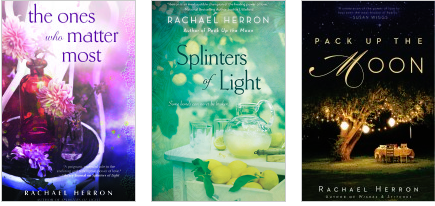
    Rachael Herron’s Beautiful Book Covers.
    Herron.3 covers


  • Does failure weigh more than success?

    Guest Blogger Rachael Herron writes about successes and failures.

    It’s December! I know this for a fact (I just rechecked the calendar). No matter which hemisphere you’re in, regardless of season, this year is getting ready for her final bow. It’s completely impossible that 2015 is almost over because about seventeen minutes ago the year was just starting, full of potential and wonder and pale spring-green hope.

    I’m prone to doing what everyone else does at the end of a year: weighing the past year’s successes and failures against each other.

    But you know what? Failure weighs way more than success. When you put things on that imaginary scale, each small failure weighs as much as a wheelbarrow full of rocks while each huge success weighs almost nothing. Success makes you lighter—it makes you able to float for a minute or even an hour—while failure drags you so low your chin scrapes the pavement.

    That? Is not fair. I don’t know about you, but I can have a million successes each day (I woke up alive! I made the best cup of coffee known to mankind! I wrote a sentence I could be proud of and wouldn’t mind other people reading! I knitted a row without stabbing myself with the needle and bleeding to death!) but that one thing I screw up makes me feel like the amazing things don’t count. The scale isn’t affected by the airy happy things I place on the success side, and then it cracks in half with the weight of that awkwardly worded email I sent in which I accidentally hurt someone’s feelings.

    So hey. Let’s do things differently this year.

    Throw away the scale.

    Let’s NOT tally up our successes and failures. Failure will win because it’s big and loud and hulk-smashy. Success (with its fairy wings and gossamer breath) will get pummeled and then go hide in the bathroom to cry.

    Screw that.

    If you just have to make a year-end tally, write down what you’re proud of this year. Things like:
    •    At your day job, you didn’t smack a single person.
    •    Your blueberry muffins disappear from the kitchen within seconds.
    •    You made someone laugh until they cried.
    •    Your socks matched more days than they didn’t.
    •    You started that novel, and now you have more words written than you did last year.

    If your fingers get itchy to list the failures, DON’T. Break the pencil and marvel at your own strength. You already spent enough time on what didn’t go well—I know you did. From enormous impossible things like not saying the right thing before a loved one died to tiny silly things like only remembering to put eyeliner on one eye: You have spent enough time hurting.

    Forgive yourself like you would forgive the person you love most. Don’t spend time “learning” from it — you did that already without even having to try. Be kind to yourself. In three weeks let’s turn the calendar page without fanfare. Last January we thought we had a whole year to finally get things right, but come on. What a burden to place on a brand new year. What was really true was that we noticed where we were in time. We can do that any old day. Let’s do that today, December 10th. Or September 17th. Or February 3rd.

    Every day is a good day to notice where you are, right now.

    Celebrate your successes because they are daily and many and they are spectacular.

    Rachael HerronRACHAEL HERRON is the bestselling author of the novel Splinters of Light and Pack Up the Moon (both from Penguin), the five-book Cypress Hollow series, and the memoir, A Life in Stitches. She received her MFA in writing from Mills College, and when she’s not busy writing, she’s working her other full-time job as a 911 fire/medical dispatcher for a Bay Area fire department. She’s a New Zealand citizen as well as an American, and she is a proud member of the NaNoWriMo Writers Board. She can probably play along with you on the ukulele.

    Sign up for Rachael Herron’s Blog, so you don’t miss a single episode in the life of author Rachael Herron.

  • How To Write A Memoir — Part One

    Your Life. You lived it. Surely you can write about it. Right?

    In How To Write A Memoir, Part 1, we’ll discuss methods and ideas about writing personal stories, with links to published memoirs.

    How To Write A Memoir, Part 2, we’ll cover organizing, revising and more.

    You can write in chronological order, or build your story around pivotal events. In the beginning, it doesn’t matter what structure you use. Write in a style that is comfortable for you. Try one way and if isn’t working for you, try something else.

    Memoirs written in chronological order (with back story woven in): To Have Not by Frances Lefkowitz  and Grief Denied by Pauline Laurent.

    Rachael Herron, A Life in Stitches, assembles her stories around her knitting experiences.

    For the first draft, it’s fine to jump around in time. Don’t worry too much about making sense in the early stage of writing. Get your stories written. Organize later.

    Paper or Computer?
    You can write using paper and pen/pencil or on a computer. Or both. For the most part, it doesn’t matter which method you use. The advantage of a computer is it’s (usually) faster. The advantage of paper and pen or pencil is the portability. Some people suggest there are benefits to handwriting for accessing creativity.

    Self-care

    If remembering and writing details about your life is difficult, it’s very important to have a strategy to avoid additional trauma. Create a self-care plan to protect yourself when writing about deeply painful topics.

    Writing Prompts

    You can use writing prompts to jumpstart your freewrites, to trigger memories and to make discoveries. Choose a prompt, write for 15 or 20 minutes. Take a break. Next time, choose another prompt. Good prompts to get started are:

    I remember . . .

    I don’t remember . . .

    In this photo, I . . .

    In this photo, you . . .

    family photosPhotos

    You can use photos to inspire your writing. First, look at the photo. Write all the details that you can see. Write about what happened before and after the photo was taken. Write about feelings you have connected with this photo.

    Photos might remind you about activities, important occasions and details that you may have forgotten. Did Grandpa always wear that hat? Did Grandma wear her apron with the little flower print every day, even on holidays? My Nana did.

    Other Memoirs

    Read memoirs to get an idea of how you want to proceed with your memoir. Some styles will appeal to you. Others aren’t right for you. You can read reviews on both Amazon and Goodreads to research different styles of memoirs.

    Susan Bono, What Have We Here, grouped her personal essays by theme.

    Rayne Wolfe, Toxic Mom Toolkit, braids three strands: her memoir, excerpts from others and toolkits.

    Janice Crow, I Give You My Word, created poems and watercolors to enhance exploring her journey.

    Story Telling

    When writing, think of yourself as a storyteller. In this story, you are the main character. Your family and friends are the supporting cast members. When you write, don’t think of any of these cast members. Write events (scenes) as you remember them, without worries (for now) about accuracy. With the first draft, put on your story-telling hat and write what happened.

    Research

    Interview family members, friends and acquaintances to learn details you may not know. You might realize a broader perspective from hearing other points of view.

    Research news, locally and world-wide, during the time period your story takes place. Tie in events with your story, if appropriate. Fact check details: slang, clothing styles, popular dances, technical gadgetry, geographical, etc.

    Take a few minutes

    After you have written all that you want to say, spend some time reflecting. What compelled you to write these stories?

    Perhaps your writing is a learning tool to understand what happened and to educate others as Piri Thomas does in Down These Mean Streets.

    Maybe your desire is to get these stories off your chest, to vent, to release emotions as well as help others similar to Ellevie by Marcelle Evie Guy.

    Maybe you want to record family stories, to document your family history.

    How To Write A Memoir – Part 2, we explore what to do after you have written your memoir, revision and the business of writing.

    woman writingFinal Comments
    This likely will be an emotional project. Take whatever time you need for breaks. Remember to exercise, go on walks, drink water and find joy, wherever you can.

    Just Write

    There are over 200 prompts on The Write Spot Blog. Use them for your memoir, for personal exploration and for fun!


  • Write authentically about difficult subjects

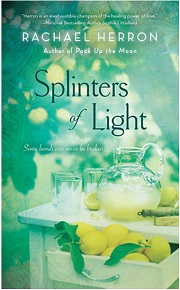
    Splinters of Light.180I recently read an outstanding novel, Splinters of Light, by Rachael Herron, “a poignant and beautiful novel about love, loss, and the unbreakable bonds of family—particularly those between mothers, daughters, and sisters.” — Amazon

    In this full-of-heart novel, the mother has early onset Alzheimer’s disease. I wondered how Rachael could write so authentically and intimately about something she didn’t have personal experience with. This is the gift of a writer who knows how to research and turn that information into a compelling story.

    I asked her how she wrote so authentically about early-onset Alzheimer’s disease (EOAD). Her answer:

    “I love immersing myself in the worlds I write about, but I’ll admit this was a hard one. Because there’s no cure for early-onset Alzheimer’s, there are really no happy endings. So I had to read about and research families that were breaking apart, but still focus on the happy parts of the love that remained. Luckily, it was easy to find. Memories are precious, and almost every family has precious stories of love. I borrowed the feelings, not the particulars, and imagined myself in each scene. I’m so pleased if it worked.”

    Herron’s dialogue is spot-on, from the mother and her age-range friends to the teenage daughter and her friends. Rachael responds, “I love writing dialogue — if it rings right to my ear when I read it out loud, then I’m satisfied.”

    Excerpt from the Conversation Guide in Splinters of Light:

    Q. How did you get the idea for Splinters of Light?

    A. I was sitting on my couch, my feet up on the coffee table, the cat on my stomach, reading a People magazine that featured an article about a teenage boy who was taking care of his forty-six-year-old mother as her EOAD progressed.

    Note from Marlene: Notice how specific Rachael is. . . sitting on couch, feet up on coffee table, cat on stomach, People magazine, ages of boy and mother. These specific details enable readers to “see” this scene.

    More from Rachael: “That boy’s story—that glossy page-and-a-half write-up—was something I couldn’t let go. . . I began to play with ideas, slipping them around in my mind much the same way Nora does with the sea glass in her pocket.

    As this book took shape in my mind, the characters became real and the plotline began to twist its way through my imagination like a river twists to the sea. At the same time, I was deeply aware that I had to get it right. I was entering a conversation that I needed to be part of . . . the truth is that we are the ones responsible for raising awareness for Alzheimer’s disease, and this book is my method of doing that, of opening the dialogue.”

    Note from Marlene: I think Rachael Herron does a fantastic job of opening the dialogue on this difficult subject. I encourage you to read Splinters of Light . . . for this important topic and for the gorgeous writing.

    Your Turn:  Do you have something difficult you want to write about?  Go for it!  Sit down and start writing. You can always toss what you have written. No one ever has to see it, unless you invite them.  Just write!

  • Make characters real and likable.

    Play around with different ways to describe characters in stories.

    Here are examples of how to make characters real and likable and how to capture readers’ interest.

    What we keep.112What We Keep by Elizabeth Berg

    “My mother was dressed in her beautiful yellow summer robe, the tie cinched evenly into a bow at the exact center of her waist, but her auburn hair was sticking up in the back, an occasional occurrence that I always hated seeing, since in my mind it suggested a kind of incompetence. It was an unruly cowlick, nearly impossible to tame — I knew this, having an identical cowlick of my own — but I did not forgive its presence on my mother. It did not go with the rest of her looks: her deep blue eyes, her thin, sculptured nose, her high cheekbones, her white, white skin — all signs, I was certain, of some distant link to royalty.”

    Splinters of Light.112Splinters of Light by Rachael Herron

    “When my daughter kissed me at midnight that year, I missed my old life a tiny bit less than I had the previous New Year’s. Paul was becoming more and more adept at dodging phone calls from his first daughter as he busied himself with his new family, but his leaving us meant I got this little girl all to myself. A girl with his blonde eyebrows and my concern for wrongs to be righted. A little girl who liked to suck the rinds of our homegrown lemons (making faces all the while) as much as she liked to lick the honey spoon I handed her in the kitchen.”

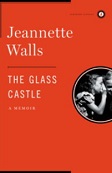
    The Glass CastleGlass Castle by Jeannette Walls

    “I was sitting in a taxi, wondering if I had overdressed for the evening, when I looked out the window and saw Mom rooting through a dumpster. It was just after dark . . . I was stuck in traffic two blocks from the party where I was heading.

    Mom stood fifteen feet away. She had tied rags around her shoulders to keep out the spring chill and was picking through the trash while her dog, a black-and-white terrier mix, played at her feet. Mom’s gestures were all familiar—the way she tilted her head and thrust out her lower lip when studying items of potential value that she’d hoisted out of the Dumpster, the way her eyes widened with childish glee when she found something she liked. Her long hair was streaked with gray, tangled and matted, and her eyes had sunk deep into their sockets, but still she reminded me of the mom she’d been when I was a kid, swan-diving off cliffs and painting in the desert and reading Shakespeare aloud. Her cheekbones were still high and strong, but the skin was parched, and ruddy from all those winters and summers exposed to the elements. To the people walking by, she probably looked like any of the thousands of homeless people in New York City.”

    Note from Marlene:  It occurs to me that this might be what it’s like for an actor to get into character: inhabit another personna. . . make that character alive.

    Your Turn . . . think of a real person. . . write about his or her mannerisms, quirks, habits, weave in physical description. Bring this person to life on the page. Just Write!

  • Use sensory detail and be specific.

    I love gorgeous writing and wonder how authors produce writing so vivid you feel as if you are in their world.

    One idea is to watch what people really do when talking, use sensory detail and be specific.

    For example, author Rachael Herron creates believable fictional characters. There is so much to like about her writing. One tool she employs well is the actions her characters engage in while talking. The dialogue develops character and moves the story along. The action makes the characters believable. Here are some examples from “How to Knit a Heart Back Home.

    Owen twisted the [plastic] spoon in his fingers. He would not rub the scar on his hip, which suddenly burned.

    Lucy took the now mangled plastic spoon out of his hand and then threaded her fingers through his.

    Dropping his eyes from hers, Owen watched Lucy’s pulse flicker rapidly in the hollow of her throat. For a moment there was no sound but the crash of the waves below.

    Back to me. . . Oh, my. I can see and hear and feel . . . the mangled plastic spoon, feel the burning scar, see the hollow of her throat and hear the crashing waves.

    Action: twisted, dropping, watched, threaded, flicker, crash

    Specific: plastic spoon, hip

    Sensory detail: burn, sound

    Your turn: give us examples of exquisite writing that use strong verbs, is specific and employs sensory detail. Share your finds with us.

    Write a scene or a vignette: a freewrite using action words (strong verbs), be specific (sycamore, not tree), sensory detail (sight, hearing, taste, touch, smell). Herron. How to Knit A Heart

    Just write!


  • The temptation is to lie. . .

    If we become honest in our talking and dealing with people, if we go deep and tell the genuine truth, will that carry over to our writing? And will we then go deep and become authentic in our writing?

    The temptation is to not go where it hurts. The temptation is to lie in order to resist the painful truth.

    I recently read Pack Up the Moon by Rachael Herron and The Interestings by Meg Wolitzer. Both of these authors went deep in their writing and the resulting books are genuine, authentic and fabulous reads. . . where the characters and their problems deeply touched me.  Rachael and Meg did not resist writing about painful truths.

    How about you? Can you recommend books that deeply touched you?  What other authors go deep in their writing? I can think of Jodi Piccoult. Your turn.

    Sorensen

    Photo by Kent Sorensen

  • Guest Blogger Rachael Herron talks about the biggest failure . . .

    Rachael HerronGuest Blogger Rachael Herron talks about the biggest failure. . .

    Last night I went out with (as I think of her) my Young Writer friend. My favorite barista at my beloved but now defunct cafe, she has stars in her eyes about writing, and is applying to MFA programs all over the country. We ate sushi and talked about writing, and I remembered myself in her.

    When I was 25 — her age — I packed up my tiny Ford Festiva with its roller-skate wheels and headed to Mills for my MFA. I was going to light the world on fire with my prose. Or at least, I was going to write. And I lit a lot of things on fire, namely the cigarettes I was still smoking back then. I was giving myself two years in the ivory tower, two years to really focus on craft.

    Then, for those two years, I avoided writing as much as possible. I did the bare minimum, because that’s what we do sometimes, when it comes to what we love most, right?

    Artists don’t draw. Musicians don’t play. Writers don’t write. If we write, we fail (because when we’re learning something, DOING anything at all, we fail. Just part of the process). And as artists, we strive for perfection and failing is really not ideal.

    So we don’t write. I managed my 150 pages of a terrible novel for my thesis. I took an amazing dialogue class in which we read a book famous for dialogue every week and then wrote a three page scene in the voice of that writer (that did more for my skill with dialogue than anything else). I took a poetry class which almost killed me.

    Then I graduated and spent the next ten years also avoiding failure by not writing. Not writing = safe! Not writing = dreaming about the perfect words you’d string together if you just had time.

    What I didn’t realize was this:

    Not writing was the biggest failure of all. 

    No matter how spectacularly I screwed up in the writing itself (which I did! Still do! Spectacularly!), when I finally started to write everyday (thanks, NaNoWriMo 2006), I was succeeding!

    And seven years (JEESH!) later, I’m still writing, all the time. Every day. Even when I fail, I win.

    The job has gotten harder the more I learn. A rank amateur says LOOK I WROTE A BOOK YOU SHOULD READ IT OMG — a writer who’s spent years actively learning how to craft emotion out of words says, Well, you don’t have to read it. It’s the best I could do but it’s still not as good as Murakami. Maybe someday. *kicks rock* (Also known as the Dunning-Kruger effect *see below.)

    I’ve been both of those people. (Admission: I’ve been both of those people this WEEK.)

    But now, after publishing six books with two more on their way to shelves, I know I can do it. And I’ve changed my website a little bit because I want y’all to see that book up there to the left with its quotes and overview and all that because I’m proud of it and I’m excited for it.

    Pack Up the Moon. It’s literally the book of my heart, and it’s available for preorder right now. I’ll be releasing excerpts and reasons for you to preorder at my website, yarnagogo (gifts! prizes! kisses on the mouth if I see you IRL and you want one!) but the real truth is this: It’s a good book. It will make you cry, and then–I hope–it will help heal you a little bit. And maybe it will encourage you to write that book you have been wanting to write.

    I love the stars in my Young Writer friend’s eyes. The funny thing is I still have them, too.

    * “The Dunning–Kruger effect is a cognitive bias in which unskilled individuals suffer from illusory superiority mistakenly rating their ability much higher than average . . . Actual competence may weaken self-confidence, as competent individuals may falsely assume that others have an equivalent understanding.”