Tag: Redwood Writers

  • Writing contests. Yay or Nay?

    If you are thinking of entering writing contests, it’s important to research to determine if a contest is legitimate and reputable.

    But, how to find reputable contests?

    Go to trusted sources.

    Research websites, blogs, and social media by people you know and trust.

    Anne R. Allen, a trusted source, blogs about writing:

     “Writing Contests are Important: How To Tell the Good Ones from the Scams

     “Beware Bogus Writing Contests! Look for These 8 Red Flags.

    C. Hope Clark’s  Funds for Writers newsletter is a great source for announcements of vetted contests, and a handbook of writing contests.

    Writer Beware, the publishing industry watchdog group.

    If entering contests is in your writing budget, here’s something to consider:

    B. Lynn Goodwin, founder of Writer Advice: posted:

    “Too often writers submit to agents and editors without having any credentials, but winning a writing competition—especially a well-known one—gives you immediate credibility and something to add to your writing resume.”  —Brian Klems, writer, speaker, freelance editor, husband, softball player, perennial fantasy sports underachiever, Huffington Post contributor

    Reputable Resources for contests:

    The Redwood Branch of The California Writers Club hosts several contests a year.

    The current contest, the 2022 Poetry Anthology deadline is soon . . .

    November 15, 2021 at 9 pm (PST)

    Reedsy, online author services in the self-publishing industry, posts contest information.

    Post your writing contest experience on my Writers Forum Facebook Page, under this post.

    #amwriting #justwrite #writingcontests

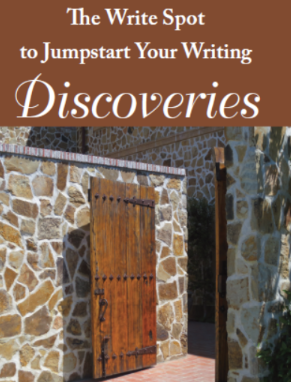
  • Freewrites: Opening Doors to Discoveries

    Notes from Marlene Cullen’s talk about freewrites. Scroll down for links about how to use freewrites and how to write about difficult subjects without adding trauma.

    I gave a talk about freewrites at the Redwood Branch of the California Writers Club. I’m sharing my notes so you, too, can enjoy the freewrite method of writing.

    I love freewrites because they are so . . . freeing. Freewrites can open doors to discoveries.

    I was thrilled to discover freewrites, unlike short story and novel writing, this was something I could do. I hope these tips help make your freewrites fun and successful in inspiring your writing. 

    What is a freewrite?
    A freewrite is writing spontaneously with no thinking. Just putting down word after word, with no worries about spelling, punctuation, how it will sound, and no worries about the final product.

    Sometimes when you are engrossed in your writing project and the writing is coming easily . . . that’s like a freewrite. The difference is that, with a freewrite, there is no end goal in mind.

    With a freewrite, you can write about what happened to you, what happened to someone, else, or you can write fiction, poetry, whatever comes up during a freewrite is fine. . . as long as you keep writing and don’t stop to think. Thinking is bringing the editor in and this isn’t the time for editing nor censoring.

    Sometimes, with a freewrite, it’s the process, not the product.  

    Freewrites can be used to understand and work out things that are puzzling or disturbing or annoying. Sometimes it helps to write about something in order to understand it.

    One way to start a freewrite is to use prompt: A word, a line from a book or a line from poetry and write from there. You can also use a visual item as a prompt.

    One of the things I like about freewrites is the freedom to write whatever you want about any topic. Ideally, with no worries about what your writing sounds like . . . no worries about the outcome.

    If you don’t want anyone to read what you’ve written, you can destroy your writing. Or you can save it in a secret place. But you have to remember where that secret place is!

    Another thing I like is that since freewrites are very rough first drafts, it doesn’t matter what the writing is like . . . it can be fragments, or unrefined ideas, or mental doodling set in writing.

    The challenge of freewrites is getting out of the way of yourself.

    During a freewrite, let your writing flow with no judging.

    What about that inner critic that we all have?

    When you are in the zone . . . in the groove of writing . . . there is no space for the inner critic to hang out.

    With freewriting, it’s just you and your creative mind playing with words.

    Let go of your worries about your writing.

    If you can talk . . . if you can think . . . you can do a freewrite.

    One way you can use freewrites is to get past roadblocks in your writing . . . whether fiction or non-fiction.

    If you are having a problem transitioning from one scene to another, or you are having trouble getting a character from Point A to Point B, do a freewrite.

    As you begin a freewrite, relax your mind . . . have no expectations about the outcome. This is play time.

    It’s the “What if?” game. What if this happens or that happens? What if your character says or does this or that? Play around with the possibilities.

    You don’t have to use any of your freewrites in your final scene. But you may generate ideas that you can use. Be open to the possibilities.

    How to be successful with freewrites.

    Let go of your ideas about what perfect writing means.  Give yourself permission to be open to whatever comes up during a freewrite.

    You can think of freewrites as making discoveries.

    Take deep breaths as you begin and then relax into your breathing and let the writing happen.

    When you are writing in this free style, you are not writing for an audience. You are giving yourself the gift of writing for yourself.

    During a freewrite, immerse yourself in your writing. Write at a place and a time where you won’t be interrupted.

    Let go of your worries and just write.

    Write to satisfy your desire to go to a meaningful place in your writing. You get to decide what that means.

    During a freewrite you can go deep into the recesses of your mind and really write.

     It’s okay to start with gut level feelings or to get to gut level feelings. It’s okay to go for the jugular as Natalie Goldberg says

    As you write, you might notice discomfort, especially if you are writing about an uncomfortable experience or about a difficult memory.

    When that happens, gently put your hand where you feel the discomfort. If you can’t put your hand there, put your thoughts there . . . your loving, caring, patient thoughts.

    When you are feeling uncomfortable, you can either stop writing and come back to it later. Or, work through it.

    To work through it, have a focal point, something you can look at that will remind you to breathe deeply.

    If you know you are going to write about a difficult subject, have a plan before you start writing.

    When the writing gets tough: Look out a window. Walk around. Look outside. Take a sip of water.

    When writing about a difficult subject, let the tears come, let your stomach tie up in knots. It’s okay to write the story that is challenging.

    Get through the barriers to go to a deeper level.       

    See your story and tell it.

    This is a lot of information. Let’s take a deep breath.

    More ideas for successful freewrites:

    When you are writing, if you run out of things to say, write down, “I remember. . .” and see where that takes you.

    Or write, “What I really want to say . . .” and go from there.

    Writing Prompt

    Let’s try a type of freewrite now.

    Get comfortable.

    Relax into your chair.  Both feet flat on the floor.

    Rotate your shoulders in a circle. Opposite direction.

    Rotate your head in a circle. Opposite direction.

    Bring your shoulders up to your ears. Let them down with a harrumph sound.

    Escort your inner critic out the door. Shoo! Good-bye.

    Give yourself permission to be open to whatever comes up.

    Take a deep breath in. And let it out.

    Go back in time to when you were 4 or 5 or 6 years old. See yourself at this age. Perhaps you can see a photo of yourself at this young age.

    Now, we’re going to travel up in time, starting with a memory of when you were 4 or 5 or 6.

    As we do this, pause when you feel energy. You might feel a flutter in your stomach. Or a tightening in your jaw. You might feel a constricted throat. Notice as you travel through your memories where you have a physical reaction. Stop there. Pause. Think about that time. If you want, you can put your hand on the place on your body where you feel this energy. If you can’t put your hand there, put your thoughts there.

    Deep breath in. Let it out.

    See yourself when you were twelve.

    Another deep breath in. Release. Let go.

    See yourself at 16 or 18.

    Remember when you were a young adult, early twenties.  Mid-twenties.

    Choose one of the memories you just thought about that brought a strong physical reaction. The reaction could be joy, pain, pleasure, or discomfort.

    Choose one event, or experience, and think about what you were like before this event happened. Then the pivotal event happened and you weren’t the same after.

    Drill down to the precise moment the pivotal event happened.  Look closely, like looking through a microscope or a telescope.

    See the details of where you were, who was there. What happened?

    Write about it now . . . Freely . . . with no thought of the outcome. No plan to ever share this writing. Just write.

    When you are finished writing.

    Breathe. Take a deep breath in. Release your breath. Shake out your hands. Stretch.

    Take a moment to transition from writing to being back in the room.

    LINKS

    What is a freewrite?  Why should you do it? How is it done?

    Get Started. How to use writing prompts.

    Don’t think. Don’t plan. Just write.   

    Don’t think. Don’t plan. Just write.   

    More about freewrites.

    How to write without adding trauma.

    Writing about difficult times.
  • What do Contest Judges Look for?

    Notepaper.make a listRecently I was one of three judges for a writing contest. We didn’t agree during the first round of reading on the winners. It took re-reading and much discussion to select the three winners. So that got me to thinking. What do contest judges look for when choosing winning entries?

    My fellow judges and I came up with:

    Make sure to follow the guidelines. They aren’t arbitrary. The guidelines are specific for a reason.

    Make sure to follow the criteria of what genre the contest is. Don’t submit memoir if the contest is fiction. Even though the judges may not be able to tell for sure if something is fiction or memoir . . . if it feels like memoir, it probably is. And that won’t work in a fiction contest.

    The winning entries that stood out excelled in creative writing and well-crafted stories. The writing and stories were compelling, keeping reader engaged to the end.

    Proofread. I know this is obvious, but many of the entries had typos or punctuation errors.

    Have someone read your entry – both for feedback and to proofread.

    If it’s a fiction contest, make sure your entry is a story. Many of the entries were anecdotes, rather than full pieces (beginning, middle, end with a definable plot and fleshed out characters).

    Avoid clichés – in words, phrases and story line. This goes back to the unique story. Tell us something new, or write something old with an interesting twist.

    Understand and use correct point of view. Many entries jumped around with point of view, sometimes it was hard to tell who “he” and “she” referred to.

    Stay with the same verb tense, except when appropriate to use past or future tense. Stories got extra points from me when using present tense (because that’s harder to do than using past tense).

    Susan Bono shares her views on contests in her essay, A Thought or Two on Writing Contests, originally published in Tiny Lights, A Journal of Personal Narrative, 2/9/2007.

    More thoughts on entering writing contests:

    “Don’t assume the winners of a writing contest were the only ones to submit excellent work. There are only so many prizes available in any given contest. Winning may equal good, but losing does not always equal bad. Your turn will come.” —Susan Bono, author of What Have We Here: Essays about Keeping House and Finding Home, has judged many, many contest entries.

    “Make us see something about the world in a fresh way or remind us of something important that has an arguable public dimension.” — Dan Lehman, River Teeth, A Journal of Nonfiction Narrative

    “There is a difference between experience and meaning-making. If we are reading along and this happens and this happens, and we still don’t know why it is important, then we know the writer might not be up to it . . . just writing about something that has happened to you is never enough. It’s what the writer does with her own experience, what she makes of it that counts.” —Joe Mackall, River Teeth, A Journal of Nonfiction Narrative, (paraphrased from original quote by Judith Kitchen).

    River Teeth Journal, Editor’s Notes, Volume 17, Number 2, May 31, 2016

    Are you motivated? Ready? Enter!

    River Teeth Submissions

    Redwood Writers, a branch of The California Writers Club sponsors contests year-round.

    The Writer Magazine regularly calls for contest submissions.

    Writer’s Digest Magazine lists contests.

    Links to writing contests.

  • Prompt Contest: A Picture is worth . . .

    A picture is worth . . . you know. . .  lotsa words.

    Redwood Writers, a Branch of the California Writers Club, is sponsoring The 2016 Prompt Contest.

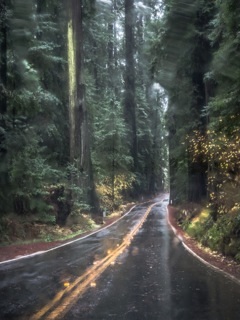
    prompt-contest-tim-mayWrite a fictional story inspired by this “Highway through the Redwoods” photo by Tim May. The connection between the story and the photo must be apparent to the judges. The words “redwood” and “highway” must be somewhere in the story.

    DUE DATE:  October 16, 9:00 p.m.

    Fiction only.

    Contest submissions are open to all California Writers Club members and to non-member residents of Sonoma, Napa, Mendocino, Marin, Lake, Humboldt and Solano counties.

    $8 for California Writers Club members; $12 for non-members

    1,000 words or less

    1st place:  $100, a certificate  suitable for framing, and a signed photo by Tim May

    2nd place: $50 and a certificate suitable for framing

    3rd place:  $25 and a certificate suitable for framing

  • Redwood Writers, a branch of oldest writers’ organization . . .

    Redwood Writers, a branch of the California Writers Club (CWC), has ongoing writing contests. Click Redwood Writers Contests to read about the current contest.

    “Whether you’re a traditionally published author or ‘just always wanted to write,’ there’s a place for you at CWC Redwood Branch.”

    CWC is one of the oldest writers’ organizations in the nation. Members are poets, journalists, essayists, technical writers, and creators of genre and literary fiction, as well as editors, booksellers, and others involved in related fields.

    There are branches throughout California. Click California Writers Club to find a branch near you.

    To enter a Redwood Writers branch contest, you must be a member. California residence is not required to be a member. Click Redwood Writers Membership for member information.

    Submit! You never know. . . the next contest winner could be you!

    Redwood Writers

  • How do you handle rejection?

    First, don’t take rejection personally. When you submit your writing for inclusion in an anthology, magazine. . . to an editor, publisher, agent. . . and you receive a “no, thanks” letter, or worse, you never hear back . . . don’t take it personally.

    It may or may not be the quality of writing, but it’s definitely not a rejection of you personally.

    My Submission Philosophy

    You won’t receive rejection notices unless you submit your writing.

    And if you submit your writing . . . you will probably receive a rejection note, or two, or more.

    Welcome to The Club

    welcomeI wrote a story about pesky gophers around 2007. Shopped it around. Submitted to a little contest. Won second place. I was thrilled. But really, this was a miniscule contest. Probably two entries.

    So I shopped it some more. Got accepted. But the editor said since it was seasonal, I should submit the following spring (nine months away). I dutifully waited and re-submitted.

    “Alas,” she said (or maybe she didn’t. Maybe that’s the storyteller in me).

    “We can’t accept this since you don’t live in our geographical area.”

    Hmmm. . . She couldn’t tell me that with the original submission (and acceptance, I might add and will add).

    Submissions, semi-acceptances and rejections are quirky.

    Time went by. I sulked, got mad and stomped around a bit.

    A few years later, I was over my annoyance and once again submitted. This time my gopher story was accepted!

    “My Way With Gophers” will be published later this year in Redwood Writers 2014 Anthology.

    Moral of this story: If the writing is polished and perfected to your best ability — my gopher story was revised about 113 times and the title changed 67 times — go ahead and submit, because you never know. You might get lucky.

    And you might as well Just Write . . .  and Submit.  check mark.1

  • Redwood Writers Anthology Accepting Submissions

    It’s a good idea to always have something ready to submit. You never know when a call for submission might be a perfect fit for your writing.

    Redwood Writers Anthology is open for submissions. . . deadline extended to April 1, 2014.

    Submission Guidelines  

    Members of Redwood Writers may submit up to two pieces in any genre, including short story, memoir, essay, flash fiction or poetry.

    You need to be a Redwood Writers Member to submit.

    Email your submissions to: anthology@redwoodwriters.org.

    Redwood Writers is a branch of the California Writers Club.

    tributaries-01

  • Guest Blogger Marie Judson-Rosier writes about Fantasy Fiction as an Ancient Way of Mythmaking.

    Guest Blogger Marie Judson-Rosier writes about Fantasy Fiction as an Ancient Way of Mythmaking.

    Clarissa Pinkola Estes invites our voices: “We have a reason for being. Blow away the over-culture that says we weren’t longed for,” (heard at a Mysterium workshop with Dr. Estes). Many of us do not think our words are awaited or even welcome. We have to deconstruct messages we absorbed subliminally through our early lives just to allow ourselves to be creative. There’s an invisible hand at our ankle, holding us back. One of the most common blocks to taking our writer selves seriously is our need to extricate ourselves from a sense of judgment, believing that our contribution is not worthwhile. The doubt of our personal voice runs deep. Many if not most of us are acculturated to believe that true authority lies with someone else. Yet we crave creative expression. We owe it to ourselves and our world to give voice to it.

    I came through great swaths of higher academia before I found myself immersed in writing fantasy fiction. As I struggled to write a dissertation, based on research regarding communication in 21st century high schools, I longed to draw my writing from the rich material I knew – as only one’s soul knows – ran thick as sap somewhere in me, out of reach. That’s when I started Jungian dream work and other forms of inner work. In this period, I began daily journaling and have never stopped the daily practice of freewriting, which carries a mother lode of benefits – self-reflection, aid to dream work, and a sense of mental cohesion, to name a few.

    It is ironic that the very discipline of writing a dissertation – along with the angst it brought, which drove me to deep inner work – led me to writing the most frivolous of all literary forms; at least it is believed to be so by some. I, however, see some fantasy fiction as holding the key to our ancient ways of mythmaking. I also believe that it has the potential to release us from a tightly defined identity into something broader, with less circumscribed edges. Sometimes the very farfetched nature of fantasy ideas can break us loose from the fetters that bind our minds and can, thereby, be healing.

    Companion to the great joy I have discovered in creating fiction is the magic of a good writing group. I can see no better way to hone one’s craft than by the feedback of a dedicated, steady group of fellow writers, helping us to see where we lag in interesting vocabulary, fall into repetition, fail to stir lively curiosity or dedication to the characters. Our group’s anticipation of our next installment feeds the fires of our innovation, allows us to dare to approach revision, and renders the writing a joyful event rather than a lonely endeavor. At least that is my experience. (If you have been considering taking part in a writing group, see below.)

    Marie Judson-Rosier, MA, is a teacher, freelance writer and editor. Judson-Rosier has been copyeditor for the scholarly journal Mind, Culture and Activity, an international ground-breaking publication founded by the Laboratory of Comparative Human Cognition at UCSD. She currently serves as managing editor of ReVision, Journal of Consciousness and Transformation. In addition, she is volunteer coordinator of writing groups for Redwood Writers, a branch of the California Writers Clubs started by Jack London. Anyone living within range of Sonoma County who is seeking a writing group is welcome to e-mail her at mariejudson@gmail.com to be added to the list.

    IMG_1588