Tag: Ruth Harris

  • This or that. Just do it!

    Guest Blogger Ruth Harris writes about the realities of trying to write while sheltered in place.

    You might have thought because you’re staying at home that you’d have more free time to start/finish a book or take an on-line yoga class. But in reality, because we’re all spending so much time at home, much of that time is consumed by eating which means food prep and cooking (which means there’s a kitchen to clean and dishes to be washed), bathrooms to be cleaned and tidied plus, of course, more toilet paper to be purchased (if we can even scrounge up a few rolls somewhere), laundry duty, garbage and trash removal, dusting, vacuuming and, of course, sanitizing.

    As one day melts seamlessly into the next, and we can’t tell Sunday from Tuesday, weekdays from weekends.

    Our moods whiplash between “This sucks” and “It could be worse.”

    We’re bored, anxious, and tired. We’re having trouble sleeping and concentrating. Much less writing.

    “A lot of us are mentally exhausted, because the energy it takes to mentally manage everything that’s happening is very draining,” says Vaile Wright, director of clinical research and quality for the American Psychological Association. “The habits we’ve worked to develop over time to keep us healthy and productive can fall by the wayside.”

    It’s not just you.

    Feeling overwhelmed by an Everest of laundry or frustrated by a cranky TV remote even as we are bombarded by relentless reports of death and disease, does not contribute to creativity.

    Instead of fighting what can feel like an unwinnable battle with the lack of inspiration, let’s consider what we can do that does not take the same level of intense concentration as writing.

    Why not take advantage of these strange days to focus on ways we can improve our skills or acquire new ones?

    1. Author Platform Care And Maintenance.

    Use this Covid-19 pause to reconsider and refresh the elements of your author platform.

    2. Better Blurbs For Better Living.

    Are your (book) blurbs OK?

    As we’ve been told over and over, the cover is the first thing that grabs the reader’s attention. The cover tells him/her what kind of book s/he is looking at: romance (sweet or steamy), women’s fiction, mystery, thriller, horror, sci-fi.

    The blurb (also known as the sales pitch, cover copy, or on Amazon, the “product description”) is the second.

    But once you grabbed/seduced/lured the reader, then what?

    Then you have to make the sale—and that’s where the blurb comes in.

    At a time when you’re finding it difficult to write, refreshing an existing blurb can be a productive use of your time, a satisfying outlet for your creativity and an opportunity to increase your sales.

    3. M Is For Metadata.

    Review your categories.

    David Gaughran tells us that “KDP is now explicitly stating that we are permitted TEN categories for each of our books.”

    If you haven’t already signed up for DG’s newsletter—he keeps a sharp eye on publishing and is generous about sharing info—now would be a good time.

    Revisit your keywords.

    Out with the old. In with the new—and more relevant.

    Dave Chesson’s Publisher Rocket does the tedious work of searching for keywords (and does ditto for categories) that will help make your book more visible to browses and readers.

    4. Brainstorm for Brilliance.

    When you can’t write, maybe you can brainstorm, which is, after all, the fun part. When you let loose, when you forget about sparkling prose, passive verbs and adverb infestation, who knows what brilliant thoughts are just lurking in your subconscious, waiting to be unleashed?

    5. Liberate Your Inner Artist.

    If your sales—and income—have been hit by Covid, DIY art and graphics are more appealing than ever. Learning your way around on-line art sites can be fun that yields practical results.

    Maybe you’d like to try making a cover even though you’re not a designer.

    Perhaps you could jazz up your blog, Instagram feed, or FaceBook page with a new banner.

    Or refresh your ads, create a new business card or bookmark.

    6. Orphaned Books. You Know, The Kind That Don’t Spark Joy.

    If you’re stuck at home, but, like so many of us, the words won’t come and you can’t write, perhaps this period of enforced down time is ideal for you to revisit unfinished and abandoned books. Maybe the solutions to the problems that once stopped you in frustration, will become apparent now that some time has passed.

    Plot holes—they’re not forever.

    Janet Evanovich’s simple method of not-exactly-outlining might help you figure out where you’ve gone wrong and how to go forward.

    7. Strengthen Your Characters.

    If the plot’s OK, but the characters are wooden (or maybe plastic—and you’re not writing sci-fi), now might be the right time to pay them a visit and give them a pulse.

    Here are 8 suggestions about how to create a memorable character.

    8. Embrace That Crappy First Draft.

    Typos.

    Clichés.

    Passive verbs.

    Banal descriptions.

    Lapses in logic.

    Adverbs!

    We’ve all committed these sins (and more because we’re creative), but, because we take our work and our readers seriously, we don’t give up.

    Henry Guinness at the NYT calls himself “a big fan of awful first drafts” and shares a useful trick about how to use that embarrassing first draft to move toward a finished product you can be proud of.

    9. Learn to Self-Edit.

    Harry Guinness goes on to explain: “The secret to good writing is good editing.”

    As a long-time editor, I would go even further and say that good editing is (almost) everything. Obviously, you have to get the words down first, but, after that, multiple rounds of editing will help you clarify your thinking and lead to a polished work in a way that can seem (almost) magic.

    Another plus is that several rounds of self-editing before you unleash your work on the public or on your editor will save you one-star reviews and your editor time. Which will consequently will save you money.

    10. How to Feel like a Real Writer.

    If none of these ideas appeal to you or if you’re just feeling generally blah, why not do what real writers do?

    Procrastinate. 🙂

    Excerpted from Anne R. Allen’s Blog… with Ruth Harris by Ruth Harris.(@RuthHarrisBooks) April 26, 2020

    Click here to read the entire blog post, which is chock full of gems.
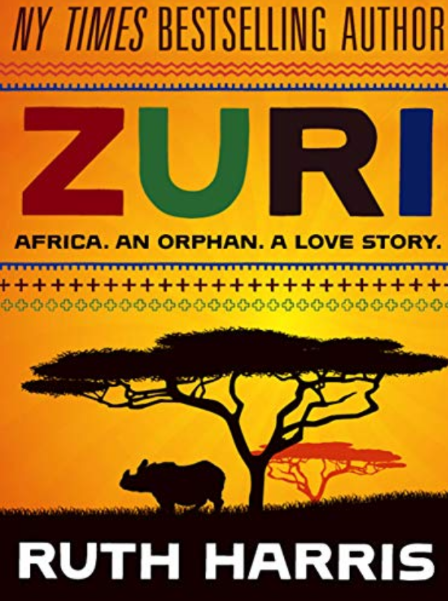
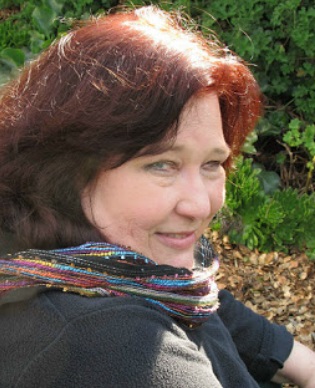
    Ruth Harris is a New York Times and Amazon bestselling author and a Romantic Times award winner. Ruth’s emotional, entertaining fiction has topped Amazon’s prestigious Movers and Shakers list and her highly praised novels have sold millions of copies in hard cover, paperback and ebook editions, been translated into 19 languages, sold in 30 countries, and were prominent selections of leading book clubs including the Literary Guild and the Book Of The Month Club. In their e-book editions, Ruth’s novels have been featured on Ereader News Today, Pixel of Ink and Kindle Nation Daily.

    Ruth writes about strong, savvy, witty women who struggle to succeed and, when sometimes they don’t get what they want, they find something even better along the way. Critics have compared Ruth to Nora Ephron and Joan Didion and called her books “brilliant,” “steamy,” “stylishly written,” ”richly plotted,” “first-class entertainment” and “a sure thing.”
  • Anne R. Allen & Indie Publishing

    The following is an excerpt from Anne R. Allen’s December 22, 2019 blog post. You, too, can be an indie-author. It helps to be informed with willingness to do the work.

    From Anne:

    In a few days we’ll be leaving the twenty-teens to enter the 2020s. We’ll be saying goodbye to a decade of wild upheaval in the publishing industry.

    It’s been quite a ride.

    On January 5th, [we hosted] agent Laurie McLean from Fuse Literary Agency, for her annual “Crystal Ball” predictions for publishing in 2020.

    But today I’m thinking about the decade that’s passing, and how it disrupted and radically changed the way authors approach publication.

    A lot of us got to behave like teens—experimenting with radical publishing ideas and trying on lots of new writing venues for size.

    Amazon’s Kindle had the right name. It fired up the writing community in a major way. Self-publishing became a viable, lucrative alternative to the soul-crushing process of breaking into traditional publishing.

    But now things are changing again. Sales of Kindles and other ereaders are way down. A lot of indie authors have disappeared.

    Is the Self-Publishing Revolution Over?

    Experts agree the “Kindle gold rush” is history.

    But self-publishing is still here.

    However, it has gone through drastic changes since 2010.

    In the early days, there weren’t many ebooks for Amazon to sell to their newly-minted Kindle owners. So they encouraged writers to publish their own work through their new “Kindle Direct Publishing” (KDP.)

    But then Amazon started its own publishing imprints like Montlake, Thomas and Mercer, Lake Union, etc. They wanted to market their own publishing companies.

    Then came Kindle Unlimited, the book service that allows unlimited reads per month for a flat fee.

    Indie incomes went down a lot more.

    A swarm of scammers, plagiarizers, and crooks learned to game the KU system and top the charts with stuffed, fake, and stolen books.

    Real indies lost out.

    Readers left Facebook’s privacy-invading machine. And new algorithms no longer let as many readers see our author pages.

    Indie incomes went down a bit more.

    E-books were the bread and butter of the self-publishing revolution, but as people started reading more on glaring tablets and phones, they rediscovered paper books.

    Big tech, which had once seemed so friendly to indie authors, became a minefield.

    But the Self-Publishing Revolution Didn’t Die

    It’s true that indie sales are more modest than they were mid-decade, and you’re not hearing about any new “Kindle Millionaires.”  

    But a lot of indies are still thriving.

    Many romance, mystery, and thriller writers who joined the self-publishing revolution are now making a good deal more than their trad-pubbed counterparts.

    Others are happily plugging along, not making a big income, but enjoying writing as a second job or hobby.

    Self-publishing is still an excellent way to publish. But it’s not the same as it was in 2010.

    Indies now need to have the training and capital to turn out a top-notch product and advertise it. They also have to be willing to learn the ropes of online marketing and put in the time with social media to build a following. They need to allot the time to put out a blog or newsletter.

    Self-publishing allows you to control your career. You’re not dealing with agents or editors who might ghost you, get fired, rope you into predatory contracts, or lose their marbles. (The majority of agents are honest and hardworking, but their incomes are falling with decreasing advances, and many simply can’t make ends meet without a second job.)

    My Advice

    Don’t choose self-publishing as the “easy” way to a writing career in the new decade. Choose it because you have an entrepreneurial spirit, enjoy social media and online marketing, and have the time to commit to running a business.

    Should You Plan to Self-Publish in the Next Decade?

    Only you know that. Do you write fast? Write in a popular genre? Have good marketing skills? Enjoy social media? Do you blog? Are you okay knowing you won’t be nominated for a prestigious book prize or get a review in The New Yorker?

    A “yes” to most of those questions would make you an excellent candidate. The only other big thing you’ll need is luck.

    So good luck to you. The 2020s may be the time your career soars!

    Click here for Anne’s full blog post with almost 100 comments.

    About Anne R. Allen

    My books are mostly romantic-comedy/mysteries. Maybe a little more comic than romantic. Since two of my favorite writers are Dorothy Parker and Dorothy L. Sayers, I guess it makes sense that I ended up writing a mash-up of the two “Dorothy” styles. Ruth Harris calls it “Chick Lit Noir.”

    I’ve been in the writing business long enough to have collected a pretty full set of mistakes. I blog in hopes of helping some of the new writers out there make better choices.

    In a former life I was an actress, bookseller, and the former artistic director of the Patio Playhouse in Escondido, CA. I last appeared in A Comedy of Errors at the Pacific Conservatory of the Performing Arts. I grew up in New England (Waterville, ME and various college towns in CT) graduated from Bryn Mawr College, and spent some time doing the hippie vagabond thing in several continents. Even got married once. All excellent adventures.

    I’m the author of 10 comic mysteries and a collection of short stories and poems. I’m also the co-author of a guidebook for writers, written with Amazon superstar Catherine Ryan Hyde, and I’ve written a new guidebook for author-bloggers: The Author Blog: Easy Blogging for Busy Authors.

    All my book-length works are detailed on my book page.

  • Short essays can be a goldmine.

    Today’s guest blog post is excerpted from Anne R. Allen’s Blog… with Ruth Harris. Writing about writing. Mostly. 

    Book length memoir is a hard sell, but short essays can be a goldmine.

    Memoir is the most popular genre at any writers’ conference.

    Unfortunately, it’s the hardest to write well—and the least likely to be successful if you’re an unknown newbie writer.

    That’s because book-length memoir isn’t likely to become a bestseller unless people already know who you are.

    So how do you get people to know you? You could become a reality TV star, run for political office, or be related to somebody who marries into the British royal family of course, but not everybody has that option.

    You can also work to get yourself known through social media, which I recommend for all memoirists.

    Start a blog, podcast, or vlog on the subject or setting of your memoir and put some serious effort into promoting it through social media (also known as “building platform”).

    It also helps to publish short memoir pieces and personal essays in traditional venues. If you’ve been working on that memoir a while, you probably have the material mostly written in the form of a book length memoir.

    With a few tweaks, your excerpts can become publishable personal essays.

    And the good news is, those short pieces can pay very well. Look at the fantastic success of anthologies like the Chicken Soup series. And if you get into an anthology along with some well-known authors, you’ll establish a fanbase that would take years to garner with a solo book release.

    To read Anne’s entire blog post, including “Tips on Getting An Audience for Your Blog” and an essay by award-winning author and editor Paul Alan Fahey on how to expand a scene from your memoir (or directly from your life) into a flash memoir piece or personal essay, click on: Writing Memoir that Sells: Think Outside the Book!