Tag: Sensory Detail – Taste Sensory Details – Kinesthetic motion in writing

  • What nourishes you? Prompt #636

    Prompt: What nourishes you?  Write for 15 minutes. Use sensory details:  sight, smell & sound.

    *********************

    Next: Picture the kitchen in the house you grew up in. See the table and chairs, the counter, the cupboards.

    Open a cupboard . . . or walk into the pantry. Take a look around. Open the spice cabinet. Breathe deeply.

    Prompt: What food reminds you of the kitchen in the house where you grew up in? Memories surrounding that food?

    *********************

    Prompt: Take a few words from previous two freewrites and expand, or describe, using smell and sound. For example, from “The Martian Chronicles by” Ray Bradbury:

    “There was a smell of Time in the air tonight . . . What did Time smell like? Like dust and clocks and people. And if you wondered what Time sounded like, it sounded like water running in a dark cave and voices crying and dirt dropping down upon hollow box lids, and rain. Time looked like snow dropping silently into a black room or it looked like a silent film in an ancient theatre one hundred billion faces falling like those New Year balloons down and down into nothing. That was how Time smelled and looked and sounded.”

    Use sensory detail: Smell

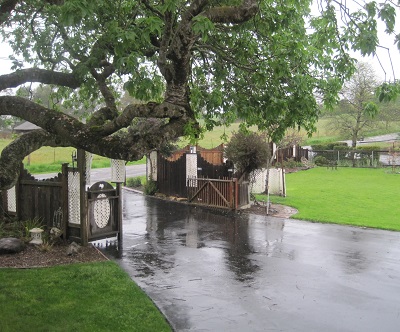
    What does rain on asphalt smell like?

    What does a crunchy red apple smell like? 

    Mentally walk through an apple or a pear orchard where the earth has recently been plowed. Describe that earthy smell.

    What does a redwood forest smell like, deep in the grove where it’s quiet?

    It might smell old or ancient and calm. What does old, ancient, and calm smell like?

    old . . . smells like parchment paper

    ancient . . . smells like musty book

    calm . . . smells like summer rain candle

    Use sensory detail: Sound

    What does old, ancient, calm sound like?

    old sounds like coughing and wheezing

    ancient sounds like rattling breath

    calm sounds like church . . .  sitting in an old Catholic church in the middle of the afternoon with no else there. That’s calm.
    The neurological impact of sensory detail
    Imagery and sensory detail ala Adair Lara Prompt #277

    33 Ideas You Can Use for Sensory Starts Prompt #278

  • 33 Ideas You Can Use for Sensory Starts Prompt #278

    I bet you have heard “Show. Don’t tell.” What does that mean? And how does one do it?

    Answer: Sensory detail.

    As described in Imagery and Sensory Detail ala Adair Lara Prompt #277:

    1. Make a list of images
    2. Expand into sentences
    3. Use sensory detail

    BobNot interested in making a list?  You are welcome to use any of the 33 ideas listed below to start sensory writing. Or just look around, choose items within your view, and write, using sensory detail, of course. Scroll to bottom of this post for links about using sensory detail in writing.

    Expand these images into full sentences, using sensory detail. Write as if you had to describe these visions to someone who has never seen or experienced these things.

    What do these things look like? How do they sound, taste, feel, smell?  Answer these questions and that’s using sensory detail in writing.

    Write a sentence using these impressions, expand into a paragraph, a short story, a poem.

    1. The musky smell of tomatoes on the vine in the heat of the warm summer sun.
    2. The smell of a freshly mowed lawn.
    3. The rustle of a plastic bag.
    4. The burnt smell of overly cooked popped corn. Burnt popcorn.
    5. The smell of popcorn when walking past a movie theatre.
    6. The sound of someone blowing their nose into a tissue.
    7. Blaring music from a passing car.
    8. The sharp intake of breath when hearing that a friend died.
    9. Brown freckled skin of a soft banana.
    10. Gears grinding.
    11. Wind chimes.
    12. Dew on the lawn.
    13. Morning mist.
    14. Snoring.
    15. Drool.
    16. San Francisco cable cars.
    17. Crunchy pickles
    18. Snap of a fresh green been
    19. Strawberries, fresh from the vine
    20. Licking a stamp
    21. Shaking a rug
    22. Dust flying
    23. Fingers curled over keyboard – striking/ready to strike
    24. Hands on stomach. Too much watermelon.
    25. Swish of wash cycle
    26. Hands folded in prayer.
    27. Heads bowed.
    28. Grieving for what the person could have been but never was.
    29. He phoned yesterday with a single question that I answered in an instant.
    30. She didn’t mean to tell me so many sordid details and revealing incidents, but I’m glad she did.
    31. He uncorked the bottle, releasing maggots.
    32. She took the lid off and let some of the fireflies escape.
    33. I could feel her pain and had to be careful to not let her pain become my pain.

    Posts on The Write Spot Blog about sensory detail:

    Sensory Detail – Sound
    Sensory Detail – Smell

    Sensory Detail – Taste
    Sensory Details – Kinesthetic, motion in writing

    The “Queen of Sensory Detail” explains how to  how to describe a character that gets into the essential details of the person:   Elizabeth Berg Shows How To Demystify Character