Tag: The Write Spot

  • Quotes for a rainy day

    Are you a planner or a worrier?

    What is the difference?

    I’m a worrier, trying to be a planner. I imagine what could go wrong so I can plan for when that happens. I suppose I should say “if” it happens. My worries seldom happen. Instead, things happen that I could never have imagined.

    But, as Leo Buscaglia said, “Worry never robs tomorrow of its sorrow, it only saps today of its joy.”

    A therapist said to me, “Worry is modern man’s voo-doo.”

    I get that.

    “Worry is like a rocking chair: it gives you something to do but never gets you anywhere.”– Erma Bombeck

    Well, as I sit and rock, I could plan what I would do if my worries came true.

    “When I look back on all these worries, I remember the story of the old man who said on his deathbed that he had had a lot of trouble in his life, most of which had never happened.” – Winston Churchill

    So where does that leave us? Some writers play the “what-if” game all the time. They get some of their best ideas that way.

    I think we need to know when our worry-thinking disables us and when our worry-thinking helps us.

    It’s good to have a plan if an immediate evacuation becomes necessary, such as having a to-go bag ready to go at a moment’s notice. And having an emergency kit easily accessible is a good plan.

    Being positive can help worriers. Not dwelling on “something bad is bound to happen.” But rather, be prepared.

    Part of that preparation might be positive thinking for mental health.

    “The best and most beautiful things in the world cannot be seen or even touched – they must be felt with the heart.” — Helen Keller

    In times of difficulty, or chaos, “look for the helpers,” as Mr. Rogers said.

    “Nothing is impossible, the word itself says ‘I’m possible’!” Audrey Hepburn

    “Try to be a rainbow in someone’s cloud.” — Maya Angelou

    What’s your takeaway today?

    Are you going to worry or are you going to plan?

    I’ll probably do a little of both.

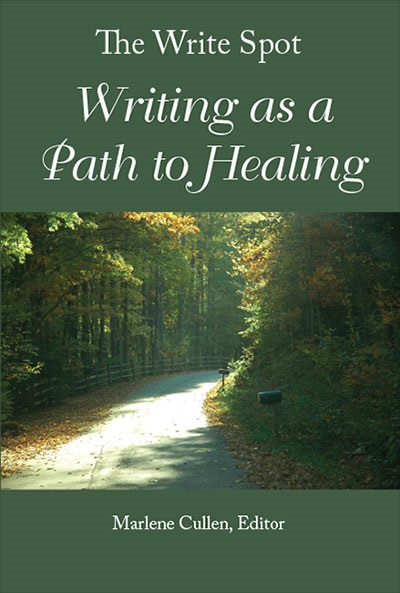
    The Write Spot: Writing as a Path to Healing has a wonderful self-care section, positive planning for mental health and physical well-being.

  • Shhhh . . . Prompt #428

    Today’s writing prompt:

    Opening line from Maxine Hong Kingston, The Woman Warrior: Memoirs of a Girlhood Among Ghosts:

    “You must not tell anyone, my mother said, what I’m about to tell you.”

    Or: You must not tell anyone . . .

    Or: My mother said . . .

  • If you could live anywhere. . . Prompt #415

    If, for one month, you could live anywhere, any place, in a certain residence, or in a famous home, where would you pick? You can time travel into the past or future.

  • Betrayal. Prompt #410

    “A time comes when silence is betrayal.” Martin Luther King, Jr.

    Write about a time you were betrayed. Or a time you betrayed someone.

    You could start with: I felt betrayed . . .

    Or write about a time you were silent and now wish you had spoken up.

    Or write about a time you could no longer remain silent.

    You could start with: I want to tell you about what happened . . .

  • A lie . . . Prompt #409

    Write about a lie someone told you, or a lie you told.

    White lies, bald-faced lies, untruths, falsehoods, fabrications, whoppers . . . whatever you call ‘em, you have experienced ‘em . . . Now write about ‘em.

  • Pretend . . . Prompt #407

    Today’s prompt: Pretend.

    With this type of prompt, you can also write about the opposite . . .
    Let’s not pretend.

    Garden

  • Why write your story?

    Why write your story? So you can move on.
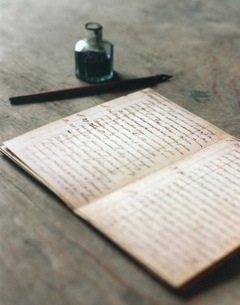

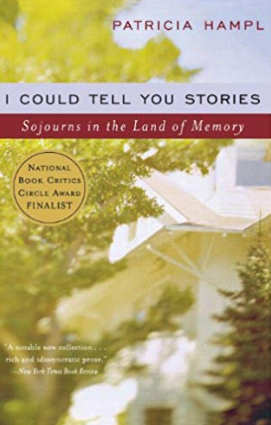
    Today’s post is inspired by Patricia Hampl’s book, “I Could Tell You Stories: Sojourn in the Land of Memory.”

    Tell your story so you can move on.

    “When a writer keeps things inside, it becomes a ball of tangled yarn. As each story is told, the ball becomes untangled. Writing from memory can help us to let go of those stories we tell over and over again. We may not even need to tell them again [after writing about them].”

    Note from Marlene: I think writing from memory can also be a type of self-help . . . a vehicle for transporting oneself back in time and getting in touch with what really happened.

    Patricia Hampl is an American memoirist, writer, lecturer, and educator. She teaches in the MFA program at the University of Minnesota at Minneapolis and is one of the founding members of the Loft Literary Center. Source: Wikipedia

    How to write without adding trauma

    Does your heart hurt?

    Writing about difficult times in your life by guest blogger Nancy Julien Kopp.

  • Another reason to Just Write!

    “Studies show that writing by hand, rather than typing, improves information processing as well as the ability to remember what you’re writing about.

    Take your learning to the next level by using your brain for what it does best: fusing existing and new information. . . . Crack open a book and once you’ve finished it, write a Goodreads or Amazon review. You might be surprised at what you come up with while mulling it over again.” — “Brain Fitness,” November 2015 Real Simple magazine.

    Note from Marlene: You will be helping authors and improving your brain fitness at the same time when you review a book and post on Amazon or Goodreads.

    And if you are inclined, consider writing a review of the Write Spot Books and post on Amazon.

    The Write Spot to Jumpstart Your Writing: Discoveries

    The Write Spot to Jumpstart Your Writing: Connections

    The Write Spot: Reflections

    I will be very appreciative and you will be rewarded . . . somehow, some way!

  • If I didn’t have to do it perfectly . . . Prompt #384

    If I didn’t have to do it perfectly, I would try . . .


  • Stuck. Prompt #382


    Write about things you can get stuck in.