“As writers, we’re often trained to seek momentum—significant events, turning moments, the big emotional payoff. Especially in memoir, there’s pressure to magnify the trauma or spin a grand arc of triumph. But when I sat down to write, what called to me weren’t the headlines. It was the folds in between.” — Mary Monoky, “What Stillness Taught Me About Story,” August 6, 2025, The Brevity Blog
We had an interesting discussion in my Jumpstart writing group the other day about being an introvert and how hard it is sometimes to be around people.
Well!
As writers and readers, it’s important to support authors. One possibly easy way is to attend author events.
Charlotte Wilkins offers suggestions on how to be a successful participant at author events.
“I attended the two book readings to support these authors, yet I’m the one who learned so much from them: relax and be yourself; having a sense of humor about yourself puts your audience at ease; read short snippets that makes the listener wonder what’s to come (Woodson says you must have intention in every line to pull the reader forward); be generous with your responses; hope for the best, prepare for the worst; and stick a couple of questions in your pocket just in case. It seems literary citizenship is a win-win.”
By the way, I keep a note on my desk, “I am an introvert who can act like an extrovert.” From “A Reformed Introvert,” by Laurie Neveau, Chicken Soup for the Soul, July 19, 2025
“In personal essay, memoir and creative nonfiction, we want to bring to our pages a sense of verisimilitude, of intruding upon someone else’s circumstances, of grasping someone else’s fleeting take on the world.”
How to do this?
Gilsdorf suggests:
“The language of cinematography is a useful analogy: in a wide or medium shot, the viewer is distant from the subject; in close-ups and extreme close-ups, the frame of reference is tight.
In writing, this means: rather than quickly cutting away, or keeping the viewer far removed, like a drone hovering high above, we can zoom in on the subject of our attention, or pan across it, slowly.
We can train our writerly efforts to pause. To not skip over— but to linger, loiter, dawdle, stay put, wait.”
Zarien Hsu Gee offers “fast drafting” as a creative process:
Fast drafting is a way to break through creative paralysis, to see what might be possible with an idea or writing project. When you commit to writing fast without judgment, you bypass the inner critic that can slow your progress to a crawl or even prevent you from moving forward at all.
The beauty of fast drafting lies in its imperfection. By calling it a “fast draft,” you free yourself from the expectation of perfectionism. You accept fast drafting as a necessary creative process in order to move forward with your work, and your expectations for its literary genius is low. Your goal is just to get it all down.
The fast draft also serves as confidence booster. It reminds you that you can write this story, this novel, this memoir.
When you write fast enough to outrun judgment, your creativity has a chance to show you what’s possible.
Fast drafting is giving yourself permission to create freely. Speed helps you outrun your inner critic long enough so you can see what you’re capable of creating. It is an essential step towards creating something meaningful.
Darien Hsu Gee is the author of five novels published by Penguin Random House that have been translated into eleven languages. Her collection of micro memoirs, Allegiance, about growing up Chinese American, won the 2012 bronze IPPY award for essays. Darien received a 2015 Hawai’i Book Publishers’ Ka Palapala Po’okela Award of Excellence for Writing the Hawai’i Memoir. Join Darien at writerish.substack.com where she offers free guided 10-minute writing sessions.
“It doesn’t matter who we are, we all want stories. They help us make sense of our experiences and a complicated world. Because we’re inquisitive, social animals, stories help us understand and connect with one another. When we recognize and relate to characters and events in stories—particularly those we believe to be true—it strengthens our social bonds and confirms we belong. There’s a kinship that inspires, informs and comforts us and, though we might not always be conscious of it or understand why, we’re all searching for truths in the world.
Stories also evoke emotions and help us understand what it might be like to be different. We want to see the truth in those stories to help us understand people who are different and have different experiences of life.” — Posted on Jane Friedman’s Blog, July 31, 2025
Note from Marlene: “Perhaps” is one of my favorite words. It’s an easy method of offering alternative ways of thinking. If you are writing a memoir and aren’t sure of the details, you could write, “Perhaps it happened this way.” If you are conjecturing, “perhaps” is a gentle way of saying, “It could have happened like this.”
Here’s what Guest Blogger Lisa Knopp has to say about “Perhapsing.”
At some point, writers of creative nonfiction come to a roadblock or dead end in our writing, where we don’t have access to the facts we need to tell our story or to sustain our reflection with depth and fullness. If only it was ethical to just make something up, we might think, or to elaborate a bit on what we know. But of course, then we wouldn’t be writing creative nonfiction. It might appear that our choices in such cases are to either abandon the topic or write a thinly developed scene or reflection.
In Woman Warrior, Maxine Hong Kingston offers another option. In the first essay, “No Name Woman,” Kingston’s mother tells her a brief, cautionary tale about her father’s sister in China, who became pregnant even though her husband had been away for years. On the night the baby is born, villagers raid the family’s house and farm. The aunt gives birth in a pigsty, and then kills herself and her baby by jumping into the well from which the family drank. Kingston’s father was so shamed by his sister’s behavior that Kingston was forbidden to ever mention her in his presence.
In order to write the essay, Kingston needed a deeper, fuller understanding of her aunt’s life and a clearer picture of what happened the night she drowned. Since the only information Kingston had was the bare-bones story that her mother had told her, Kingston chose to speculate an interior life for her aunt. I call this technique “perhapsing.” Notice in the following passage how Kingston uses perhapsing to imagine an identity for the man who impregnated her aunt (italics are mine):
“Perhaps she had encountered him in the fields or on the mountain where the daughters-in-law collected fuel. Or perhaps he first noticed her in the marketplace. He was not a stranger because the village housed no strangers. She had to have dealings with him other than sex. Perhaps he worked in an adjoining field, or he sold her the cloth for the dress she sewed and wore. His demand must have surprised, then terrified her. She obeyed him; she always did as she was told.”
The word perhaps cues the reader that the information Kingston is imparting is not factual but speculative. Kingston doesn’t need to use perhaps in every sentence, because we can see that one perhapsing leads to another. We can also see that when Kingston presents facts (“He was not a stranger because the village housed no strangers. She had to have dealings with him other than sex”), she does not begin those sentences with perhaps.
Elsewhere in the essay, Kingston uses other words and phrases to alert the reader when she’s moving from fact to conjecture:
“It could very well have been, however, that my aunt did not take subtle enjoyment of her friend, but, a wild woman, kept rollicking company. Imagining her free with sex doesn’t fit, though.”
She may have been unusually beloved, the precious only daughter, spoiled and mirror gazing because of the affection the family lavished on her.”
By perhapsing, Kingston offers motives, actions, justifications, and specific details that add richness, texture, and complexity absent in her mother’s account, without crossing the line into fiction. Kingston believed that by remaining silent about her desperate and defiant ancestor, she was participating in her aunt’s punishment. By perhapsing, Kingston freed both herself and her aunt from the traditions that bound them.
Perhapsing can be particularly useful when writing about childhood memories, which are often incomplete because of a child’s limited understanding at the time of the event, and the loss of details and clarity due to the passage of time.
Susan Griffin offers a fine example of how perhapsing allows a writer to bring detail and understanding to a memory of a long-ago event. In “Red Shoes,” an essay in her collection The Eros of Everyday Life, Griffin recounts a childhood memory in which her grandmother gave her a pair of red shoes that she coveted. This memory is essential to the essay because it serves as the springboard and touchstone for Griffin’s musings on such dichotomies as mind versus body, domestic versus private spheres, public versus private memories, and genre (fiction versus nonfiction; detached, intellectualized essay versus intimate memoir). In the following segment, notice the various ways in which Griffin signals her uncertainty as she presents her memory of being given the red shoes – if, indeed, she was given the shoes (italics and ellipses are mine):
“I was, I suppose, shopping with my grandmother in the department store with the X-ray machine that made a green picture of the bones in my feet. I have the vague feeling my grandmother finds red impractical. . . . I cannot remember whether or not my grandmother let me have those shoes. . . . Perhaps she did buy me those red shoes. I can see them now in my closet which was also her second closet, the closet of the black silk robe, the place where she kept her rarer treasures, her two fur coats, worn only on the most special occasions. . . . and, am I embellishing here, her sweater with the rhinestones on it, or were they pearls?”
When an author’s memories of concrete details are sketchy or absent, the technique of perhapsing not only allows her to recreate the scene effectively, it also helps establish her as a reliable narrator. Because Griffin admits what she doesn’t know and tells me when she’s speculating, I trust her to be a reliable narrator and follow her willingly through her other memories and complex, philosophical wanderings.
Writing Exercise:
Select a passage in one of your essays that could be made richer and fuller through the use of speculation. If your memory of the time you learned a family secret is fuzzy and incomplete, “perhaps” details and plausible dialogue. If the person you’re profiling can’t or won’t say why he began playing the banjo when his wife left him, “perhaps” some likely motives. If you and your family don’t know why your grandmother inserted such a peculiar clause into her will, “perhaps” plausible motives. In addition to perhaps, other words and phrases you can use include maybe, suppose, if, what if, might have/could have, possibly, imagine, wonder, perchance.
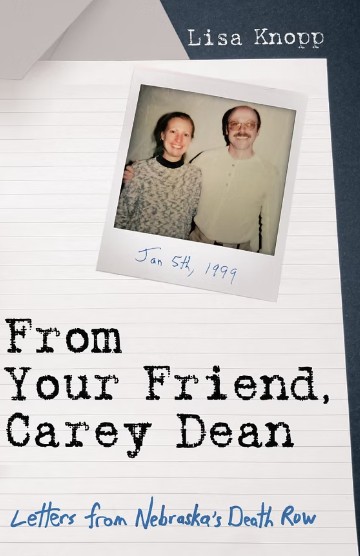
Lisa Knoppis the author of “From Your Friend, Carey Dean: Letters from Nebraska’s Death Row”(2022), a memoir/biography. When Lisa visited Nebraska’s death row in 1995, she couldn’t have imagined that one of the inmates she met that day would become a dear friend. For the next twenty-three years, through visits, phone calls, and letters, a remarkable, platonic friendship flourished between Knopp, an English professor, and Carey Dean Moore, an inmate.
Lisa was born and raised in Burlington, Iowa, a Mississippi River town. She was educated at Iowa Wesleyan College, Western Illinois University, and the University of Nebraska-Lincoln. Since 2005, she’s been a professor of English at the University of Nebraska-Omaha where she teaches courses in creative nonfiction, including food writing, travel writing, and a seminar in experimental forms
Knopp is an associate professor of English at the University of Nebraska-Omaha and a visiting faculty member in Goucher College’s low-residency MFA in Creative Nonfiction program in Baltimore.
We acknowledge that aging, slowing down, and death are normal stages of life. We exercise, eat healthy, think positively, and bring love and playfulness into our lives. Still, eventually, death will walk in.
What if we make friends with death? Can understanding the last chapters of your life move you toward acceptance and peace? Acceptance and peace can be a gift you can give yourself and your loved ones.
Sharon’s Story: I remember Mama. I wore a hat with a bee pin that was my Mother’s. I gave it to her for her birthday thirty years ago. Maybe for her 75th? I don’t remember the year. But I remember the joy of purchasing it and her face when I gave it to her. I can see it on her blouse. I think of Mother often. Every time I wear my hat with her bee pin.
Sharon’s reflection on memory: Sometimes, my words come a little slower. I usually joke when the word or thought finally comes to me. Sometimes, it takes only 10 seconds to surface, but ten seconds is a noticeable pause in a conversation. I enjoy reading and listening to podcasts and often come across ideas I want to share. However, I may need to make notes to recall the clever idea! The ideas surface eventually, and as they do, I give myself positive reinforcement—like a high five to Sharon!
As my mother aged, she would often ask me, “What do you think is worse, Sharon: losing your mind and being healthy, or being sick and having your mind?”
Some memory loss is a normal part of aging.
How do you react when you can’t recall a word, a friend’s name, a book, or a movie? Can you laugh gracefully at yourself and accept the effects of aging?
Memories play a significant role in our lives. It’s common to reminisce and reflect on the past as we age. I’m excited that I remembered how to spell “reminisce” and wrote it without using spell check! Google makes it easy to recall facts or trivia that we may have forgotten, as long as you remember how to use your computer or search on your phone!
I googled “Why do old people reminisce?” and got a list of answers. Reminiscing serves a good purpose. It is a way to remember a well-lived life and come to terms with past regrets or incomplete relationships.
Sharon researched how memories are formed: Understanding that the amygdala links a memory stimulated by an emotional connection, a memory with an emotional charge may remain for years, whether happy or sad.
The amygdala, hippocampus, and neocortex are the parts of the brain responsible for memory. Link to an article on How the brain stores memories.
From Marlene: It’s important to practice self-care when writing about difficult subjects to prevent adding trauma.
Resources about how to take care of yourself while writing about difficult things:
Sharon Ziff‘s work as a Hospice Nurse taught her about end-of-life issues and the importance of preparations to die with dignity. After retirement, she was certified in the “Authentic Presence: Contemplative End of Life Care Training,” a specialized program committed to providing Let’s Speak About Death, a Community Education Project.
“Quitting Time: Why You Need to Let Go of That Writing Project” by Allison K. Williams.
“As writers, we’re sold on the value of perseverance. Just do another draft. Just keep working. Send another query, another submission. One day you’ll break through. Sit down and finish. Now. Today. This week. In fifteen-minute increments while waiting for carpool, or in one wild coffee-fueled weekend. I think I can, I think I can.
I can get to the end of this sentence. This paragraph. This page. This essay. This book.
But there’s value in quitting, too.
Click “Quitting Time” to read the rest of Allison’s Blog Post.
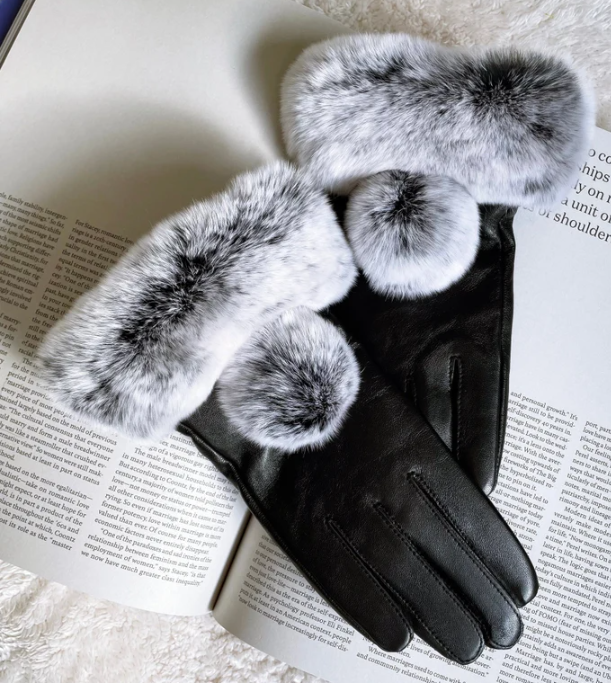
I lost my gloves—the ones I bought in Venice last year. I loved them. LOVED THEM. How could I love a pair of gloves? They had a soft, fluffy pompom on the top. I liked to stroke them. It was like petting a kitty. Sadness. And upset with myself for losing them.
So I lost a pair of gloves. How could I feel this deep emotion for a pair of gloves? It’s the attachment to my experience in Venice and my love for the friend I was with.
Loss is a recurring theme in my writing. At times, I struggle to manage the intense feelings that accompany loss. There’s a burning sensation in my belly that I want to go away. I find myself thinking, “No, no, no,” while tears begin to flow. It’s not about the lost gloves; it’s about the impermanence of life.
To cope, I have established a gratitude practice, focusing on appreciating the little things. Friendships are crucial in supporting me through my feelings and creating a safe place for expression. I have friends with whom I can laugh after the tears have flown.
Meditation and journaling help me process my emotions and provide a calming effect. I also have a favorite playlist that serves as a therapeutic outlet, allowing me to reflect and connect with positive memories.
Change and loss are a part of life. Aging brings about losses with a decline in health. You may slow down and cannot do everything you did when you were younger. Retirement brought changes. You are adjusting to a new routine or lifestyle you may not have anticipated. Give yourself time. What are some of your passions that can still provide you with a fulfilling life? Focus on them.
We can be prepared for change and build resiliency as we age. Prepare for the practice of accepting what is.
As Frank Ostaseski writes in “Five Invitations,” Welcome everything, push away nothing. It doesn’t mean you have to like it. Then focus on what you can do.
Embrace the joys. As the song goes, “Accentuate the positive, eliminate the negative, and don’t mess with mister in between!”
Sharon Ziff, RN, spent twelve years as a Hospice Nurse where she learned about end-of-life issues and the importance of the preparations to die with dignity.
Sharon is certified in the “Authentic Presence: Contemplative End of Life Care Training,” a specialized program, and is committed to providing the Community Education Project called “Let’s Speak About Death.”
Note from Marlene: I am very excited to share Jennifer’s post with you. Since my passion is how to write about difficult subjects without adding trauma, I am especially grateful to Jennifer for addressing this topic.
Jennifer’s eloquent writing on what she doesn’t know about her father is outstanding and an example of how you can write about “what you don’t know.”
Guest Blogger Jennifer Leigh Selig:
When I lead memoir writing retreats, I like to kickstart the mornings with writing prompts. One of the tricks of my trade is a manilla envelope stuffed with images I’ve printed out of vintage and iconic toys and games from across the decades. It’s a ritual I cherish—spreading these images out on the long conference room tables, imagining my students’ delight as they light upon a special toy or game that brings back fond memories, and then watching them begin to furiously write.
This last retreat was different. I found myself tearing up as I laid out the pictures of the Kewpie doll and the troll. I found those tears falling as I laid out the pictures of Clue and Yahtzee. So many of the toys and games took me back to my beloved grandmother’s house. This was the first retreat I led since her death at 102 years old. I was blessed with 60 years of my life with her. And now no more.
I wiped my tears away before anyone entered the room. Sitting alone in the circle, I wondered if there was any writing prompt I could give that wouldn’t trigger someone. Even asking: “Write a happy memory about your mother” is fraught with danger. What if someone has no happy memories of their mother? What if someone’s mother has just been diagnosed with a terminal disease? What if someone has no mother?
Then I remembered a writing prompt a teacher gave me that triggered a torrent of furious writing. I shared that piece with my students, to acknowledge that any prompt, no matter how seemingly innocuous, can stir something deep within.
For fifteen minutes, write about your father’s eating habits. Remember the journalistic imperative to include what, how, where, when, and why, all aiming to flesh out a deeper sense of who your father is. Follow the writer’s adage to write what you know.
I don’t know a thing about what my father eats. I don’t know if he peppers everything he eats with tons of salt or if sugar is his road to ruin. I don’t know if he frequents farmers’ markets for the freshest produce or if he stockpiles boxes of frozen food in his grocery store cart. I don’t know if he goes to the grocery store or if that’s the province of his wife. (I don’t know if my father even has a wife.)
I don’t know a thing about how my father eats. I don’t know if he’s a gentleman who savors each bite or a feral animal who wolfs down his plate. I don’t know if he smacks his food with relish, if he rests his elbows on the table, if he licks his fingers or knows to use a napkin. I don’t know whether he dives straight into a meal, or if he stops to thank God first. (I don’t know if my father even believes in God.)
I don’t know a thing about where my father eats. I don’t know if he eats standing up in the kitchen or if he takes a plate to the sofa where he can watch sports on TV. I don’t know if his taste skews toward fine dining establishments or all-you-can-eat buffets or if he prefers eating at home. (I don’t know where my father’s home even is.)
I don’t know a thing about when my father eats. I don’t know if he’s a creature of habit or if he eats when he’s hungry, regardless of the hour. I don’t know if he eats after smoking or smokes after eating, or if a happy-hour cocktail always precedes dinner. I don’t know if his children nag him for skipping a meal, or scold him for snacking all day. (I don’t know if my father even has other children.)
I don’t know a thing about why my father eats. I don’t know if he’s trying to gain or lose weight, to lower his cholesterol, to control his diabetes, or to stave off cancer. I don’t know if he eats when he’s stressed or he eats when he’s bored. I don’t know if he eats for pure pleasure or whether he eats to stay alive. (I don’t know if my father is even alive.)
If my father is no longer alive, I don’t know where he died, when he died, or why he died. I don’t know how he died, or what he was doing when he died. I don’t know whether he is interred in a tomb where coffin flies feast on his corpse or if he was buried at sea where fish nibble on his flesh or if they bled him out before they burned him to ashes and scattered him.
I cannot flesh out my father, Teacher. I cannot write what I know, because I do not know the flesh and the blood of my father.
___
As a writer, I was seething. Not seething at my teacher, though the prompt did seem presumptuous. But in the end, I’m glad I wrote to it. It was good to see how bad I still feel that half of who I came from is a ghost. This is the raw power of writing prompts crafted by others—when we open our memory bank, we have no idea if the coins will fall out heads or tails, or which is best for us.
So I tell my students—I’m going to give you writing prompts this week. Even if I don’t mean it to, any prompt may trigger distressful or traumatic memories. If you go there, it may hurt. If you go there, it may help.
Jennifer Leigh Selig is an LBGTQ+ teacher, book publisher, and author whose writing career spans nearly four decades. Her most recent book is Deep Memoir: An Archetypal Approach to Deepen Your Story and Broaden Its Appeal, a companion to her co-written Nautilus Gold award-winning book, Deep Creativity: Seven Ways to Spark Your Creative Spirit. Learn more about Jennifer and her writing classes and her publishing companies.
Your turn: I don’t know . . .
Choose a prompt from The Write Spot Blog and Just Write!