Author: mcullen

  • Write the Scene. Prompt #51

    Prompt #48 was about how to “Grow Your Character.”  Prompt #49 was about setting the mood. Prompt #50 was “The Problem.”

    Let’s put them all together and write the scene.  If you have freewrites on character, mood and a problem. . . use these elements to write a scene. Or, write a scene, using all new material.

    If writing memoir, write what actually happened, as best as remembered. Be sure to include details. Be specific. Not “car,” rather “1966 blue Dodge van.”

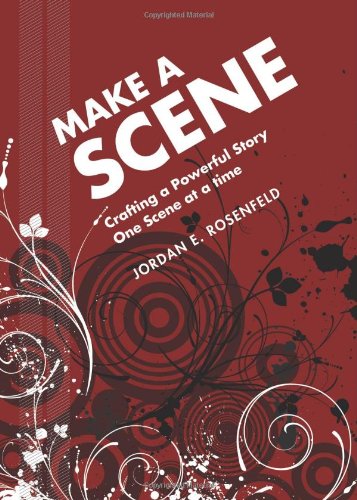
    “Scenes are capsules in which compelling characters undertake significant actions in a vivid and memorable way that allows the events to feel as though they are happening in real time. When strung together, individual scenes add up to build plots and storylines.  — Make A Scene, Crafting a powerful Story One Scene at a Time,  by Jordan E. Rosenfeld

    In Make A Scene, Jordan includes a recipe for basic ingredients for compelling scenes. If you are looking for an excellent book on how to write, this is it! Click here for my review of Make A Scene.

    Make A Scene.Rosenfeld

  • Put into written words . . .

    From the Hard Life to the Writing Life by Jay Baron Nicorvo

    Put into written words your understanding, and misunderstandings, of the world. — Jay Baron Nicorvo, Jan/Feb 2014 issue of Poets & Writers magazine.

    “The Miracle of Mentors: From the Hard Life to the Writing Life,” by Jay Baron Nicorvo.


    Book


  • The Problem . . . Prompt #50

    Prompt #48 was about how to “Grow Your Character.”  Prompt #49 was about setting the mood.

    Today’s prompt is about “The Problem.” These series of prompts are based on Sheldon Siegel‘s 2011 Writers Forum workshop.

    We’re working on how to write suspense, mystery, thriller. If that doesn’t interest you, you can also use these prompts to write memoir.

    Write a one-sentence premise.  What’s at stake? Why should the reader care?

    If we follow along with Prompt #49: Our heroine is about to get into a limo to meet with Monsieur Blanchard. We know her father is concerned about her. We know she wants to look professional for this meeting. That’s about all we know.

    Let’s play with this. What if our heroine is a contracted killer? What if she is meeting with Monsieur Blanchard to receive her next assignment?  What if she needs the money because her father is in danger of losing their house for failure to pay back taxes? What if Monsieur Blanchard is about to blackmail her? What if she has information to blackmail him?  All sorts of possibilities.

    Premise:  Our heroine, Monique, needs money to pay her father’s bills.

    Stake:  He could lose the house. She could lose her life.

    Care: She will die.

    When you are writing thriller, mystery or suspense, Sheldon says to know the enemy. Know who it is and what we’re scared of. Then you can manipulate the reader.  Need to feel the enemy. Personified.  Fear the murderer.

    You can use your list of fears from Prompt #47 to incorporate with your character’s problem. Or you can think about your fears and work one of those into the premise.

    Prompt:  The problem is . . . Or, The problem was . . .

    Note:  If you are writing memoir, write what actually happened, as best remembered. Be sure to include details, such as character description and location.  When writing about real people, they become “characters” in the story. Use sensory detail such as smell. Use the weather to mirror mood of character and of story.

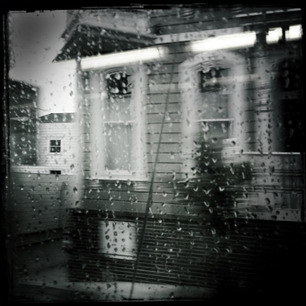
    rainy house

    Photo by Sasha Oaks

  • Your writing will soar with Hemispheres Magazine

    United Airlines Hemispheres Magazine

    “Hemispheres is written for the affluent, curious, sophisticated citizen of the world. Blending long-form journalism with trend stories, think-pieces and service [articles].” — Writer’s Digest Magazine, February 2014.

    95% freelance articles, pays $.50 per word and up.

    Hemisphere’s Three Perfect Days series is gorgeous photography.  Scroll through for a mental mini-vacation.

    Pitch your story. Details here.

    Blue sky + white clouds

  • Guest Blogger Amanda McTigue — The Power of Place

    Guest Blogger Amanda McTigue — The Power of Place

    Writing is setting. Indeed, to write is to place (that’s “place” as a verb).

    We writers place readers in worlds. We set them into circumstances, stories, imagery, facts, memories, actions, fantasies, and so on.

    Setting in this sense isn’t mere background. It’s the sum total of every last word we write. And yet, so often we think of place as scenery. What a mistake!

    Place shapes voice. I’m not talking dialect here. I’m saying the ways we writers situate ourselves in imagined (or remembered) worlds give rise to the ways we convey those worlds to others.

    Our first task, then, is to place ourselves so fully that our readers go with us.

    “All well and good,” you say, “but how can we interrupt our action-packed, conflict=drama, page-turning flow to squeeze in some detail of setting? We’re writing to keep readers reading! There’s no room! There’s no time!”

    I feel your pain. We writers are in such a rush. Determined to finish-and-publish, we worry about where to put the “where” in our text before we even know where “where” is.

    But place gathers power when we slow down.

    In my writing process, “where” has a time and pace (that’s not a typo). I do everything I can to remind myself that plot points can wait; endings will find themselves. Meanwhile, when I’m lost, I get more lost. I schedule time for sheer exploration. We’re talking undirected (but focused!) wandering accomplished through short sessions of stream-of-consciousness writing.

    So often, our best work is discovered, not planned. When’s the last time you ambled through your worlds with no agenda? How about sitting still? How about nosing around for nothing in particular? Try leaving your map at home. Paddle. Search. Listen. Taste. Sniff. Find a new vantage point. Marvel. Take a nap. Unpack a picnic, etc.

    Forget writing. Just notice and take notes. The bird watcher doesn’t agonize about her style when she’s out in the field. She scribbles as fast as she can. Who cares if there’s a better word for “red?” She keeps her eye not on the page, but on that tiny splash of color hidden in the branches. She tries to capture everything, knowing the bird will fly off any minute, taking the moment with it.

    Lately, I find such field trips invaluable. I schedule them not only as I’m drafting but also right through my editing process.

    Let’s say I’m polishing a chapter for the umpteenth time and it’s still god-awful. Sometimes I know what’s missing. Sometimes I have no idea why it stinks. Either way, I set the manuscript aside, put on my boots and step out into a wet garden or a fetid alley or a crater on the Planet Zarn with absolutely no sense of how that’s going to help. I just give myself a half-hour and go.

    I take field equipment along to sharpen my observations: binoculars, a camera dolly, a satellite, a cloud boat, a microphone, a microscope, my tongue. I grab every writer’s prompt I’ve ever enjoyed and bring them too—questions or novel points-of-view—to keep myself playful and curious.

    I place myself—and things happen. Setting always brings more than static landscape. Worlds always world, even the quietest of them.

    When I return to editing, I bring the fruits of my wandering. Suddenly an overlooked shoelace suggests a murder weapon, a tree branch holds a charm, or the stitching on a pillow brings a character to life.

    Does that mean that I use every word I write in such sessions? Not even close. But nothing is wasted. What I don’t use leads me to what I do use: richer passages—even new storylines—far fresher than anything my editor’s brain could cook up.

    There’s nothing like a road-trip. Whether staring at a blank page, or yet another re-write, schedule time to explore. Place yourself first (pun very much intended). Shake off your worries about the where of where; you can figure that out when the where is there.

    Go.

    Slow down.

    Forget writing.

    Take notes.

    Amanda-McTigue-112x150Amanda McTigue’s debut novel, Going to Solace, was selected as one of four “Best Reads of 2012” by Gil Mansergh on KRCB’s “Word by Word.” 
  • Hard work got me here and only . . .

    Hard work got me here and only hard work will keep me here.  —   Brandon Stanton, photographer and author of Humans of New York.  Brandon is the amazing young man who founded the Humans of New York Project.

    Q & A with Brandon and Lee Shearer:

    Why did you start Humans of New York?

    The idea for HONY came very organically from a love of photography. It wasn’t really modeled on anything. It emerged from many small evolutions rather than coming from a fully formed idea. For my first year or so of doing HONY full time, there weren’t even captions or interviews. It was just a photography blog.

    What kept you going in the first months of HONY?

    Obsession, really. I just truly loved doing it, and I thought the work was unique and important. Even early on, I had a lot of confidence that if I kept working, an audience would eventually develop. I didn’t expect it to be easy. I knew that I was going to have to put a ton of work into HONY before it would be fair to ask anyone to pay attention to it. I feel like one mistake new artists make is that they expect people to care about their work before they’ve really demonstrated that they care about it themselves.

    How is your new fame affecting your life and work?

    Obviously it’s very nice to have your work appreciated on such a large stage. I try my best not to change as HONY gets bigger. I think I’m doing a pretty good job of it. Main thing is just to remember that hard work got me here and only hard work will keep me here.

    Click here for more about Brandon Stanton and the Humans of New York Project

    IMG_1501

    Humans of New York on a little table in my writing room.

  • Setting The Mood. Prompt #49

    Prompt #48 was about how to “Grow Your Character.”  We’ll talk about location as character (exterior and interior) in this post and how to set the mood, or the tone of the scene.

    Let the reader know right away where the scene is happening, include details such as place, year, season, weather, and perhaps time of day. Not in an information dump, rather, weave in these details.

    Furniture tells a lot about a person. Sparse? Elegant? Are there cooking utensils on the kitchen counter?  Neat and tidy? Cluttered?

    The city (setting) can be a character in the story. Examples:  Dashiell Hammett and San Francisco, Lisa Scottoline and Philadelphia.

    The Christmas tree in The Nutracker becomes a character as it expands.

    As you write details about the setting and location, try to use dialogue and action. Think Casablanca and the Maltese Falcon.

    Elements of setting the mood:

    Where does this scene take place?

    City (real or mythical), urban, suburban, small town, hamlet, metropolis

    Time of day

    Season

    Weather can match mood of story

    Furniture

    Example of a freewrite, using details to set the mood:

    Martha pulled back the Coventry lace curtains, squinting past the newly pruned rose bushes, past the edged lawn and noted the weather. She raised her coat collar high above her ears, and picked up her fur-lined gloves from her bureau. One more look in the mirror to check if her seams were straight. It wouldn’t do to meet Monsieur Blanchard looking like a two-bit whore.

    She walked downstairs.

    “Good night, Father. Don’t wait up. I’ll be rather late.”

    Mr. Edmonton lowered his reading glasses and glanced at his daughter.

    “Setting out in this weather, are you?”

    “Yes, Father, I have an important client to meet.”

    “I don’t like the looks of this. Where are your rubbers? You aren’t dressed appropriately. You’ll catch your death.”

    “I’m fine, Father. You worry too much.” She brushed his bald head with her lips and was out the door before he realized a limo had stopped in front of their flat.

    Your turn:  Write details about setting and location, using dialogue and action.

    For more prompts on location:

    A place where you find satisfaction.  Prompt #25

    Physical location and action and to describe emotion state  Prompt # 12
    Favorite place form childhood. Prompt #11

    Location, or place as a character   Prompt #8

    Coventry bottom hem

    Photo of hem of Coventry lace curtain

  • I’d like you to meet Pat Schneider.

    I am fortunate to have experienced the wonderful and intrepid Pat Schneider, founder of Amherst Writers and Artists (AWA) . . . both in her books and in writing workshops.

    Pat was born in 1934, lived in tenement housing with her brother and single mother where there was seldom food in the cupboards, let alone on the table. When she was ten, Pat and her brother went to live in an orphanage. Those early experiences deeply influenced her writing, and fueled her passion for those who have been denied voice through poverty and other misfortunes. Through the help of a caring teacher, Pat was awarded a scholarship and was able to attend college, where she met her future husband. And so a life of writing began for this remarkable woman who lives and loves passionately.

    Here’s a story about Pat, from her website:

    I was a young poet, published in a few small journals, but I didn’t yet have a book of poems, when another poet in my neighborhood who did have a book, suggested we exchange poems and give each other critical suggestions. I was flattered – after all, she was a published poet! We exchanged poems, wrote our comments on the pages, and when I read her comments, I was devastated. My poor pages were bleeding red ink! So many criticisms! So little that was affirmed! For several days I felt sick – thinking I knew I shouldn’t have given her my poems! I’m not a good poet! I’m so embarrassed! and on, and on.

    But after a few days, one of her comments bothered me. “Mama,”she said, “is a childish word for ‘mother.’ Change to ‘mother.’”

    The poem began like this:

    Mama

    Mama knew a family in the Ozarks
    named their baby “Vaseline Malaria”
    because the words were pretty.

    I could just imagine my very dignified big-city poet friend’s reaction to that. But changing the name to “Mother” and putting “who” before “named” so it would work with “mother” — would make it an entirely different poem. The problem for my friend was the voice. And then I saw that almost every one of her comments were aimed at changing my voice into her voice.

    I don’t speak with an Ozark dialect now (except for a few words that I choose not to alter). I don’t write all the time using Ozark rhythms. But writing about my mama or my grandma – even writing about my own childhood frequently requires Ozark speech. Like this one, written in response to that experience:

    WHAT I WANT TO SAY

    Well, I was playing, see,
    in the shadow of the tabernacle.
    I was decorating mud pies
    with little brown balls
    I found scattered on the ground
    like nuts, or berries.
    Until some big boy came walking by
    and laughed. “Hey,
    don’t you know you’re puttin’ goat doo
    on your mud pies? I bet
    you’re gonna eat ‘em, too!”

    That day I made a major error
    in my creative life.

    What I want to say is this:
    I liked those little balls
    on my mud pies. I was a sculptor,
    an artist, an architect. I was
    making pure design in space and time.
    But I quit
    because a critic came along
    and called it shit.

    Click here to read more about what Pat Schneider wants to say.

    In this interview with Cary Tennis, Pat shares some of her deepest passions.  If you want inspiration for writing, watch Pat in her most sincere conversation about her passion for writing.

    Writing Alone and With Others, a film about Pat Schneider and the writing process.

    House-Pat-was-born-in

    The house Pat Schneider was born in the year 1934.


  • Grow your characters. Prompt #48

    Grow your characters.

    For the next three writing prompts, we’re going to build our repertoire, so that we’ll have characters, location and a problem leading us to write a scene.

    One step at a time.

    First step:  Write a brief description of character or characters.  If  you have a work in progress, use this time to discover something new about your characters. If writing memoir, same thing . . . find a new way to describe character.  Include flaw or flaws.

    Example:  Self-doubt, what would be challenging to character?  What does the character fear? What big events molded character? Character’s likes and dislikes.  What drives character? How does character react to pressure? Give your character a personality quirk, add internal conflict. These examples are from Sheldon Siegel’s 2011 talk at Writers Forum of Petaluma.  Sheldon Siegel is one of my favorite authors.

    Need more ideas? Fill in the blanks. Answer these questions for each of your characters.

    Character’s name
    Nickname

    Personality trait character is most proud of.

    How did character get this trait?

    What do people like least about character?

    What habit would character like to change?

    If someone looked in character’s bathroom garbage right now, what would they find?

    What scent does character like and what does it remind him/her of?

    What scares the character?

    Answer these questions for each of your characters (whether fictional or real). Real people become “characters” in your story once you start writing about them.

    For more prompts about character:

    Develop Character, put your character in an unusual situation and see what happens – Prompt #4

    Interview Character – Prompt #6

    Your Character Has A Surprise Secret – Prompt #7

  • We insist that all of our content is contrary.

    Do you have some writing that could be considered contrary?

     Contrary Magazine wants your contrary writing.

    “The ‘n’ in the title on Contrary’s website banner is backwards, fitting for a literary magazine guided by the editorial statement, ‘We insist that all of our content is contrary. And, we insist, so is all of yours.’”   — February 2014, Writer Magazine

    Contrary receives submissions throughout the year and publishes four issues per year, with the change of seasons. Spring deadline is March 1.  Summer deadline is June 1, Autumn is Sept. 1, Winter is Dec. 1.

    Types of work accepted:  Fiction, poetry, commentary.

    Click here for submission guidelines.

    Click here for Contrary Blog.

    Screen-Shot-2014-01-05-at-2.39.03-PM