Author: mcullen

  • Childhood Stories . . . Prompt #745

    Stories from our childhood can be rich material to write about.

    Let’s start with going back in time.

    See yourself at 6 years of age, five years, 4 years.

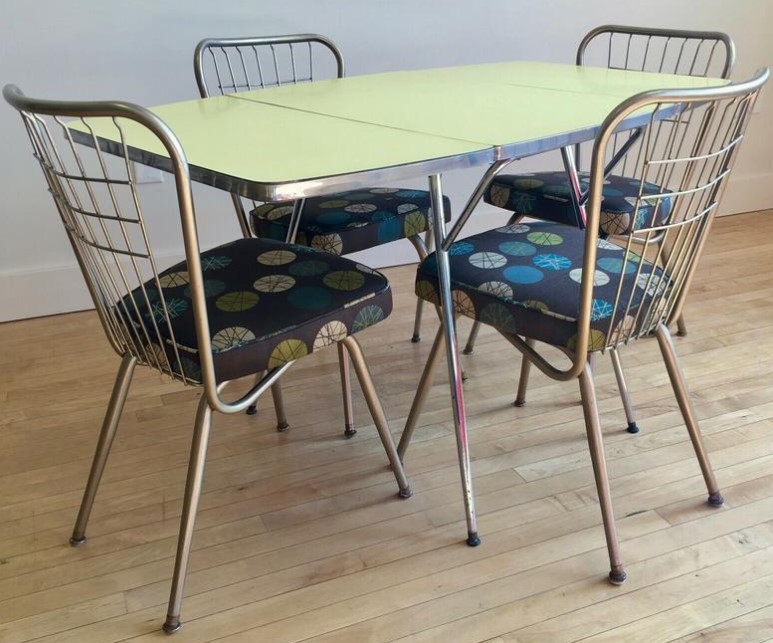
    See yourself at the kitchen table where you ate breakfast.

    Maybe swinging your legs because your feet couldn’t reach the floor.

    Listen. Hear the adult chatter. 

    Maybe there was no ‘round the kitchen table time for you.

    Maybe it was a picnic table, or a dining room table.

    Perhaps there was no table.

    Maybe family time was in the family room, or the TV room, the den, or the rumpus room.

    Possibly there was no family time. Friends might have been significant in your child life.

    Maybe most of your childhood was spent outside.

    Take a deep breath in. Let it out.

    See the room or the place where you spent a lot of time as a child.

    Write about that place.

    Describe the place.

    Why did you go there?

    When did you go there?

    What happened there?

    Step into it. What do you see? What do you smell? What do you notice?

    Just write!

    #amwriting #iamawriter #justwrite

  • Change in Perspective

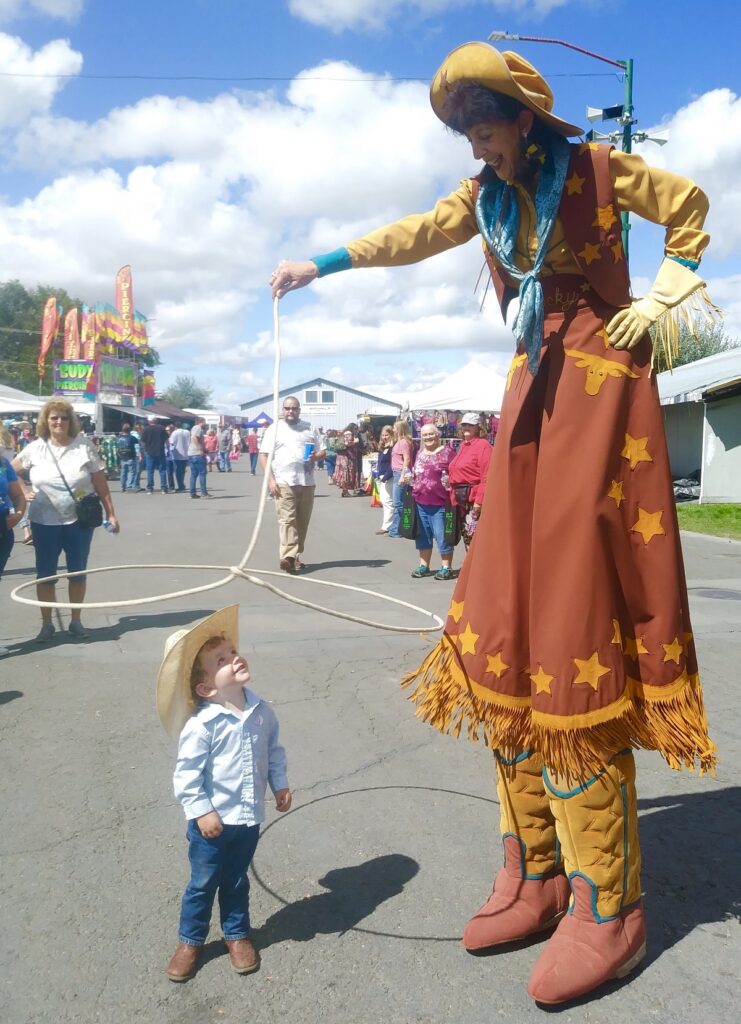
    “Lucky Starr,” an Over the Top Stilt Character from Giddyup Productions

    The following is excerpted from “A Collected Perspective” by Joanna Gaines, Fall 2023, Magnolia magazine.

    “There have been times when I’ve felt a need to approach some things differently. When life has handed me new challenges to navigate, and my mind’s been a blank.

    Maybe you’ve been in a similar place—where the way you’ve always done a thing is no longer working.

    So,  I tried something new.

    I started closing my eyes.

    I’m more alive to the present moment, more aware of my blind spots, when I stretch my point of view. It’s like feeling the moment in total harmony, every new vantage point revealing more of the bigger story being told.

    Sometimes, it’s as simple as physically shifting my point of view. I’ll take a few steps back. Walk to the other side of the room. Stand instead of sit.

    It’s this kind of change in perspective that can lead to deeper understanding. Clarity. Growth.”

    #justwrite   #iamawriter   #iamwriting

  • Outside the Norm . . . Prompt #744

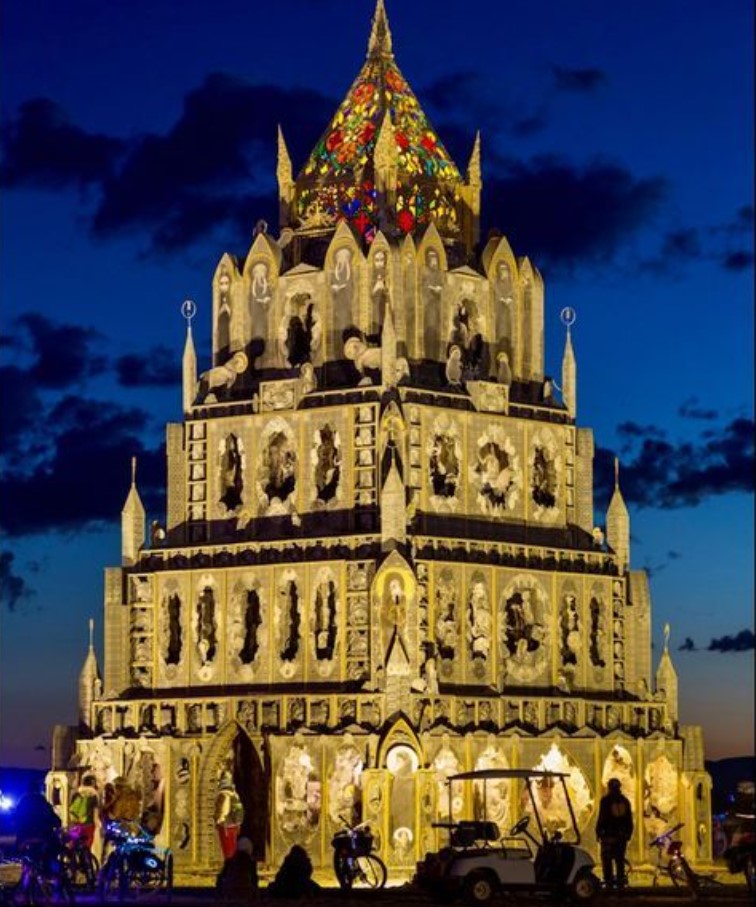
    “Totem of Confessions” by Michael Garlington at Burning Man

    What have you done that is “outside the norm?”

    Been to Burning Man in the Black Rock Desert?

    Burning Man is all about self-expression and the rejection of corporatism and capitalism. The experience of creating and viewing art and living in the moment is Burning Man’s purpose.” —Reno Gazette Journal, Aug. 31, 2022

    Or,  perhaps something like seeing the musical Hair, “where friends struggle to balance their young lives, loves and the sexual revolution, with their rebellion against the war, their conservative parents, and society.”

    Writing Prompt:

    Write about an experience you have had that is “outside the norm.”

    #justwrite  #amwriting  #iamawriter

  • Letting Go . . . An Essential Skill For Writers

    Guest Blogger Bella Mahaya Carter:

    Last week, I went to the dark side.

    I kept trying to get out of my low mood, which I created by misinterpreting a situation, making presumptions about other people’s opinions about me, and then listening to—and believing—the small voice inside my head ranting about what a terrible person I am. These thoughts looked real.

    They weren’t. They were expressions of fear.

    Having been beaten as a small child, I can sometimes be a hyper-vigilant people-pleaser, and when I sense others are unhappy with me, it can trigger the kid who feels unsafe.

    Last week, when I was in that low mood, I kept trying to do things to get out of it, but nothing helped.

    I finally realized there was nothing to do except sit with my uncomfortable feelings, be compassionate with myself, and wait for my mental storm to pass.

    There was nothing to do but recognize my mind was playing tricks on me and hijacking my well-being.

    Seeing this made letting go—and freedom—possible.

    Letting go is an essential skill for writers. We are not in charge. The more we can relax our ideas about what, how, or when we “should” write, the better we can receive what wants to be expressed through us on its own terms.

    When struggling, people often ask, “Why is this happening to me?” Why questions can become rabbit holes. The “why” doesn’t matter as much as how you respond to what’s happening.

    I find it more productive to ask “how” questions.

    Here are a few examples:

    • How can I find peace right now?

    • How can I feel good about myself?

    • How can I experience more joy?

    • How can I be free?

    • How can I liberate myself from my mind’s destructive habits?

    • How can I write this story?

    • How can I be more loving with myself and others?

    • How can I live with a spacious, open heart?

    I enjoyed exploring these questions in my journal and found the directive “let go” answered most of them. Let go of my illusions of control. Let go of needing to perceive myself as outstanding or correct. Let go of ruminating on the past and the future, which rival social media as attention thieves, taking me out of the present moment—our point of power. The place where life is unfolding now.

    And, yes, let go of fear. To the extent we are able.

    Faith is the most valuable if fear is the cheapest room in the house.

    Bella Mahaya Carter is passionate about the power of writing to heal and transform lives. “It took me decades to understand how to get out of my own way so that what wanted to be expressed through me could come forward. When I finally embraced this process, it was a game changer. Ever since, I’ve been helping other writers, artists, and healers navigate work and life from the inside out.”

  • All In Good Time

    Memorable writing that sparks imagination. Lean in. Hear the writer’s voice on the page.

    All in Good time

    By Lynn Levy

    “How do you work it?” Joe finally asked.

    Agnes smiled. It was one of her rules. No cell phones in the house. Not no phones, but by the time these kids got handed over to her, less-is-more turned out to be a good starting place.

    “What’s the phone number?” Agnes asked.

    Joe shrugged, which was not a surprise. Kids didn’t memorize numbers anymore. The phone stored them.

    “Alright,” Agnes said. “The first thing you have to do is memorize the phone number here. Get it down until you can say it by heart. It’s just 10 numbers. 304-555-0058. Say it back.”

    “Three oh four,” Joe started and faltered. “Can I write it down, at least?” Joe asked.

    Agnes shook her head, and repeated the number. This first test told her a lot about the child. The reward was to talk to a friend – an important act of connection. At that age, they craved their friends even if they couldn’t say why. She watched them overcome the small hurdle, to memorize her phone number and their friends’ – which of course Agnes had. She knew all the important numbers for the kids she took in. CPS was used to it by now, and her kids did well, and often asked to stay. Not always, but more than less, so they did as she asked and didn’t argue.

    Some kids got angry at the task. You could tell a lot about someone by how they dealt with frustration. The bright kids generally had no trouble memorizing, but they might react with boredom or annoyance or curiosity, or they might be matter-of-fact about it. All of that told Agnes something.

    Joe needed about 10 minutes to memorize her number, then he had the hang of it, of remembering the short bits instead of all 10 at once, and learning his friend Gabe’s number took only a moment. It was too soon for hugs, but Agnes patted the back of his hand.

    She angled the heavy phone toward him and took the receiver off the hook. “Here,” she said.

    Joe took it, his hand visibly dipping. He wasn’t expecting the weight.

    He held it for a second, and Agnes tipped her chin at him. He put the receiver up to his ear, gingerly. “What’s that noise?” he asked.

    “It’s called a dial tone. It lets you know the phone is ready to work.” Another thing lost with cell phones, that audible connection to the machinery of it all.

    She dialed the first digit of Gabe’s number, then the second and third.

    “Really?” Joe said.

    “You do the rest,” Agnes prompted.

    He finished the number, then looked a bit relieved at the familiar ringing tone.

    “Hey,” he said when Gabe answered. He stood up, as if to go somewhere else, and then realized he was tethered. She watched the implications play across his face. He couldn’t leave. He couldn’t speak freely with Agnes present.

    “I’ll just be in the kitchen,” she said.

    Being assigned to Agnes was like getting in a time machine, kids said. She had a bit of a reputation that way. Kids talked about her, but they didn’t really know what it meant until they got there.

    Agnes didn’t hate technology, not really, but she felt it made people dependent. And people who were dependent had a harder time climbing out of the mire of their own problems. So, she made her kids memorize phone numbers, so they would learn to retain important information. She made them talk to their friends, not text, so they would learn to pay attention to voices and inflection. She taught them to read paper maps, and navigate for her when they wanted a ride. And she taught them to use the typewriter, so they would slow down and think about what they wanted to say.

    Of course, eventually, they all left her, and rejoined the present, and the moment they did, they all went and got their own phones again, first thing, the thing they’d most longed for, most missed. But if they were with Agnes long enough, some of them, not all, but many, found it had changed. Found that it was easier, after all, to understand subtext in the tone of a friend’s voice than in their choice of emoji. Found that a drained battery was not a cause for panic. Found they felt more choice and control over when to attend to it, and when to ignore it.

    “You got Agnes?” the older kids would say to the younger ones. “She’s cool, but you won’t feel the same about your phone after,” they’d say.

    Of course, it wasn’t just the trip to the past, the Bakelite rotary phone and TV with 13 channels and manual typewriters that changed the kids. It was Agnes herself, and how she used her throwback world to help them reach themselves.

    “You won’t feel the same about your phone,” some would say, sagely. But the ones who really got it said, “You won’t feel the same about yourself.”

     Lynn Levy lives in Northern California with her husband, an overly familiar wild scrub jay called “Bubba,” and an enormous wisteria. She and the wisteria are in negotiations regarding ownership of the patio trellis.
  • Neuroplasticity & Character Development . . .  Prompt #743

    Neuroplasticity

    We have well-worn neural pathways that help us get through routine activities without having to think about the details of each one.

    For example: Driving to a destination and arriving without having remembered every detail on the route.

    When that neural pathway gets interrupted, there is an opportunity for:

    Neuroplasticity: The brain’s ability to form new connections and neural pathways. 

    That change of habit can enrich perspectives:

    The way we look at our world, the way we meet challenges, and problem solve.

    Prompt #1

    Set the scene.

    Choose a fairytale character, a fictional character you create, or someone from your life (this could be you):

    Finish the sentences:

    A character wants ___________________________

    To get it, character needs to ____________________

    But (obstacles) ______________________________

    What if: Neural pathway gets interrupted. An opportunity for neuroplasticity? _________

    Prompt #2

    Choose one path to follow

    Path One: Fractured Fairytales: Start with a well-known fairytale and mix it up.

    Give the character another obstacle, or add on to existing obstacle.

    Embellish the details, be as unrealistic and as crazy as you want.


    Path Two: The main character is the person you just wrote about or someone from your life, (could be you).

    Path Three: Main character is a fictional character created by you.

    Whatever path you choose, use these questions to develop character and situation:

    What does the character want?

    What are the obstacles?

    If you choose to write about person from the first prompt, use “add-ons” to flesh out the story.

    Add-ons: For every sentence you wrote in Prompt #1, add three more sentences.

    For example:

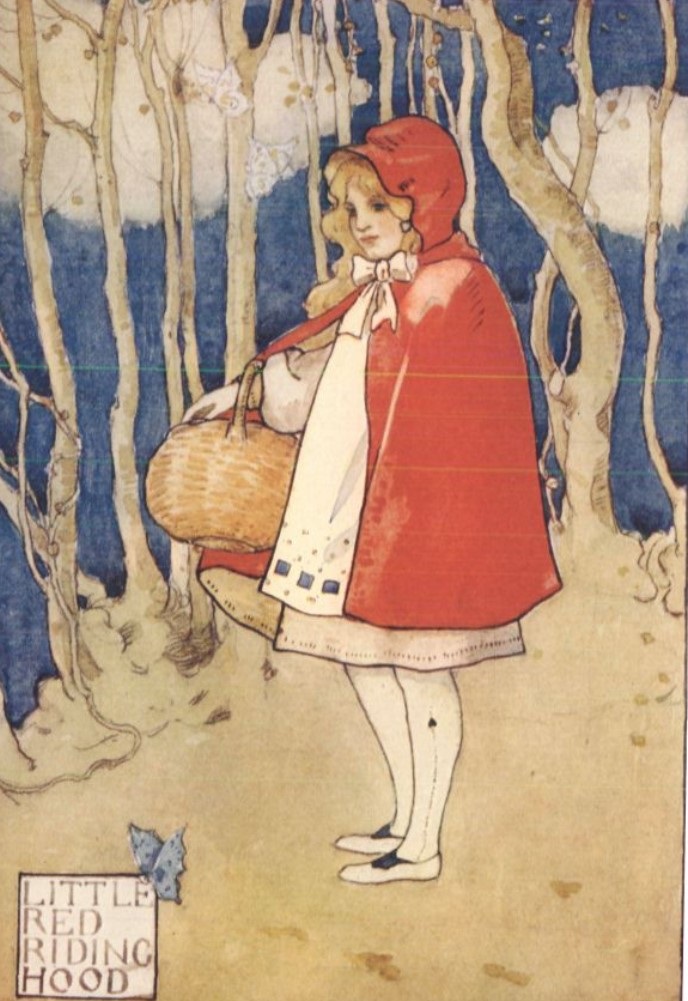
    Original sentence; Little Red Riding Hood wants to deliver tasty morsels to Grandmother.

    Add-ons: She carries the muffins in a basket. She made the muffins that morning. She’s worried about Grandma’s health.

    Prompt #3

    What does the character need to do to get what they want?

    How does character solve problem? Able to form new connections and new neural pathways?

    This could be a brainstorming session where any and all solutions are possibilities.

    You can be creative in how character solves problems. Anything goes!

    Or, you can be realistic, overcome obstacles in a reasonable way.

    More on character development

    Character development – discovering characters

    What does your character want? What gets in the way?

  • Grandparents . . . Prompt #742

    What did you call your grandparents? Great-grandparents?

    If you didn’t know your grandparents, why is that?

    Do you know stories about them during their young years?

    Write about your grandparents and/or your great-grandparents.

    #justwrite #iamwriting #iamawriter

  • Intuition . . . Prompt #741

    Writing Prompt:

    Write about a time you paid attention to your intuition.

    Or, a time you didn’t pay attention.

    Just Write!

    More on Intuition: Calm Your Brain.

    #justwrite #imawriter #iamwriting

  • Imagination and Mentors

    Imagination is everything. It is the preview to life’s coming attractions. – Albert Einstein

    Guest Blogger Suzanne Murray and imagination:

    I’ve been asking myself, how can I best help empower others at this time of great global change.

    The first answer that came in the flash of inspiration was the word imagination.

    Einstein regularly insisted that imagination is more important than knowledge.

    But the thing is, it’s not just for geniuses. It’s for everyone. We have been taught to favor the rational mind at the expenses of capacities that actually can help us in amazing ways. It’s easy to reclaim.

    Years ago, I learned an exercise from Jean Houston, noted author, visionary and one of the founders of the human consciousness movement. It involves working with an imaginary mentor to get advice on any question that we have for any area of our life. Using our imagination and intuitive mind give us access to a deeper wisdom and way of knowing beyond the capabilities of our linear mind.

    I have used this exercise for years in teaching writing and with creativity coaching. I have been amazed and delighted that my students get much better advice than I could have ever given with all my years of experience. Everyone in class could hear the wisdom coming through as we shared our answers.

    Most remarkable is that the answers actually sounded like they were coming from the individual asked. If someone asked Mark Twain, the response would sound like something Mark Twain would write.

    Tapping your imagination and writing in flow can give you access to expanded awareness and better answers you could think up.

    TRY THIS: Pick someone you think would give good advice. It could be Einstein, Plato or your grandmother. Imagine you have written him or her a letter asking a question you have about anything in your life. It helps to be specific.

    Then using the technique of free writing (writing as fast you can without censoring), write the response as if it is coming from your imaginary mentor.

    Really let go on this one. Don’t think. Just let the answer flow out of the pen or the keyboard for at least ten minutes.

    Then read the answer with an open curiosity as if you really have just received this letter in the mail. Be open, be objective. The more you play with this, the stronger the muscle of your imagination grows.

    OR TRY THIS: Go for a walk with your imaginary mentor and have a conversation with them in your imagination. The key is to play and be open. Let go of thinking that you have to figure out everything with your mind.

    Wishing you an abundance of health and creativity, Suzanne

    Suzanne Murray is a gifted creativity and writing coach, soul-based life coach, writer, poet, EFT practitioner and intuitive healer committed to empowering others to find the freedom to ignite their creative fire, unleash their imagination and engage their creative expression in every area of their lives.

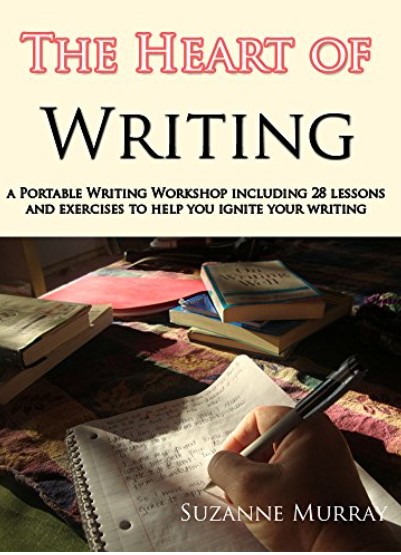
    Suzanne’s ebook, The Heart of Writing, will help: Jumpstart  the Process, Find Your Voice, Calm the Inner Critic and Tap the Creative Flow.
  • State fairs, county fairs, bazaars . . . Prompt #740

    Photo by Denisse Leon

    Writing Prompt: State fairs, county fairs, bazaars

    Where you . . .

    Tried your luck at winning prizes.

    Threw a dart to win a stuffed animal, tossed a ring to win a goldfish.

    Went on a dizzy, scary, gravity-defying ride.

    Ate fair food:  Fried food, caramel covered apples, cotton candy, funnel cakes, soft-serve cones.

    Were entertained: Music, hypnotist, magicians, stilt-walkers.

    Inhaled a variety of smells: Barnyard animals, food.

    Gazed at exhibits: 4-H crafts, fine art, photography, sculptures.

    Prompt: State fairs, county fairs, bazaars . . . an overabundance of sensory riches.