Author: mcullen

  • Time . . .

    Waste Not

    By Desiree Cooper

    “Time stretching languid in the humid afternoon tastes like caramel cake. It smells like pine needles in the rain.” —excerpted from “Waste Not,” by Desiree Cooper, River Teeth, Beautiful Things, September 29, 2025

    Desiree Cooper is the author of the award-winning collection of flash fiction, Know the Mother. Her fiction, poetry and essays have appeared in The Best Small Fictions 2018, CallalooMichigan Quarterly Review, The Rumpus, and Best African American Fiction 2010. Her essay, “We Have Lost Too Many Wigs,” was a notable essay in The Best American Essays 2019.

    “Using truth and wit, Desiree Cooper was the perfect conduit for university presses to have larger conversations about diversity and representation through books starting with their covers.

    Cooper, an electric speaker, is a master at navigating the tricky waters of difficult conversations by never excluding failures, but instead owning and learning from them and encouraging others to grow from these lessons.” —Annie Martin, Editor-in-Chief, Wayne State University Press

  • Sanctuary

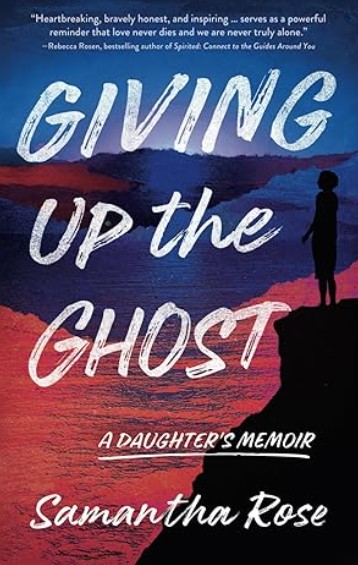
    “When you take sanctuary within yourself, the world can be falling apart around you and you will be okay.” — “Giving Up The Ghost” by Samantha Rose

  • Get Into The Habit

    “Forget about inspiration and get into the habit of writing every day. Habit has written far more books than inspiration has. If you want the Muse to visit you, she needs to know where you are: so stay at your desk.” —Philip Pullman

    Quote in “Write it All Down” by Cathy Rentzenbrink.

    #justwrite #amwriting #iamawriter

  • Zoom In, Then Linger

    Ethan Gilsdorf on Zooming In and Lingering:

    “In personal essay, memoir and creative nonfiction, we want to bring to our pages a sense of verisimilitude, of intruding upon someone else’s circumstances, of grasping someone else’s fleeting take on the world.”

    How to do this?

    Gilsdorf suggests:

    “The language of cinematography is a useful analogy: in a wide or medium shot, the viewer is distant from the subject; in close-ups and extreme close-ups, the frame of reference is tight.

    In writing, this means: rather than quickly cutting away, or keeping the viewer far removed, like a drone hovering high above, we can zoom in on the subject of our attention, or pan across it, slowly.

    We can train our writerly efforts to pause. To not skip over— but to linger, loiter, dawdle, stay put, wait.”

    Excerpted from “Stay a Little Bit Longer: The Art of Zooming In and Lingering,” The Brevity Blog, March 17, 2025

  • Hey! I feel like that too.

    “Be brave with it. Be brave with the thing that you are most scared to talk about, that is the thing you need to be able to talk about. There are so many tragedies in you and joy in you that need a voice, and you would be so surprised to see that when you voice that thing you are so scared of how many people across the world will go, ‘Hey, I feel like that too. Thank you for putting a voice to how I feel.’” —Nikita Gill

    Quote in “Write it All Down” by Cathy Rentzenbrink.

  • Write It All Down

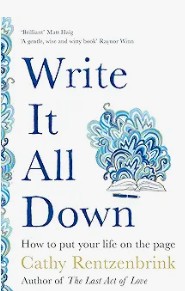
    Write It All Down” by Cathy Rentzenbrink

    Review by Marlene Cullen

    A friendly book encouraging people to write without worries.

    Easy to read with specific suggestions that inspire writing.

    My motto is “Just Write.”

    Cathy’s motto could be “Release your fears. Stay in your chair. Write.”

    #justwrite #iamwriting #iamawriter

  • It’s a Jungle

    It’s a Jungle

    By Marlene Cullen

    It’s a jungle out there. I’d like to peg Bumbling Unreliable Gardener, aka Bug, on a hook and let him hang until cured.

    Except, I wonder, is he at fault for my jungle of a yard? Should I have been more forceful in not allowing him to install a plethora of plants in my pursuit of a peaceful place?   

    I discovered Bug on social media. He answered my gardening questions as if he was a landscaping guru. So, I hired him. Big mistake. Huge.

    He handed me an extensive questionnaire to compose my heart’s desire in a garden. Winding paths. Check. Whimsical. Check. Calm, serene. Check, check. I envisioned a landscape of pleasant plants flowing in meandering paths. No white plants.

    What I got was spiky plants here, there, everywhere. Festucas are so overgrown they barricade the path from the sidewalk to the storage shed. I need a machete to get to the innocent outbuilding. It stands sentinel, even though the fescue threatens to obliterate it.

    The sweet-sounding lamb’s ears look like aliens landed in my yard and vomited.

    Guara, taller than skyscrapers, threaten to overtake the clothesline with white flowers. White! Didn’t I say I did not want white flowers?

    Pause. Take a breath.

    I transplanted seven Guaras. They are majestic in their new location, waving their glorious flowers like a princess atop a float in a parade.

    I successfully transplanted three festucas. I was as excited as a rabbit in a field of carrot tops. But then, the green stalks turned yellow. When I pulled on them, they came right up, as easy as pinching a wad of cotton candy from its paper cone holder. I stared at the clump in my hand. It looked like something a scarecrow could use to stuff himself or herself with. The roots had disappeared from the universe like a black hole.   

    The irrigation system has misbehaved since Bug installed it. There were leaks in several places that spurted water like they were errant fire hydrants.

    One zone completely stopped squirting water, as if we hadn’t paid our water bill.

    The sad but not neglected yard is a gardener’s nightmare. To repair the leaky irrigation tubing my husband and I had to disturb the calm bark mulch, forming it into mounds, so we could access the misbehaving parts. We plugged them and prepared to move on to the next laborious step: Removing 27 plants that are overcrowding, overproducing, and just not wanted. Sorry, not sorry, plants.

    Step One. Sharpen the machete.

    Step Two. It’s hot in the jungle. Go inside. Get a cool drink. Check email. Check Facebook because, you never know, there might be something important there.

    Step Three. It’s the middle of the afternoon. Nap time.

    Step Four. Dinner Time.

    Step Five. Plan to tame the jungle another day.

    Epilogue: Twenty plants have been re-homed. The lamb’s ears became mulch to help other plants live long and prosper.

    Freewrite inspired by the writing prompt, Metaphors and Hyberbole on The Write Spot Blog.

    Marlene Cullen grew up in the Mission District of San Francisco where she visited the library weekly, carrying home as many books as she could carry. She has always been fascinated with words and language.

    Marlene Cullen is a writing workshop facilitator and founder of Writers Forum of Petaluma. Her Jumpstart Writing Workshops provide essential elements for successful writing.  She hosts The Write Spot Blog, where memorable writing is featured on the Sparks page.
  • My Heart

    My Heart

    By Karen Handyside Ely

    My heart is a newly uncluttered closet. Organized and cleared of discarded outfits that smothered the floor, made movement impossible, allowed no forward progress.

    The air, once static and heavy with body-image accusations, is now peaceful and fresh. Eerily quiet with a hanging row of color-coded dresses that don’t hurl recrimination and neatly stacked t-shirts, crisply folded and segregated. Controlled. Smelling faintly of the lavender sachet I’ve finally replenished on the bottom shelf… now that I can reach it.

    Favorite sweaters, unworn for ages, have been lovingly salvaged, gently removed from their hangers, and boxed for consignment shops and resale. Traitorous pants and blouses, once thought to be friends, are stuffed haphazardly into hefty bags to sit out on the sidewalk for donated pick-up.

    My heart is a freshly weeded garden, no longer raucous with errant fruit and thorny, overgrown blackberry vines.

    The vines must be cut back. They have overrun the garden. Sweet berries have been harvested, the memory of their syrupy tang still coating the back of my tongue. It is hard, punishing work, leaving bruised and bleeding hands inside scruffy gardening gloves. I love my berry bushes, but they put up a fight when I try to tame them. They take up precious space. They have run their course.

    I’m sad but content in this season of my life – rethinking, regrouping, reprioritizing. A process that is painful but cleansing. A surgical and focused attempt to remove what doesn’t serve. Saying good-by to illusions of “what was” that have piled up on the closet floor. Illusions that are now choking new growth in the garden.

    This is not a personal rebuke of friends and family, who have disappointed my idealistic expectations. Just a reshuffle of who and where and how I spend my time. I’m saying good-bye to my own hurt feelings and the painful disconnection that is muddying my water, over-running my closet, dominating my garden. I am losing my fear of letting go of what has already changed to make space and sanctity for what is to come.

    “My Heart” was inspired by the writing prompt, Metaphors and Hyberbole.

    There are some who say that Karen Handyside Ely was born with her nose firmly planted in a book. She is a life-long lover of unusual words, lilting phrases, and absurd stories.

    After a brief stint as a credit analyst in San Francisco and New York City, and a 30+year career as a mom and “professional” volunteer in Scottsdale, AZ, Karen retired to her beloved hometown of Petaluma, CA.

    She delights in difficult crossword puzzles, singing with the Petaluma Choir, and anything baked by her husband James.

    Karen has been published in “The Write Spot to Jumpstart Your Writing: Discoveries,” “The Write Spot: Reflections,” “The Write Spot: Possibilities,” “The Write Spot: Writing as a Path to Healing,” and “The Write Spot: Musings and Ravings From a Pandemic Year.”
    The Write Spot books are available from your local bookseller and on Amazon (both print and as e-readers)

  • Metaphors and Hyperbole . . . Prompt #853

    Make a list of things that surprised or astonished you or made you feel uncomfortable. Something from a long time ago or recently.

    Just a list for now.

    Using your list, make a list of emotions you felt either during what you experienced or emotions you felt today or are feeling right now.

    For example: Fear, anger, surprise, annoyance, joy, angst, acceptance

    Prompt Three

    A metaphor compares two unlike things to show a relationship without using “like” or “as.” Metaphors imply that one thing is another.

    Chaos is a friend of mine. Bob Dylan

    You ain’t nothin’ but a hound dog, cryin’ all the time. —Elvis Presley

    Darling, I’m a nightmare dressed like a daydream. Taylor Swift

    My heart, a church where no one prays. Lonely pews and smudged stained glass. The Forever Workshop

    Writing Prompt: Choose an emotion from your list.

    Write what happened that caused these emotions.

    Use sensory detail.

    Sight. Sound. Touch. Taste. Smell.

    Use metaphors.

    Just Write!

    Use hyperbole to describe an emotion. You can expand upon something you have written or use a new topic to write about.

    Hyperbole is exaggeration to the extreme.

    No one is going to judge you nor your writing. So you can exaggerate as much as you want.

    Cry me a river              

    Enough food to feed an army

    He has the memory of an elephant

    I could sleep for a week

    I died of embarrassment 

    I had to walk to the ends of the Earth to find it

    It’s a jungle out there

    It’s so hot, you could fry an egg on the sidewalk

    Choose something from your list. Write what happened as if you are telling a gullible listener.

    Or:

    Expand upon one of the above hyperbole examples.

    Or:  

    Write whatever is popping up in your head.

    Idea for this prompt inspired from The Forever Workshop.

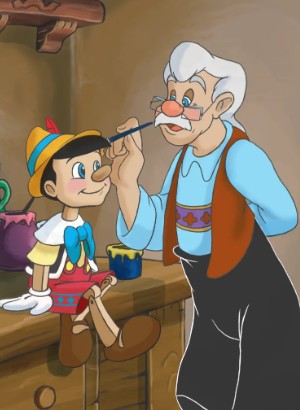
    The story of Pinocchio, as metaphor:

    Gepetto, a woodcarver, prays that a puppet he carved could become a real boy. According to Phil Romo, a “real boy” is a metaphor for being an autonomous individual, not bound to ideologies or to existing institutions. “To think for yourself . . . Don’t be bound to the strings you are born into.”

    The Blue Fairy grants life to Geppetto’s puppet. This is a metaphor for human birth, the ‘miracle of life.’

    Excerpted from Life is a Beautiful Rideby Phil Romo.

    Future writing: Choose something from one of your lists and Just Write!

  • Maisie Dobbs

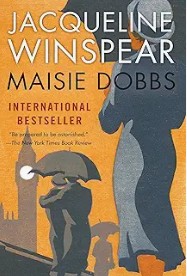
    Maisie Dobbs series of books one through eleven, reviewed by Marlene Cullen

    Winter 2025

    I needed escapism reading . . . where a heroine cracks the case, the murder gets solved, the valuables are restored, and at the end, I smile with satisfaction after absorbing excellent writing.

    And so, I re-read the first eleven books in the Maisie Dobbs series by Jacqueline Winspear.

    Even though they were published between 2014 and 2016, some scenes could be describing today’s political events. I wonder how Jacqueline had the prescience to do that.

    Her books contain inspirational messages:

    “Birds of a Feather,” page 220

    “Tell me, Dr. Dene, if you were to name one thing that made the difference between those who get well quickly and those who don’t, what would it be?”

    “If I were to name one thing, it would be acceptance. Some people don’t accept what has happened. They are stuck at the point of the event that caused the injury. They keep thinking back to when it happened.”

    Page 264

    “In learning about myths and legends of old, we learn something of ourselves. Stories are never just stories. They contain fundamental truths about the human condition.”

    A friend’s comments about the Maisie Dobbs books, “I like the way Maisie grows, and I like the metaphysical aspects.”

    I haven’t read her last nine books, so I can’t comment on them. I recommend the first eleven, especially if you need to “get away in a Calgon way” with a book.