
Someone said this to me recently: “Let me take this off your plate.”
Sounds like a good writing prompt . . . so here we are.
Just Write!
“Let me take this off your plate.”
#iamwriting #iamawriter #justwrite
Someone said this to me recently: “Let me take this off your plate.”
Sounds like a good writing prompt . . . so here we are.
Just Write!
“Let me take this off your plate.”
#iamwriting #iamawriter #justwrite
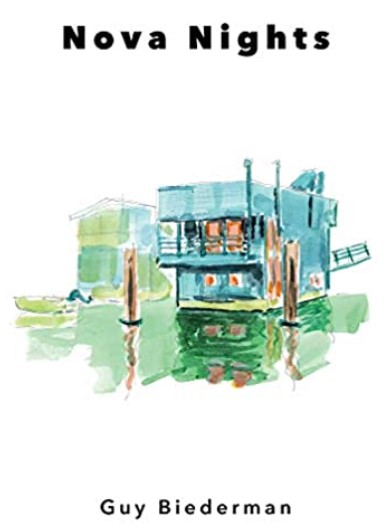
“If I had more time, I’d write a shorter story.”— Mark Twain
Today’s Guest Blogger, Guy Biederman, talks about crafting short fiction.
I’ve always been intrigued by the challenge of creating something small that has big power. Giacometti said he wanted to make a sculpture the size of a matchbox, but so dense no one could lift it.
The first micro story I remember reading was “Coup de Grace” by Ambrose Bierce, with a gotcha ending. O. Henry’s “Gift of the Magi used” a similar technique. I was astonished by the wallop a short piece could pack.
As a young writer, I cut my teeth on Raymond Carver’s work. Carver’s stories weren’t always short, but they were spare and vivid, conveyed feeling, empathy and understanding, and explained very little. I didn’t know what he was doing or how he did it. I only knew that reading his work was like glimpsing beautiful pebbles through clear water on the bottom of a lake. And I wanted to write like that.
I began to practice, and later teach what I called low fat fiction, the art of expressing more with less. And I began to apply what I learned to the short form.
As a gardener, I became fascinated by bonsai—how a miniature plant in a pot evoked the grace, power, and wonder of an ancient tree; how pruning created space between leaves and branches that defined what remained. But how to create that empty space, that room between the sentences in fiction?
What I learned from reading Carver and others, was the compelling power of evocation. To evoke rather than explain is a strong and efficient style of craft that creates room for readers who bring their imaginations to the page and make the experience their own. I call this practicing the reader’s art. By providing opportunities for them to have their own aha moments, readers can sync with a story and make profound connections, and in this way, writer and reader together create something new that may or may not even be on the page.
In the 80’s this genre of very short stories went by many names including short shorts, palm-of-the-hand stories, and smoke-long-stories (short enough to be read in the time it takes to smoke a cigarette).
Today we know them as micro and flash fiction, defined by word counts which vary from publisher to publisher; generally, micros are under 400 words, and flash runs up to 1,000.
Subgenres include the well-known six-word stories, 100-word stories, and even six sentence stories.
It’s tricky business—what to include, what to leave out, how much to reveal, how much to distill, and that’s part of the craft. Micro fiction and prose poetry are close cousins. Both are spare, rely on metaphor, vivid language, and lyrical rhythms.
And they don’t always have conventional story endings. No-doubt-about-it endings can be satisfying and pack a punch. But there’s also something exquisite and expanding about not so much ending a story, but landing it, finding a place to bring it down (and walk away in one piece!); the way a painting extends beyond the frame, a story beyond the page.
Artful ambiguity is a useful, streamlining technique that creates possibilities, while using sharp, clear, specific language to conjure distinct images and pictures. And it’s not the same as vagueness.
When I read fiction, I don’t look for answers.
I look for understanding. Astonishment. A turning of the corner.
Ambiguity can make way for those moments without reducing big picture questions or enigmatic milieus to narrow explanations with neatly wrapped answers that risk draining the juice from a complex, dynamic story.
Imagine turning all the lights on in your house and walking across the street to see how you live. That’s how I look at fiction. It may not be my life, my house. But I know it, understand it, and feel it. As Fellini said, “All art is autobiographical, the pearl is the oyster’s autobiography.” Truth.
I tend to riff within limits in my rough drafts, say for ten minutes or a single page. Surface limits can provide helpful containment. Try writing on the back of an envelope, or an ATM receipt with a negative balance. Space dictates what you include, like living on a boat. So does balance.
In the rewrite, I check for pace and flow, removing the scaffolding of excessive adjectives and adverbs, compressing, and distilling the prose, trying to get to the essence of what I began. Hemingway believed you could take out what you know, once written, and the reader will feel it as if it is still on the page. But if you leave out something that you don’t know, it creates a hole in the story.
This is one of the mysteries of craft, a discovery we make along the way, in what for me is a lifelong apprenticeship in the astonishing, compelling genre-bending form of very short fiction. What I know is this: if you’re feeling it when you write it, the reader will feel it too. That’s a beautiful way to create a small story with big power while expressing more with less and allowing a story to linger long after the book has been closed. That’s good fiction. The shorter the better, the finer the craft.
Guy Biederman teaches short fiction and is the author of five collections of short work, including Nova Nights (Nomadic Pres,), Edible Grace (KYSO Flash Press), and Soundings and Fathoms, stories (Finishing Line Press).
His work has appeared in many journals including Carve, Flashback Fiction, MacQueen’s Quinterly, Bull, great weather for Media, Riddled with Arrows, The Disappointed Housewife, and Exposition Review.
He’s been a creative-writing midwife since 1991. His collection of short work, Translated From The Original: one-inch-punch fiction will be published by Nomadic Press in 2022.
You can purchase a copy of Nova Nights (and support a really great independent publisher).
Note From Marlene: Right before I read “Crafting Short Fiction,” I sent off a submission to a contest with the theme of “imagine.” After reading “Crafting Short Fiction,” I was surprise to realize I created “room for readers who bring their imaginations to the page and make the experience their own.” At least, I hope that’s what I did.
But when I wrote it, I didn’t know I was doing that. So, yay, for playing with words, making changes bonsai style for writing that opens the door for possibilities and also respects the reader.
I like to think that’s what I did with my contest entry. And, maybe I did~!
Your turn: Just write!
Memorable writing that sparks imagination. Lean in. Hear the writer’s voice on the page.
Reverberations
By Brenda Bellinger
I suppose another title for this post could be “Echoes.” Some are gentle, quiet, reminiscent of the fading ring of a bell. Others are loud, persistent—drumbeats, almost—like the hourly news headlines of the brutal slaughters in Ukraine, occasionally punctuated by stories of defiance, strength and resilience.
It’s Monday morning, the day before I’ll upload this post. I’m sitting at the dining room table in the family home that will soon be listed for sale, waiting for the painter and landscaper to arrive.
Traffic noise is more noticeable now in the hollow silence of this near-empty space. All but a handful of the original furnishings are gone, replaced with artsy pieces and decor selected by our real estate agent to stage the home.
Gone is the Tuscan-inspired color scheme that ran throughout the house, a carryover from my folks’ trip to Europe in 1993. It’s hidden under two coats of marketable cream with an occasional accent wall in a trendy shade of light sage.
It’s odd, sitting here where I always sat during those evening card games with my father and his lady friend, a new modern light fixture above the table. Dad couldn’t stand silence and always had his television turned to the easy listening station on the music channel. “Elevator music,” my husband called it. Between hands, the music would be drowned out by the sound of the battery-operated card shuffler and the squeak of chairs on the hardwood floor as we got up to refill our coffee cups or pour a drink. Midway through the game we’d take a break for dessert.
And then there was the clock that had been in our family for years. It hung on the dining room wall and chimed on the hour and the half, a sound that never bothered me but apparently drove my younger brothers crazy. All three of them adamantly refused to take the clock (one even threatened to burn it – he was just kidding. I think.) so it came home with me. Like the soundtrack to a favorite movie, the chimes play on, marking time and recreating memories.
Originally posted as “Echoes” on Brenda’s Blog.
Brenda Bellinger’s work has appeared in Small Farmer’s Journal, Mom Egg Review, Persimmon Tree, THEMA, the California Writers Club Literary Review and in various anthologies. Her first novel, “Taking Root,” a young adult story of betrayal and courage, is available through most local bookstores and on Amazon.
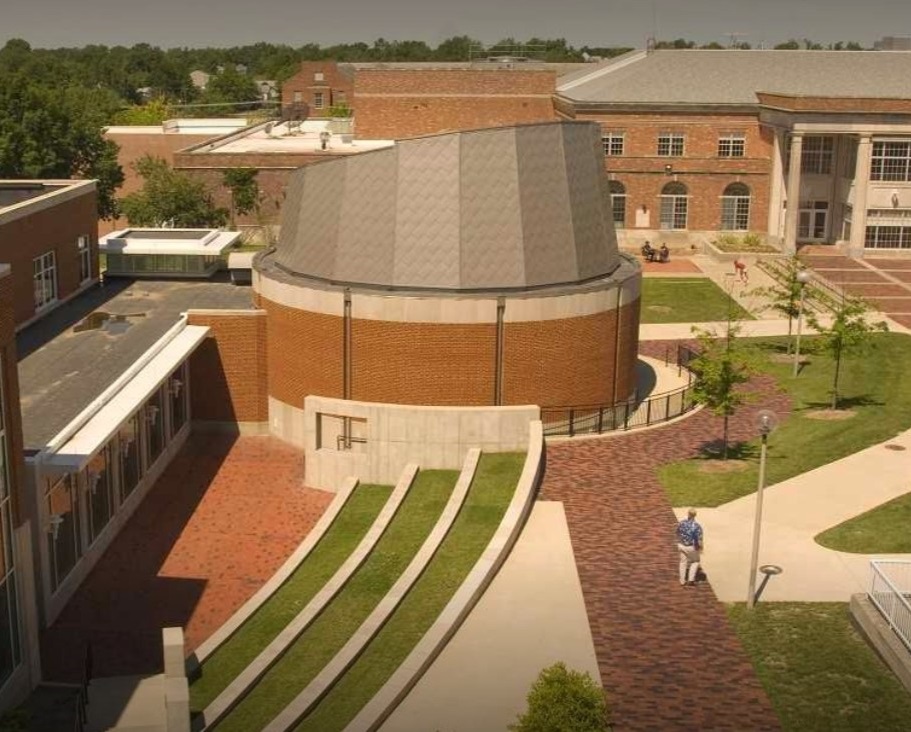
“The backbone of many university presses’ trade programs is probably familiar: local and regional history, cookbooks, photography books, and other sorts of consumer-friendly titles with an obvious connection to the area or university. But many also offer a home for books that are niche, experimental, challenging in various ways, and/or just kind of weird.” —Adam Rosen, Why You Should Consider a University Press for Your Book, Jane Friedman’s Blog, April 5, 2022 |
Fourteen Hills, The San Francisco State University Review
The Green Hills Literary Lantern, Truman State University
Bayou Magazine, University of New Orleans
I wish I would have . . .
I wish I would not have . . .
#justwrite #iamawriter #iamwriting
Memorable writing that sparks imagination. Lean in. Hear the writer’s voice on the page.
When I heard “I am not That Girl” by Ariel LaChelle, I knew I wanted it on the Sparks page of my blog.
It’s longer that what is usually posted here.
It’s so amazing, I could not resist.
You can read it and watch Ariel perform “I am not That Girl” in her own strong and melodic voice.
I am not That Girl
By Ariel LaChelle
Even though the term “That Girl”
Was created by black girls,
I don’t fit the requirements
Automatically,
Because I am a Fat Girl.
And ‘cause I have tight curls
That become more angry
If I dip my scalp in the water,
Then let my hair air dry
And don’t try
To keep it in order.
No styling,
No stretching,
No products,
No dye,
But I feel like I might
If this guy
Continues to undermine
My sensitivity.
My femininity
Because of my size.
He’ll generalize me
Asking “how tall are you,”
And “how much do you weigh?”
Before he ever asks me
“How do you feel?”
Using my looks as the barometer
To measure my worth.
He calls me low value
He regards me lower than dirt,
Because at least you can get flowers from dirt.
I’m not a rose,
I’m not so easy to pluck.
I’m no longer so simple so
I’m less easy to ____
I get that from my grandma
Her birthday is Earth day
And she died in so much pain
If I’m here and I’m healthy
How can I complain
With groundwater in my veins?
I’m a tree
Rooted deeply
I’m big and sturdy
And whole ecosystems
Thrive off of me.
They took the healing power
Of my fruit for granted
Just because it’s sour.
They took forever to
Make tonic and lemonade with it,
Then took the credit
Without realizing that
Was my intention.
To show them creativity.
In the face of adversity
And provide them with cleansing.
That’s the smell of clean
I’m sorry everyone can’t be
The Giving Tree
Yes I’m inspired but baby
This ain’t Shel Silverstein.
I stay in the background
Black bodies swayed from my limbs
And I remember that sound
Of wind, swooshing around.
When the picnic was not a good thing,
And the sudden smell of burning flesh
Could not be washed out
By the storm
And the rainbow was not enough
To take our mind off of it
‘Cause it was the norm.
The picnic was not a good thing,
So we made the cookout.
And we made enough bread
Finally
To build a tree house instead
We saying: “We Made It!”
But we live in our pain.
It’s bittersweet,
Like a house made of gingerbread
That would lure me in
Just so the owner could
Devour me.
Fattened up
Like a gullible kid
Who loves cake.
I love the way
That sugar feels in my heart
And how savory delicacies
Stimulate my palette
And my mind,
Like a painting of flavor
I savor
It like the wine
That I’ve been known to decline.
I guess we all have a vice.
We all get drunk on something.
I used to smoke and have sex
To clear my head.
I used to cut myself
And release tears
In the form of blood
From the gashes.
I used to burn myself
In ways that wouldn’t
Turn me to ashes,
Only hurt myself
Until I could forget
What had happened.
But I am no longer THAT girl.
Now I just eat my feelings sometimes
So yeah, I am a fat girl.
But I can lose a few pounds,
That’s an easy weight to drop.
The one that’s harder and heavier
Is what you carry around in your soul
That compels you to
Rip others apart,
In hopes of looking inside of them
And seeing something you’re missing.
I hope you see
This vulnerability
As an invitation to do the same
And find some chivalry
Or at least some civility
I hope you see the love of God in me
Because I go to lions’ dens
Trying to do some good
And I come back feeling like Job
Y’all ganging up on me!
Because I don’t wear your colors,
I wear all of them.
Because I don’t act like others
I be appalling them.
But I don’t try to shut anyone up
I listen to you
And all I hear is anger and wounds.
Yeah, I do
Need to lose weight, but honey…
So do you.
Ariel LaChelle is an independent singer, songwriter, poet, composer, and arranger with an Associate’s Degree in Music Production from The Los Angeles Recording School.
As a child, she started to write poetry and displayed a natural affinity for storytelling. This came in handy during her teenage years, which were riddled with trials, trauma, and triggers caused by abuse, homelessness, toxic relationships, depressive episodes, and panic attacks. Writing, singing, and praying became her outlets as she recovered from self-harm scars–both external and internal.
Her goal is to write divinely-inspired pieces that explore the beauty and poetry in the nuances of life, love, pain, and interconnectedness as we know it today. She sees her poetry and music as a small contribution to the story and the soundtrack of life.
Note from Marlene: I think Ariel has accomplished her goal of writing “divinely-inspired pieces.”
I learned about Ariel at one of Kevin Powell’s writing workshops. A shout out to Kevin Powell for inspiring writers.
Spring/Summer 2022: Kevin is offering Friday Night Writing, and Sunday Writer Events, info on Kevin’s Facebook Page.
Memorable writing that sparks imagination. Lean in. Hear the writer’s voice on the page.
Face the Sun
By Flynn
I see that you are broken badly
For you this can’t be fun
I know I cannot fix you
Still, I’ll help you face the sun
Flynn is a musician, writer, and artist, originally from New York City, now living in Seattle, WA. He is the creator of SinkCoffiti art.
As a lifelong artist, Flynn is always looking for the next opportunity to translate his everyday experiences into artistic expressions of art and music.
SinkCoffiti is an original art design concept using coffee, light, and photography to create unique art.
Originally posted on Suleika Jaouad’s The Isolation Journals Facebook Page.
#justwrite #amwriting #iamawriter

❖ The 2022 Voices of Lincoln Poetry Contest ❖
The Voices of Lincoln Poetry Contest is open to adult and young poets.
Everyone is encouraged to enter the contest. Poets do not have to live in Lincoln, CA to be eligible.
There is no entry fee.
Poems must be received by Thursday, July 21, 2022
Young Poets, 18-years of age or under, are encouraged to submit poems and will compete in a special “Young Poets” category.
Contest theme: People Are . . . Everything.
Contest Categories:
People Are Funny
People Are Amazing
People Are World Changers
People Are Unreasonable
People Are Unpredictable
Contact Alan Lowe for more information and for a copy of the entry form.