Category: Book Reviews

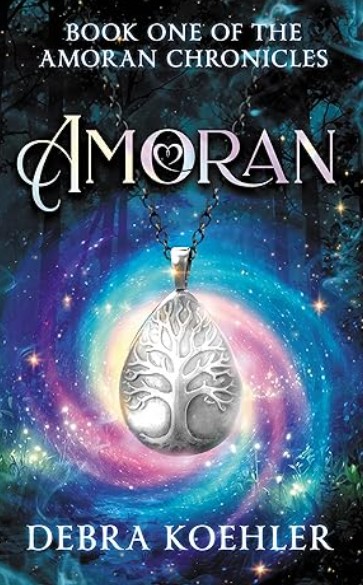
  • Amoran: Book One of the Amoran Chronicles

    “Amoran: Book One of the Amoran Chronicles,” by Debra Koehler, reviewed by Jessica Fahey

    Debra Koehler’s Amoran: Book One of the Amoran Chronicles is a richly layered blend of domestic realism and metaphysical fantasy, a story that begins in a perfectly ordinary New England household and expands into an extraordinary multiverse. It’s a novel about rediscovery of self, of purpose, and of unseen worlds that lie just beyond the veil of perception. What begins as the story of a harried mother juggling family, work, and forgotten dreams evolves into an odyssey across dimensions, infused with wonder, humor, and emotional truth.

    Amoran explores the tension between the mundane and the mystical. Kerrin’s life in Glenwood Falls, marked by school runs, marital banter, and afternoon tea, embodies the small comforts and quiet frustrations of midlife. Yet Koehler uses that ordinariness as fertile ground for transformation. The novel poses the question: what if the life we consider ordinary is only one version of reality? The “vortex” connecting Earth and Amoran becomes a potent metaphor for midlife awakening, the recognition that there are dimensions within us we’ve yet to explore.

    Koehler weaves in classic fantasy motifs, guardians, portals, and ancient prophecies, but grounds them in modern emotional realism. It’s this juxtaposition, heroism amid domestic practicality, that makes Amoran stand out in a crowded genre.

    The novel’s prose balances light humor with moments of lyrical description. Underneath the fantasy, Koehler explores universal themes: the rediscovery of purpose, the interplay of science and spirituality, and the enduring power of choice.

    Amoran is both comforting and exhilarating. It’s a story of awakening told with humor, compassion, and a touch of cosmic mystery.

    It’s the rare fantasy novel that not only whisks you away to another world but leaves you more deeply rooted in your own.

    Debra Koehler will share her writing journey at Writers Forum, from believing she couldn’t possibly be imaginative enough to write fiction to producing a four-book fantasy series.

    She will share tips on how to keep going with your writing project even when you get so fed up you want to throw it away. Which she did. Multiple times. Only to pull it out of the recycling bin, smooth out the pages, and keep going.

    Debra will also cover how using intuition to trust her story, as well as her writing process, helped her move beyond the setbacks and blocks that can be part of any writer’s journey. 

    I hope you can join us at Writers Forum, February 2026.
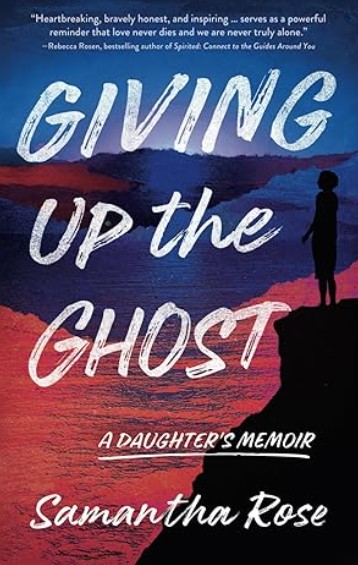
  • Giving Up The Ghost

    Even though “Giving Up The Ghost” by Samantha Rose is about a difficult topic (her mother’s decision to end her life), the gorgeous writing, the meaningful themes, and demonstrations of the importance of connections make this a powerhouse of a memoir.

    I was curious how Sam accomplished this masterpiece, so I took a deep dive to discover how she did this; reading the first time to learn the story, the second time to discover gems I missed the first time, and a third exploration, using “Ghost” as a textbook for how to write a memoir.

    Sam skillfully uses sensory detail and strong verbs to word-paint scenes that readers can “see,” unspooling across their minds like a well-crafted movie.

    Her ability to transform conversations and scenes into poignant moments paired with her willingness to be vulnerable while releasing the truth of her mother’s life and death are remarkable.

    Sam’s mother, Susan Swartz, was a popular journalist who uncovered facts at a time when people wanted and needed to be informed. Sam expertly captures meaningful truths about life, connections, mental health, friendships, grief, moving on, keeping secrets, and profound wisdom in sharing her journey traveling from disbelief to realizations about people, life, and our journeys.

    “Giving Up The Ghost” is so much more than a daughter’s telling the story of how her mother died.

    Sam’s unique ability to tell her family story in an honest and forthright manner with a variety of important themes rocked my world.

    One of the threads in this strong story is the idea of being a witness to one another’s lives. Sam explores the idea that after someone dies, especially someone who has been in your life for a long time, they are no longer a witness to your life.

    I never thought about this. After reading “Ghost,” I realize the importance of this concept: How we are witnesses to one another’s lives and what that means.

    Sam grapples with (and comes to a resolution) about what happens when the person who has known us the longest dies prematurely. What happens when we no longer have that person in our lives? How do we go on?

    Now, I’m contemplating that concept.

    I asked Sam how she became such a good writer.

    She answered, “I’m a visual person. I write what I see.”

    “And,” she added, “I’m a good listener.”

    Excerpt from the prelude:

    “. . . the best books challenge readers to see things in a way they haven’t before.”

    “Giving Up the Ghost” did that for me.

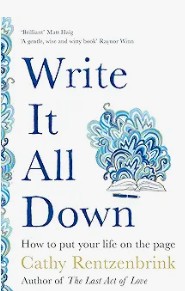
  • Write It All Down

    Write It All Down” by Cathy Rentzenbrink

    Review by Marlene Cullen

    A friendly book encouraging people to write without worries.

    Easy to read with specific suggestions that inspire writing.

    My motto is “Just Write.”

    Cathy’s motto could be “Release your fears. Stay in your chair. Write.”

    #justwrite #iamwriting #iamawriter

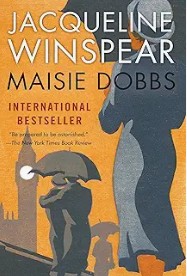
  • Maisie Dobbs

    Maisie Dobbs series of books one through eleven, reviewed by Marlene Cullen

    Winter 2025

    I needed escapism reading . . . where a heroine cracks the case, the murder gets solved, the valuables are restored, and at the end, I smile with satisfaction after absorbing excellent writing.

    And so, I re-read the first eleven books in the Maisie Dobbs series by Jacqueline Winspear.

    Even though they were published between 2014 and 2016, some scenes could be describing today’s political events. I wonder how Jacqueline had the prescience to do that.

    Her books contain inspirational messages:

    “Birds of a Feather,” page 220

    “Tell me, Dr. Dene, if you were to name one thing that made the difference between those who get well quickly and those who don’t, what would it be?”

    “If I were to name one thing, it would be acceptance. Some people don’t accept what has happened. They are stuck at the point of the event that caused the injury. They keep thinking back to when it happened.”

    Page 264

    “In learning about myths and legends of old, we learn something of ourselves. Stories are never just stories. They contain fundamental truths about the human condition.”

    A friend’s comments about the Maisie Dobbs books, “I like the way Maisie grows, and I like the metaphysical aspects.”

    I haven’t read her last nine books, so I can’t comment on them. I recommend the first eleven, especially if you need to “get away in a Calgon way” with a book.

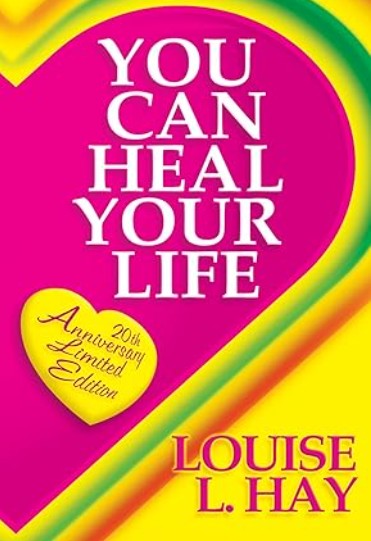
  • You Can Heal Your Life

    “How did we go from being a tiny baby who knows the perfection of itself and of life to being a person who has problems and feels unworthy and unlovable to one degree or another? People who already love themselves can love themselves even more.

    Think of a rose from the time it is a tiny bud. As it opens to full flower, till the last petal falls, it is always beautiful, always perfect, always changing. So it is with us. We are always perfect, always beautiful and ever changing. We are doing the best we can with the understanding, awareness and knowledge we have. As we gain more understanding, awareness and knowledge, then we will do things differently.”

    Excerpted from You Can Heal Your Life, by Louise L. Hay.

  • Gold Digger

    Review: Gold Digger by Rebecca Rosenberg.

    One look at Baby Doe Tabor, and you know she was meant to be a legend of the Wild West and Gilded Age! She was just twenty years old when she came west to work a gold mine with her new husband. Little did she expect that she’d be abandoned and pregnant and left to manage the gold mine alone. But that didn’t stop her! 

    She fell in love with an old married prospector twice her age. Horace Tabor struck the biggest silver vein in history, scandalously divorced his wife, became a U.S. Senator, and married Baby Doe at the U.S. capitol with President Arthur in attendance. 

    Though Baby Doe Tabor was renowned for her beauty, her fashion, and her philanthropy, she was never welcomed in polite society. Her friends were stars they hired to perform at their Tabor Grand Opera House: Sarah Bernhardt, Oscar Wilde, Lily Langtry, and opera star Emma Abbott. Discover how the Tabors navigated the worlds of scandal, greed, wealth, power, and politics in the wild days of western mining.

    “An accomplished and absorbing novel, Rosenberg brings forth a fine historical [perspective] inspired by Elizabeth McCourt Tabor, better known as Baby Doe whose rags-to-riches and back to rags again story made her a famous figure in history. The skillful plotting and richly crafted characters immediately draw readers in. Rosenberg’s poignant account delivers a stunning historical, and the open-ending climax makes readers wait eagerly for the next installment.” -The Prairies Book Review

    Rebecca Rosenberg  is a champagne geek, lavender farmer and award-winning novelist of historical fiction. Read GOLD DIGGER, The Remarkable Baby Doe Tabor, before the sequel, SILVER ECHOES, comes out! 

    Enter to win Gold Digger on Goodreads! Contest ends 2/20/25.

    Follow Rebecca Rosenberg:

    Facebook

    Instagram