Category: Guest Bloggers

  • Guest Blogger Marjorie Richardson corrals the chatter and invites creativity.

    Guest Blogger Marjorie Richardson writes about waking our consciousness through gentle yoga.

    Want to calm your nerves, quiet your mind, decrease anxiety and heighten immunity? How about having more comfort and ease in your body? Developing a feeling of fluidity in your body? Accessing your creativity? All these things can and do take place through slow and gentle movement accompanied by focused rhythmic breathing. Gentle yoga enhances our ability to hear ourselves, to listen to the inner cues we are constantly being given. In deeply concentrated states of mind, restlessness calms down. Synchronizing breath and movement train the mind to sense the subtle layers of well-being below all the surface chatter.

    Hatha Yoga is a tool discovered thousands of years ago to be used to awaken consciousness and unite with all the levels of our being. When attention is directed inward, your body receives messages that you are safe and secure; your self is being looked after. Muscles relax, blood pressure drops, the nerves calm, the mind quiets, anxiety decreases and immunity heightens.. Our fast-paced busy lives tend to stimulate a high level of stress that runs our immune systems down as they try to cope. A Yoga practice is a counter pose to that life style.

    The gift of yoga is multifaceted. Through our yoga practice we break through and loosen old patterns of feeling and being. We develop a new relationship with ourselves physically, mentally, emotionally and spiritually. Yoga deepens our understanding of who we are and how we choose to be in the world. Yoga expands us, opens us to new territory, releases stuck places that were previously unavailable. Through our yoga practice we attune to our alignment at the core of our being. We increase physical strength, flexibility and balance. We develop non-judging acceptance and open heartedness. And through all of this we experience a calmer and more peaceful state of mind. We cultivate an ability to listen to our body, to hear what it really needs for well-being. We begin to move away from the push and the struggle and breathe into the little releases and insights that are revealed to us through our body as we learn to listen with curiosity and trust. In this way, yoga can enhance our writing.

    The body, mind and spirit responds to and loves the oxygenating benefits of deep rhythmic breathing and the balancing of all the body systems through the gentle stretching and relaxing into the poses. The true work of our yoga practice is cultivating self acceptance, kindness and patience, developing and integrating body mind and spirit. Our physical need is health, our psychological need is knowledge and our spiritual need is inner peace. Cultivating all three produces harmony and who the heck doesn’t want that?
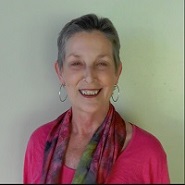
    Marjorie Richardson.1Marjorie Richardson is a certified Integrative Yoga Instructor & Massage Therapist who has been teaching yoga in Petaluma, California since 1997. Her gentle style supports the process of letting go of tensions, worries and habits by using breath and movement synchronized together.

    Note from Marlene:  I just love serendipity. I’ve had this post ready for awhile, waiting for an “open spot” on the guest blogger calendar.  Today is The Day. There is a good article about “Yin yoga: A fascia-nating practice,” by Hana Medina in the July 2014 issue of The Costco Connection. Don’t you just love it when serendipity happens?

  • Establishing a practice can help you move forward in magical ways.

    Guest Blogger Suzanne Murray writes about: The Power of Establishing a Practice.

    Until one is committed, there is hesitancy, the chance to draw back, always ineffectiveness concerning all acts of initiative and creation. There is one elementary truth, the ignorance of which kills countless ideas and splendid plans; that the moment one definitely commits oneself, then providence moves too. All sorts of things occur to help one that would never otherwise have occurred. A whole stream of events issues from the decision raising in one’s favor all manner of unforeseen events, meetings and material assistance which no one could have dreamed would have come their way. I have learned a deep respect for one of Goethe’s couplets: “Whatever you can do or dream you can, begin it. Boldness has genius, power and magic in it. Begin it now!” – W.H. Murray The Scottish Himalayan Expedition

    Whether it’s for writing, meditation, or exercise, establishing a practice can help you move forward in magical ways. Having a practice means that you show up every day, no matter what. You are going to want to release all expectations of outcome or where you think you want things to go. It doesn’t matter how good you are or what you accomplish or what happens with the practice. You sit down to meditate and your mind goes wild with chatter the entire time, that’s fine. You show up to write and find yourself whining on the page, that’s okay. The point is to show up and practice.

    A lot of things are happening when you show up consistently to something. You begin to forge the neural nets in your brain needed for the task and strengthen them so that whatever you are committed to actually becomes easier to do and you are able to increase our level of skill. In writing your subconscious mind is working 24/7 on whatever you give it to focus on, so showing up everyday allows you to access new insights and ideas arising from your expanded mind.

    You commit and take the action. The universe responds in kind to the power of your willingness and the force your commitment. Free from expecting that you need to accomplish something, you relax and open up to allowing. In this receptive state, the your subconscious mind aligns with the workings of the Universe and you find support, synchronicities and inspired ideas coming to you.

    Establishing a practice helps you move beyond any resistance that has been in the way. When you release the need for instant gratification you slip into a sense of satisfaction from the simple act of showing up for yourself. You learn to find joy in the practice itself and this allows you to expand your creative capacity.

    To begin, start small. When I coach writers who are having a hard time showing up,  I ask them at first to commit to writing ten minutes a day. This helps you cross the threshold of resistance and move past the associated voice that tells you that you don’t have enough time. Once you have established the habit of showing up you will find things flowing with greater ease.

    Suzanne MurraySuzanne Murray is a creativity and empowerment coach and offers healing work with EFT.  Her eBook contains material that she has used for more than twenty years in her writing classes. Her ebook helps followers to show up to write, find their voice, deepen their experience with the writing process and surrender to the creative flow and let the magic happen. The portable book is like being in one of her workshops and allows participatns to establish writing as a practice. Suzanne offers her book with a 14 day money back guarantee. For information about Suzanne’s ebook and her coaching packages,  please click here.

    Check out Suzanne’s inspiring Blog, Creativity Goes Wild, for ideas on writing, creativity and life coaching.

  • Alicia Butcher Ehrhardt reveals her secrets for tight control.

    Guest Blogger Alicia Butcher Ehrhardt shares her secrets for keeping track of plots, characters and their shenanigans.

    Hi! Marlene asked me to write about the weird way I write – and I will, with one caveat: don’t try this at home.

    In fact, don’t try any of this at all unless you already know you’re an extreme plotter (as opposed to a pantser), and need to 1) have tight control over what happens in your novel, and 2) have a method that you are comfortable with to keep track of all that plot stuff. If you are a true pantser – following your instincts alone – I think the following will strike you as insane.

    I do this because my CFS-addled brain makes it very difficult for me to keep everything in my head – more about that in a minute.

    I gave up Word for managing a writing project because I had too many files, and no system to keep them under one management. I am good with Styles in Word after I finish writing – and it’s one way of formatting output to look exactly as I want it to.

    Scrivener manages my writing projects, and I use all its features to the max. While I’m working on a scene, I have a number of auxiliary files where I do my thinking, and use the synopsis, label, metadata, etc. features of the Inspector – little text files Scrivener provides for you automatically with each file in your main hierarchy. Scrivener will also ‘Compile’ your text from the pieces into an ebook, or a Word file with a lot of formatting control over the output.

    I use Dramatica to plot – and I don’t recommend it unless you want to spend years learning what it means (some of the terminology is tricky), but it leads to the possibilities of fiendishly complicated plots that hang together beautifully at the end. Again, I use almost ALL the text boxes in the program that allows me to store bits and pieces of thought – and they can all be transferred to the working files when I need them.

    I use Dramatica’s Scene/Chapter list function to set out what goes where, and then copy that structure to my Scrivener project for the writing. I end up easily with an outline of the whole project in either program, and I keep the correspondence between the two up-to-date. Dramatica keeps track of what goes where with checklists, so I can see that everything (called appreciations – apps for short) I answered when creating the story actually ends up in a scene in the final story.

    Because I have all this structure in place – which can be collapsed or expanded to any level – when it comes to the writing part, I have a single scene at a time in my workspace with several files containing every little piece of character, plot, or theme that is going into the scene. When I start the writing, I don’t yet know how these bits will be expressed by my characters within a scene that has a short title – “Scene 9.1 – Andrew restless after fight; sleeps at Kary’s house,” but with a solid structure I can have the fun of figuring out how to make the pieces fit – and the knowledge that when I’m done, the scene will fit neatly into its slot in the Chapter and Book.

    A scene is about how much I can work with at a time: my brain won’t keep more than that loaded without dropping bits. Since I usually take several naps during a writing session, I’d make no progress if I had to go look at the whole. Within the scene I set up as many beats as I have topics to expand, so that a scene is composed of one to several beats dealing with a small subset of ideas/dialogue/action/thoughts, and segues neatly into the next beat, so that a scene is a set of linked mini-stories with transitions that make sense. Structure within structure.

    Once I don’t have to worry about losing that absolutely wonderful Idea I had for a plot bit in Chapter 19 just because I’m writing Scene 9.1 about the fight aftermath, because I stored it for when I get there, in a searchable format I can’t mess up, it frees my mind to concentrate on the scene at hand – and how I want to actually tell the story I’ve invented. It’s like knowing I can bring the red thread from the back of the tapestry to the front to weave in a rose when I want one, because the red thread is there, on the back side, ready for me to use.

    Just writing a bit about this makes it seem impossible, but if you are interested in more control, and in some of the tools I use, please drop by liebjabberings.wordpress.com, and type into the search box: scene template [8 posts with screenshots of the Scrivener template I’ve created to store my bits; downloadable], Dramatica [for apps and plotting],  and structure [how I use it when writing]. Select Categories such as ‘CFS’ for how my brain works and why I have to manage it to even write at all, or ‘fears’ for the things I do battle with regularly which keep me from writing. Check out the Pride’s Children tab to see the novel being created with these tools posted, a new polished scene every Tuesday – and judge for yourself whether my method produces something you find readable. Or the short story ‘Princeton’s Dancing Child’ – also plotted with the tightest form of Dramatica.

    Hard to believe, but this complicated superstructure makes it possible for my writing to be simple: once I get the ideas in order, the writing flows – a topic for an entirely different kind of post.

    Note from Marlene:  Click here for 9 reasons why Nina Amir uses Scrivener.

    Alicia Butcher EhrdardtI’m Alicia (ah-lee-see-ah). I use: Alicia Butcher Ehrhardt. No ‘B.’ No hyphen. And no, I’m not related to Amelia. My middle name is Guadalupe.

    WRITING THE HARD WAY: I am a PWC (person with CFS); I try not to let it have more of my life than absolutely necessary, but it’s something I battle every day for possession of my brain. Sometimes I win. I take a lot of naps.

    I cannot NOT write. Fiction is my hobby – mainstream, SF, mystery, ? – and I will e-publish myself when I’m ready for prime time.

    I sing, garden, draw a little. I will tackle, subject to energy limitations, any household task short of Heating-and-Air-Conditioning. When my brain balks at learning something new, that’s when I know I have to. It can take a while.

    DH is now retired. We share a love of science, a home in suburban NJ, a bird-and-butterfly garden, and a chinchilla named Gizzy. My children, who were home-schooled, consider me opinionated and stubborn; they are mostly on their own, and a credit to their parents. My wonderful family and friends are responsible for my sanity, such as it is.

  • Guest Blogger Rebecca Lawton: conflict = bringing opposing forces to light

    Rebecca Lawton writes about conflict . . . the kind writers want to have in their writing.

    Recently I read an article by a bestselling novelist who claimed she didn’t follow the well-worn advice to include conflict in story. “I hate conflict,” she wrote. “I don’t like to read it, and I don’t like to write it.” Wondering what techniques she did use to captivate her devoted followers, I turned to my bookshelf and opened one of her latest works to the first page.

    The initial paragraph set a sunny, peaceful scene in which couples and families strolled and played outdoors; the second paragraph described a situation only blocks away where a crowd was experiencing danger that had “turned their perfect Saturday into a nightmare.”

    Bingo. Conflict. The word is via the Latin conflictus, meaning contest. My good old Oxford English Dictionary describes conflict as “an incompatibility between two or more opinions, principles, or interests” (There’s a conflict between his business and home life) or “a clash of opposing wishes or needs” (My heart is in conflict with my brain).

    Our writing instructors tell us that we’ll engage our readers if we start our works with some sort of clash in our opening sentence or paragraph and keep it coming throughout our stories. We’re directed to embed it in every page to engage our readers nonstop.

    It’s good advice. In his fabulous manual, Writing the Breakout Novel Workbook, Donald Maass describes the many levels of conflict that can be integrated into our stories. There’s Inner Conflict (the clash of desires within a character), Bridging Conflict (temporary conflict or mini-problem), Inherent Conflict (a world of conflicting forces), and Main Conflict (main problem in the story). And those are just a few examples.

    There’s a connection between writing conflict and building story tension. The two words are inherently opposites, but they work together to hold the interest of our readers (I’ll say more about how conflict and tension are related at the June 19, 2014 Writer’s Forum hosted by Marlene Cullen.

    Even before I knew how to weave conflict into a story, culture clash inspired me to write my novel Junction, Utah. From experience I knew communities were disagreeing over resources in the oil-rich American desert, where the story is set, and I wanted to explore that clash. There was much to tell, and as I wrote and rewrote, I discovered new opportunities to bring the opposing forces to light.

    Here are ten of the many opposites I identified in my characters and settings in Junction.

    • Dry versus Wet
    • Settled versus Nomadic
    • Hawk versus Dove
    • Solo versus Communal
    • War versus Peace
    • Wild versus Tame
    • Wounded versus Healed
    • Shadow versus Light
    • Lost versus Found
    • Death versus Life

    But don’t take my word for the universality of conflict. Go to your own bookshelf and do a survey of your own beloved stories. I did, and found opposing wishes or needs woven into the fabric of these favorites:

    • North versus South in Gone with the Wind (Mitchell)
    • Free versus Enslaved in Huckleberry Finn (Twain)
    • Light versus Dark in Moby Dick (Melville)
    • New versus Old in The Great Gatsby (Fitzgerald)
    • Truth versus Lies in To Kill a Mockingbird (Lee)
    • Mice versus Men in Of Mice and Men (Steinbeck)
    • Establishment versus Renegade in The Monkey Wrench Gang (Abbey)
    • Refined versus Rough in Angle of Repose (Stegner)
    • Masculine versus Feminine in The Green Hills of Africa (Hemingway)
    • Domestic versus Wild in The Yearling (Rawlings)

    Like it or not, conflict is a constant presence in our lives. Fortunately, it also beats the heart of truth in stories and keeps readers engaged to the last page. Don’t think you like to write and read conflict? Think again.

    Rebecca Lawton’s work has been published in Orion, THEMA, the San Francisco Chronicle Magazine, Shenandoah, Sierra, More, and other magazines. Her essay collection about the guiding life, Reading Water: Lessons from the River, was a San Francisco Chronicle Bay Area Bestseller and ForeWord Nature Book of the Year finalist.

    With her agent, Sally van Haitsma, Rebecca published a debut novel, Junction, Utah. Her collaboration with photographer Geoff Fricker, Sacrament: Homage to a River, is just out from Heyday, and her first short story collection, Steelies and Other Endangered Species (Little Curlew), is due out in June. Her literary honors include the Ellen Meloy Fund Award for Desert Writers and three Pushcart Prize nominations—in fiction, poetry, and nonfiction—and residencies at Hedgebrook and The Island Institute. In fall 2014, she will be working on her second novel while serving as Fulbright Visiting Research Chair in Humanities, Social Sciences, and Fine Arts at the University of Alberta.

    For up-to-the-century news, visit Rebecca at the below links or send her email at becca (at) beccalawton (dot) com to receive her monthly writer’s postcard.

    Lots of ways to connect with Rebecca Lawton:

    Becca

    Website

    Blog

    Twitter

    Facebook


  • Guest Blogger Janet Ciel: Recall a time in your life. . .

    Janet Ciel writes:

    The other day I was having a conversation with a biking friend who mentioned she had a dream of being a poster child for the 70′s and above age group. She said she was buckling down on her eating, biking as much as possible, and is joining a gym. She was inspired by an amazing woman she read about who is in her 90s and still competing in track and field events.

    You know my response was enthusiastic, as of course I always feel that our maximum potential is just another bike ride away. I am amazed at the strength and endurance increases that are possible by just doing it, what “it” is for you, over and over again. No matter what your age you can get stronger and more vibrant.

    But some of you have not even started. You might be in your 70s or older and are saying, “it’s too late for me, why bother?” The answer to that is baloney!

    First, what do you want your old age to be like? How does being in a nursing home from a stroke, heart attack or inability to move sound to you? How about the idea of your kids having to take care of you and the burden on them? The endless hospital visits, and the vulnerability that comes from a frail body: you are longing for this?

    But I think the huge question is: Do you want your life to be one of motivation and striving towards a better you, or one who is just resigned to who you are and will be…a “whatever” kind of thing?

    Okay, I am on a rant here, but I feel strongly about this. Those of you who are not doing something truly challenging for yourself physically, I encourage you to push the envelope and actually develop some muscle. And when I say muscle I mean it both literally and in other contexts.

    Literally, we need real muscle so that we do not develop osteoporosis. When you work with weights you will develop muscle, and it is vital for our long term strength and well-being. I so recommend braving a boot camp, if you’re reasonably fit, or a core fitness, bar sculpt, TRX or other type of class which works with weights and resistance.

    But we also need to develop our “I-am-getting-off-the-couch-and-getting-my-butt-in-gear” muscle too. Once it has been in use for awhile it becomes habit. And once you create the habit…change is inevitable.

    We should consider the brain muscle. Okay, I’m not sure brain is a muscle, but it certainly needs a big shift when it comes to activity for a lot of us. So many people have the “I hate exercise” loop running through their heads. If that sounds like you I encourage you to recall a time in your life when you decried having to do something you “hated,” but then eventually liked and then loved. Think computers, for example. I am betting most of us were a tad intimidated, if not downright angry at having to face this machine and learn it. Now it is so ingrained in us that we cannot go anywhere without it being with us in some way. Few people go into a serious exercise regimen “loving” it from the outset. In fact, for most I would say it is a gradual build-up of little steps leading to an eventual “Wow, look what I can do!”

    So set this blog aside, get on some sneakers and let’s make 2014 the year we look back on and say, “I started then and I am so glad!”

    Note from Marlene: Perhaps you started writing and then stopped because of __________ (fill in the blank). No matter the reason, if you really want to write. . . just start. . . get out a notebook, paper, pen or flex your fingers and sit at your keyboard. By the way, I started a boot camp program last year and absolutely love it. If you are in the Petaluma area, join me at Fitness Revolution.

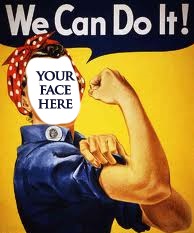
    Rosie Riveter.CielGuest Blogger Janet Ciel has lost 80 lbs and maintained that loss since 2001. She is a former Weight Watchers leader, and a certified Life Coach specializing in weight management. Janet and her husband Denver recently opened a new bike rental company in Sebastopol, the Sebastopol Bike Center. Janet is a proponent of healthy, smart eating and activity. Check out her website, Healthy and Happy and subscribe to her newsletter to read her blogs monthly.

  • Guest Blogger Jared Gulian never gave up.

    Guest blogger Jared Gulian wrote a fun story about his dream of being published. I love publishing stories that are inspiring and enjoy stories that take place in San Francisco, my home town.

    “I’m giving up,” I said. “‘Moon over Martinborough’ is never going to be a book.”

    Ever since I’d started this blog I’d wanted to turn it into a book, but I was losing hope.

    “Maybe you shouldn’t give up just yet,” Uncle Oscar replied.

    Uncle Oscar was here on his annual visit from New York, and we were sitting at the Gamekeeper, the restaurant at Alana Estate vineyard just down the road. CJ and I were having lunch with Uncle Oscar and our friends Leelee and the Wolf.

    “Uncle Oscar’s right,” Leelee said. “Don’t give up.

    Although the blog had gained some recognition, after 3 years of hard slog I still felt no closer to my book goal. It didn’t matter that I already had a first draft of the book manuscript put together, or that my stories were appearing regularly in Wairarapa Lifestyle Magazine. I was ready to throw my hands in the air.

    “Why don’t you write a book proposal and send it to publishers?” Leelee said. “I have a great book which tells you how to write a book proposal. You can borrow it.”

    CJ and the Wolf joined in, and the group’s gentle cajoling continued until I finally agreed to write a proper book proposal.

    Writing a book proposal

    Leelee’s copy of ‘How to get published and make a lot of money!’ by Susan Page was my guide. The title is a bit embarrassing, but it has a very good chapter on how to write a book proposal. It explains how to write sections on the author, the audience, the marketing plan, analysis of the ‘competition’, and chapter-by-chapter outline.

    I spent almost two months working on that proposal. I honed and crafted and redrafted. On 16 May 2012 I sent that proposal – printed handsomely and filled with gorgeous photographs – to four publishers. I figured it would sit for months in their ‘slush piles’ of unsolicited material, and I’d be lucky if I ever got a response.

    Well, blow me down if I didn’t get a response less than two weeks later. It was from Nicola Legat, Publishing Director at Random House New Zealand. She said, “Many thanks for sending in your overview of Moon Over Martinborough. I am impressed by and grateful for the very detailed analysis it contains. I’d very much like to see the first draft.”

    Huh? Was this possible? I quickly sent her my manuscript.

    HourglassWaiting for the decision

    Then the painful waiting began. Each day was sheer torture. What was Nicola thinking? Would she hate my manuscript? Would she love it?

    After a week that felt like an eternity, Nicola emailed saying, “Just a quick note to say that I am halfway though, and I am loving it! I’ll be back to you next week.”

    Yeah! But it wasn’t final yet. Maybe the second half of my manuscript was horrible. Maybe she would change her mind.

    Finally Nicola’s response came. “I’ve now finished my read and I am going to propose to the Publishing Committee at our Wednesday meeting that we accept this book for publication early next year. I will let you know that afternoon what their decision is.”

    What?! OMG! I was thrilled. But Wednesday was four whole days away! How on earth was I going to survive the wait?

    SF waterfrontIn San Francisco

    As it turned out, that four-day wait coincided with my and CJ’s big plane trip back to the States for a long-overdue visit with friends and family. Our first stop was San Francisco, where we stayed with our old Tokyo friends Josh and Tina. At their house I checked my email, and sure enough there was an email from Nicola.

    “Can you give a number where it’s convenient to call you later on this afternoon?” Nicola wrote.

    I responded that I was in San Francisco, and I sent Josh and Tina’s home phone number. Literally moments later the phone rang.

    Tina answered in her best I’m-a-corporate-lawyer voice. “Yes, Jared is here. May I ask who’s speaking?”

    I felt like screaming, “Just give me the damn phone!”

    “Thank you, Nicola,” Tina said calmly. “I’ll get Jared.”

    Tina handed me the phone with a huge smile on her face. “Jared, it’s Random House calling for you.”

    What hopeful writer doesn’t want to hear those words?

    I took the phone and walked out onto Tina and Josh’s back deck, which overlooks an amazingly beautiful canyon. I can barely remember the details of the conversation. My head was spinning. I have a piece of paper I scribbled notes on, and it hardly makes any sense at all.

    But the most important thing I heard in that conversation was this. The Publishing Director of Random House New Zealand said very clearly, “We are really keen and would love to publish your book with you.”

    It was a yes.

    I feel like I’ve stepped into some bizarre parallel universe where all of my dreams come true. Thank God my friends and loved ones intervened just as I was ready to give up. Thank God.

    Click here for information about purchasing print and ebook:  Moon Over Martinborough: From Michigan to the Wairarapa… How an American city boy became a Kiwi farmer.

    Reposted with Jared’s permission.  You can stay in touch with Jared’s adventures as told on Jared’s Facebook Page, Moon Over Martinborough.

    I originally learned about Jared and his blog-to-book story on Nina Amir’s post.

  • Guest Blogger Arlene Mandell: Write Quirky, Break Free

    Guest Blogger Arlene Mandell writes:

    “Found tiny brown frog in bathroom sink.” Both the frog and the notation in my journal made me smile. This reminded me that not all entries must be “worthwhile” in the service of self-analysis or material for lofty literary purposes.

    I’m seventy-three, have been writing for most of my life, and have cabinets, folders and computer files filled with work. Quite a bit has been published. And there’s plenty that hasn’t been. Recently I’ve been giving myself permission to snip, toss and DELETE anything that hasn’t worked thus far and may not be worth expending any more energy on.

    For example, there was the stack of dusty manuscript copies of Slow Kissing, my first novel which I shipped from Closter, New Jersey, to Santa Rosa, California, fourteen years ago. No matter how many times I revised it, it just wasn’t very good. One rainy morning I hauled the copies to my recycling bin. Then I took the ultimate action and deleted Slow Kissing from my computer’s memory with only a twinge of nostalgia for Claudia, my protagonist.

    This brave action inspires me to urge other writers to at least contemplate the unthinkable. Have you been slogging through a multi-year project that has squeezed the happiness from your writing self? But you don’t yet have the courage to toss it out? Do consider putting it aside and writing something funny, silly, and/or inappropriate.

    Or borrow a tactic from Lynda Davis, a Man-Booker-prize-winning writer who sometimes pens a one-sentence story. For example, Tropical Storm: “Like a tropical storm, I, too, may one day become better organized.” After writing a sentence like that, you should reward yourself with a cappuccino or a walk in the woods.

    Another way to brighten your writing life is to take a piece of work that has been rejected many times and ruthlessly edit it, keeping only the liveliest bits. Then send out the shortened version. My “Kaleidoscope” poem, written in 1989, was just published in the April 2014 issue of Waterways: Poetry in the Mainstream. (The poem had been reduced from 67 to 23 words.)

    Perhaps you write about serious ecology-related subjects, like global warming or endangered species. Consider detouring to another nature-related topic, such as those tiny odoriferous black ants that swarmed over your kitchen counter after you set down a single piece of unwrapped fudge. According to the extermination company that charges $160 a visit, these ants are invading the nation. Once you admit to hosting this horde, others will want to share their own ant horror stories. You might even end up with an ant anthology.

    Another tactic is to pick a subject that no one, to your knowledge, has ever written about before, such as an ailing hot water heater with an ominous Tick Tick Tick that reverberates through the pipes, as though counting down the seconds of your life. Then describe its replacement, a shiny new hot water heater with a little white light that goes blink, blink, blink.

    The lyrics to a song from the 40s just popped into my head:

    “Enjoy yourself, it’s later than you think. Enjoy yourself, while you’re still in the pink. The years go by as quickly as a wink. . . .”

    Obviously if your main focus is on the Holocaust or memory loss, it can be difficult to switch to fluffy stuff for an hour or two, but good for your mental health.

    Should you share any of these suggestions with your writing group? Only with extreme tact. For months I’ve held my tongue as a fellow writer reworks a piece that just isn’t very interesting. I’ve wanted to offer my Thai mantra, mai pen lai (which means let it go) but wouldn’t want to hurt her feelings.

    One of the poets writes verses that make no sense at all. I tried, “Um, those blueberries rolling through the courthouse?” But she feels no need to explain. This may be her unique quirkiness or a profound symbolism I’m too dense to comprehend.

    Might you consider deep-sixing an ending? Some of us (probably not you) have a tendency to add a summary paragraph or a cute little coda to every piece of writing, just in case the reader may not get the point. A cigar-puffing city editor once gave me a gruff piece of advice as he slashed my copy: “When you’re finished, STOP!”

    Arlene Mandell Arlene Mandell, a retired English professor who lives in Santa Rosa, CA, was formerly on the staff of Good Housekeeping magazine. She has published more than 600 poems, essays and short stories in newspapers and literary journals. Her work has also appeared in 24 anthologies.


  • Guest Blogger Adair Lara talks about her latest obsession.

    Guest Blogger Adair Lara writes:

    Voice in writing is my new obsession. I’ve been talking nonstop to my memoir students about it until they all look at me cross-eyed. “You must think of your experiences as material! And of yourself as a character!” Many of them have been taking the workshop with me for years, climbing the three flights of steps every Saturday to the redwood attic of the Victorian house I live in.

    I was all about identifying the emotional beats of the arc when some of them started. They must have been sick of hearing me say, “What’s the beat?” (The wine Lee Anna brings helps). And they must have been surprised –why had I not mentioned this new approach before, if it was so important?

    Well, I didn’t because even though voice is the most obvious thing in the world, we don’t see it.

    It’s also all agents and editors care about in the memoirs they are sent these days. They’re looking for a vivid, quirky narrator with an engaging voice. The subject? Comes in second. You think you’re the only one who fell out of a prop plane in the Andes and captured by a lost tribe, and go online and find it happened to six other people, all of whom have written memoirs and already have agents. With a great voice, though, you can write about that or any other damned thing you please and get into print. For example, the agent who received a manuscript of a memoir called Candy Girl by a former stripper-for-a-year named Diablo Cody said:

    “I wasn’t interested based on the subject matter alone. Stripping had been covered before (no pun intended), and I didn’t think the author was likely to add much to an already crowded market. But then there was the voice. After just one paragraph, I was a) completely convinced that stripping was the solution to all of her problems, b) laughing uncontrollably, and c) definitely interested in being along for the entire ride, or at least 250-plus pages.”

    “Personality” is another word for voice, really. If you don’t like a person’s personality, you don’t want to hang out with them. If you don’t like a book’s personality, you don’t want to hang out with it, either. I know that the number one reason I pick up a book or put one down is because I like the voice or I can’t stand the voice. There doesn’t seem to be much in between for me. The subject is not a factor. I can happily read Anne Lamott talking about Jesus—not an interest I share –because she is so funny and smart and self-deprecating.

    Adair.Bill

     Note from Marlene:  Adair Lara is also smart and funny . . . take a class with her to learn more about “voice in writing.” This post is an excerpt from Adair’s book in process. I’ll post a book review as soon as the book is published and I have read it.  If you would like to be a Guest Book Reviewer for The Write Spot Blog . . . Let’s talk! Send me an email.  mcullen@comcast.net

    Adair and Bill on San Francisco Bay, Alcatraz in the background.

  • What if we speak truth with compassion? The power of words.

    Guest Blogger Kshatriya Millick writes about the importance of words.

    The lyrics to “Speak Life” by Toby Mac have really been weighing on my heart and mind. Hearing this song, live in concert, touched my soul and spirit in a way hearing it on the radio never did. It has caused me to think about how I speak to others. Do I use my words to lift others up or tear them down? Do I take little jabs to their characters and their lives, to feel like I am connected to something or to feel superior? Do I use jokes that are hurtful to be funny? Do I use my words to inspire others or to discourage them? These questions have caused me to evaluate how I use words in my life, and how those in my life use their words in their lives. I no longer wish to associate with people who use their words to judge, tear down, make a joke at others’ expense, ridicule, or who just don’t care what they say. I no longer want to be the person who uses her words to hurt others.

    How hard is it really for me to spread hope and kindness with my words? How hard is it really for me to speak encouragement instead of ridicule? I don’t have to be witty or “on the mark” or funny to say a word that would lift someone up. Why shouldn’t I be proud of those in my life? Why shouldn’t I learn to look at them and say, “You are an amazing person” and mean it! How hard would it be to eliminate the witty banter of sarcasm and ridicule for truth and support? Why do I need to use sarcasm as a way to prove to the world I have a “special” connection to someone?

    Words spoken even in jest can cause pain, doubt and mistrust, so why wouldn’t I watch my words? If I focus on lifting others up and “speak life” to them, wouldn’t I be the one who benefits from that action? I find when I can “speak life” and encouragement then I feel better about my day, I feel better about my relationships and I feel better about me.

    Does this mean I won’t tell people the truth or bring light to something that I see as harmful, no of course not, truth is different from what I am saying, yet it is the way we express it.

    Think about it for a minute, how do you deliver the truth to someone? Do you do it with disdain, are you a bully with your delivery, are you judgmental, or are you mean? Now think about how you respond to this kind of delivery in your life? There is no written rule that says, “Truth must be delivered with a hammer and with stones, until the person you are speaking to is a pile of brokenness and despair.” What if we speak truth with compassion? What if instead of rocks thrown we put our hand out and offer to help them walk? What if we truly treated others the way we desire to be treated and not the way we were trained to accept treatment?

    My challenge for myself is to “speak life” into each person I come in contact with, in some way. A smile, a kind “Hello,” eye contact, truth with compassion, forgiveness, a word of encouragement for the hard work they put into a goal they are working towards. My challenge includes my family and friends; sometimes it is those close to us that we ridicule the most, when they should be the first people we lift up.

    “Speak Life” by Toby Mac is a song that expresses the power of words. Words we say, words we hear, words we write, all the words we use. It spoke to me in such a way as to change my thinking about how I use my words. It changed how I hear words and it has changed me and my relationships. All my conversations now have a positive slant; I speak words of encouragement and hope before I speak words of bitterness and pain.

    Kshatriya Millick lives in Northern California and is married “to a very loving sweet man who has taught me so much about love and acceptance.” Over the last couple of years she has transformed her life. “I have gone from existing to living a joyful life. At almost 300 pounds I started my life all over with all things new from a job to a new school to a new relationship. Now at 115.8 pounds less and with a new lease on life I see each day of my life as a blessing and I adore and welcome the challenges life has to offer.”

    Ksha

  • Due Dates — Making Friends with Deadlines by Michelle Wing

    Guest Blogger Michelle Wing writes:

    I have always been rather envious of writers who say they sit down at their desks each day at, say, 9 a.m., and write for three or four hours. In other words, writers who have a pattern and a discipline to their output. That is simply not how I am wired. I can’t do anything that way – exercise regimens, meals, study sessions – nope, I fail at every attempt to adhere to a strict schedule.

    Instead of berating myself over this, I have learned to look at what does work for me. What are my ideal conditions for writing productivity?

    I thrive under deadlines. Having spent over 15 years of my life working as a journalist, I am very familiar with the feeling of having to get a story out – now – just under the wire. It is its own particular type of adrenalin rush. Journalistic copy is often fairly straightforward – a news story, maybe a longer more elaborate feature, a column. But always, that common thread of having a short time frame to get the work done.

    I still have a couple of similar gigs now. I write a monthly literary column which appears in four local newspapers, and I also do a Q&A interview on stage craft for a local theater company, as part of the program handed out to patrons at the show. These writing assignments are easy for me to manage, because I simply calendar them. I know when I have to be brainstorming for ideas, when interviews must be scheduled, and when the final copy is due. No problem.

    So what about my more creative work? How do I make space for it in my otherwise very busy life? The best way I have found is to treat my prose and poetry the same way. Find deadlines. One option is to look for submission opportunities. I choose a reasonable number, and put them on my calendar or my white board. A call for pieces for an anthology, due on June 1. A contest for creative nonfiction, due on June 30. A local group asking for contributions to a poetry chapbook, due in August. I may decide along the way not to go with all of these, but at least they get me started at my computer.

    One of the reasons I enjoy working with deadlines, and having specific projects in mind, is that I am a percolator. Especially with poetry, much of my writing is done when I am not sitting in front of the blank page. It happens when I am walking, or reading someone else’s verse, or when I am sitting at a coffee shop waiting for a friend to arrive. My poems brew. By the time I sit down to write, entire lines are already formed. But I can get lazy, and not stick with an image or a poem. Knowing that I have a deadline coming up, I will encourage this process to pick up the pace a bit. Remember, I will whisper as I wake up in the morning. We have a poem we’re working on. Keep your ears open.

    This can be used just as effectively on much bigger projects. When Ruth Thompson of Saddle Road Press first approached me about writing a book of poetry, it felt completely overwhelming. How could I get a handle on something that huge? It turned out to be very basic. We set a deadline – final manuscript due by Jan. 1, 2014. As soon as I had that goal in mind, all the rest fell into place. I found I was able to do the work, pace myself, make the time, get it done. All I needed was that firm deadline.

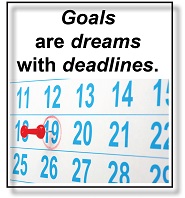
    Goals Are DreamsSo now, when asked how many hours a day I sit at my desk, I don’t feel ashamed to say that sometimes, I don’t sit there at all. Because it doesn’t matter. The dates are on my calendar; the work is in process; and I am a writer, whether or not I am at the keyboard.

    Michelle Wing_02-sm

    9780991395200_cov RC 05.inddMichelle Wing is a poet (Body on the Wall, May 2014) and writer of creative nonfiction who blogs about writing. For more information, see her website.