If you could have a super power, what would you choose?
Why did you choose that super power?
What would you do if you had that super power?
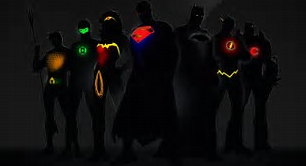
If you could have a super power, what would you choose?
Why did you choose that super power?
What would you do if you had that super power?
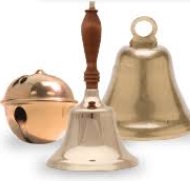 Using sound in our writing can be a way to add richness and memorable descriptions to our prose. For this writing, first think of some sounds . . . . a train whistle . . . a fog horn . . . a cat’s meow . . . someone calling for help.
Take a few minutes, if you can, to listen to the sounds around you right now. Think of some other sounds . . . the fizz from a carbonated drink being opened, the intake of breath when someone is surprised.
As Jay Heinrichs says in the October 2011 issue of The Writer magazine, “Onomatopoeia: Words that go splat”:
“The Greeks came up with [onomatopoeia], which means ‘made-up name.’ The ono is an echo, imitating a sound for action.
The ono . . . is a great way of bringing life to your storytelling. Things do not go “oops” in the night; they go bump. A master storyteller uses onos to make an audience feel the action.
Include sound effects in your own stories. Rather than ‘He hit his head on the beam’ use ‘He cracked his head on the beam.’”
Your turn . . . . the first prompt is an idea from Henrichs’ article, use sound in your writing:
Prompt: Pretend to sell a used car or a building or jewelry or clothing or a concept or an idea, or any item using words that match the item.
Prompt: The one that got away.
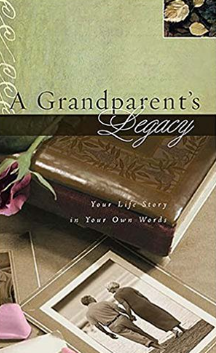 “As the years slip past, we become more and more aware of what’s really important in life. With every passing season, we see more clearly and know more surely that the love and traditions a family shares are treasures beyond value.” — A Grandparent’s Legacy: Your Life Story in Your Own Words by Thomas Nelson
It occurs to me (Marlene) that we think our lives are boring. We think “No one wants to hear about me.”
But. . . aren’t you curious about your grandparents and your ancestors? Maybe you are lucky and know all about them. If you are like me, you know little about your family that came before you.
So, write your stories. Write stories about your parents, grandparents, aunts, uncles. I bet someone will be interested. I bet more than one person will be interested.
Write about a tradition involving your grandparents. Or about anyone in your extended family.
Just Write!
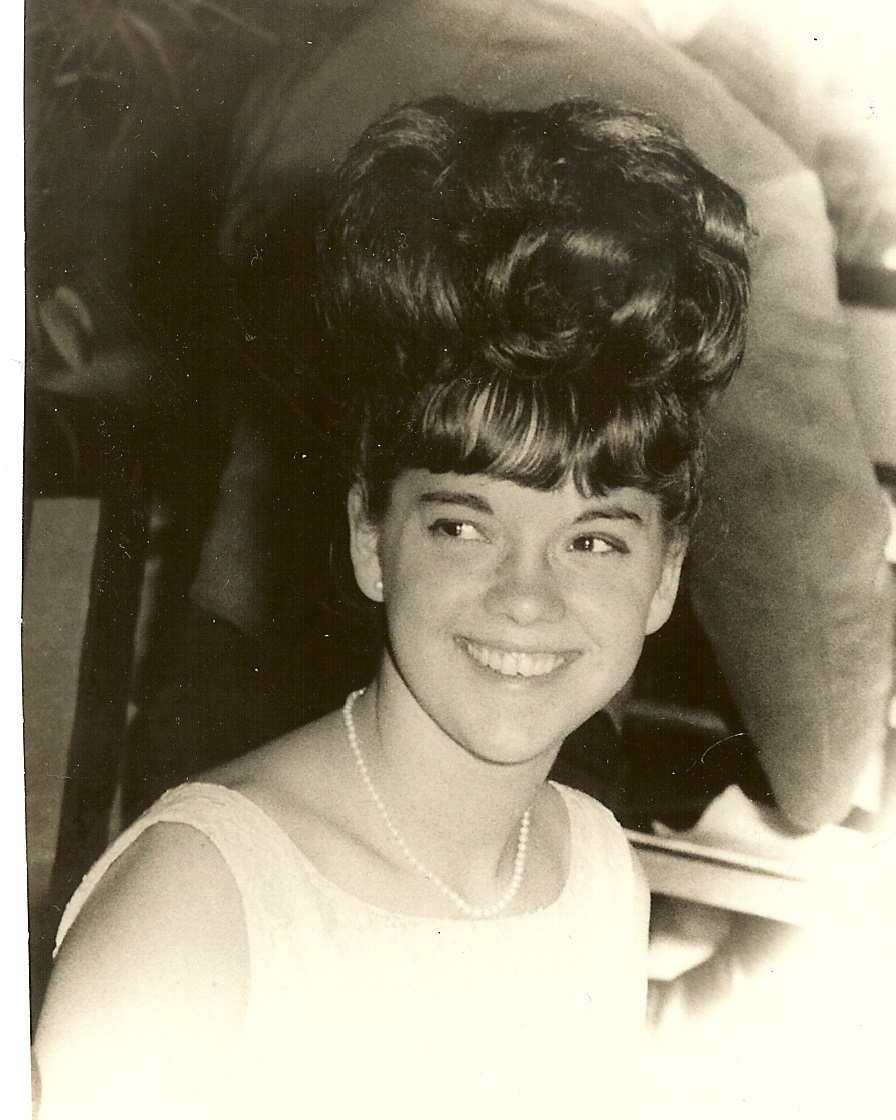 Write about a favorite childhood outfit – dress, pants, top or favorite childhood dressy outfit – on what occasions would you wear it?
Or write about school uniform.
 “When I put my house in order I discovered what I really wanted to do.” These are words that professional organizer, Marie Kondo, hears repeatedly from her clients.
“Their awareness of what they like naturally increases and, as a result, daily life becomes more exciting.” — Marie Kondo, the life-changing magic of tidying up, the Japanese art of decluttering and organizing
There are a couple of ways you can use this writing prompt:
Either clean something out: a drawer, the refrigerator, a file drawer or a file folder, a room, a car, a garage.
Or mentally picture decluttering something in your life.
Show that it’s not just physically making space, it’s also making mental space, letting go of an old self and making room for who you are now, and who you want to be.
 Today’s writing prompt is excerpted from Everyday Creative Writing, Panning For Gold in the Kitchen Sink by Michael C. Smith and Suzanne Greenberg.
Ben Johnson, a seventeenth-century English writer and scholar, characterized poetry as “What has been oft thought but ne’r so well expressed.” In so saying, Johnson relieves poets of the obligation of coming up with new ideas and focuses on the perhaps infinite number of ways that ideas can be expressed.
To illustrate this idea, consider that most of us were required to write a “What I Did This Summer” essay at some point in our school careers. While the subject matter for these essays is largely the same among classmates – camp, swimming pools, summer jobs – the ways in which we wrote our stories those details we chose to highlight and those we chose to omit, are what gave each piece its own flavor and originality.
For example, the following were written by two sixth-graders.
1. I went away to camp this summer, which was interesting. I had never been to camp before and I enjoyed meeting new people. I slept in a bunkhouse with five other girls. I went sailing and learned how to macramé, which really is more boring than it might sound. I made a new friend who was very nice. We did a lot of activities together, which made everything a little more interesting than it was before. It’s important to have a good friend at camp.
2. Has anyone ever tried to convince you that tying knots is fun? How about sitting on a stagnant pond waiting for a gust of wind that never comes? Well I spent the summer waiting to be convinced that either of these activities were fun. At least I made a friend, Bobbie. Finally, we got smart and started hiding behind the bunk and reading her sister’s old issues of Seventeen when it was time for knot-tying class – whoops, I mean macramé.
Everyday Creative Writing, Panning For Gold in the Kitchen Sink by Michael C. Smith and Suzanne Greenberg
For another prompt about vacation writing, please click on The Real Summer Vacation.
 The following is from I Could Do Anything If I only knew what it was, by Barbara Sher.
Once someone I cared for deeply did something very unethical, so I tried to totally revise my feelings about him. “He’s not a good person,” I said. “I don’t know how to love him anymore.”
And a very wise woman told me, “Your love belongs to you. You mustn’t let anyone touch it, not even him. You can keep away from him, but don’t try to destroy your love. That love is yours. Keep it.”
It won’t really break your heart to remember something that got snatched away from you, even though it may feel that way.
Prompt: What got taken away from you?
New York Times Best Seller author Barbara Sher believes we each have a genius inside us, our Original Vision, and we’ve had it since birth. Our culture tends to discourage that vision, but it remains within us, waiting to be fulfilled.
Something inside you is too loyal to permit you to turn your back on everything you loved and simply walk away. No matter how many times people tell you to let the past go, it’s never possible. You’ll never move wholeheartedly into the future unless you take your beloved past with you. And that’s exactly as it should be.
There’s no reason to turn your back on a happy past. Sometimes we try to turn away from the past because we feel it somehow betrayed us. It’s as though we loved our past, but our past didn’t love us. So we go on strike and pretend we don’t care, as if to punish fate for being unkind. Fate never cares, of course, so we only hurt ourselves.
Prompt: What do you . . . or what does your character pretend to not care about?
 Today’s prompt is inspired from I Could Do Anything If I Only Knew What It Was by Barbara Sher.
For more prompts about writing about your past, click on:
How To Write A Memoir—Part One
 You can use these prompts to write about something that happened to you or something that happened to someone you know. You can also use these prompts to develop your fictional characters.
Prompt: Praise your past. Write a few sentences about the best time in your life. What did you love about that time? What did your work, or life, at that time, look like, smell like, taste like? Could be a big thing or small things.
Letting yourself describe every lovely detail will give you back something you lost, a precious time you put out of your mind. When you remember that time by praising it, you’ll have rescued it. You’ll have pulled it out of the corner where you threw it a long time ago.
Prompt: What did you, or the character you have created, throw into the corner?
Inspired from I Could Do Anything If I Only Knew What It Was by Barbara Sher.