Guest Blogger Elaine Silver writes about why writers should reconsider using “of course.”
With growing concern I am noticing sentences in my clients’ books that begin with the words “Of course.” These sentences sound like this: “Of course, I was devastated that I had to move.” Or, “Of course, I knew I shouldn’t look but I did.” Or “Of course, he was overjoyed to see her again.” As a developmental editor, it is my job to serve as the eyes and heart of the author’s future readers and to make sure that those readers get the most bang for their reading buck.
So, loudly and emphatically (and with a lot of hand gesturing) I let these authors know that each time they use the words “of course” they are essentially cheating the reader out of a full exploration of the experience of the book’s character (this goes for fiction as well as memoir). “Of course” implies that the author assumes the reader understands the emotional life of the character and probably feels the same way. We can never make that assumption as writers, nor should we. One of the more delicious pleasures of reading is to experience the inner lives of others. To use “of course” is to diminish the uniqueness in the way we each meet the world.
Let me give you an example. A client of mine is writing a memoir about her short marriage to a sociopath (it’s actually a very funny book!). In one pivotal scene, she accidentally discovers a box of papers that provides all the proof she needs to confirm her suspicions that he has lied to her about pretty much everything. Her original line in the book was “Of course, I should have just closed up the box and not looked, but I am not that virtuous.” In our discussion about this chapter, I pointed out to her that assuming that the reader would share her point of view both diminishes her particular experience and she loses out on an opportunity to enrich the story.
She could, instead be sharing her particular truth: how she was very timid even in the face of all the misery her husband had caused her. She still felt like it was wrong to look through his personal papers. She considered sacrificing her own sanity in order not violate his privacy. There is no “of course” about this.
This is a very specific response to a specific situation by a unique individual. It is the author’s obligation to unpack and explain these emotions with no mitigating phrase like “of course.”
When you are writing, claim and proclaim your characters’ interior experiences. They are the jewels of your writing. And whether it is actually written or just implied, of course, please ban ‘of course!’
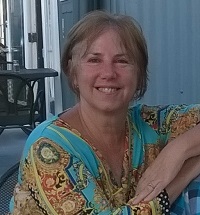 Elaine Silver, Conceptual/Developmental Editor, AKA: Book Midwife
Elaine S. Silver is a writer, editor, journalist, playwright, storyteller and performer. She has written for The New York Times, BusinessWeek Magazine and a bevy of design and construction magazines and newsletters for worthy not-for-profit organizations. One of her most unusual and fun gigs was ghostwriting for the media sex therapist Dr. Ruth Westheimer. Click here to find out more about Elaine.
Elaine Silver She will be on a panel of editors at Writers Forum in Petaluma on May 21, 2015.
 Build those castles with word pictures, include a moat, a forlorn prince or princess, a formidable problem to overcome. Throw in a fire-breathing dragon, a jealous cousin. . . Just Write!