Today’s prompt: Life is just a . . .
Set your timer for 15 minutes and finish the thought. . .
Life is just a . . .

Today’s prompt: Life is just a . . .
Set your timer for 15 minutes and finish the thought. . .
We accept submissions September 1 through May 31, and, as always, our summer and winter issues are not themed. We consider each submission for all upcoming issues regardless of theme. If you wish to be considered for a particular theme, please make a note in your cover letter. We have provided suggested deadlines for each theme issue, but please be aware that these fill up fast, so get your theme-issue submissions in as soon as possible.
Tin House has announced the Spring 2015 theme of Rejection. We are looking for fiction, essays, memoir, poems, and interviews about rejecting or being rejected. Rejection of, or rejection by people, animals, organizations, institutions, belief systems, physical locations, a calling—the theme is open to interpretation.
 Deadline is September 15.
Click here for Submission Guidelines
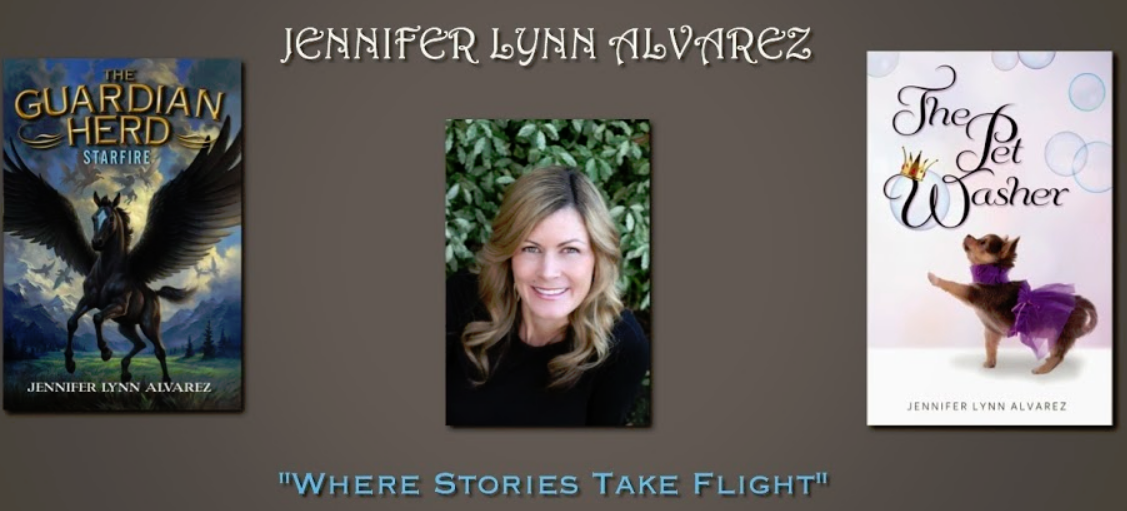
The Importance of Daily Writing, by Guest Blogger Jennifer Lynn Alvarez
Writing is an exercise that requires practice and training to build the muscle required to become a “finisher.” When I set out to write a novel after a fifteen-year break, I struggled to trap my imagination on paper. I wrote a few days a week, and it was mentally agonizing, similar to how I feel when I begin a new exercise routine for my body. However, I was happy to be writing again, and so I kept at it, but my writing routine was sporadic. I finished a middle-grade book, THE PET WASHER, in about a year, and it’s only 33,000 words.
In January of 2012, I made a decision to write something—anything—every day. I announced this on my blog, and like any new routine, it was difficult to keep up at first. I didn’t have a book contract at the time, and not all of my friends and family initially accepted that I now had “work” hours. But I stuck to it and carved out several hours a day, often awaking at 5 or 6am, to write blog posts, articles, and journal entries.
After a few months, I noticed how much easier it was to write. I became adept at quickly organizing my thoughts. Soon I was averaging 2000 words a day in three-hour time periods. I also noticed that the more I wrote, the more ideas I had for new material. And eventually, everyone in my life accepted that they saw a little bit less of me.
So later—when the big idea came—I was ready! It happened while I was driving home from Petaluma on highway 101. I visualized a herd of winged horses flying above my car. They were migrating and a heavily pregnant mare was struggling to keep up. I knew immediately that her foal was special and that I had to write about him. When I arrived home, I began the first draft of STARFIRE.
Because I had been writing daily, I had the brain muscle to fuel a quick first draft. I wrote 53,000 words in just 20 days. I finished, revised the book, and sent it to an agent who had previously, but kindly, rejected me. She loved STARFIRE and signed me on as a client. Soon after that, we accepted a four-book contract from Rosemary Brosnan and Karen Chaplin at HarperCollins Children’s Books.
I attribute my success to the fact that I showed up each day and wrote. It created the endurance I needed to quickly act on my idea, it carved out the time required to write the next three books in the series, and it enabled me to meet my tight publishing deadlines.
It can be difficult at first to carve out this time, and not everyone in a writer’s life will always understand it, but I encourage all writers who aren’t doing it to try. Don’t judge your progress. Just write!
I showed up every day at my computer without the foreknowledge that it would ever lead to anything. I treated my hobby as a job even though I had no reason to believe I’d ever be paid for it. I wrote without judgment because my goal was to practice, not to publish. But when the big idea came, I was strong enough to execute it. I went from aspiring author, to debut author with a big five publisher in exactly one year.
The first book in my new series will be released in hardback around the world on September 23, 2014. Of course, results will vary with every writer, but the point is that daily training will prepare you, whether your published or not, for the next big idea.
Jennifer Lynn Alvarez is a fantasy fiction author and speaker who writes middle-grade fiction. She graduated from U.C. Berkeley with a B.A. degree in English Literature. Jennifer’s upcoming books include The Guardian Herd middle-grade series. Book one, Starfire, releases on 09/23/14 through HarperCollins Children’s Books. Jennifer’s self-published books include The Pet Washer. This series is for ages 7 and up. Jennifer lives on a small ranch in Northern California with her husband and three children.
Write about something that seemed so wrong but turned out right.
 Photo by Breana Marie
“Life often has a way of making people feel small and unimportant. But if you find a way to express yourself through writing, to put your ideas and stories on paper, you’ll feel more consequential. No one should pass through time without writing their thoughts and experiences down for others to learn from. Even if only one person, a family member, reads something you wrote long after you’re gone, you live on. So writing gives you power. Writing gives you immortality.” — Antwone Fisher, Screenwriter and author
Note from Marlene:
I write to get out of my head and onto paper. Writing, with a pen or pencil, is an extension of my arm. When I picture my arm, it’s elongated by the pen, which in my mind, is always there. Computer typing — same thing — the keyboard is an extension of me. Writing is as natural and as much a part of me as breathing. I would rather write than do almost anything else. I write because I get to see a side of myself that isn’t always present. My daily concerns revolve around household chores, gardening, helping my husband run his consulting business and whatever else needs to be done. My efficient me bustles about cleaning and scrubbing and waiting until I have a moment or two to write. And those moments are glorious. Because I’m writing for me. Not for any monetary gain. Not for notoriety. I don’t need to be noticed to enjoy writing.
 I write because I not only can, I have to.
Why do you write?
Today’s writing prompt is inspired from the September 2014 issue of Writer’s Digest magazine.
“A man opens his mailbox to find an envelope containing a set of instructions.”
Set your time and write for 20 minutes. Set it aside for twenty minutes. Then read. Tweak, make a few changes, but not too many. The energy from that first and fast writing is usually spot-on.
Write a short story of 750 words or fewer based on this prompt and enter Writer’s Digest Contest #60.
Send your story using the online form at writersdigest.com/your-story-competition or send via email to yourstorycontest@fmedia.com (entries must be pasted directly into the body of the email; attachments will not be opened).

Bella Andre, David Corbett and Jordan Rosenfeld have all been Writers Forum of Petaluma presenters. Scroll down for details.
The September 2014 issue of Writer’s Digest magazine is filled with practical, helpful and inspirational articles. Bella Andre is on the cover. Her story, “Romancing Big Publishers With E-book Success” might encourage you to go the indie route for publishing or try traditional. She also talks about why she uses a pen name.
Do you wonder about “pacing and tension?” Jessica Page Morrell has written an article that explains it in easy-to-understand format.
Donald Maass writes about “Building Microtension Into Every Scene” and makes it seem like an easy thing to do.
 Writer’s Digest Contest #60 is one you can enter. “Write a short story of 750 words or fewer based on the prompt: A man opens his mailbox to find an envelope containing a set of instructions.” “You can be funny, poignant, witty, etc.; It is, after all, your story.”
To enter: Send your story using the online form at writersdigest.com/your-story-competition or via email to yourstorycontest@fmedia.com (entries must be pasted directly into the body of the email; attachments will not be opened).
 Note from Marlene: I don’t receive any money from endorsing Writer’s Digest Magazine. I just enjoy articles that are well-written, informative and inspiring for writers and this particular issue is jam-packed with good stuff.
Bella Andre has been a Writers Forum presenter twice. Other contributors in this issue who have also been Writers Forum presenters: Jordan Rosenfeld (twice), and David Corbett. Lots of talent in these pages, as well as at Writers Forum.
And be sure to check out the last page of Writer’s Digest, “Reject A Hit.” Amy Maricinick, a Petaluma’s Jumpstart Sonoma county writers cleverly spoofed a rejection letter for Great Expectations in the March/April 2013. Your name can be here, too. Write your Reject a Hit spoof.
Guest Blogger Karin Gillespie writes:
“When the student is ready, the teacher will appear.”
Long ago, when I first read the statement above, I imagined an encounter with a big-bellied, toga-wearing monk who would whisper the secrets of the universe into my ear.
Over the years I’ve learned you don’t necessarily need a monk to show you the way. If you’re open to it, wisdom comes in many guises, such as advice from a friend, a passage in a book, an overheard conversation or even a sudden insight.
What follows are the valuable writing gifts I have received over the years. Depending on where you are in this journey, they may or may not resonate with you, but each one was precious to me and changed my way of thinking about my craft.
Morning Pages
Since I was a little girl I always dreamed of being a writer but it wasn’t until I started doing daily morning pages that I gained the courage to face the blank page. And what are morning pages?
Simply, first thing when you wake up in the morning, you write longhand in a notebook for twenty minutes without stopping. It’s best if you practice morning pages for two or three months and you shouldn’t read what you’ve written until much later. The Artist’s Way by Julia Cameron popularized morning pages but they’ve been around for decades.
Morning pages train your subconscious to write. It coaxes out the muse, and, trust me, the practice is utterly magical. Morning pages work best with new writers or writers who have abandoned the craft for a while.
Save the Cat!
Storytelling is a skill separate from writing beautiful sentences and Blake Snyder, author of “Save the Cat Strikes Back!” explains plotting in the most eloquent and accessible way possible.
After reading his book, I knew I would never again plot myself into a corner or abandon a project because of structural problems. Although his work is written in a breezy style, there’s something very elemental and old-world about Snyder’s approach.
He died a few years ago, and even though he was a successful screenwriter, I think his insightful how-to books were his true legacy. I recommend all of his books but if you were only to buy one, I’d get “Save the Cat Strikes Back.” In addition to giving structural advice, he shares the very personal story of how he changed his writing life around. An inspiring man who will be missed.
Pomodoro Technique
The Pomodoro Techinque is simple: Basically you write for twenty-five minutes, no interruptions, and then take a five minute break.
Repeat as many times as necessary. This method has increased my focus ten-fold. I no longer worry about being distracted by the Internet or e-mail, because during each twenty-five minute period, you trick the brain to attend only to the writing.
Rachel Aaron’s Amazing Productivity Method
Recently I decided I wanted to write first drafts faster, and I ran across Rachel Aaron’s advice on that very topic. Using her method, I easily upped my daily word count from 2,000 words a day to 3,000. (Accomplished in a four-hour time period with brief breaks) The secret?
Aaron suggests writing a brief summary of what you’re going to write each day before plunging in. Her advice should be worth a $1,000 it helped me so much. But I only spent $.99 on her book .
Trusting Your Subconscious Mind
Once during one of the best performances of his life, Laurence Olivier came off the stage and was approached by a reporter who was bowled over by his mastery. Olivier acknowledged he’d done well, but he also said, “I don’t know if I can ever repeat it, because it did not come from me.”
The more I write, the more I understand that the best writing is achieved when I leave my ego outside the writing room, and surrender to my subconscious mind.
 If I show up every day, the muse will arrive, and if I’m humble and understand that I’m only a conduit or co-creator at best, then good writing will almost always result. When I’m co-creating, the supply of ideas are endless, and I never get stale. Maybe this gift was the most important one of all.
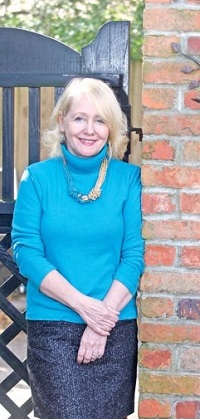
Karin Gillespie is the author of five novels; her nonfiction work has appeared in the NY Times, Washington Post and The Writer magazine. Click here to visit Karen’s blog about writing and creativity insights.
You give but little when you give of your possessions. It is when you give of yourself that you truly give. —Khalil Gibran
Note from Marlene: It seems to me this is what writers do . . . we give of ourselves every time we share our writing. We put ourselves out there . . . our emotions, our vulnerability, and our hope that our writing is understood. Kudos, Writers, for being willing to put yourselves out there. . . what would we do without you and your stories?

~ You see something you can’t live without, but you don’t have enough money to pay for it. What do you do?
~ You see a neighbor, alone, weeping. What do you do?
~ You see an acquaintance shoplift. What do you do?
~ You see two married acquaintances, without their spouses, heads and bodies close together, in a suggestive position. What do you do?
~ You are a young child and smile up at the grown-up whose hand you are holding but you don’t recognize the grown-up. What do you do?
Pick one and write for 20 minutes.
Note from Marlene: You can tweak prompts however you want. For example, with this prompt, the setting could be a deserted walkway near water, in a park, at a crowded Saturday market. You choose the setting and Just Write!
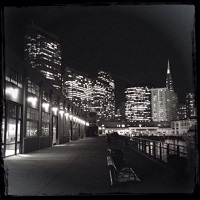


Photo by Sasha Oaks Photo by Jim C. March Photo by Kent Sorensen