Guest Blogger Amanda McTigue — The Power of Place
Writing is setting. Indeed, to write is to place (that’s “place” as a verb).
We writers place readers in worlds. We set them into circumstances, stories, imagery, facts, memories, actions, fantasies, and so on.
Setting in this sense isn’t mere background. It’s the sum total of every last word we write. And yet, so often we think of place as scenery. What a mistake!
Place shapes voice. I’m not talking dialect here. I’m saying the ways we writers situate ourselves in imagined (or remembered) worlds give rise to the ways we convey those worlds to others.
Our first task, then, is to place ourselves so fully that our readers go with us.
“All well and good,” you say, “but how can we interrupt our action-packed, conflict=drama, page-turning flow to squeeze in some detail of setting? We’re writing to keep readers reading! There’s no room! There’s no time!”
I feel your pain. We writers are in such a rush. Determined to finish-and-publish, we worry about where to put the “where” in our text before we even know where “where” is.
But place gathers power when we slow down.
In my writing process, “where” has a time and pace (that’s not a typo). I do everything I can to remind myself that plot points can wait; endings will find themselves. Meanwhile, when I’m lost, I get more lost. I schedule time for sheer exploration. We’re talking undirected (but focused!) wandering accomplished through short sessions of stream-of-consciousness writing.
So often, our best work is discovered, not planned. When’s the last time you ambled through your worlds with no agenda? How about sitting still? How about nosing around for nothing in particular? Try leaving your map at home. Paddle. Search. Listen. Taste. Sniff. Find a new vantage point. Marvel. Take a nap. Unpack a picnic, etc.
Forget writing. Just notice and take notes. The bird watcher doesn’t agonize about her style when she’s out in the field. She scribbles as fast as she can. Who cares if there’s a better word for “red?” She keeps her eye not on the page, but on that tiny splash of color hidden in the branches. She tries to capture everything, knowing the bird will fly off any minute, taking the moment with it.
Lately, I find such field trips invaluable. I schedule them not only as I’m drafting but also right through my editing process.
Let’s say I’m polishing a chapter for the umpteenth time and it’s still god-awful. Sometimes I know what’s missing. Sometimes I have no idea why it stinks. Either way, I set the manuscript aside, put on my boots and step out into a wet garden or a fetid alley or a crater on the Planet Zarn with absolutely no sense of how that’s going to help. I just give myself a half-hour and go.
I take field equipment along to sharpen my observations: binoculars, a camera dolly, a satellite, a cloud boat, a microphone, a microscope, my tongue. I grab every writer’s prompt I’ve ever enjoyed and bring them too—questions or novel points-of-view—to keep myself playful and curious.
I place myself—and things happen. Setting always brings more than static landscape. Worlds always world, even the quietest of them.
When I return to editing, I bring the fruits of my wandering. Suddenly an overlooked shoelace suggests a murder weapon, a tree branch holds a charm, or the stitching on a pillow brings a character to life.
Does that mean that I use every word I write in such sessions? Not even close. But nothing is wasted. What I don’t use leads me to what I do use: richer passages—even new storylines—far fresher than anything my editor’s brain could cook up.
There’s nothing like a road-trip. Whether staring at a blank page, or yet another re-write, schedule time to explore. Place yourself first (pun very much intended). Shake off your worries about the where of where; you can figure that out when the where is there.
Go.
Slow down.
Forget writing.
Take notes.
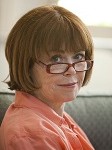 Amanda McTigue’s debut novel, Going to Solace, was selected as one of four “Best Reads of 2012” by Gil Mansergh on KRCB’s “Word by Word.”