Blog

  • Magnificent Hydrangea from Safeway

    Memorable writing that sparks imagination. Lean in. Hear the writer’s voice on the page

    Magnificent Hydrangea from Safeway

    By Elizabeth Kirkpatrick-Vrenios

    Just like clockwork – this gorgeous flower wilts two hours after I place her in the vase. I carefully fill the water with the little food packet that comes with the flowers, cut the stems, arrange her perfectly, arrange her hair, fix her makeup, and convince her she will be the star at our dining table.

    “What do you need?” I ask.

    “Just some loving care – and oh, yes, will you feed me some sugar and trim my nails? And while you are at it, fluff up my gown.” 

    Dutifully I oblige, but just as the guests sit down, the flower drops her head to her chest, her leaves droop and she gives up the ghost with just a single petal dropping theatrically to the tablecloth.

    There she is, right on target, pulling a Theda Bara (I think I hear a theatrical sigh and see an eye roll as she expires). She flops on the table and goes through her death scene in front of everyone as if before a camera.

    I thought it was a fluke the last time I bought her cousin, a white peony – (she had winked at me in Safeway, claiming she would make me proud and shine gloriously on my dining room table if she were treated right). But she had collapsed just as the main dish was being served.

    This hydrangea is a particularly good actress. I am fairly certain of this, for there is an audible gasp from my dinner guests, when she acts her way through her death scene. One very sensitive lady (pale, skinny, a vegan) rises and dashes for my bathroom, another rather rotund bald man tips his wine over as he hastily shoves his chair back, and a third covers her mouth with her flowered napkin. 

    There is stunned silence as I lean over, pick up the limp dead actress, and gingerly carry her to the garbage can in the kitchen. As she collapses, she moans something about being abused and mistreated by the woman of the house. 

    The nicest thing I can say is that while I never liked Miss Hydrangea-Theda Barrow’s type of acting, she provided some excitement to what was a fairly dull meal.

    One thing I know for sure, the next actress I bring home for the bouquet will be something closer to a mum.

    Elizabeth Kirkpatrick-Vrenios’ award-winning chapbook, Special Delivery, was published in 2016, and her second, Empty the Ocean with a Thimble by Word Tech Communications.  

    Twice nominated for a pushcart prize, she has poems published in various anthologies and journals including Stories of Music, The Poeming Pigeon, Love Notes from Humanity, Stories of Music, American Journal of PoetryCumberland River Review, Unsplendid, Edison Literary ReviewPassager, and NILVX. 

    She is a Professor Emerita from American University, a member of international Who’s Who of Musicians, and has spent much of her life performing as a singing artist across Europe and the United States. 
  • What, or who, inspires you? . . . Prompt #611

    What, or who, inspires you?

    #amwriting #justwrite #writing freely #creativewriting

  • Rescue Your Stories

    Guest Blogger Nancy Cullen writes:

    “I am a rescuer of stories hidden among the ordinary.  I give these stories voice as a template to inspire others with untold stories so that they will know the satisfaction of rescuing their own stories.”  – Nancy Cullen

    My BLOG, THE STONEBRIDGE, began as a place I could record and share stories.  Stories stemming from four areas outlined on the BLOG’s “About” page. It is my version of a Sacred Bundle, a practice began by my father.

    Capturing, or as I like to say, rescuing, stories from our thoughts, memories, and obscurity is a learned skill. There are processes, template frameworks, and yes, a bit of discipline involved. These are not apparent as one reads a particular post but run in the background like a good operating system in a computer.

    Although, not complex, nonetheless they must be identified and adapted to your own style. Once in place, becoming a hero at rescuing stories feels natural.

    My Hero Model Template

    My father was a quiet example of a story rescuer. His method was quite simple, as were the tools he used:

    • his thoughts and observations
    • a quiet place to think and write
    • paper
    • a manual typewriter

    My tools are the same, except I have replaced the typewriter and paper with a laptop and this BLOG.

    Dad wrote during quiet hours in the office at “The Shop,” his place of business where he sold new and used auto parts. 

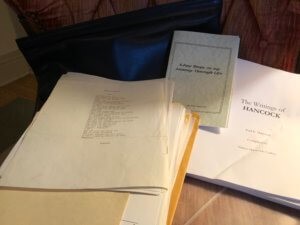
    He stored his writing in a dark blue vinyl satchel. Occasionally he would let one of us read these musings.

    I write in my “vision room,” then store them on this BLOG for the world to read, comment on, and, I hope, receive inspiration.

    Find Your Personal Why

    How can you become a Hero at Rescuing Your Valuable Stories? 

    First, define why rescuing stories is important, then why it is important to you.  This is a great support in not only getting started, but to remain consistent when life conspires to derail your efforts.

    The “why,” for me, comes from either discovering some delightful piece of information previously lost or losing a significant person in my life and realizing how much passed with them.

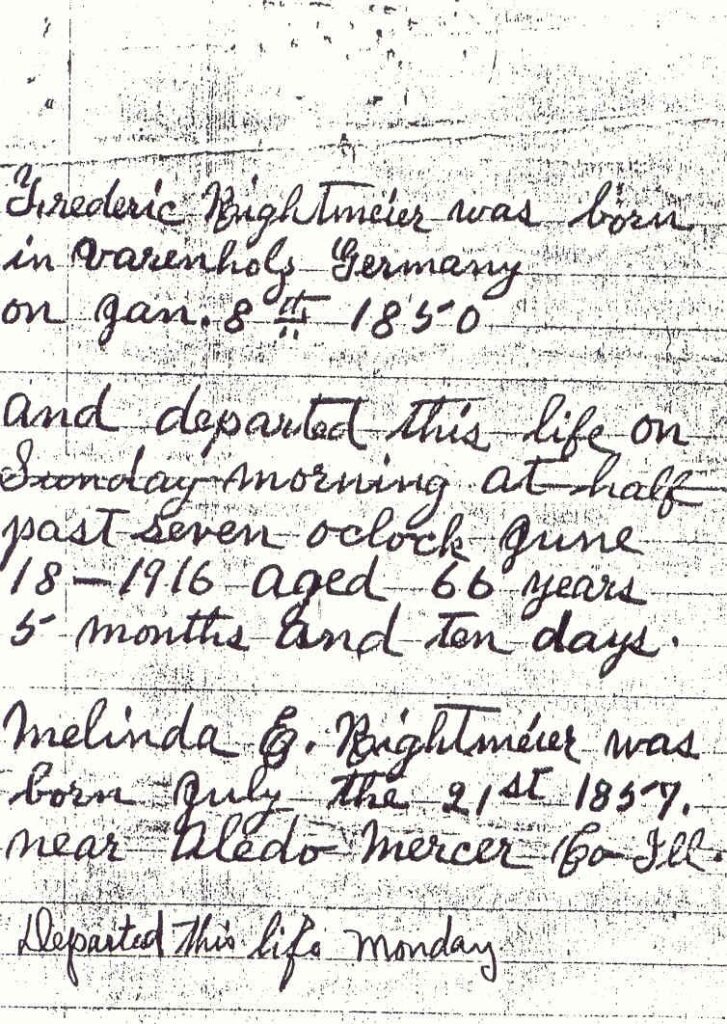
    An example of the former was an entry in the Rightmeier family bible about my maternal great-great grandfather’s birthplace in Germany. It was discovering a piece of my own history.  That piece of information eventually resulted in me traveling to the German village mentioned in the notation.

    Of course, the loss of a person from this earth is sorrowful, but the loss of their stories for lack of recording only compounds that sorrow. Taking the time to write these down is a way to preserve their legacy.

    There are many other “whys” for rescuing stories.  What is your “why?”

    Your Hero Model

    Second, what kind of stories do you want to record?  Your personal observations of:

    • daily life
    • family events or conversations
    • the story behind specific objects and what they represent

    For instance, a collection of seashells. Where were they collected? What was the occasion? Who were you with? That painting that was always present, where did it come from? 

    Third, assemble your own simple tool kit. Decide a time, place, and means where these rescued stories will be recorded and stored. Look for ways to fit “rescuing” into your life routine, for example:

    • Use a voice recorder during your daily commute or walk
    • Journal each morning, evening, or once a week, with thoughts and details on your chosen topic
    • Catch ideas as they fly by on a digital voice recording or App such as Evernote or OneNote
    • Tried and true paper files still work!

    A Place To Start

    Below is a template as an aid in deciding what kind of stories to rescue along with some suggested ways to begin “storing” them.

    Click here for your free PDF download and start today!

    I inherited Dad’s writings and have compiled them into a book. It is an example of what is possible with humble tools. It can be viewed and purchased by clicking on this link.

    What kind of story will you rescue this week? 

    Nancy J. Cullen grew up in Rooks County, Kansas, where she was introduced to aviation by her father. Flying in the same airplane she now owns, her early days of traveling with her dad to rural destinations, landing in pastures, grass airstrips and attending local fly-ins lay vivid in her memory.

    What she did not realize was that her father was also cultivating another legacy he would pass on to her:  writing. Other than the technical writing she did over her 30+ years as a federal civil servant, an air traffic controller, and air traffic staff support both in the United States and Europe, she had no aspirations to write.

    It was not until her father passed on to her his writings, what she called his “sacred bundle” did the desire to rescue stories come to life for her. She has preserved his writings in a self-published book, “The Writings of HANCOCK.”

    Since 2013 she has developed her own writing platform through her BLOG, The Stonebridge, where she shares her rescued stories and endeavors to inspire others to begin their own rescue operation.

    Nancy holds the Premier Degree in French from the University of Strasbourg, France.  She is a private pilot and owner of a 1961 Aircoupe she has restored twice and assists in its annual maintenance. She and her husband of 43 years own a 133-year-old Kansas State Historic Landmark home in Historic Midtown, Wichita, KS which they are in the process of restoring. She serves at the Chairperson of the PBS Kansas Citizens Advisory Board and actively participates in several aviation groups, locally, nationally, and internationally.

    She inherited the EAA Biplane project from her father which she is building with the support of the local Experimental Aircraft Association chapter.

    #amwriting #justwrite #creativewriting #lifestories #biographies

  • A Perfect Getaway . . . Prompt #610

    Write about a perfect getaway.

    #amwriting #justwrite #freewrites #creativewriting

  • Know Your Colors

    Memorable writing that sparks imagination. Lean in. Hear the writer’s voice on the page.

    Know Your Colors – An Introduction to the Plant Mood Chart

    By M.A. Dooley

    Luckily, my face turns colors when I feel emotions. Whether I am sad or happy or embarrassed, angry, jealous, afraid, confident, guilty, content, confused, giddy, flirtatious, thoughtful, nostalgic, hesitant, determined, focused, agitated, brazen –or if I feel a song coming on–I can consult the Plant Mood Chart. Rather than grasping at some external label that’s not quite accurate, I hold up the chart at the mirror, or sometimes with a friend, to make sense of the inside of me. It’s quite convenient, saving me lots of time and effort.

    Much like the little cannister with the PH and alkaline hues used to test hot tub water, but far more complex, the color chart corresponds to feelings and can even suggest a backstory as in, “What happened that brought me to this point?” 

    Although little understood by the public, there is a consistent body of work by Species Translators over hundreds of years.  They were doctors, spiritual leaders, druids, medicine women, scientists, and athletes who uncovered a correlation between emotions, humans (who change color) and plants including trees, fruits, flowers and vegetables. I just checked as I am writing this, and sure enough, I’m a white orchid, focused on explaining how the system works. Later on, I might be a pink lady – a little flushed with excitement to share my research with a broader audience – and then shrinking back in sepia, like an acacia, as some consider me a whacko, which turns me embarrassed into bright tomato.

    Yet there is a great deal of science behind the Plant Mood Chart similar to the deeply analyzed Bach’s Flower Remedies. Recent neuroscience has shown how the amygdala strengthens the part of the brain’s cellular memory reaching back to reconnect with earth’s ancients – plant beings. They are the ones that came first, offering life to all that followed. Biologists and healers alike know that plants actually feel and communicate. Plants not only have feelings but create feeling. Like us, they exist partly underground hiding their vulnerable veins, cool and safe, but also seek the sun their heads shining for all to see.

    As we breathe in their shifting colors, the more we become like plant beings. Today, we have a growing evolutionary opportunity to adapt as carbon emissions increase along with our CO2 intake. Oxygen transmuted by the sun through chlorophyll makes me turn ivy green with envy of their design to efficiently transfer and store life energy.

    With so much wind driven cross pollination, subatomic particles get into genetic codes and distribute globally. Most color changers are part wood fairy (my 24 and Me results indicated Corklorian Sprite at 1.3%). Many people are finding it natural to burrow into a soft barked redwood (sienna – comfort) or hide amongst the autumn fern (pale yellow – shyness) or wave their arms in the meadow like a big sunflower (golden – pride). Since we don’t always have a mirror and the color chart handy to verify our emotional states, listen with the ancients and their children rooted and sprouting from the earth to learn the colors of feeling. Our relationship to plant beings becomes our guide to understanding ourselves.

    M.A. Dooley is an architect, mother, skier, runner, and dancer who spent most of her life exploring the Santa Cruz Mountains, Sonoma County, the Sierra Nevadas, and the San Joaquin Delta.

    M.A. has been published in The Write Spot: Musings and Ravings From a Pandemic Year, and Poems of a Modern Day Architect, Archhive Books, 2020.

    M.A.’s writing has appeared in Sunset, San Francisco Chronicle, and The Press Democrat.

    #amwriting #justwrite #creativewriting

  • ‘Tis the season . . . NaNoWriMo

    ‘Tis the season for NaNoWriMo.

    National Novel Writing Month is held during the month of November.

    Have you ever done it? Have you thought about it and wondered if you could or should do it?

    I say: Go for it!

    What do you have to lose?

    And, you might gain some excellent writing.

    “National Novel Writing Month began in 1999 as a daunting but straightforward challenge: to write 50,000 words of a novel in thirty days.”

     Sharon Oard Warner says “A work of fiction that logs in at 50,000 words is actually a novella . . .”

    So, if the idea of writing a novel is overwhelming, consider writing a novella.

    Prepare for NaNoWriMo

    Julie Artz writes about her NaNoWriMo experience on Jane Friedman’s blog, “Want to Win NaNoWriMo? The Secret is Preparation.”

    Learn from her mistakes to get “that coveted NaNoWriMo win.”

    Prolific author Bella Andre wrote about her struggles with writing, “Guest Blogger Bella Andre couldn’t stand it anymore, so she . . .

    As for me? Yes, I have participated in NaNoWriMo. It was fun to “pretend to be a writer for a month.” And then, guess what? I did become a writer. I wrote about my experience, with tips on how to prepare and succeed with NaNoWriMo: “Concept is simple, execution is difficult.

    NaNoWriMo-Is it for you?

    Tips to Unlock the Book Only You Can Write

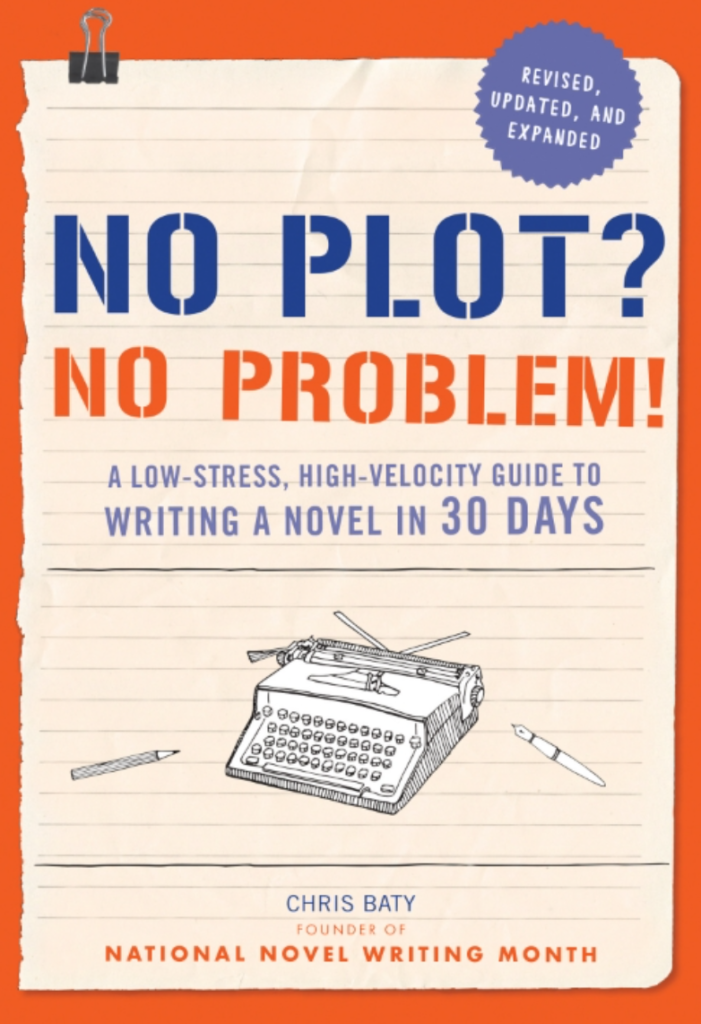
    Thanks, Chris Baty and Grant Faulkner for NaNoWriMo and for inspiration to Just Write.

    #amwriting #justwrite #NaNoWriMo #ChrisBaty #JaneFriedman #Bella Andre #novella #GrantFaulkner #NoPlotNoProblem!

  • The Way Through

    Memorable writing that sparks imagination. Lean in. Hear the writer’s voice on the page.

    The Way Through

    By Rebecca Olivia Jones

    Fears change over the years

    Never being good enough

    The youthful drive for perfection


    The impossible


    Competition and proving myself

    The best daughter

    The best dancer

    The best singer

    The best at all attempts


    Not possible


    Time has mellowed anxieties into a soft pillow of joy

    Fear now is the walk toward unknowing

    A loss of self

    The fading memories of life’s struggles


    I witnessed Mother’s decline into helplessness

    The night wanderings

    The frightening hallucinations

    Her ultimate vanishing


    Will I vanish, too?


    The slow breaking of synapses

    Unable to make decisions

    Thoughts like ghosts

    The fear of losing control over choices

    Existing in a continuum of uselessness


    I also watched my father’s vanishing

    But he held on

    Giving until his music stopped


    Perhaps, the only way through the fear is beyond thought

    Beyond the unknowable

    Accept what was

    Hold faith in life as it is

    Trust loved ones living


    And love the ones who have vanished


    Rebecca Olivia Jones is a playwright, singer, dancer, composer, choreographer, director, and always a poet. In 2021, Rebecca collected her poetry and lyrics, accompanied by beautiful photography into a memoir, Beachsight, available on blurb.com.

    Rebecca has a B.A. in Creative Writing from New College of California. She is also a mother, grandmother, sister, and a seeker. She lives in San Rafael, California with her long-time boyfriend and their cat.

    Rebecca teaches singing lessons via zoom; enjoys hiking, gardening, cooking, reading, and writing.

    She is an advocate for the Alzheimer’s Association.

  • Kept since childhood . . . Prompt #609

    Write about something you have had since you were a child.

    #amwriting #justwrite #creativewriting #memories

  • The Smell of Old Leather, the Scent of Cigars

    Memorable writing that sparks imagination. Lean in. Hear the writer’s voice on the page.

    The Smell of Old Leather, the Scent of Cigars

    Karen FitzGerald

    Every so often Georgia would pull out that tin cigar box her Gramps gave her some 75 years ago. Imagine—75 years she’d been hauling that old tin box around, moving it from the family homestead to her college dorm, to that sweet pensione in Italy in her 20’s, to the little garden apartment when she and Gitulio married. Good gosh! And how many other moves in her 85 years had there been?

    But, here she was, in Happy Valley Seniors’ Residence with her tin box from Gramps, about to open it for possibly the last time in her life; open it to retrieve the cherished item inside her very first diary.

    Her arthritic hands wrestled with the lid of the container while a thought crossed her weary mind. Surprisingly tight this lid on such a worn-out tin. But it did finally give way to the beaten and battered, leather bound book within.

    The gold, etched letters in beautiful cursive writing that spelled out the word “Diary” were pretty much all worn off, but that did not distill the thrill, the wave of emotion that swept over her as she ran her hand across the cover. And that precious lock of gold—OK, only tin, really, but to the ten-year-old Georgia, it was pure gold that lock, and she still had the key! Imagine. And the entire contraption worked! The key and lock and binding all in order, as were the words on the pages that she hastily, excitedly scribbled out 75 years ago.

    Not even the urgent screams of sirens penetrated her tender thoughts in lifting the book from the cigar box. Do I smell cigars? The smell of leather? Really? After all these years?

    She inhaled deeply, took it all in—the smell drifting through her memories. She thumbed through the first pages of her first diary, the first words of her very first, private thoughts. 

    When the firemen broke down the door, the smell of gas was overwhelming. There they found an old woman sitting, peacefully, head down, chin to chest, a soft smile on her face, a worn-out book in her hand.

    * A wonk is a person who takes an enthusiastic or excessive interest in the specialized details of a particular subject or field, immersing oneself in the subject matter.

    Karen FitzGerald, founder of Think I.N.C. (Thinking Innovation, Not Consulting), professional trouble-shooters in business and organizational management, is transitioning from business management wonk to full time writer.

    Karen is a prior board member for a variety of organizations: The Sonoma County Public Library Foundation, National Women’s History Project, Living Room Center (a day shelter for homeless women and women with children). She is a Finance Committee Member for Interfaith Shelter Network.

    Karen recently dusted off her M.A. in English which she achieved with a Master’s Thesis on language centered theories of human behavior (1994).

    Over the last several decades, Karen has been rejected by obscure presses and prestigious publishing houses alike. Ever the optimist, except when not, she moves forward, undaunted, with pen, dictionary, and a sizable inventory of Wite-Out correction fluid in stock.

  • I left my heart . . . Prompt #608

    Writing Prompt:

    I left my heart . . .

    #amwriting #justwrite #creativewriting