Blog

  • Surrender to Creativity

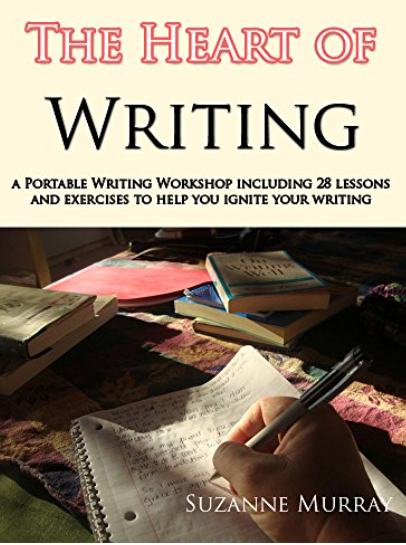
    The Heart of Writing by Suzanne Murray, available at Amazon
     
    Guest Blogger Suzanne Murray encourages creativity by surrendering.  

    SURRENDER IS CRITICAL TO CREATIVITY

    We can’t force creativity. We know this intuitively. If we told a painter that we wanted a masterpiece by five o’clock tomorrow, they would look at us like we were crazy; that we clearly didn’t understand what being creative was all about.

    An important part of being creative is learning to surrender to the flow of the universe, allowing something greater than our everyday self to move through us. It’s not something we can figure out with our linear mind. Of course, if we want to paint we need to learn how to work with our chosen medium and studying the work of the masters can help.

    If we want to write it’s really valuable to read widely and deeply, to show up daily to put pen to paper (or fingers to keyboard) and perhaps take a workshop on the form we want to work with. Yet at the heart of being creative is letting go and allowing the ideas, the inspiration to move through us. This is where practice comes in.

    As Flannery O’Connor said of her writing experience, “I show up at my office everyday between 8 am and noon. I’m not sure that anything is going to happen but I want to be there if it does.”
    I recently met a young man in the park who had a set of watercolors laid out on a table and quickly produced a couple of small paintings that were quite lovely. We spoke of creativity and how so many people think you either have it or you don’t.

    “Yeah,” he said, “really it’s a muscle, you’ve got to use.”

    He went on to say “No matter how lousy I feel, if I do even a couple of little paintings I instantly feel better.”

    I feel the same way about writing, even if it’s just a page of free writing where I let the words flow out of the pen. Being creative feels good and lightens our mood because we become more present to the moment, quiet our chattering minds, and allow for the awareness of our heart and knowing to do the work.

    In the surrender we find ourselves in an expanded state of consciousness where we can do things we didn’t think we could. In whatever way creativity calls to you, make a habit of showing up to play with it. Let your self be guided by what excites you. Surrender to what brings you alive.

    Sending you blessings and the wish for creative flow, Suzanne.

    Suzanne Murray is a Creativity Coach, Life Coach, Writing Coach, and EFT practitioner.   She blogs at Creativity Goes Wild.  


  • Complimented Complement

    By Kathleen Haynie

    Yes, it drives me nuts. They take an English word that has some nuanced meaning for them personally, and they use it to name some untouchable gadget they have invented. And then someone else makes the gadget anew and puts a new name on it. Then it becomes daily language usage.

    She was complaining that her boyfriend didn’t understand her feelings.

    “He doesn’t have enough bandwidth, I guess.”

    That word no longer belongs in Techieville.

    Complement with an “e” gets merged into compliment with an “I” because spell check doesn’t check it. Someone must think highly of me because I am always getting complimentary “one-month free” offers.

    My e-mail gadget is called a program, a file, or a client. My clients usually pay me for my services, but this one does a service for me for free!

    I went to copy some text on my computer to a CD disk. The boxes say rip, export, import, burn, copy. Which is which? Is it a webpage, a site, a platform, or what? 

    And how do I populate a digital screen? If I click “OK,” will it apply it?

    I put my computer desk in my new large bedroom. I had never slept with my laptop before, and did not know that computers, like spiders, are nocturnal creatures. In the middle of the nights, Microsoft updates my windows.

    I hate cleaning my windows. The updates update my task bar so the start icon won’t open and the sound icon doesn’t adjust the sound.

    The techie help support on the phone tells me to fix the problem by first opening the start icon.

    “Oh, that’s right. You can’t do that.”

    Help!

    Kathleen Haynie. This City Girl turned into a Sonoma County Horse Girl, and then retired from decades as a professional in health care. She is now acting out a latent inclination for the dramatic arts as a drama student and cast member of Off the Page Readers Theater. Surprisingly, the journey continues into the newly found delight discovered in written expression. Kathleen felt honored to have her work, What They Did to Alice, performed at the 6th Street Playhouse 2020 Women’s Festival. She has decided that dark chocolate is perfect with a full-bodied red wine.

  • The Paterson Literary Review

    The Paterson Literary Review

    International magazine features fiction, poetry, interviews, and essays.

    Submission Guidelines

    Praise For the Paterson Literary Review

    “A great poet once said that art is not life because ‘Art has its own dynamic. It is a runaway train which society either boards, or does not board.’

    Editor Maria Mazziotti Gillan decided from the beginning that the Paterson Literary Review would board that train and bring with it all voices, all people, not just a few—not only the dominant cultures, but each writer who has a genuine story to tell. We thank her for an all-inclusive literary magazine with a high degree of excellence—a journal that is global as well as deeply personal. “—Grace Cavalieri, Producer & Host: “The Poet and the Poem from the Library of Congress”

  • Adaptation . . . Prompt #579

    Write about something you have had to adapt to.

    Was change easy? Or, was it a struggle (either internally or externally)?

    Write about something you adapted to.

    Write about the process of adapting. What did you do? How did it go?

  • Brain Space

    By Camille Sherman

    I’d like to write something charming or insightful or brilliant but the mind is as blank as the page. I scavenge the corners of consciousness, deftly sidestepping the errands and faint reminders threatening to blossom into worry. I search for a road less traveled by, a path in the crevices of my frontal cortex that could lead to my creative promised land. All that comes is the Law & Order theme song.

    Camille Sherman is a professional opera singer from the Bay Area. She trained at The Boston Conservatory and the San Francisco Conservatory of music, and served as an Artist in Residence at Pensacola Opera and Portland Opera. She currently lives in Portland, where she continues to sing and develop projects with local artists.

  • Writing Family Stories

    Guest Blogger Nancy Julien Kopp encourages writing family stories as a gift to family members.

    When stories are only told around the holiday dinner table, they eventually get lost. Writing the stories ensures that they will live on, that those stories will be a continuing gift to other family members.

    Many people want to write their family stories, but don’t know how to begin. There is no set place or time to begin. It’s not necessary to start with the first ancestor you remember. The starting spot is anywhere, about anyone, or anyplace.

    Begin with the most vivid memory you have. Type your family stories, put them in a binder, and assemble them any way you like: By the person, by the era, by the ones you like best. It does not matter how you put your book of family stories together. What is important is that you do it.

    Writing family stories is a big undertaking and once started, people get enthused and want to keep going. 

    Below is a list of prompts to help you get started. You’ll note they are questions, and it’s you who have the answers.

    What part of the world did you live in?

    Did you live near close relatives?

    Did you see relatives only on holidays?

    Were grandparents part of your everyday life?

    Were your closest relatives born in America or somewhere else?

    What kind of storms did you have where you lived?

    Were your parents and grandparents strict?

    Did you have siblings?

    Were you close to siblings?

    Was there jealousy among siblings?

    Were any of your relatives mean?

    Who was the kindest relative you had?

    Do you know stories about your siblings at school?

    Did you have cousins who were close to you?

    Was your family large or small?

    What were holiday gatherings like in your family?

    How did you decorate for holidays?

    What special foods did your family make for holidays?

    Did you wear new clothes or hand-me-downs?

    Did you have chores to do every day?

    Who was the biggest eater in the family?

    Who made you happy?

    Who made you sad? 

    Who taught you to drive?

    Do you know any weather-related family stories?

    Was there anyone in your extended family that scared you?

    Who had a special hobby?

    Who was the best cook?

    What were family vacations like? Or were there any?

    Did your family attend church?

    What leisurely activities did your family pursue?

    Did you have radios, TVs, record players?

    Who was your favorite relative? Why? 

    Did your father and mother each have a best friend?

    How did your parents or grandparents meet?

    What kind of wedding did they have?

    These are not meant to receive one-word answers but to trigger some memories so that you can begin to write your family stories. Pick any one of them and get started. Starting is the hardest part of the project. Once you begin, you’ll probably want to continue. 

    There will be parts missing as you delve into your family history.

    For instance, I know that my maternal grandparents lived in different states. My grandmother grew up on a Minnesota farm, daughter of Irish immigrant parents. My maternal grandfather came to America from England with parents who settled in Iowa and were coal miners. How, I have often wondered, how did they meet and decide to marry? As a very young person, I never thought to ask my mother. Did she even know? So, it remains a mystery. That story about my grandfather coming to America with his parents? Turned out the man his mother married was not his father. Grandpa was not English but 100% Irish like his mother and the man who fathered him before his mother fled to England in shame. It’s the stuff that we read in novels. A great-uncle went to England and Ireland and researched the people involved. It was a true revelation in our family. A family story to be told over and over, but I still don’t know how my grandparents met! Or where.

    Ask questions of your older relatives. Find out the answers to questions you have before it’s too late. Don’t worry about where or how to begin writing your family stories. Just start!

    Nancy Julien Kopp lives and writes in the Flint Hills of Kansas. She has been published in various anthologies, including 23 times in Chicken Soup for the Soul books, websites, newspapers, and magazines and The Write Spot: Writing as a Path to Healing (available on Amazon both in paperback and as an e-reader)

    She writes creative nonfiction, poetry, fiction for middle grade kids, and short memoir.

    Nancy shares writing knowledge through her blog with tips and encouragement for writers. www.writergrannysworld.blogspot.com 

  • Shopping at the A & P

    By Jonah Raskin

    My mother always shopped at the A & P in the small town where I grew up. Going there with her was almost as wonderful as going to the Planetarium with its stars and planets in its make-believe night sky, and the Museum of Natural History with its reconstructed dinosaurs. At the A & P I liked the rows and rows of canned goods, and packaged cereals, the smell of the wood floor and the man in the green apron who always helped my mother. I thought of him and the A & P the other day when I went shopping in my own local food market.

    Like the A & P of my boyhood, my local market is small, clean, and tidy. Some of the smells are nearly the same. Walking the aisles, I’m reminded of the smells in the A & P. Before I know it, my boyhood has come back to me, and I’m back in my boyhood on an afternoon shopping adventure with my mother. Indeed, I can remember what she and I bought together: the cans of tuna fish; the half gallon containers of vanilla and chocolate ice cream; and the many products with labels that read “Ann Page” and “Jane Parker”—names as familiar to me as the names of my own aunts.

    The manager of the local market where I shop today reminds me of the man who helped my mother. He smiles, he’s soft-spoken, and he seems like a relic from another age. There isn’t ever a product that he pushes at me, or tells me I have to buy. I like him because he’s never trying to sell me anything at all, whether it’s discounted or not.

    Maybe, too, I like him because he shopped at the A & P with his grandmother when he grew up back East. We weren’t raised in the same town, but we have the A & P in common and we can each describe the stores we knew—which is like describing the same place. Almost every &A & was identical, which was why we liked it. If we went to another town or city, we could walk into the A & P and find what we wanted without having to ask questions, or roam about. Everything about the place was imprinted on our young minds.

    We both have memories of boyhood foods—both store-bought and homemade. We’re both partial to the kinds of foods our grandmothers and our old, old aunts made for us. We both remember the smells in their kitchens, and that we liked to roll out the dough for a pie, peel and slice apples and add brown sugar, cinnamon and nutmeg that we’d bought at the A & P.

    Just the other day in my local market we were talking about the A & P, and how it was once a strange and mysterious place. We both remembered how we’d learned a long time ago that A & P was the abbreviation for “The Great Atlantic and Pacific Tea Company.” We’d both also learned a long time ago that the symbol between the “A” and the “P”—the “&” was called an ampersand.

    The manager of my neighborhood market uses ampersands a lot and draws them the way they were drawn in the A & Ps of our boyhood. No one else seems to recognize that particular lettering. It’s something that means a lot to us, something that binds us together, along with our food past and our food present. Then, too, there’s something about knowing the A & P stands for “The Great Atlantic and Pacific Tea Company” that connects us as though we belong to a secret tribe or clan.

    Of course, the market where I shop today has things that the A & P never had— organic fruits and vegetables, whole grains in bulk, and local produce. It’s a much better store with healthier food, and with much more health and nutrition-savvy employees. Still, I can’t help but feel loyal to the A & P of old and sentimental about it. Not long ago I read that the once “Great Atlantic and Pacific Tea Company” had shrunk from the thousands of stores when I was a boy to just a few hundred today. Maybe like the dinosaur, the A & P will go out of existence. Then all I’ll have will be the memoires of that long-ago time, and the never-to-be-forgotten smells of A & P; nutmeg, cinnamon, and brown sugar, too.

    As I’ve grown older, I’ve learned to appreciate my own memories and to enjoy sharing them with friends and family. Once mighty enterprises seem to come and go; memories remain. My friend, the manager of the local market, has moved on to another, bigger store, and while I’m sad to see him go, I remember the stories he told me about food and his childhood. In autumn, he and his grandmother would pick unripe, green tomatoes just before the frost, wrap them in newspaper and put them away in a drawer. At Thanksgiving, they’d remove them, unwrap them and they’d be ripe and red and ready to eat.

    Memories are like those tomatoes. You pick them, store them away, then take them out months and even years later and enjoy them. So, there’s something I think of now as the taste of memory, and I know it can be as nourishing as ripe tomatoes at the height of summer, or in the cold dark days of November. Stores & stories; there’s not much that separates them, and just an ampersand brings them together as it brings together two great oceans in The Great Atlantic and Pacific Tea Company.

    Originally published in Susan Bono’s Tiny Lights: A Journal of Personal Narrative, Flashpoints 2008.

    Jonah Raskin was born in New York and raised on Long Island. He attended Columbia College and the University of Manchester, England where he received his Ph.D.

    He has taught at Winston-Salem State College, The State University of New York at Stony Brook, and Sonoma State University (SSU).

    He moved to California in 1975 and began to teach in the English department at SSU in 1981. From 1988 to 2012 he was the chair of the communication studies department at SSU, where he taught media law, reporting, and media marketing. He is now a professor emeritus.

    As a Fulbright Professor, he taught American literature at the University of Antwerp and the University of Ghent. From 1985-2005 he was the book critic for The Santa Rosa Press Democrat.

    He writes for Valley of the Moon magazine, CounterPunch, The Bohemian and The Anderson Valley Advertiser.

    Jonah Raskin is the author of sixteen books, including most recently  Dark Land, Dark Mirror and  Dark Day, Dark Night.

    His other books are:  James McGrath: in A Class By Himself,  Marijuanaland: Dispatches from an American War, and  Field Days: A Year of Farming, Eating and Drinking Wine in California.

    He has published six poetry chapbooks among them  Rock ‘n’ Roll Women: Portraits of a Generation.

  • Time . . . Too Much, Too Little

    By Cheryl Moore

    In the many years of a working life, time is too little.

              Too little to be with family and friends

              Too little to pursue creative activities

              Too little to just sit back and enjoy its passage.

    Since retirement there has been time. What have I done with this time?

              Walk to the river

              Scribble in a journal

              Mix up paint on a canvas

              Invent a story from memories

              Settle on the porch with a book and watch the birds at the feeder,

                        crows chasing a hawk high in the sky

              Watch the sun rise and set as it slowly arcs across the sky

              Watch the tide’s ebb and flow pulled by the distant moon

              Watch the blooming and fading of the garden’s flowers

              And the creatures who visit

    Too much time or too little?

              It depends on the day, my energy, my mood and my desire.

    When Cheryl Moore came to California in the early 1960’s, she realized she’d found her home. Moving to Petaluma in the 70’s, she was as close to paradise as she’d ever get. Travel has taken her to Europe and the Middle East. She has written on these memories as well as on the flora and fauna of the local river and her own garden. 

  • Be more, do less.

    By Camille Sherman

    This advice was first shared in a Master Class-style opera workshop where my classmates and I would sing for each other, beginning the long process of working out the kinks in our presentation. The purpose of the vice was to help organize the inner monologue: the running mental news banner that presses into every young performance or audition. 

    Here’s how it goes: standing in front of a dozen peers, preparing to perform the aria you’ve been overthinking all morning, the mind runs wild. Sound good, remember the words, give a compelling performance, impress everyone or face clumsy embarrassment. The music starts and as you stare at a point on the back wall just above the heads of your classmates, your mental tornado flurrying, a thought freezes you into place: what do I do with my hands? Do I move or gesture? You realize as you sing the first lines thaThis advice t you are just standing there, petrified, giving the most uncomfortable and boring performance of your life, and the best thing you can think of to fix it is to take an awkward shuffle forward and maybe raise your arms in some generic, meaningless “singer” gesture, and try to play it off as if everything you’re doing is intentional. Polite applause follows, and then the professor, a veteran opera director, will graciously take you back to the beginning of the piece for a second shot.

    I remember standing there in the crook of the piano, the surreal scene as my professor approached to begin the work. My mind was still racing: the high note was ok. I had some tension in the passaggio, though, and my base of tongue keeps clamping down on my E vowel. The performance was not a catastrophe but I’m glad there weren’t that many people in the room. All of the criticism and comments flowed forth from my own brain before my professor could open his mouth.

    Then the advice came: be more, do less. Try it again, he encouraged me, but don’t worry about what your body or face are doing and don’t worry about how it sounds. Be more, do less.

    This advice came back around throughout my training. Don’t be a singer doing a performance. Be an artist performing. Do less “delivering” of the art through busy gesturing and instead choose to be something that we don’t just see and hear, but we feel. Try to focus on allowing what is in your heart and body to shine out of your face and voice. Over time and experience, the other aspects of performing strengthen and grow under this authenticity.

    Years after that course, after that degree, I sit here in Portland on top of my wealth of elite training. I consider how curious my life is: no gainful employment, an uncertain future in an uncertain industry, a highly flexible day to day with little structure and no guarantees. Why am I not panicking? Why do I not fret, morning to night, on what to do. What do I do with my time? What do I do with my talent? What do I do with my brain, body, skills? These questions brought me back to my 19-year-old self, worrying every moment about what to do, on stage and off. I sit back now as a professional artist and I answer my own questions: I am being.

    Camille Sherman is a professional opera singer from the Bay Area. She trained at The Boston Conservatory and the San Francisco Conservatory of music, and served as an Artist in Residence at Pensacola Opera and Portland Opera. She currently lives in Portland, where she continues to sing and develop artistic projects with local artists.

  • Turtle Regains The Pond

    By Lakin Khan

    Layers of mud kept Turtle warm and secluded all through the winter hibernation. Occasionally a bubble escaped to the top of the pond, but usually, no.

    A spring sun glanced across the serene surface of the pond, riling up the water insects, generating a small current that brought fresh smells to Turtle’s blunt, beaky nose. Cinnamon, he thought, and hot cross buns, he considered, the memories of days kept at a house weaving into his rising consciousness. Time for business, he thought, and scrabbled against the twigs and leaves that the mud held against him, claws working to free him up out of his encasement and into the cold bottom water and then up, up, up into the gradually warming surface, into the feral spring.

    Two months ago, wild horses couldn’t have dragged him out of the bottom of the muck, but now Spring itself was galloping toward the yin-yang tipping point, when equal parts sunlight and shadelight split the hours. His blood surged and expanded, he was greedy for the light, for the bugs, for the feel of marsh grass against his scaly legs. He was greedy to breathe and gulped his way to the surface of the pond.

    Note: “Turtle Regains The Pond” was inspired by two prompts: Five Random Words: glare, serenity, feral, turtle, layer, cinnamon and the prompt wild horses.

    Lakin Khan writes and walks in the North Bay, enjoying the woods and the ocean, the mountains and the marsh-trails of Marin and Sonoma Counties. She leads Jumpstart Workshops online and posts on occasion to her blog, Rhymes with Bacon

    Currently, she is working on a collection of nature and animal essays titled Home Turf, A Beastiary of Sonoma State, illustrated by well-known printmaker Shane Weare. Her essays have been published in Tiny Lights, a Journal of Personal Essay, her fiction in the anthology Zebulon Nights, and various poems in online forums. She is always surprised by the stories that arise out of the fermentation of random words or images.