Blog

  • What are you afraid of? Prompt #553

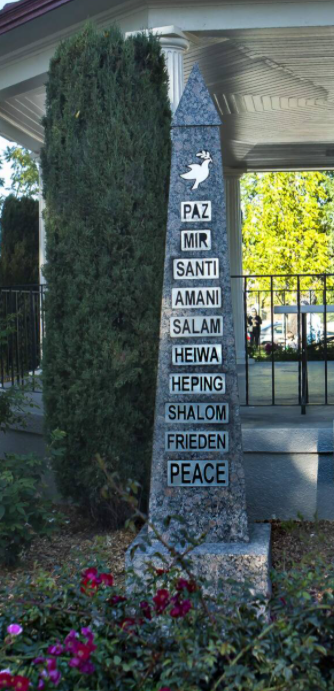
    Peace monument in Walnut Park, Petaluma, California

    Like many, I am worried about the future of America.

    I believe in the power of writing as a path to healing.

    If you are feeling overwhelmed and scared, please take a few minutes to write about your feelings.

    You can’t change what happened. You can change what you think.

    Today’s prompt is a hope and a chance for you to write about your thoughts and your feelings, as a way to start healing.

    For more prompts and suggestions for healing through writing, please consider reading the anthology, The Write Spot: Writing as a Path to Healing, available as a paperback and as an ereader through Amazon.

    Prompt: What are you afraid of?

  • Expect The Unexpected . . . Prompt #552

    Today’s writing prompt: Expect the unexpected.

    Marlene’s Note: I thought of this prompt, then remembered the photo from Susan Bono’s Inklings page on her website. They seem like a good match.

  • English as a First Language

    English as a First Language

    By Ken Delpit

    If I could learn a foreign language that I currently do not know all that well, I might choose English. That’s silly, you might say. You’re writing in English now. What’s to learn? This is a legitimate question. Allow me to explain.

    My comprehension of English is OK much of the time. I can get by. Once in a while, it may approach pretty good. In disturbingly frequent other times, though, even moderate fluency is sadly lacking on my part.

    For example, I would like to learn the English spoken by people whom I do not understand. Crazy as their thoughts might be when heard by my ears, I would like to hear those thoughts through theirs. Or, among everyday geniuses, when people reveal astute perspectives or brilliant insights, I would love to grasp the language that gave rise to those sparks. And for those cherished rescuers among us who are able to find the funny or the bright in the darkest of hours, I would be delirious to have that kind of language facility.

    But my deficiency goes beyond not comprehending the English used by others. Sometimes, I don’t understand it for myself. I can find myself searching hopefully, perhaps naively, for words that describe situations appropriately and accurately. And, too often for my liking, those words are nowhere to be found. I can be left slack-jawed, sometimes literally, when trying to express my own thoughts and feelings, whether subtle or extreme. Although the word “dumbstruck” is typically used to describe audience or reader, I confirm that the word can apply equally to speaker or writer.

    English is a wonderful and versatile language, a copious toolbox of practical and artful utensils, just waiting to be deployed in infinite varieties of forms, and for unlimited types of purposes. Would that I could know the adept English of all those who speak and write it well now. Even better, would that I could find a fluency of my own, a constant companion who helps me to express myself ably and naturally, no matter the circumstances. English As A First Language. Sign me up.

    Ken Delpit has been writing for quite a while, that is if you count computer programming and technical documentation as “writing.” Since leaving those professions behind, Ken has discovered an exciting new world of creative writing. He is now giddily exploring new devices, such as adjectives, subtlety, mystery, and humans with emotions and feelings.

  • Sankalpa

    It’s so easy to get caught up in our day-to-day busyness that we forget we have an inner spiritual core that is the basic strength for everything we do. What do you do to support this core?

    I recently learned about Sankalpa when experiencing a guided meditation class called Yoga Nidra/iRest with my friend and meditation/yoga instructor, Rhonda Gerhard.

    Guest Blogger Rhonda writes:

    Yoga Nidra is a meditation of self-inquiry. In the beginning of this practice, we ask ourselves: What is my Sankalpa (a heartfelt desire or intention) towards healing, strength, and wholeness?

    We welcome our unique Inner Resources—calling up peaceful places or protective and nurturing beings—so that we can draw on our deep inner knowing and loving-kindness. With continued practice, we build our resilience.

    Sankalpa means an intention formed by the heart and mind—a solemn vow, determination, or will.

    A Sankalpa is a way to refine the will, and to focus and harmonize mind and body. 

    Sankalpa is your heartfelt mission, said in a short phrase or sentence, clearly and concisely expressed, using a present tense “I” statement. It is said to ourselves in the present tense because it is in the now, as it is really only now all the time. This sustains your inner felt sense of purpose, meaning, and value.

    Note from Marlene: What is your Sankalpa? Can you form a Sankalpa to sustain your writing life?

  • Best Year of Your Life . . . Prompt #551

    If you could choose the best year of your life, what would it be and why?

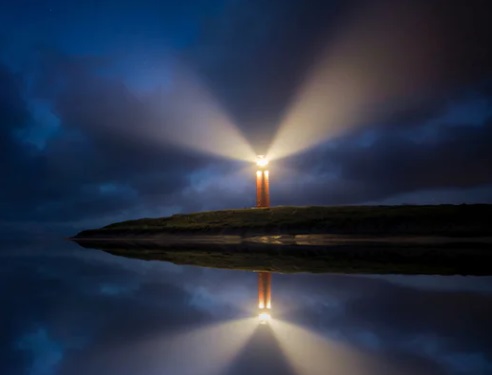
  • Be like a lighthouse.

    If you are writing the clearest, truest words you can find and doing the best you can to understand and communicate, this will shine on paper like its own little lighthouse. Lighthouses don’t go running all over an island looking for boats to save; they just stand there shining.—Anne Lamott, Bird by Bird

  • Graphic T-Shirt . . . Prompt #550

    If you were going to design a graphic t-shirt that explains you, or your fictional character, what would it say and what would the graphic be?

  • Choices

    Guest Blogger Nancy Julien Kopp wrote about choosing a path and exploring your choice. It seems like a perfect writing prompt for the start of a new year.

    Nancy wrote on her blog:

    Life is full of choices. I think often of Robert Frost’s poem that tells us of two roads diverging in a yellow wood, and the poet said he took the one less traveled by. But don’t we always wonder if this choice would be better than that choice or another one?  

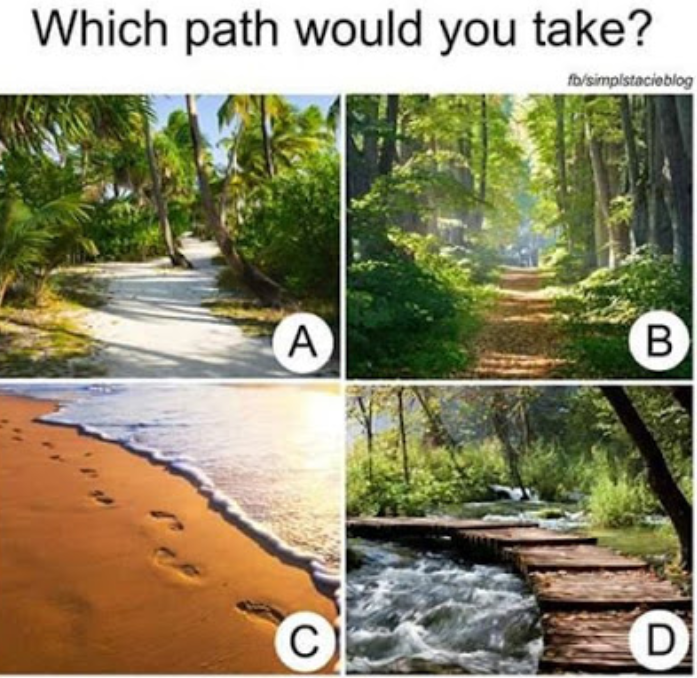
    For a writing exercise today, look at the four photos. Each of them is somewhere you can walk. Two have water while the others are filled with green trees. What is your choice? Where would you prefer to walk? A, B, C or D? 

    Choose one and write a paragraph or several paragraphs about the photo you liked best. Study the photo and ask yourself a few questions. What sounds are there? What is the weather like; air temp? Are you going to meet someone? Does a person appear coming toward you? Does the weather make a distinct change? Can you smell anything? Are you happy on this walk? Or are you despondent? Do you have a destination in mind? Or are you walking aimlessly? Are you hungry? Thirsty? Barefoot or wearing shoes? 

    Think about all those questions before you begin to write. Hopefully, you’ll end up with the beginning of a story, or even a piece of flash fiction. Or a bit of memoir. There is no limit to where you can go with this exercise. 

    If you enjoyed one, try another with the same questions and see what happens. Remember that writing exercises allow you to flex your writing muscles in any way you like. Let your creativity flow.

    Original post on Writer Granny’s World by Nancy Julien Kopp.

    Nancy Julien Kopp lives in Manhattan, KS where she writes creative non-fiction, fiction for children, personal essays, articles on the craft of writing, and poetry. She has been published in 22 Chicken Soup for the Soul books, newspapers, magazines, and ezines, and several anthologies including The Write Spot: Possibilities and The Write Spot: Writing as a Path to Healing (available in both print and as an ebook at Amazon).

    Nancy was the Kansas Authors Club Prose Writer of the Year in 2013.

  • Silence . . . Prompt #549

    Write about a silence. A silent night. A silent vigil.

    A quiet experience perhaps in a church or in nature.

    Or a calm experience, perhaps while watching a performance, or listening to music, or while watching children or animals or while walking.

  • The Lotus Flower Miracle . . . Prompt #548

    Before diving into writing, I’m inviting you to sit back, and relax. Take a deep in.  Exhale fully. Another deep breath. And exhale.

    Take some deep nourishing breaths as you read this prompt.

    Notice where there is tension in your body. Put your hand there, if you can. Or, put your thoughts there. Easily and comfortably think about what could be causing that discomfort.

    If you are not experiencing any discomfort, notice what you are thinking about.

    Going over, in your mind, the past few days, have you had a troubling conversation or a difficult interaction?

    For now, just notice these things. Set them aside, or make a quick list of these things.

    Staying as relaxed as you can in your body, read the first part of the prompt, which is inspired by Viktor Frankl. You have probably heard of him or you might be very familiar with him. He was an Austrian Holocaust survivor, neurologist, psychiatrist, and author. He was in four different concentration camp over the course of three years.

    He was the founder of logotherapy, healing through meaning.

    Quote from Viktor Frankl:

    “When we are no longer able to change a situation, we are challenged to change ourselves.

    Everything can be taken from a man but one thing: the last of the human freedoms—to choose one’s attitude in any given set of circumstances; to choose one’s own way.

    Between stimulus and response there is a space.

    In that space is our power to choose our response.

    In our response lies our growth and our freedom.”

    Prompt:

    Write about a situation that you would like to change, but you can’t. You can’t change what happened. And you can’t change other people.

    Write about what changes you can make . . . how can you change your thinking to bring about hope and peace?

    Brainstorm on paper about what you can do to change your perspective.

    Or: Write about what happened from the other person’s point of view, write from their perspective.

    Or: Write about something you survived, something you overcame.

    Or: Write a rant about how crappy, horrible, and awful something or someone is.

    Or: Write about what annoys you.

    Logotherapy

    Developed by Viktor Frankl, the theory is founded on the belief that human nature is motivated by the search for a life purpose; logotherapy is the pursuit of that meaning for one’s life. Frankl’s theories were heavily influenced by his personal experiences of suffering and loss in Nazi concentration camps.

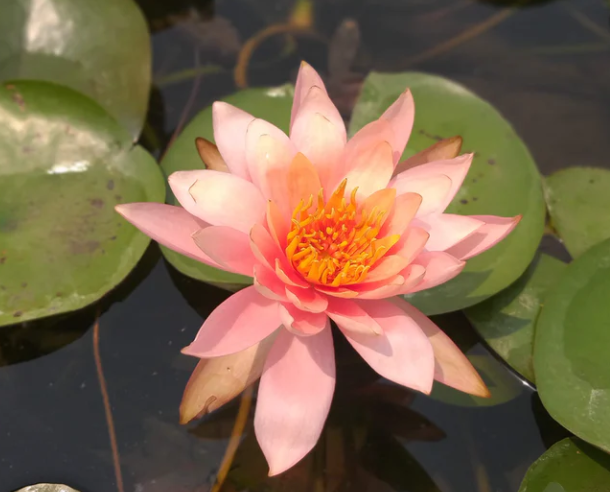
    Lotus flower

    The lotus has a life cycle unlike any other plant. With its roots latched in mud, it submerges every night into river water and miraculously re-blooms the next morning, sparklingly clean. In many cultures, this process associates the flower with rebirth and spiritual enlightenment. With its daily process of life, death, and reemergence, it’s no wonder that the lotus holds such symbolism.