Blog

  • Perfection vs Good Enough

    Guest Blogger, David Moldawer, is the author of The Maven Game. He writes weekly essays for writers.

    Perfection vs Good Enough

    Take the old quote:   Perfect is the enemy of good.

    Voltaire might have been the one to say it in this form, but the idea of “good enough beats unattainable ideal” has been around much longer. In fact, it warrants its own Wikipedia entry, if you’re curious to trace its history.

    However it’s expressed, it’s good advice for a writer. But is it perfect? (See what I did there?) I’ve often said, “remember, perfect is the enemy of good,” to people stuck in the trap of perfectionism, but over time I’ve come to question the effectiveness of simply saying the words.

    If you’re working on a solo project with no genuine deadline, more can be done to improve it. And even more. There is always a better solution to even the smallest creative problem in any work, whether or not you can find it in a reasonable amount of time. That simple fact can be paralyzing. In fact, I’d argue that while writers might not actually get “blocked”—nothing is truly in the way of getting words down—they can definitely be paralyzed by perfectionism.

    While I’m skeptical of the value of the adage—it’s never gotten me out of any ruts—I do find demonstrations of the good-enough philosophy motivating. They get me going when nothing else can. Seeing good-enough in action, it becomes just a little bit easier to inject a little pragmatism into your own work.

    I’ve written before about my love of the competitive forging reality show Forged in Fire and this is a part of it. When a smith accidentally snaps his blade in half with thirty minutes left on the clock, it’s inspiring to see a feat that took over two hours the first time somehow repeat itself in a quarter of the time with comparable results. A few minutes of an episode of Forged in Fire is often the kick in the pants I need to push through and finish instead of finesse.

    Another place I turn to for good-enough inspiration is the YouTube series Pitch Meeting. In it, writer/actor/comedian Ryan George portrays both a sociopathic studio executive and the manically productive screenwriter tasked with pitching him on his latest project. (He’s the writer behind all the big movies.) As the screenwriter explains what happens in the film, the exec can’t help but point out all the things that don’t make any sense, or that might annoy viewers, or that might be downright offensive. “Whoopsie!” the screenwriter cheerfully replies. “Whoopsie!” The exec repeats. And on they go to the next plot point. After all, they’ve got a movie to make.

    For over two years, George-the-screenwriter has pitched George-the-exec on dozens, if not hundreds, of movies.

    The beauty of the Pitch Meeting concept is that it forces you, the viewer, to grapple with the fact that a real writer and a real exec—at minimum—had to force their way through all the inconsistencies and logical fallacies inherent in a screenplay in order to get it made. It goes without saying that they solved many more than they ignored, but at a certain point, the originators had to say “whoopsie!” and leave it at that.

    Click here to read the rest of David’s “Whoopsie” essay.

  • Imagine receiving a greeting card. Prompt #455

    The last Just Write post talked about writing a messy first draft.

    Ready to start that messy project?

    Or continue with something you are working on.

    Here is a writing prompts to start the messy project:

    Writing Prompt: Imagine you (or your fictional character) received a greeting card in the mail. It can be from someone you know or a character you create.

    It can be from a celebrity.

    It can be sent to the wrong address.

    What does the card say?

    How does the narrator react when reading the card?

    What happens next?

    Just Write!

  • When the final product satisfies.

    Elizabeth Sims

    Whether you write fiction, non-fiction, poetry, songs, or whatever you write, this might help understand why the final product isn’t working.

    Excerpted from “Rough it Up,” by Elizabeth Sims, Writer’s Digest Magazine, February 2009,

    Get messy with your first draft to get to the good stuff. 

    As Ernest Hemingway famously said, “The first draft of anything is sh*t.”

    For years, I didn’t understand. When I started writing fiction seriously, I kept trying to get it right the first time. Over time, as I got rougher with my first drafts, my finished work got better and better.

    Why does a coherent first draft give birth to a stilted finished product?

    Because it means you haven’t let it flow.

    You haven’t given yourself permission to make mistakes because you haven’t forgiven yourself for past ones.

    Admit it: Unless your throttle’s wide open, you’re not giving it everything you’ve got.

    Creativity in writing isn’t a linear process, even though we read in a linear fashion and the words must go on the page one after the other; even though we must put our thoughts and words in order so the reader can make sense of them.

    Writing, in fact, is the only art that is literally one-dimensional.

    If you can be gut-level honest with yourself, you’ve really got a shot at your readers.

     And the only way to find that honesty is to not overthink it. 

    Consider your pen your paintbrush.

    For your writing to come alive — to be multi-dimensional — you must barter away some control.

    The rewards are worth it.

    Prompts to inspire writing.

  • Angry? Too nice? Prompt #454

    Congratulations on being here, taking time to do something for yourself.

    Sometimes the writing prompts on The Write Spot Blog are serious, sometimes fun, and sometimes instrumental in learning something about writing and learning about ourselves.

    You are always free to write whatever you want. The prompts are just ideas to get you started.

    If you are writing and run out of things to say, either repeat the prompt, or write “what I really want to say.” And go from there.

    When you read the prompt, write it down, and just start writing. Get rid of the editor that sits on your shoulder. Don’t think. Don’t overthink. Write whatever comes into your mind.

    The writing prompts are meant to encourage you to write what you really want to write (no judgement on good or bad, nice or not nice content).

    But what if what you really want to write isn’t very nice?

    I say . . . go for it. You can burn your writing or delete whenever you want. No one ever needs to see it. You are writing this for yourself. Not to entertain others.

    Is it okay to write about anger and being angry?

    This is from my friend Lizzie, who is a hypnotherapist:

    Anger is good because it’s energy IN MOTION.

    Depression is stuck energy and we rarely take action. We become bound to “this is how it is.” 

    Back to me: The opposite of being allowed our anger feelings . . . we’re taught to be nice.

    So, yeah, write about your feelings . . . anger, being too nice, or the fine balance of “just right.”

    From The Writing Diet by Julia Cameron:

    “I got a lot of mileage out of being nice,” says Benjamin, a composer. “Whenever I felt angry, I ate to stuff my feelings. I never expressed how I really felt. Instead, I used comfort foods to console myself. When I began using a journal, I found I could calmly and maturely express my anger. I may not be quite as ‘nice’ anymore, but I am a hell of a lot thinner.”

    Back to me: Anger is a spark that can be used as creative fuel. We can take our anger to the page and write our emotions. We write to tell ourselves the truth, and the truth may be that we are angry.

    Prompt: Write about being angry. Write about being nice. Write whatever comes into your head. Just Write!

  • Reflections after a year of travel

    Guest Blogger Alisha Wielfaert encourages us to work through the difficulties rather than be stuck in the mud.

    This excerpt is from her December 4, 2017 blog post, with her epiphany about her year of travel.

    The glowing orange moon rose over the cypress swamp as we drove home with tired limbs, hungry bellies and full hearts after a long day of kayaking. I had almost bowed out of this trip before it even started. 

    Maia called me on my last trip to DC before I left for Paris and said, “We’re camping at Carolina beach and taking a few of my students to kayak the three sisters swamp to visit some of the oldest cypress trees in the world.  Can you join us?”  

    Maia, full of energy and excitement, just isn’t someone you tell “no” even though I knew saying yes meant two days away from home after only 3 nights in my own bed. That’s how I found myself in a swamp in the middle of nowhere, NC somewhere near the coast.

    Sunlight streaked through the bare trees and flooded over us, floating on the water with two adventurous women. I reflected that this time last week I had been in Paris running next to the Seine then eating a bistro dinner. 

    It’s now December and I’m in a swamp with muddy, soaking wet shoes and socks because I just jumped out of a kayak to see, touch, and feel trees that are over 2500 years old. Older than Jesus.

    This self-proclaimed year of travel has been a wild ride. The backs of my eyes sting with tears I’m holding back as I realize that this year of travel adventures has ended.

    In addition to a touch of sadness, there is also extreme relief that these adventures are over because I’ve been spread thin more than when I was working a full-time job and running a yoga studio.  

    Reflecting on this through the cypress swamp I’m suddenly aware of the magnitude of everything I experienced in the last 12 months, and I’m emotional.  

    I’ve gained so much but also at a cost. I’m spent financially, relationships at home need tending, and I’m ready to give my new business my full attention.  

    I’m not ready to sum up the year just yet, there’s still too much to process and I need some space between the experience and writing about it.

    One of the biggest lessons of the year of the travel has been “too much of a good thing is still too much.”

    But if I had followed that lesson I would have said no to this camping trip and I would have got to rest at home, maybe even getting work done, but I never would have got to car camp at the ocean, and connect deeply with these men and women in the absence of many words while floating down a river and visiting 2500-year-old cypress trees in the middle of no-where.  

    While we were floating on the river, I realized that when you’re on the right path it feels like you’re being pulled and the current will carry you in the right direction.  Even if you do nothing you’ll at least be ever so slowly pulled in the right direction.  

    When you get off the right path you might find that you’ve landed on a sand bar alone and getting back into the current can be really difficult.

    When I worked in corporate America, I didn’t feel like I was moving. I was stuck in the mud.  

    I’ve had to claw and dig my way back to the current, to the right path, and now I feel like I’m being physically pulled in the right direction.  

    Looking back over this whole year I realize that as soon as I made my mind up to leave what didn’t serve me, I’ve been pulled in the right direction.  

    Frankly it’s not been a gentle process. It feels like I’ve been pulled through a class 5 rapids over the last 12 months and I’ve been hanging on for dear life trying to keep it together.

    But that’s a much better feeling than being stuck in the mud alone.  

    Meet Alisha Wielfaert

    I’m a leadership, life and creativity coach who specializes in working with women. I do this work because my purpose in life is to use my curiosity, empathy and listening skills to walk as a guide with seekers on paths towards clarity of purpose.  

    I’m the compass to point you towards your north to ensure you fully step into your own power.  

    I spent over a decade in corporate America in sales for an insurance company, a great company and a great career, but for someone else.

    I went about gathering tools, looking for the map and the compass to find my own north.

    I became a certified yoga instructor, taught yoga classes, opened a yoga studio and created a program to teach others how to share the gift of yoga.

    Yoga and the trainings I’ve received as a yoga teacher brought me closer to my calling, it gave me the map, but I wasn’t quite there.  

    After selling the yoga studio, I started leadership, life and creativity coaching.  

    For the first time in my life, I knew I could stop searching. I had my compass. This was the work I’d been put on this earth to do.  

    I coach individuals and groups, lead workshops to move you north of neutral, speak on topics to help others flourish, and lead retreats all over the world.  

    This work is my calling and it’s a gift to share it with you.  

    When we step into our power, we make the world a better place. Let’s shine our lights brightly together! 

  • NaNoWriMo-Is it for you?

    Have you heard of NaNoWriMo? National Novel Writing Month.

    “NaNoWriMo believes in the transformational power of creativity. We provide the structure, community, and encouragement to help people find their voices, achieve creative goals, and build new worlds—on and off the page.” —NaNoWriMo website

    “A month of NaNoWriMo can lead to a lifetime of better writing.” Grant Faulkner, founder and creator of NaNoWriMo.

    NaNoWriMo

    National Novel Writing Month began in 1999 as a daunting but straightforward challenge: to write 50,000 words of a novel during the thirty days of November.

    Each year on November 1, hundreds of thousands of people around the world begin to write, determined to end the month with 50,000 words of a brand-new novel — but that’s not all that NaNoWriMo is!

    NaNoWriMo is a nonprofit organization that supports writing fluency and education.

    It’s a teaching tool, it’s a curriculum, and its programs run year-round.

    Whatever you thought NaNoWriMo was, it is more than that. — NaNoWriMo website

    The following is excerpted from an article by Grant Faulkner, Nov/Dec 2016, Writers Digest magazine.

    “Wharton professor Katherine Milkman and her colleagues found that we’re most likely to set new goals around ‘temporal landmarks’: a birthday, a holiday, the start of a new semester—or a new month, such as National Novel Writing Month. These milestones create a new ‘mental accounting period’ (past lapses are forgiven, and we have a clean slate ahead of us) and prompt us to turn our gaze toward a better vision of what we want for ourselves and how we can achieve it.

    NaNoWriMo invites you to generate many new ideas—to rip through failures, learn from them and build on them.

    “I like to think of Nano-ing as excavating. You uncover different things at the 30,000-word mark than you do at 10,000,” says Erin Morgenstern, who wrote the rough draft of The Night Circus during NaNoWriMo.

    A sense of playful wonder is important for writing mastery, and NaNoWriMo teaches you to trust the gambols of your imagination, to test your ideas on the page. When you stop demanding perfection of yourself, the blank page becomes a spacious place, a playground. So what if your writing feels a bit sloppy? It’s just a first draft.

    NaNoWriMo gives you the opportunity to reflect on your writing, to understand what creative approaches work for you, and to develop the grit, resilience and can-do gusto of a true master.

    How to find time to write when you have no time.

    Need ideas for when your stuck? How about doing a 15-minute freewrite as a warm-up before your writing? You can use writing prompts for freewrites and they might just end up in your novel, or help you get your characters from Point A to Point B.

    Just Write!

  • New Delta Review

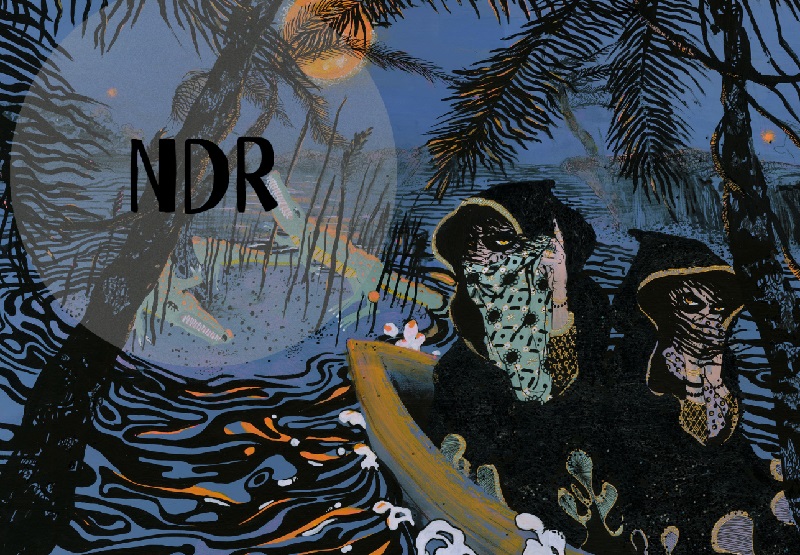
    New Delta Review is an online literary and arts journal produced by graduate students in the MFA Program in Creative Writing at Louisiana State University. Since 1984, NDR has published the work of emerging and established writers. Each issue includes original fiction, poetry, creative nonfiction, reviews, interviews, and artwork.

    “In our 30 years of publication, authors of international renown — Anne Carson, Billy Collins, Robert Olen Butler, J. Robert Lennon and Alissa Nutting, to name a few — have shared our pages with tomorrow’s literary stars. Our contributors are regularly included in anthologies such as Best American Short Stories, New Stories from the South, and Best American Poetry.

    As a journal we are committed to publishing underrepresented voices, and aim to foster diversity in our issues. Although we ask for a small fee for our general submissions, this fee helps us sustain and extend this practice into our community by hosting and supporting readings and other literary events.”

    Submit: Art, Digital Media, Reviews, Interviews, Flash Fiction and Photography Contest, Matt Clark Editors’ Prize in Prose and Poetry.

  • Changes and challenges. Prompt #453

    What are disappointment and disasters all about?  What is your first reaction when you hear or read disturbing news?

    Write about how you, or your fictional character, deal with changes and challenges.

  • Bookstagrammers & Influeners

    Hello from Marlene, host of The Write Spot Blog,

    I originally read the post below by Julie Valerie on Anne R. Allen’s Blog with Ruth Harris.

    Today’s guest blog post is longer than my usual posts. Take it in small bites. There is a lot of content here. All good stuff.

    I learned so much I didn’t know about things such as bookstagrammers and influencers (the book kind).

    Guest Blogger Julie Valerie:

    From Book Blog to Book Deal

    Julie asks: Does a book blog still land a book deal?

    Of course they do. Great writing and great content will always find an audience, and where there’s an audience, especially a sizable one, there’s typically a book deal waiting to happen. Think Julie Powell, Candice Bushnell, Jen Lancaster, and Jenny Lawson.

    Not to mention, entire empires (with books launched along the way), have been built on the humble foundations of blog sites that just wouldn’t quit. Think ProBlogger’s Darren Rowse and Content Marketing Institute’s Joe Pulizzi.

    Getting Visible is an Uphill Battle – Bookstagrammers and Influencers

    For published and unpublished writers, whether traditionally-published, hybrid, or self-published, it’s often an uphill battle to garner attention for our work.

    Working with influencers such as book reviewers, bookstagrammers, and book bloggers is an excellent way of reaching both a wider audience as well as an audience that may lead to signing with an agent or landing a traditional book deal. (If this is something you are seeking, not all authors share the same goals.)

    Many authors invest considerable time networking with book influencers. Some have worked to build influence and audiences for their work by becoming professional book reviewers, bookstagrammers, and/or book bloggers.

    Julie is one of those authors.

    How Her Book Blog Worked For Julie

    Though I do work closely with bookstagrammers now that the first book in my Village of Primm series is releasing with Lake Union Publishing December 2019, I do not have professional experience as a bookstagrammer. 

    Note from Anne R. Allen: Bookstagram is a book-related platform on Instagram. Here’s more info on becoming a bookstagrammer.

    Back to Julie: As a former book-reviewing book blogger, I reviewed 200+ books in my genre while writing my debut novel, seeking an agent, and signing with a publisher.

    Technically speaking, I was not “discovered” solely because of my book blog, though many authors have been. I did, however, cite my work as a book reviewer and book blogger in the query letter that ultimately led to signing with my agent.

    And I believe the body of work I produced on my blog over the course of many years helped with that. So did the audience I built and the network of fellow writers I nurtured, as well as the market research and knowledge I acquired reviewing 200+ books in my genre. They helped to strengthen my credentials as an author in today’s competitive book publishing industry—whether I had pursued a traditional or indie path toward publishing.

    I signed with an agent who sold my women’s fiction series to a publisher based on the merits of the manuscript, at the time, I was an unpublished writer.

    Having that book blog demonstrated I could meet deadlines, produce a lot of writing on a timely schedule, and sustain a writing life that not only built readership (very important) in advance of the first book, but also one that built relationships with other writers.

    When You Have to Step Aside from Your Book Blog

    Unfortunately, I had to give up my book blog in 2016. The development of the Village of Primm series, coupled with the launch of the 85K Writing Challenge, led to a redesign of my work life.

    I miss my book blogging days.

    But I do produce steady content for my author site at julievalerie.com, including a monthly author newsletter, and I will continue to do so for as long as I’m in the industry. I feel it’s a necessary part of conducting business.

    Why Bother with a Blog or Website?

    There are many benefits of hosting your content on your own website. One, unlike content shared on social media, what you write on your site isn’t fleeting and isn’t bound by the rules of someone else.

    Two, you own that content – not so with content published to Facebook, Instagram, and Twitter.

    And three, as long as you keep your domain name and web hosting services active, no one can pull the plug on what you want to present to the world. Your author site is your space, your portfolio, your home.

    If you’re pursuing a publishing contract, be mindful of copyright law before publishing excerpts of your unpublished work. A publisher may consider what you post as already “published” and in the public domain.

    Was book reviewing and book blogging a lot of work? Yes, it most certainly was.

    Was it worth it in the end? Absolutely. But enough about me.

    Let’s Talk about You

    I’m here to share a broad overview of the “influencer” sector of the publishing industry so that you can decide how best to proceed according to your goals. Who knows where your work in this sector of the book industry might lead you?

    Are you interested in reaching readers, building name recognition, increasing awareness of book titles, and driving sales? Of course, you are. Who wouldn’t be? But how does an author do that? Let’s drill down, starting with why any of this should matter to you.

    Should You Start a Book Blog or Become a Bookstagrammer?

    What are the benefits of working with or becoming a book blogger or bookstagrammer who posts book reviews?

    Though the what, the why, and the how of book reviews, bookstagram, and book blogs differ slightly, what they all have in common is their exceptional ability to reach an author’s end consumer, whether that end consumer be agents, publishers, other industry professionals, or the most coveted end consumer of all: readers.

    Many authors have enjoyed careers that skyrocket after receiving coverage in the book review, bookstagram, and book blog ecosystem. And many writers, while writing their first novel, have gained meaningful access to the book industry through their work as a book reviewer, bookstagrammer, and/or book blogger.

    Book reviews, bookstagram, and book blogs are important constituents within the book industry because they offer authors the opportunity to attract attention that:

    • builds name recognition
    • raises awareness for book titles, and
    • drives sales

    How Does an Author Maximize these Opportunities?

    Start by considering the people behind the book reviews, bookstagram, and book blogs as well as the role those people play as influencers in a crowded book market.

    A great place to start is understanding influencers and influencer marketing.

    What is an Influencer?

    An influencer is anyone who uses their knowledge, authority, social position, audience, or relationship with others to affect the decisions of an audience.

    Types of influencers:

    • celebrities
    • industry leaders
    • industry experts
    • thought leaders
    • content creators
    • journalists
    • book reviewers
    • bloggers
    • micro-influencers
    • social media mavens
    • vloggers, podcasters, booktubers, etc.
    • other authors

    Celebrities are typically considered the original influencers. They play an important role within the book industry, especially celebrities with book clubs. They carry a lot of clout due to their large, already established, and loyal fan base, which helps to move the needle on sales.

    Industry leaders, industry experts, and thought leaders are often executives, brand or genre specialists, and often work for publishing companies, trade publications, professional organizations, and the like.

    Content creators and journalists provide a steady flow of information consumed by broad audiences.

    Book blog reviewers, bloggers, micro-influencers, social media mavens, vloggers, podcasters, and booktubers all fall under the focus of this discussion but differ from the above types of influencers due to their unique ability to speak directly to their audiences with peer-to-peer “voice,” which lends authenticity to their influence through active, often daily interactions with their fan base. With these types of influencers, fan bases are treated as a wide web of interconnected friends.

    Because of this “extended conversation with friends” and the unique blend of highly niche book chatter and its resulting word-of-mouth book recommendations, agents, publishers, industry professionals, authors, and most certainly, readers, take notice.

    I have experience as a book reviewer and book blogger and would love to share a few insights with you.

    The Inside Scoop on Working with Book Influencers

    1. Know what you’re asking. 

    The behind-the-scenes life of a book influencer is hard, time-consuming work.

    When seeking a book review on either Instagram, a book blog, or some other media like a podcast, vlog, or booktube, keep in mind you are asking someone to commit about five to eight hours of their life to you.

    I estimate it took me about four to six hours to read the book, about an hour to write a thoughtful review, and then another hour creating a blog post, scheduling social media to support that blog post, and then finally, uploading the book review to the various book review sites. And that doesn’t count time spent monitoring the published post to engage with readers in the comment section.

    Taking all of this into consideration, what are my tips?

    Be courteous. Submit all materials in a timely manner. Remember to thank them, share their coverage on your social media channels, and be sure to engage with their readership in the comment section of the post.

    2. Research first.

    No one likes a cold call. And it’s frustrating when someone asks you to review a book from a genre you clearly don’t cover. It shows they took no time to get to know you, your work, and your audience.

    My first name is Julie. My last name is Valerie. I make this distinction clear on my website and sign off on all emails as simply “Julie” (with a notation in my email signature that clarifies my first and last name).

    But there was one author who kept swinging by my site whenever she had a book release, asking for coverage (remember those five to eight hours I described above?), and she simply could not stop referring to me as if my first name was Valerie. Now, I typically don’t care if you get my name wrong. Truly. (It happens all the time.) But this one particular author really bugged me. It seemed selfish on her part. Not to mention unprofessional.

    If you’re asking someone to devote possibly eight hours to your book, and you’re asking someone to share your book with their readers, please, spend meaningful time researching their platform, don’t send a form letter, do nurture the relationship, and for goodness sake, get the person’s first name right.

    Some tips: Start by interacting with their platform. If they’ve posted something you enjoy, leave a comment, or consider sharing their post with your audience on your platform (author Facebook page, Twitter, Instagram, your website, etc.). Get to know them as people. Try to establish authentic, meaningful connections. Some of my closest friendships in the book world are with book lovers that are not authors or writers, but rather, people who love the written word as much as I do and seek to connect readers with great books.

    3. Don’t show up only when it suits you.

    Here’s a novel idea: be present and participate in conversations when your book isn’t launching or in promotion. I think most people understand if there’s a spike in your activities around the time of your pub date or promotion, but if you’re nowhere to be found in the “off-season” and if you don’t support others when it’s their time to shine, people will sense your interest might be a little one-sided. By the time my first book will be released, I will have spent seven years participating full-time in the book community. Seven years.

    My tip? Always remember that more often than not, it’s not about you. It’s about someone else. So help each other out. Celebrate. Do onto others. You know, that stuff you learned in kindergarten.

    4. Tips on how to ask.

    Be polite. Write a courteous, personalized letter addressing them by name (the correct name.) Write a few sentences that either reflect your current relationship, or, if your query is the attempted start of a working relationship beyond baseline social media interactions, then include a few sentences that indicate you know who they are, what they do, and what they are seeking to cover on their platform.

    Include enough information about your book to help them decide if it’s a match for them and their audience. If they indicate a preferred format (ebook, paperback, etc.), try your best to accommodate them. If you can provide a signed book giveaway (or similar), say so. Also, indicate if you can answer interview questions and the like.

    Note from Anne R. Allen: And here’s a post on how NOT to query a blogger.

    5. Be prepared with a complete media kit. 

    Some items to include in your media kit: book cover, jacket copy, early endorsements, an excerpt if available, publisher name, pub date, buy links, author press photo, author bio, social media links, and a subscribe link to your author newsletter. The goal here is to anticipate ahead of time and then gather in one place everything that book influencer may need.

    6. Follow up and work to maintain the relationship.

    After coverage of your book goes “live,” thank the influencer in the comment section of the post. Keep an eye on the comment section of the post so that you can interact with the influencer’s audience (when appropriate and with proper etiquette).

    Be mindful of the valued and very important relationship the influencer has with their audience. If you’re a guest on their platform, then please, first and foremost, be friendly, be active, and be kind and considerate to the influencer’s audience.

    That’s a Wrap!

    I hope you found this discussion about book reviewers, bookstagrammers, and book bloggers useful. I’ve always felt that through the work of these influencers, authors have great potential to reach agents, publishers, industry professionals—and especially, readers.

    I hope you’re having a great day and I wish you every success.

    So what do you think, scriveners? Do you have any tips you’d like to share about reaching book influencers? Julie would love to hear what you found helpful and she’ll answer any lingering questions you may have. Did you know about the importance of bookstagrammers? 

    For more on how blogging can lead to big success in the publishing industry, see Anne R. Allen’s post on How Blogging Leads to Many Career Paths.

    Julie Valerie writes upmarket contemporary women’s fiction and is developing a series set in the fictional Village of Primm.

    Her debut novel, Holly Banks Full of Angst, Book One in the Village of Primm series, publishes December 2019 as part of a multi-book deal with Lake Union Publishing.

    A voracious reader, Julie has reviewed 200+ books in her genre, won the BookSparks 2015 Summer Reading Challenge Grand Prize, and founded the 85K Writing Challenge (85K90.com), providing writers with a supportive, enriching forum to pen 85,000 words in 90 days followed by 12 months of writing, editing, prepping to pub, and publishing support.

    With a master’s degree in education and a bachelor of fine arts degree in fashion, Julie earned an editing certificate from the University of Chicago Graham School and enjoys testing her knowledge of the Chicago Manual of Style. Connect with Julie at julievalerie.com. On Facebook and Instagram  @JulieValerieAuthor. On Twitter and Pinterest @Julie_Valerie.
  • Weather. Prompt #452

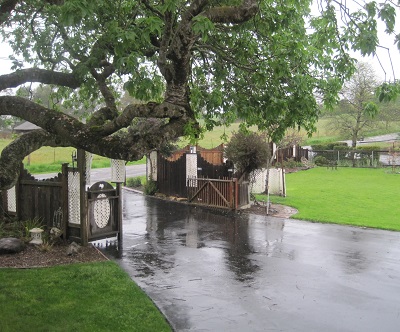
    Photo by Marlene Cullen

    Strangers do it. Neighbors do it. Friends do it. We all do it.

    Talk about the weather.

    Now, write about it.

    Write about how weather affects you.

    What is your favorite type of weather?

    Does weather play a small or large role in your life? How? Why?

    Write about weather.

    Me? I like rain, as long as I don’t have to be out in it.

    Photo: View from my front porch on a lovely rainy day.