Blog

  • Guest Blogger Cara Wasden

    Today’s Guest Blogger, Cara Wasden, writes about the value of story-telling and listening.

    One day our [Toastmaster’s] club president emailed members asking if anyone would be interested in volunteering for one hour at a seniors community. She said administrators wanted to set up a Table Topics session for their residents.

    I thought, “That sounds like fun, and it’s only an hour!”

    I signed up and headed over to the seniors complex the following week. I was immediately introduced to Albert, Larry, Terry, Shirley and Joan, and I became fascinated by their world of living history.

    I loved the stories they shared that day. Albert recalled a harrowing time for his family more than 50 years ago, as they awaited hearing whether his lottery number would be called in the Vietnam War draft.

    Terry talked about his career as a professional photographer on an African safari.

    Larry shared how he recently bought a stranger lunch—an act that was out of character for him.

    Joan spoke about her terrifying experience being stranded at an airport as a child.

    What particularly stuck with me was what Albert told me after the session. “Joan never talks. That was so special to hear one of her stories.”

    I knew right then that Table Topics with seniors shouldn’t be a one-time event. I offered to return the next week if they were interested. That was three years ago.

    Today, there are ten regulars; others come and go. Some have passed away, and tears have been shed.

    “We have become a family,” a sweet woman named Pat says regularly.

    When people get into their 70s, 80s and 90s, they have a lifetime of heartwarming, humorous, and cherished stories to share, but they often don’t have anyone willing to listen. If I hadn’t stuck around, I would have missed the truly beautiful love story of Charles and Charmaine.

    Charles is 95 years old, and the couple had been married for 75 years. Charmaine passed away a few months ago. Charles has spoken over and over again about his one true love, and of their continuous honeymoon at their home in Hawaii, where they frolicked in the waves sunbathing and skinny-dipping.

    The best part of this opportunity is that residents feel listened to. They feel loved. They laugh and they hear laughter.

    Some residents have lost most of their cognitive abilities, so their contributions are more from the here and now. Whatever question Pat gets, she always says, “I love it here, just being surrounded by all of you!”

    When Gerry speaks, her stories often don’t make much sense, but she has such variety in her voice and facial expressions that her body language is enough to keep us fully engaged.

    Every week that I’m at the seniors community, I also feel listened to, loved, and rewarded with a gift of smiles and laughter.

    Excerpted from “My Turn,” Toastmasters International, August 2019

    Cara Wasden is a member of the Toast of Petaluma club in Petaluma, California. She is a public speaking coach, a middle-school speech teacher and a tour guide for nature hikes with kids.

  • Random Phrases . . . Prompt #440

    Choose a phrase and write whatever comes up for you:

    You can’t move forward from a stuck place.

    Let go of perceptions.

    Acceptance.

    If you are not part of the solution, you are part of the problem.

    What matters?

    Learn to let go.

  • Tapestry of Fortunes Inspired . . . Prompt #439

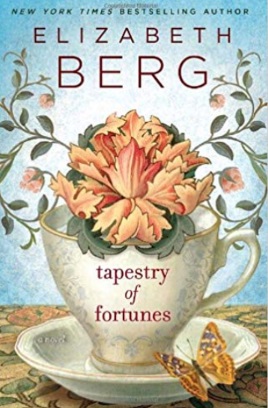
    I’m spending this summer re-reading Elizabeth Berg’s books. Perhaps I’m trying to recreate the summers of my pre-teen years. After morning chores, afternoons were mine to do what I wanted. I walked to the library every Saturday and checked out an armload of books. Starting with the letter A in the children’s section, I worked my way around the room. I don’t remember what letter I was on when I abandoned the children’s section for adult fiction, upstairs in the grand and austere room, seeped with old-world charm, burnished wood stair railings, mahogany wainscoting, heavy oak chairs, and of course stacks and stacks of books. Those were the days of hushed voices and the librarian whispering shhhhh, pointer finger over pursed lips.

    This summer, I’m enjoying the cool breeze from a portable fan while Berg’s characters march and dance through my head.

    Here is an excerpt from Tapestry of Fortunes from pages 7 and 8:

    {The main character, Cecilia Ross, is a motivational speaker. She is Atlanta in this scene, at the Oshaka Women’s Club.)

    “I’m standing at the window in the speaker’s room and looking through the slanted blinds at the women gathered on the lawn, chatting amiably, laughing, leaning their heads together to share a certain confidence. They’re pretty; they look like so many butter mints, dressed in pastel greens and pinks and yellows and whites. It’s a warm spring day after a rainy night, and the women who are wearing high heels are having trouble with them sinking into the earth.

    A fifty-something woman wearing a yellow apron over a print dress comes into the room holding a little gold-rimmed plate full of food: tea sandwiches, cut-up melon, cookies. ‘I have to tell you, I am really looking forward to hearing you speak. I hope you won’t mind my telling you this, but you said something in your last book that truly helped change my life: Getting lost is the only way to find what you didn’t know you were looking for.’”

    Prompt: Write about something you have looked for.

    Or write about getting lost in order to find what you were looking for.

    Or write about a warm spring day.

    Links to “Lost” writing prompts on The Write Spot Blog:

    Write about a time you were lost. Prompt #60

    Something lost or stolen from you or from your fictional character. Prompt #321

    Something that was lost or stolen. Prompt #326

    You can also write on any of the photos that accompany these writing prompts.

  • Interim Online Journal

    Interim seeks writing that engages the perilous conditions of life in the 21st century as they pertain to issues of social justice and the earth, writing that demonstrates an ethos that considers the human condition in inclusive love and sympathy while offering the same in consideration of the planet.

    Because we believe that the truth is always experimental, we especially appreciate work with innovative approaches.”

    Submissions are welcome from 1 June-1 September and from 1 December-1 March.

    “We appreciate your continued interest and support and look forward to spending time with your work.”

    Submissions end September 1, 2019:

    Poetry

    Essay

    Translation [Poetry and Essay]

    Artwork

  • The mind can’t tell the difference . . .

    Today’s guest blogger is the extraordinary Brad Yates, Emotional Freedom Technique Tapping (EFT) instructor.

    Reposted from his 8/19/2019 Email.

    Reviewing the Past

    In spite of all the encouragement to live in the present or focus on the future, most of us are likely to still spend a fair amount of time reviewing the past. And, more often than not, the moments we dwell on are not necessarily the highlights.

    It’s normal … but it isn’t without cost. Because the mind can’t tell the difference between something that is real and something that is imagined, just thinking about past troubles triggers the same chemical reactions and the same uncomfortable feelings.

    Given that we create our reality based on what we are feeling, you can see where this could be problematic.

    Each time we go through those unpleasant experiences, we hardwire those memories and feelings more firmly, making it more likely we’ll keep recreating the same kind of stuff. This phenomenon can be positive if you focus more on past victories, but that’s not what most of us do.

    Don’t worry… I’m not going to suggest that you force yourself to never relive past moments. That would be a pretty tall order. But I am going to encourage you to do a certain something when you find yourself playing those old tapes again…

    Tap. (I know… big surprise.) 😉

    When you tap, you are reducing the stress response. When you tap while reviewing a past memory, you can remove the uncomfortable feelings.  As you clear those away, it becomes safer to remember those events, because they will not cause you the same – if any—distress. No more negative vibes being put out into the cosmos. 

    In this way, you can change the past. You can’t change the events (as far as I know… but we don’t yet have all of quantum physics figured out) – but you can change your response to them. And it’s only your response to events —the thoughts and beliefs you have about them—that causes distress, not the actual events themselves.

    Tapping while reviewing past events helps you unlock the emotional patterns, giving you the freedom to reconsider what happened, and look at other possible meanings. 

    You can even decide to manufacture a positive meaning – something more empowering.

    (Note: you don’t owe it to anyone to stay stuck in a negative interpretation.)

    As you might imagine, this works as well with envisioning the future. When we think of possible future events with a negative expectation, we are stirring up the same toxic cocktail of chemical as when we dwell on past misfortunes. Again, tap when you find yourself doing this. Create the freedom to give yourself permission to imagine and anticipate great outcomes, then bathe in those good feelings. This definitely increases the likelihood of positive results.

    Be mindful of the kind of energy you are putting out there – it comes back. Give yourself the freedom to feel good and think more positively while reviewing the past and imagining the future.

    Change your mind, change your vibe. Change your vibe, change your life.  😊

    Thanks for reading! Please let me know how I might be of further service as you clear emotional pain and embrace the joyful success you so richly deserve!
    Be Magnificent! Brad

    Basic Recipe of EFT (Emotional Freedom Technique) by Brad Yates

    The tool I primarily use in guiding folks to greater personal freedom is Emotional Freedom Techniques (EFT) – also commonly known as Tapping.

    It is a remarkable healing modality based on the same principles that have been used for thousands of years in acupuncture—but without the needles. EFT has been reported successful in thousands of cases covering a huge range of emotional, health and performance issues. It often works where nothing else does.

    Best of all, anyone can learn and use EFT in a relatively short amount of time, and achieve great results in relieving stress and other uncomfortable feelings.

    Brad Yates is known internationally for his creative and often humorous use of Tapping/EFT (Emotional Freedom Techniques).

    EFT is a very flexible process and there are many ways to use it.

    www.TapWithBrad.com

    Write Spot blog posts to help when writing about a difficult topic:

    How to Write Without Adding Trauma    

    Why Write Your Story


  • Comfort Zone . . . Prompt #437

    Comfort zone – write about a time you were out of your comfort zone.

  • Freewrites: Opening Doors to Discoveries

    Notes from Marlene Cullen’s talk about freewrites. Scroll down for links about how to use freewrites and how to write about difficult subjects without adding trauma.

    I gave a talk about freewrites at the Redwood Branch of the California Writers Club. I’m sharing my notes so you, too, can enjoy the freewrite method of writing.

    I love freewrites because they are so . . . freeing. Freewrites can open doors to discoveries.

    I was thrilled to discover freewrites, unlike short story and novel writing, this was something I could do. I hope these tips help make your freewrites fun and successful in inspiring your writing. 

    What is a freewrite?
    A freewrite is writing spontaneously with no thinking. Just putting down word after word, with no worries about spelling, punctuation, how it will sound, and no worries about the final product.

    Sometimes when you are engrossed in your writing project and the writing is coming easily . . . that’s like a freewrite. The difference is that, with a freewrite, there is no end goal in mind.

    With a freewrite, you can write about what happened to you, what happened to someone, else, or you can write fiction, poetry, whatever comes up during a freewrite is fine. . . as long as you keep writing and don’t stop to think. Thinking is bringing the editor in and this isn’t the time for editing nor censoring.

    Sometimes, with a freewrite, it’s the process, not the product.  

    Freewrites can be used to understand and work out things that are puzzling or disturbing or annoying. Sometimes it helps to write about something in order to understand it.

    One way to start a freewrite is to use prompt: A word, a line from a book or a line from poetry and write from there. You can also use a visual item as a prompt.

    One of the things I like about freewrites is the freedom to write whatever you want about any topic. Ideally, with no worries about what your writing sounds like . . . no worries about the outcome.

    If you don’t want anyone to read what you’ve written, you can destroy your writing. Or you can save it in a secret place. But you have to remember where that secret place is!

    Another thing I like is that since freewrites are very rough first drafts, it doesn’t matter what the writing is like . . . it can be fragments, or unrefined ideas, or mental doodling set in writing.

    The challenge of freewrites is getting out of the way of yourself.

    During a freewrite, let your writing flow with no judging.

    What about that inner critic that we all have?

    When you are in the zone . . . in the groove of writing . . . there is no space for the inner critic to hang out.

    With freewriting, it’s just you and your creative mind playing with words.

    Let go of your worries about your writing.

    If you can talk . . . if you can think . . . you can do a freewrite.

    One way you can use freewrites is to get past roadblocks in your writing . . . whether fiction or non-fiction.

    If you are having a problem transitioning from one scene to another, or you are having trouble getting a character from Point A to Point B, do a freewrite.

    As you begin a freewrite, relax your mind . . . have no expectations about the outcome. This is play time.

    It’s the “What if?” game. What if this happens or that happens? What if your character says or does this or that? Play around with the possibilities.

    You don’t have to use any of your freewrites in your final scene. But you may generate ideas that you can use. Be open to the possibilities.

    How to be successful with freewrites.

    Let go of your ideas about what perfect writing means.  Give yourself permission to be open to whatever comes up during a freewrite.

    You can think of freewrites as making discoveries.

    Take deep breaths as you begin and then relax into your breathing and let the writing happen.

    When you are writing in this free style, you are not writing for an audience. You are giving yourself the gift of writing for yourself.

    During a freewrite, immerse yourself in your writing. Write at a place and a time where you won’t be interrupted.

    Let go of your worries and just write.

    Write to satisfy your desire to go to a meaningful place in your writing. You get to decide what that means.

    During a freewrite you can go deep into the recesses of your mind and really write.

     It’s okay to start with gut level feelings or to get to gut level feelings. It’s okay to go for the jugular as Natalie Goldberg says

    As you write, you might notice discomfort, especially if you are writing about an uncomfortable experience or about a difficult memory.

    When that happens, gently put your hand where you feel the discomfort. If you can’t put your hand there, put your thoughts there . . . your loving, caring, patient thoughts.

    When you are feeling uncomfortable, you can either stop writing and come back to it later. Or, work through it.

    To work through it, have a focal point, something you can look at that will remind you to breathe deeply.

    If you know you are going to write about a difficult subject, have a plan before you start writing.

    When the writing gets tough: Look out a window. Walk around. Look outside. Take a sip of water.

    When writing about a difficult subject, let the tears come, let your stomach tie up in knots. It’s okay to write the story that is challenging.

    Get through the barriers to go to a deeper level.       

    See your story and tell it.

    This is a lot of information. Let’s take a deep breath.

    More ideas for successful freewrites:

    When you are writing, if you run out of things to say, write down, “I remember. . .” and see where that takes you.

    Or write, “What I really want to say . . .” and go from there.

    Writing Prompt

    Let’s try a type of freewrite now.

    Get comfortable.

    Relax into your chair.  Both feet flat on the floor.

    Rotate your shoulders in a circle. Opposite direction.

    Rotate your head in a circle. Opposite direction.

    Bring your shoulders up to your ears. Let them down with a harrumph sound.

    Escort your inner critic out the door. Shoo! Good-bye.

    Give yourself permission to be open to whatever comes up.

    Take a deep breath in. And let it out.

    Go back in time to when you were 4 or 5 or 6 years old. See yourself at this age. Perhaps you can see a photo of yourself at this young age.

    Now, we’re going to travel up in time, starting with a memory of when you were 4 or 5 or 6.

    As we do this, pause when you feel energy. You might feel a flutter in your stomach. Or a tightening in your jaw. You might feel a constricted throat. Notice as you travel through your memories where you have a physical reaction. Stop there. Pause. Think about that time. If you want, you can put your hand on the place on your body where you feel this energy. If you can’t put your hand there, put your thoughts there.

    Deep breath in. Let it out.

    See yourself when you were twelve.

    Another deep breath in. Release. Let go.

    See yourself at 16 or 18.

    Remember when you were a young adult, early twenties.  Mid-twenties.

    Choose one of the memories you just thought about that brought a strong physical reaction. The reaction could be joy, pain, pleasure, or discomfort.

    Choose one event, or experience, and think about what you were like before this event happened. Then the pivotal event happened and you weren’t the same after.

    Drill down to the precise moment the pivotal event happened.  Look closely, like looking through a microscope or a telescope.

    See the details of where you were, who was there. What happened?

    Write about it now . . . Freely . . . with no thought of the outcome. No plan to ever share this writing. Just write.

    When you are finished writing.

    Breathe. Take a deep breath in. Release your breath. Shake out your hands. Stretch.

    Take a moment to transition from writing to being back in the room.

    LINKS

    What is a freewrite?  Why should you do it? How is it done?

    Get Started. How to use writing prompts.

    Don’t think. Don’t plan. Just write.   

    Don’t think. Don’t plan. Just write.   

    More about freewrites.

    How to write without adding trauma.

    Writing about difficult times.

  • Write Your Story. Prompt #436

    An article in the Mail Tribune, Medford, Oregon, September 14, 2006 described how Betty Henshaw wrote about her childhood in the Oklahoma hills and her family’s move to California. 

    Author Sandra Scofield read a collection of Betty’s work and said her history needed to be in the hands of a university press. Texas Tech University Press published her story and Betty did a book tour in 2006.

    Here’s an excerpt from that newspaper article.

    “The family hired an auctioneer and sold their cows, horses, pigs, chickens, farm tools, the potatoes in the barn and the home-canned fruits and vegetables. Mama kept her sewing machine.

    The next morning I helped herd the younger children into the truck before first light.

    Daddy and Robert had placed a feather mattress on the pickup bed. The babies crawled to the back, grabbed a pillow each, and rolled up in quilts.

    Sadness washed over me when we drove past the high school that morning.

    There’s an old tradition that Okies were supposed to sing and holler when they came over the 3,793 foot Tehachapi Pass near the south end of the Sierra Nevada.

    Mama said we were too tired to holler.

    It was a hardscrabble life. Laundry was done with a washboard after heating water in a kettle, and hung on an electric fence to dry. Sunday dinners might be beans and cornbread and fried green tomatoes. My sisters and I wore dresses Mama made of flour sacks on her Grandma Bristol’s old Singer sewing machine.

    Mama and my grandmother picked cotton to buy that machine.

    Today the machine sits in a place of honor in my living room, a piece of the past contrasting with the computer on the desk at the other end of the room.

    “It was hard,” Betty says, of leaving Oklahoma, “I left behind a part of myself.”

    Prompt: Write about your history, either fact or what you imagine could have happened. Or write about a something you inherited.

  • Write what is hard to admit. Prompt #435

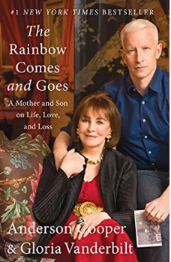
    “You don’t grow up missing what you never had, but throughout life there is hovering over you an inescapable longing for something you never had.” — Susan Sontag, excerpted from The Rainbow Comes and Goes by Anderson Cooper.

    Anderson Cooper continues:

    “As a child, you generally aren’t aware that your family is different from any other. You have no frame of reference.”  

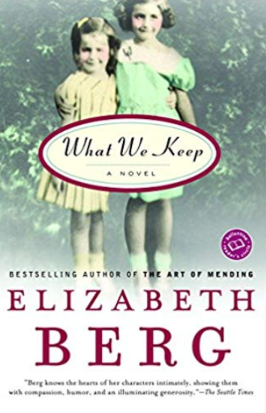
    The following is excerpted from What We Keep by Elizabeth Berg.

    “I am thinking of how right he was when he said that people want to be deceived. I have learned the truth of that notion over and over; but I never admitted to its obvious presence in my own life. After all, I claimed I did not need my mother. I said I had replaced her.”

    Prompt: Write about something you have been unwilling to admit or something you have been deceiving yourself about.

    Note: No one has to see your writing unless you share it. You can write and destroy your writing if it feels too personal to leave on paper, or delete on computer.

    Write Spot blog posts to help when writing on a difficult topic:

    How to Write Without Adding Trauma

    Why Write Your Story