Tag: Brevity

  • Do Not Be Afraid to Write What You Know

    Memorable writing that sparks imagination. Lean in. Hear the writer’s voice on the page.

    Do Not Be Afraid to Write What You Know

    By Mashaw McGuinnis 

    An acquaintance of mine texted after reading some of my novel-in-progress. “Don’t try so hard with stereotypical language and trailer park folks . . . I don’t buy it.” I wanted to disappear into the furniture, but instead I texted back a bumbling explanation that I wasn’t trying too hard, that the people in my stories are the people that I know, and I know them well.

    I always dread sharing my work because my middle-class friends never believe me when I say my characters, experiences, and vernacular come directly from my own dysfunctional, lower-class upbringing.

    By “lower class,” I mean more than low income or under-educated. I was raised by Dust Bowl migrant grandparents. Two generations back, only one had more than a seventh-grade education. Californians called them “Arkies” when they’d arrived hungry from Arkansas in the late 30s, searching for work. Like Steinbeck’s Joads, they picked fruit and cotton and slept in government camps in the Central Valley.

    Eventually, my grandfather secured a union factory job, but their hardscrabble roots ran deep. My clan put the “hard” in hardscrabble. One aunt died from an overdose, leaving eight kids behind—two came to live with us. My spitfire grandmother went to jail for shooting three neighbors, and one Sunday fried chicken supper was interrupted with a drug-withdrawal seizure requiring an ambulance. When my grandparents died, they left nothing but a family tradition of grit.

    These experiences—not unusual in my family—made for a wealth of material once I learned to write. But nothing prepared me for the responses I received from my fellow writers.

    Over and over, I heard “you’re exaggerating” or “your characters are hyperboles.” (The first time I heard that I was too ashamed to ask what “hyperbole” meant.) In critique groups, workshops and conferences, I think of those people as “normies”—middle-class people, or often, upper-middle class people, who grew up wearing braces and taking college prep classes in high school, raised by parents who never threatened to kill each other or send the kids to foster homes. Their parents were either college-educated professionals, or they raised their kids to become that.

    Normies in my workshops didn’t know the person sitting next to them resorted to winning TV game shows to pay for teeth that looked like theirs. Most would never suspect she’d barely squeaked by in high school with a “C” average or understand why she stumbled over the pronunciation of “cacophony.”

    Writers like me—blue collar, less-educated, rough around the edges—whatever category we claim, we learn by reading. We may understand definitions, but don’t hear the words pronounced in a real-world scenario. If I ever used “cacophony” in a conversation with my relatives they’d assume I was playing a prank. I wouldn’t attempt to work these terms into conversations at conferences or workshops, lest I mispronounce them to people who tout their MFAs and Pushcart nominations. If only conferences could offer workshops in how to navigate through a roomful of educated, middle-class writers.

    The normies’ families I most admired were upper-middle class—they went on vacations instead of parole. Their homes had real art. Their parents threw dinner parties. Mine had real guns and threw dinner plates. My scrappy upbringing was one of constant chaos. We didn’t have music or literature or own our homes, and we sure didn’t dream of college. We worried the next fist in the wall would get us evicted. Each family member used whatever tools we could to eat, sleep and keep working. Arkies were programed to survive, nothing more.

    Recently, I finally came out in a private Facebook group for women writers. After reading for years about the other members’ publications, fellowships, and acceptance into acclaimed retreats like Hedgebrook, I fessed up. I asked if there were other lower-class writers, like me, who lurked in the shadows of the FB group, feeling like they don’t belong but not wanting to reveal their true roots.

    Many members responded with their own versions of my story. Yes, their “normie” counterparts accused them of hyperbolizing their characters’ vernacular, confronted them on their described scenes, even settings. One woman said her critique group didn’t believe a trailer park would really have so much grass. The acquaintance who’d texted me her opinion of my chapter (and who assumed I was middle-class) once said to me that Pulitzer-Prize winner Barbara Kingsolver did a much better job of writing lower-class characters than I had done.

    Where are the under-educated, lower-class writers with generational trauma supposed to fit? Like transplants from other countries, or people from mixed cultures, we don’t feel at home in either world. I can masquerade as a normie for the short term, but when you’re raised in a family that racks up jail terms like frequent flier miles, others eventually spot the squalor seeping through the cracks.

    When I employed the help of a writing coach to help me craft an entry to a regional contest, he said, “That’s great, but it’s not the kind of award that will change your life.” I cobbled together the courage to respond, while fearing I’d sound like a character from Hee Haw to someone with his background. The coach taught MFA students, he’d won awards, and he was a fellow at some mucky-muck writer place. I struggled to explain how, for someone like me, a regional award felt life changing. (I omitted the part about how much I needed the $900 prize money.)

    Someone in my Facebook discussion offered, “One thing working-class writers have over everyone else is a work ethic.” Now at 61, I realize what I concealed for so long is actually my biggest asset. More than anything to succeed, a writer needs tenacity. And as my tough-as-leather grandma once told me, “You want something bad enough, you’ll fight like a rabid dog to get it.”

    I’m trying, Granny.

    Originally posted as “Blue Collar, Less-Educated, Rough Around the Edges: The Other Marginalized Writers,” Brevity, August 19. 2024.

    Mashaw McGuinnis started writing from bed while fighting chronic Lyme Disease. Her work has appeared in Good Housekeeping, The Sun magazine, and other publications. The opening chapter to her novel-in-progress won first place in women’s fiction at the Pacific Northwest Writer’s Association’s writing contest, and her flash memoir, “Taft, Ca.” was a recent winner in Writing by Writers Short Short contest. She has a high school diploma from Hueneme High School. Learn more about her work at Mashaw McGuinniss, Writer.
  • Recipe for Publishing Success

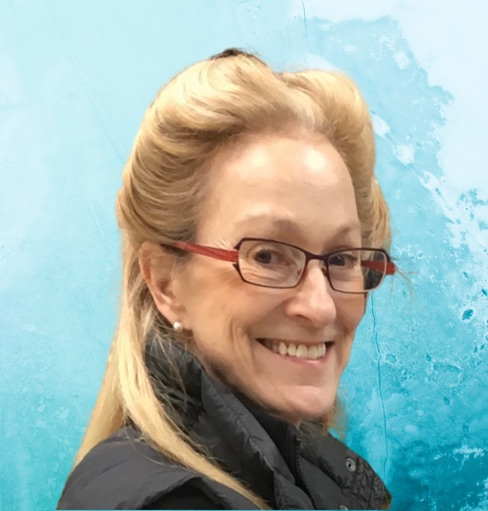
    Sue Fagalde Lick writes about the ups and downs of being published.

    I have three books coming out next year: A memoir, a full-length poetry book, and a poetry chapbook. Different genres, different subjects, different publishers. I didn’t plan it this way, but it’s happening. I have also had a run of acceptances for short pieces.

    I should be overjoyed. Isn’t this what I wanted?

    But I feel guilty boasting about my three books when other writers are not able to get even one acceptance. It’s the “people are starving overseas while I’m complaining about ice cream making me fat” conundrum.

    After years of mostly no’s, I’m reading proofs, approving cover designs, and preparing for “pub dates” like a real writer. How will I promote three books at once? What if something goes wrong between the signing of the contract and holding the books in my hands?

    I’ll deal with it. Just to have these editors say yes is a triumph.

    I have to remind myself that I earned this and that it’s okay to succeed. I submitted the memoir, which is about Alzheimer’s disease, for years. I entered contests. I pitched to agents and editors. Those who responded said it was swell and they had a loved one with dementia, but they didn’t think they could sell it. Until one, sub #59, said she could.

    Both poetry books were finalists in contests sponsored by publishers that feature Northwest poets. They didn’t win, but they caught the attention of editors who wanted to publish them. I have met both editors through my work as president of the Oregon Poetry Association. My name was not on my manuscripts, but I knew they published books like mine featuring poets from the Pacific Northwest, so my chances were good.

    I did the work, and now I’m reaping the results. Lords, that sounds like boasting, but it’s true. Like Thanksgiving dinner, I shopped, prepped, set the table, and got up at 5 a.m. to put the turkey in the oven. Now all the food is ready, and it’s time to share the meal.

    Can you make it in the writing world if you don’t grow up in a literary family, if you live in a tiny town in Oregon that doesn’t have a decent book store, if you don’t attend a prestigious university where your roommate’s dad just happens to work for Simon and Schuster, and you don’t win all the fellowships and prizes?

    You can—if you follow the recipe.

    * Write. Set yourself a writing time and keep to it religiously, even when it seems like every word is garbage.

    * Rewrite. The first draft is the raw clay you will shape into a finished piece. Sometimes you’ll need to take it apart and start over from scratch. Sometimes you’ll need to hire a professional editor to help you see what could be better. My memoir looks nothing like the massive manuscript I started with. The editor of the full-length poetry book took out 15 poems that “didn’t sing” and changed the title. Now the whole book sings.

    * Submit your work. Send it to multiple places at once. Keep track on a spread sheet, and when something is rejected, send it out again. And again. I received 98 rejections last year, but I also got some acceptances. Follow the submission guidelines regarding length, format, theme, etc. Send them exactly what they’re asking for.

    * Read what they publish before you submit. If your work would not fit, move on. If you wouldn’t buy their books, they probably wouldn’t buy yours, and you wouldn’t want them to.

    * Enter contests. The entry fees are high, but one win or acceptance because someone saw and liked your work will cover everything you have spent.  

    * Study your craft. After many years writing for newspapers and magazines, I earned my master of fine arts degree in creative writing at age 51. I continue to take workshops, read craft books, and trade critiques with other writers. There’s always more to learn.

    * Become a presence in the writing world. Post on social media. Ask questions and get discussions going. Comment on other writers’ posts, read and review their books. Attend their readings and book launches. Answer their questions and share connections.

    * Join and be active in writing organizations. Through my work with California Writers Club, Willamette Writers, the Nye Beach Writers Series, and Oregon Poetry Association, my name is out there, and I have met people who can help me not only get published but provide blurbs and reviews.

    * Volunteer. The editor of a journal I admire needed someone to sit at their table at the AWP book fair for a few hours. I said yes. When she wrote to thank me, she also asked me to write for her.

    * Keep at it. I started submitting my work to magazines and newspapers when I was in high school. Overnight success can take a lifetime.

    Don’t feel guilty if you succeed. Just enjoy it. And take an extra helping of stuffing.

    Originally posted on July 28, 2023 in Brevity’s Nonfiction Blog as, “Three Books at Once? Say What???”

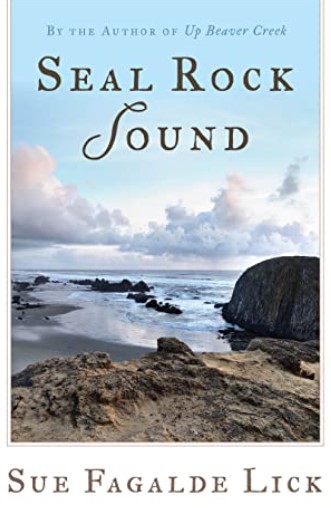
    Sue Fagalde Lick, a former journalist, is a writer/musician/dog mom living in the woods on the Oregon Coast. Her books include Stories Grandma Never Told, Childless by Marriage, Love or Children: When You Can’t Have Both, the novels Up Beaver Creek and Seal Rock Sound, and two poetry chapbooks, Gravel Road Ahead and The Widow at the Piano. Coming in 2024 to a bookstore near you: Blue Chip Stamp Guitar, Dining Al Fresco with My Dog, and No Way Out of This: Loving a Partner with Alzheimer’s.

    Don’t call her in the morning; that’s when she’s writing.

  • Beats Plunge Readers Into Scenes

    Guest Blogger Jan Pezarro shares what she learned about beats, using her experience with lung cancer to illustrate physical, emotional, and setting beats. I  hope you enjoy this entertaining and informative writing about different kinds of beats as much as I did. — Marlene

    Jan Pezarro:

     “A few beats missing here.”

    In the first year of my MFA program, after 40 years in business and on my way to fulfill a long-held ambition to write a book, my mentor added this comment to my submission. I was pretty sure she wasn’t referring to golden or purple beets, but neither did I know exactly what she meant by “beats.”

    My knowledge gap of storycraft tools and techniques was formidable. Lectures on structure, place, scene, and character sent me repeatedly to the internet for supplemental tutoring. The process reminded me of trying to read a text in the original Greek by translating each word in turn.

    My mentor’s margin note sent me scurrying back online, where I learned there are several kinds of beats.

    You may be familiar with the “Blake Snyder beat sheet,” a method for sequencing screenplay scenes, which Snyder describes in his groundbreaking book, Save the Cat! His fifteen beats offer screenwriters a template for tracking their heroes’ pursuit of their goals, from “Opening Image” to “Final Image” and all the plot events, wins, losses and subplots in between. Jessica Brody has since adapted Snyder’s beat sheet for novelists and memoirists in Save the Cat! Writes a Novel.

    But the kind of beats I’m focusing on these days relate to smaller units of storytelling—sentences or phrases—that help plunge readers into the scene. Action beats, for example, depict what the character is physically doing, emotion beats reveal the character’s feelings, and setting beats provide context and depth.

    Action seemed like a suitable jumping-off place. I went hunting for a place in my draft memoir where I could replace a dialogue tag (he said, she said) with an action beat.

    Original:

    If I was not sufficiently recovered from surgery, we would have to cancel the trip. “I should be OK with a September date,” I said. “That leaves two months for post-op recovery.”

    Revision:

    “I should be OK with a September date.” My shoulders slumped as I sighed in despair. But in the next moment, I straightened and looked at Andy. “It still leaves two months for post-op recovery.” I would just have to heal faster.

    Just writing the action beat took me back to the moment. I could feel the hopelessness that I would be unfit for travel, and the moment of resolve that I would make it work. The beat added to the wordcount but made the narrative more interesting and moved the plot forward.

    Next, I looked for opportunities to replace an emotion (sad, happy, angry, etc.) with an emotion beat that would reveal more about my character’s internal state.

    Original:

    “Have you ever experienced stigma because you have lung cancer?” Linda asked sadly. “It really hurts.”

    Revision:

    “Have you ever experienced stigma because you have lung cancer?” Linda hugged herself as her eyes filled with angry tears. “It really hurts.”

    The emotion beat disposed of a dreaded adverb and added insight into the motivation for Linda’s next action.

    A setting beat avoids halting the forward pace of the story by having a character take action within the setting, talking while observing the setting, or emotionally reacting to the setting.

    Original:

    The operating room looked like an ordinary room: four white walls with just a few cabinets and a long table covered with a gleaming array of medical instruments. The surgical team stood around a narrow bed in the centre of the room.

    Revision:

    The orderly wheeled my gurney into the operating room, maneuvering around a long table covered with a gleaming array of implements that looked like a buffet carving station. I didn’t recognize the room from what I’d seen in television medical shows.

    I turned my head to look at him. “It looks like an ordinary room, not an operating theatre.”

    The orderly arched a tweezed eyebrow and waved a hand at the assembled surgical team of ten. “What do you mean by an ordinary room?”

    Adding action beats and dialogue to the setting picked up the pace while providing additional detail about the orderly.

    Understanding and using beats with purpose has enriched my storytelling and breathed life into my characters. Best of all, I can’t wait to begin the revision process—to find places and spaces to achieve different effects and improve my scenes.

    All I had to do was get the beats in.

    Originally posted as “I Have The Beat,” in Brevity’s Nonfiction Blog, June 28, 2023

    Jan Pezarro uses the power of storytelling to entice consumers, influence politicians, and motivate employees. She is currently querying a series of essays exploring the psychological impacts of illness caused by personal behaviour. Jan is an MFA student at the University of King’s College in Nova Scotia and is 40,000 words into her first book, a memoir called Breathing Lessons: How To Outlive Lung Cancer With Medicine And Mindset. Read more on her website.

    #justwrite #iamwriting #iamawriter

  • Submit. Yay or nay?

    Excerpt from “Submission Control” article about submitting your writing to publications, in the March/April 2019 issue of Writers Digest magazine, by Dinty W. Moore.

    Sending your work to literary magazines puts you at the whim of editors—but there’s more in your power than you may realize.

    Every few months, ask yourself why you’re doing this [writing]. If writing, waiting, and facing rejection make you truly miserable, maybe you should stop.

    But if you don’t want to stop, if writing is necessary, like breathing, then change your way of thinking. The long wait, the long odds, the sometimes inscrutable aesthetic taste of the editorial staff: You have to put all of that aside and write new poems, essays and stories.

    And that’s a good thing.

    Because the more you write, the better you get.

    Dinty W. Moore is the author of the memoir Between Panic & Desire, the writing guide Crafting the Personal Essay and other books. He is the editor of Brevity, a journal of flash nonfiction.

  • Brevity publishes extremely brief essays.

    Brevity is an online journal,  publishing short narrative essays (750 words or less).

    Employing strong verbs and using sensory detail increase chances of your writing being selected.

    “There is no room for throat-clearing in search of a point. . . You need each sentence to do more than one thing . . . provide setting, forward the action and give insight into character, all at once.” Founder and editor Dinty W. Moore, interviewed by Kerrie Flanagan, The Writer August 2015

    Information about using sensory detail can be found in the Just Write section on The Write Spot Blog.

    Good Luck!

    Brevity