“So, while I still write for understanding, for truth, for clarification, to tell a story, to help people, to help myself and even for fun—I also write for communication, for discussion, for connection.
I don’t like being late – to classes I teach or the airport to catch a plane. My anxiety meter goes haywire if I haven’t given myself the time to organize before school or when I’m packing to go away. Will I need my swimsuit? What about those shoes? I allow extra time wherever I go, which means I’m usually early.
My stepfather once told my daughter as he drove her to a summer job, “You’re on time if you’re ten minutes early.”
I’ve taken that to heart.
When my daughter and I went to a wedding in Montana a few years ago, we were excited about the event, and to see the big sky landscape we had heard so much about. I didn’t want to feel rushed or anxious, so I allowed for plenty of extra time to get through security and find our gate.
We watched planes taxiing to other gates from the rocking chairs we sat in. For three hours.
But when it comes to my writing, I don’t follow my own advice. I often rush it. I think I’m done way before I really am. My husband, a former journalist and editor, reminds me frequently to slow down, think the piece through, whether it’s an essay or a profile I’m working on. Wait, he says, before sending it out. There are always opportunities to expand or transform my writing.
I don’t always listen. Often, I already have a good sense of what’s working and where I need more, but instead of figuring out the fixes, I get jittery and eager and I send off the piece to trusted readers and editors, hoping they won’t notice the holes.
Not only do they notice, they fall in them.
I encourage the writers in my workshops to take their time. Sit on your work for a day or two, or more, I tell them. If it’s a timely essay, sit on it for a few hours. Wait and see how the work matures over time. Then revisit and revise. Don’t rush. Wait before taking a bite of the cookie that’s just come out of the oven. Don’t burn your mouth.
I spoke with a writer recently who has a book of essays out, and she told me some of the essays took her years to write. Years.
I don’t have years. I want to get my book of essays out now!
I’m a problem solver. I like immediate results. I can usually fix someone else’s challenge, edit their work, or find their lost car key. Helping myself is more perplexing and time consuming.
But when I linger on my pieces, like waiting to bite that hot cookie, it’s always worth it. I might remember another aspect of the topic I want to add in, or recognize a theme I didn’t see before.
I’ve been working on a collection of essays for, yes, years, and I thought I knew their purpose. but recently, I realized I was going in the wrong direction. There was a theme in my work I hadn’t seen earlier, a theme that tied my shorter pieces together from two separate projects. I am now going to select, toss, and revise. Because I’d taken my time with the essays, the theme had time to marinate before it jumped out at me.
Now I’m eager to get going. But I need to heed the yellow light ahead and slow down, take my time, let the pieces simmer, blow on them a little so they’re not so hot and I can hold them.
If I rush to pack, I might forget the shoes I need, or my bathing suit in case there’s a pool. Sometimes I have to unpack and repack to make sure I have everything I need—editing my suitcase like I edit a book. I repack, rolling my clothes instead of folding them. They take up less room that way, and there is more room to add and substitute items. Just as I can revise once more, allowing for expansion and transformation.
“Don’t Rush It” first appeared on Brevity’s Nonfiction blog on June 6, 2022.
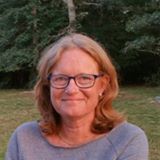
Morgan Bakerhas written forThe Boston Globe Magazine, The New York Times Magazine, The Bark, The Bucket, Talking Writing, Cognoscenti, Motherwell, and several times for theBrevity Blog.
Morgan’s debut memoir will be out in Spring 2023 (Ten16 Press).
She lives in Cambridge, MA with her husband and two dogs where she teaches at Emerson College and facilitates writing workshops.
All changes, even the most longed for, have their melancholy; for what we leave behind us is part of ourselves; we must die to one life before we can enter another. —Anatole France
Western culture divides life into three stages: birth/student, work/family, and retirement/death. My husband and I, moving into our retirement years and building a new house, borrowed the Hindu concept of four stages, adding a time of spiritual growth and reconnection between retirement and death.
The third stage of life, Vanaprastha, the name we chose for our mountain home, means retreat to the forest. Not retirement but time to learn, reflect, and grow. Time to take the internal journey and heal past wounds from loss, rejection, and inexplicable disruptions. Time to explore, discover, seek meaning, share wisdom, and serve others. Time to become our truer selves.
As it turned out, I became a writer.
While overseeing the construction of our mountain retreat, I read the books I’d promised myself I’d get to but never had time, walked the dog, and tried new recipes. I wrote about my husband’s daughter, lost to suicide at age twenty-four, a girl I’d never met and wanted to know about as part of my husband’s past. But while reading her journals, hearing her father’s stories, and writing, I found my story bleeding through the pages into hers, because of connections I never expected. Disruptions from when we were five: her parents’ divorce and a home-invader assaulting my mother; mental illness episodes starting at sixteen; troubles in college; rejection in love—stories begging to be written, hiding in our closets. After the house was built, I signed up for writing classes.
Being a novice was humbling after a long and successful career, teaching, designing curriculum, and publishing technical articles. I was no longer a sage on the stage or guide on the side. My teachers were often the same age as my students—my recent students. More to the point, my wants and path-to-purpose had changed. After years of forward motion, raising children, earning money to pay the bills, pursuing success and honors, I looked back and moved toward asking, Who am I?
Third-stage-of-life writers often employ creative nonfiction in memoir and personal essays. They are less interested in earning a living as a writer and more interested in the internal search on the page. This journey for self-knowledge is heroic in the Joseph Campbell sense, fraught with external and internal obstacles and resistance. We all have wounds in our past and tend to evade them at all cost. I was appalled to discover the extent of my evasions, self-centeredness, and self-righteousness, my need for approval, to be right and in control. The “clever” stories I’d told myself and others over the years were often self-serving and sometimes outright lies. My husband’s daughter took the same journey, until her mental illness exacted its toll. To become the master of my story, I had to portray myself as both protagonist and antagonist, to turn victims into actors, villains into humans, and the helpless into the able; to find a third way to manage fear, other than flight or fight. Only then could I find peace and offer what I’d learned to others.
The nuts and bolts of writing can be daunting. Pitches, proposals, publishing, platform. The bottom line of becoming a writer in the third chapter is growth, both personal and professional. Write, write, write. Take classes to grow your craft, read craft books and recommended models, join writing groups, attend conferences, create communities. Open yourself to criticism; be honest and generous in return. Study, learn something new, sing, garden, volunteer. Do all those things and more—and have a grand time!
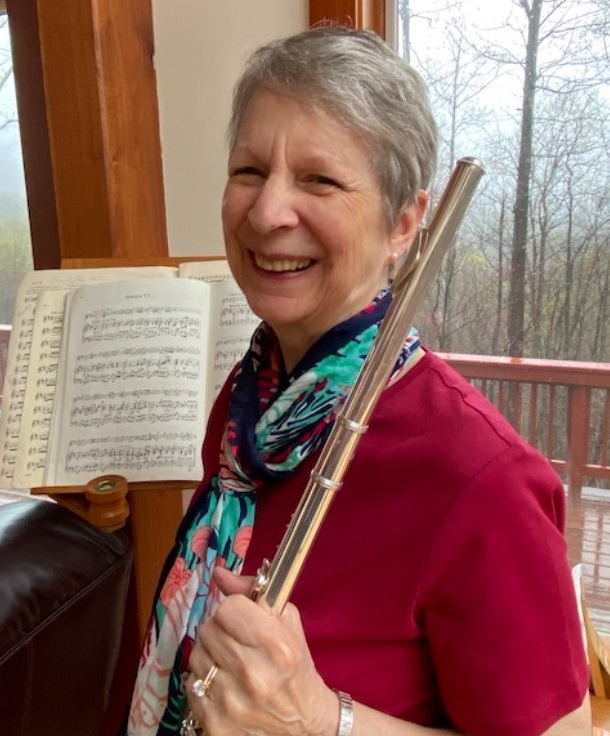
Carole Duffis a veteran teacher, serious flutist, avid naturalist, and writer of creative nonfiction. She posts weekly to her long-standing blog Notes from Vanaprastha, and has written for Brevity blog, Mockingbird, Streetlight Magazine, The Perennial Gen, for which she is a regular contributor, and other publications.
Carole lives in Virginia’s Blue Ridge Mountains with her husband, writer K.A. Kenny, and two, large overly-friendly dogs.
She will present a session on “Becoming a Writer in the Third Chapter of Life” at HippoCamp 2022 in August.
Brevity Blog is the place to discuss issues related to the writing of creative nonfiction. “Though we don’t shy away from important issues in the writing community, the Brevity blog can also often be colloquial, personal, and at times irreverent or humorous, and our most popular posts tend to be those that are the least academic.”
Appropriate topics for the Blog include the craft of writing nonfiction, issues in editing and publishing, writing conference and creative writing classroom experiences, interviews with writers or editors, prompts, close reading of essays or essayists, or specific issues that challenge us as we attempt to capture true experiences on the page.
Word Count: 500 to1,000 word range (sweet spot is 850).