Tag: Susan Bono

  • The thing about grief . . . Prompt #754

    Inspired by an email from Susan Bono:

    I was at Dollar Tree the other day and didn’t have quite enough cash to cover my Halloween garlands.

    As I fumbled with my card, the cashier said, “I never carry cash anymore.”

    I said, “I don’t either, but I miss it sometimes.”

    She looked at me full in the face and said, “There are things I miss every single day about the way things used to be.”

    I saw such grief in her face before she smiled and urged me to have a nice day.

    Prompt: Write whatever comes up for you . . .

    Shopping at the Dollar Tree store

    Halloween

    Cash vs credit card

    I miss . . .

    The way things used to be . . .

    The thing about grief is . . .

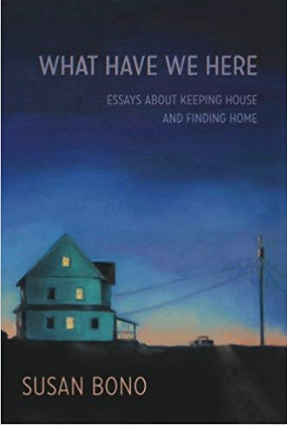
    Susan Bono is the author of “What Have We Here: Essays about Keeping House and Finding Home.” Available on Amazon.

    “The world is full of stories. Mine collect in journals, spill onto postcards and scraps of paper, come to conclusions in computer files, call to me in dreams. I write what I believe is true about my experiences, not just events that happened to me. 

    I’m not sure what’s more important: the raw aliveness of a dashed-off journal entry or the carefully developed and edited essay, finally (one hopes) complete.  I only know that every story is a shard of mirror that shows me pieces of who I am and what it means to be human.” —Susan Bono

  • Illuminating The Essay

    Guest Blogger Arletta Dawdy’s reflections on Susan Bono’s talk, “Illuminating The Essay.”

    Remember the bogs of Ireland or those on the moors of England in old romance novels? The one where the heroine comes to the lonesome manor to be a governess, nurse, or maid only to fall for the moody master, his neighbor or maybe the groundsman. She’s lost in the mire of boggish emotions until HE comes to her rescue.

    Well, I don’t see HIM rescuing this writer from her blogger’s mind-bog. If you noticed, I’ve been absent for, low, these many months and then I thought there might be hope showing on my horizon.

    Marlene Cullen, producer of Writers Forum, invited local heroine/publisher//teacher Susan Bono to inspire an October gathering by “Illuminating The Essay.”

    Susan has published personal narratives in her famed  journal, Tiny Lights, for nearly twenty years. She is an expert in the form and offers references, stimulation and inspiration freely.

    Susan Bono sees five keys to writing the personal essay:

    Character: the self

    Problem: give yourself a problem

    Struggle: Problem creates conflict

    Epiphany: after struggle, a flood of new understanding

    Resolution: what you do differently as a result.

    Susan calls on the work of many experts including: Phillip Lopate’s The Art of the Personal Essay; Adair Lara’s Naked, Drunk and Writing; and Louise Desalvo’s Writing as a Way of Healing.

    Many of her references specialize in memoir which Susan finds to be good resources.

    As so many good instructors do, Susan had exercises for us to try out. I found them to be great fun and marveled at the variety when students chose to share what they wrote. These are starter ideas which serve to establish the intent or direction of the essay/narrative. 

    Here they are with a couple of my answers shared:

    1. I want to tell you how [name of person] changed my life (Universal statement).

    My answer: John Steinbeck, and he did it twice: inspiring me to go into social work to change the world and to write.

    • I’m trying to figure out how I feel about______________
    • I learned about obstinance . . . from my granddaughter, with her threats not to go to sleep, hands on hips, pursed lips . . . and then dissolving into tears as she gave up.
    • I never expected to________________
    • I will always regret . . . My answer: not starting to write earlier.
    • I never thought I’d become a person who_______________________

    Paraphrasing Susan Bono’s rules:

    Reader should know within three paragraphs what the essay is about.

    Check proportion of scene with real action against summary which moves reader thru time rapidly.

    Check the frame: sense of being triggered by past event and ends by bringing back to current event.

    Use of dialogue brings others into the event.

    Use restraint when writing difficult themes as with violence, abuse . . .  need not be gory to make point.

    End or resolve with action or gesture as opposed to flowery words.

    Your Turn

    Challenge yourself:  Try answering Susan’s six openers.

    Posted on Arletta Dawdy’s Blog, October 27. 3013.

    SAVE THE DATE

    July 7, 2022: Susan Bono will talk about Ready, Set, Pivot!

    Personal narratives are documents of change. They always contain a “before” and “after.” This is really useful to remember when building our stories. In our time together, we’ll explore this concept and experiment with some structures that create natural pivots or shift points.

    Writers Forum sponsors this free event on Zoom. You need to register to attend.

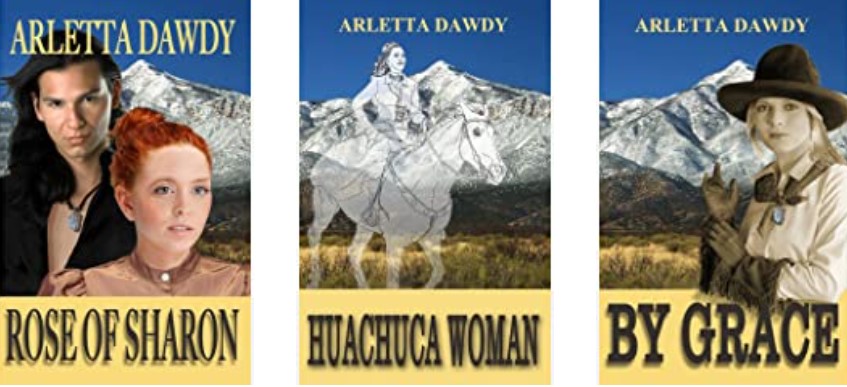
    Note From Marlene: Arletta Dawdy has written a wonderful series of historical fiction: entertaining, engaging, and “escapism” reading.

  • A Little Louder, Please

    Memorable writing that sparks imagination. Lean in. Hear the writer’s voice on the page.

    A Little Louder, Please

    Susan Zahl Bono

    Christmas 2005

    I must be going deaf. It’s the season when yuletide TV ads are louder and brighter than the shows they’re interrupting, but I don’t seem to be hearing their message. December is swinging into its second week and I haven’t bought any presents. Last weekend, my husband wrestled the fake tree into the living room and wrapped it with lights, but if that’s as far as we get, I’m not going to be heartbroken about it. At night with those little lights glowing, I can almost forget the ornaments are missing.

    These are my dark ages. My kids are too old to believe in Santa and too young to make grandchildren. They stopped caring about trees and holiday trappings about the time we gave in to their dad’s allergies and went artificial. As far as their gifts are concerned, there are only so many ways you can wrap money. My husband likes to order his own gifts, and all I really want are my closets emptied and my left eyelid to stop sagging enough to let me see out of it in the morning. I’m not inspired to do much baking. Everyone my age knows about the dangers of letting Christmas cookies into the house.

    A few days ago, a three-year-old took me to lunch. Her mother drove, but the little queen was obviously in charge. Giuliana, dressed like a Victorian monarch in a flouncy skirt and short velvet cape, issued orders from her crash-tested throne in the back seat.

    “A little louder, please,” she said, indicating the car stereo. The queen’s mum, like any good mother, pretended to comply by touching the volume knob.

    “A little louder, please,” our sovereign commanded, with only a trace of irritation in her voice. Soon, such seasonal favorites as “All I want for Christmas is My Two Front Teeth” and “Frosty the Snowman” engulfed us.

    I suspect Giuliana’s mother was afraid I would condemn her daughter’s musical tastes as well as her own lack of parental control. On the contrary. The sappy rendition of “Jingle Bells” took me back to yuletides past when my own kids demanded the volume cranked on Dr. Demento’s Christmas Novelties, payback for having tortured my own parents. As a child, my favorite holiday album featured Jack Benny’s halting violin and someone loudly lisping, “I thaw Mommy kith-ing Thanta Cloth.” Little ones really do know what Christmas is all about.

    “A little louder, please,” the Good Queen said again, this time for our benefit. She was having no trouble singing along with a relentlessly cheery “Deck the Halls,” and she wanted to make sure we heard the music, too. Any fool could see that her mom and I were so busy dissecting the past and worrying about the future we were completely missing out on the fa la la la la.

    A wiser woman would have joined in on a couple of verses of “The Twelve Days of Christmas” or “Rudolph, the Red-Nosed Reindeer.” I’m sorry, Giuliana. I wasn’t ready to listen.  But it’s not too late. Sadly, my own collection of holiday music is heavy on a cappella versions of “The Holly and the Ivy,” “O, Come, O, Come, Emmanuel” and carols played on antique German music boxes. But maybe if I play them loudly enough, I’ll start to remember what the fuss is all about.

    Susan Zahl Bono is a California-born mother, teacher, writer, and editor who’s lived more than half her life with the same man in the same house in Petaluma. She published Tiny Lights: A Journal of Personal Narrative for twenty years. She facilitates writing workshops, including Jumpstart with Marlene Cullen. Her own work has appeared online, on stage, in anthologies, newspapers, on the radio, and in several Write Spot anthologies. Her book, “What Have We Here: Essays about Keeping House and Finding Home” was published in 2014. 

    #amwriting #justwrite #creativewriting #iamawriter

  • Personal Essay – Pivotal Event Plus . . .

    A personal essay isn’t your life story. It’s a pivotal event. The narrator has an epiphany, or is changed at the end of the story.

    “Personal essays represent what you think, what you feel . . . your effort to communicate those thoughts and feelings to others . . . What is the point of your essay? Don’t belabor the point too much; let the point grow out of the experience of the essay. It might be true, in fact, that you didn’t even have a point to make when you started writing your essay. Go ahead and write it and see if a point develops.” — The Personal Essay

    More on personal essay:

    How to Write a Personal Essay

    Writing Personal Essays

    Personal Essay is Memoir in Short Form

    Still don’t know how to start? Gather your writing implements: Paper, pen, pencil, writing device, choose a writing prompt and . . . Just Write!

  • Dad

    By Susan Bono

    “That’s quite a sack of rocks you’re carrying, sweetie,” my father’s friend Bruce said more than once during phone calls last year. It was his way of acknowledging how heavily Dad’s poor health, hard-headedness and self-imposed isolation weighed on me. But I also took it as a tribute to Dad’s stubbornness and my strength, too.

    “Dumb as a rock” never made much sense to me, since stone strikes me as having its own unassailable intelligence. Its ability to endure illustrates its genius. I have never believed in the ability to factor equations or compose sonnets was proof of brain power, although I shared with Dad the idea that someone with rocks in his head was lacking in foresight and flexibility. Rocks may be smart, but they are slow. Time measured in stone is something else again.

    There were moments during my dad’s dying that were as slow as serpentine, sandstone, rose quartz, chert. His unseeing eyes were obsidian, and the pauses between breaths were long enough to form fossils. But just after that great wave rolled down from the crown of his head, darkening the air around him so his spirit glowed like a white shell at the bottom of a silty river, a tear slid from beneath his closed eyelids. That’s when the sack of rocks fell empty at my feet and I was surrounded by the tumult of released wings.

    Originally published in The Flashpoints 2008 issue of Tiny Lights. This issue was dedicated to the memory of Susan Bono’s father, Morris N. Zahl (12/24/24-3/22/09), whose light guides Susan.

    Susan Bono, a California-born teacher, freelance editor, and short-form memoirist, has facilitated writing workshops since 1993, helping hundreds of writers find and develop their voices. Her work has appeared online, on stage, in newspapers, on the radio, and in anthologies, including The Write Spot series.

    Susan is the author of “What Have We Here: Essays About Keeping House and Finding Home.”

    From 1995-2015, she edited and published a small press magazine called Tiny Lights: A Journal of Personal Narrative, as well as the online component that included quarterly postings of micro essays and a monthly forum dedicated to craft and process.

    She was on the board of the Mendocino Coast Writers’ Conference for more than a decade and was editor-in-chief of their journal, the Noyo River Review, for eight years. Susan often writes about domestic life set in her small town of Petaluma.

  • Shopping at the A & P

    By Jonah Raskin

    My mother always shopped at the A & P in the small town where I grew up. Going there with her was almost as wonderful as going to the Planetarium with its stars and planets in its make-believe night sky, and the Museum of Natural History with its reconstructed dinosaurs. At the A & P I liked the rows and rows of canned goods, and packaged cereals, the smell of the wood floor and the man in the green apron who always helped my mother. I thought of him and the A & P the other day when I went shopping in my own local food market.

    Like the A & P of my boyhood, my local market is small, clean, and tidy. Some of the smells are nearly the same. Walking the aisles, I’m reminded of the smells in the A & P. Before I know it, my boyhood has come back to me, and I’m back in my boyhood on an afternoon shopping adventure with my mother. Indeed, I can remember what she and I bought together: the cans of tuna fish; the half gallon containers of vanilla and chocolate ice cream; and the many products with labels that read “Ann Page” and “Jane Parker”—names as familiar to me as the names of my own aunts.

    The manager of the local market where I shop today reminds me of the man who helped my mother. He smiles, he’s soft-spoken, and he seems like a relic from another age. There isn’t ever a product that he pushes at me, or tells me I have to buy. I like him because he’s never trying to sell me anything at all, whether it’s discounted or not.

    Maybe, too, I like him because he shopped at the A & P with his grandmother when he grew up back East. We weren’t raised in the same town, but we have the A & P in common and we can each describe the stores we knew—which is like describing the same place. Almost every &A & was identical, which was why we liked it. If we went to another town or city, we could walk into the A & P and find what we wanted without having to ask questions, or roam about. Everything about the place was imprinted on our young minds.

    We both have memories of boyhood foods—both store-bought and homemade. We’re both partial to the kinds of foods our grandmothers and our old, old aunts made for us. We both remember the smells in their kitchens, and that we liked to roll out the dough for a pie, peel and slice apples and add brown sugar, cinnamon and nutmeg that we’d bought at the A & P.

    Just the other day in my local market we were talking about the A & P, and how it was once a strange and mysterious place. We both remembered how we’d learned a long time ago that A & P was the abbreviation for “The Great Atlantic and Pacific Tea Company.” We’d both also learned a long time ago that the symbol between the “A” and the “P”—the “&” was called an ampersand.

    The manager of my neighborhood market uses ampersands a lot and draws them the way they were drawn in the A & Ps of our boyhood. No one else seems to recognize that particular lettering. It’s something that means a lot to us, something that binds us together, along with our food past and our food present. Then, too, there’s something about knowing the A & P stands for “The Great Atlantic and Pacific Tea Company” that connects us as though we belong to a secret tribe or clan.

    Of course, the market where I shop today has things that the A & P never had— organic fruits and vegetables, whole grains in bulk, and local produce. It’s a much better store with healthier food, and with much more health and nutrition-savvy employees. Still, I can’t help but feel loyal to the A & P of old and sentimental about it. Not long ago I read that the once “Great Atlantic and Pacific Tea Company” had shrunk from the thousands of stores when I was a boy to just a few hundred today. Maybe like the dinosaur, the A & P will go out of existence. Then all I’ll have will be the memoires of that long-ago time, and the never-to-be-forgotten smells of A & P; nutmeg, cinnamon, and brown sugar, too.

    As I’ve grown older, I’ve learned to appreciate my own memories and to enjoy sharing them with friends and family. Once mighty enterprises seem to come and go; memories remain. My friend, the manager of the local market, has moved on to another, bigger store, and while I’m sad to see him go, I remember the stories he told me about food and his childhood. In autumn, he and his grandmother would pick unripe, green tomatoes just before the frost, wrap them in newspaper and put them away in a drawer. At Thanksgiving, they’d remove them, unwrap them and they’d be ripe and red and ready to eat.

    Memories are like those tomatoes. You pick them, store them away, then take them out months and even years later and enjoy them. So, there’s something I think of now as the taste of memory, and I know it can be as nourishing as ripe tomatoes at the height of summer, or in the cold dark days of November. Stores & stories; there’s not much that separates them, and just an ampersand brings them together as it brings together two great oceans in The Great Atlantic and Pacific Tea Company.

    Originally published in Susan Bono’s Tiny Lights: A Journal of Personal Narrative, Flashpoints 2008.

    Jonah Raskin was born in New York and raised on Long Island. He attended Columbia College and the University of Manchester, England where he received his Ph.D.

    He has taught at Winston-Salem State College, The State University of New York at Stony Brook, and Sonoma State University (SSU).

    He moved to California in 1975 and began to teach in the English department at SSU in 1981. From 1988 to 2012 he was the chair of the communication studies department at SSU, where he taught media law, reporting, and media marketing. He is now a professor emeritus.

    As a Fulbright Professor, he taught American literature at the University of Antwerp and the University of Ghent. From 1985-2005 he was the book critic for The Santa Rosa Press Democrat.

    He writes for Valley of the Moon magazine, CounterPunch, The Bohemian and The Anderson Valley Advertiser.

    Jonah Raskin is the author of sixteen books, including most recently  Dark Land, Dark Mirror and  Dark Day, Dark Night.

    His other books are:  James McGrath: in A Class By Himself,  Marijuanaland: Dispatches from an American War, and  Field Days: A Year of Farming, Eating and Drinking Wine in California.

    He has published six poetry chapbooks among them  Rock ‘n’ Roll Women: Portraits of a Generation.

  • History Lesson

    By Susan Bono

    I’ve been rummaging around in already full closets lately, trying to find space for all the stuff I brought home when I emptied my parents’ house last May. It’s been rough going, but I stopped wondering why when I realized Mom and Dad lived in their house for thirty-seven years, only eight years longer than we’ve lived in ours.

    Our youngest son often encounters me staring into space clutching a quilt, wood carving, or photograph. I think my uncharacteristic attempts at organization are making him nervous. “What are you doing? What’s that?” he asks.

    “Oh, this is some of your Great Aunt Emily’s needlepoint,” I tell him a little too eagerly. “These are my Barbie clothes, and here are the baby rompers your great grandmother made for your grandfather back in 1925. You wore them once yourself.”

    I give him these family history updates knowing full well it’s all drifting into one ear on its way out the other. At twenty-two, he doesn’t have a sentimental bone in his body. But as long as he keeps asking, I continue to supply the disregarded answers.

    Telling these stories is a kind of test. I’m trying to figure out how much I actually know about the Scotty dog napkin ring, the china baby doll, the anniversary clock, the piece of Native American pottery. If I don’t remember what my parents told me about these things, what can they really mean to me?

    “It’s just stuff,” I heard myself say as I watched people carry off Christmas decorations, books, camping gear, and clothing from the garage sale I organized to clear my parents’ attic. But I might as well have said, “It’s just stories.” Stories that connect me by an ever-thinning thread to a world that is disappearing.

    I remember asking my own mother, “What’s that?” and “Who are those people?” when I caught her sorting drawers or photographs. I thought I was listening to her explanations, but I didn’t retain much. The tiny, mirrored powder box with the ostrich puff, that silver thimble—I know they were her mother’s, but what about the rest of the story? I’m sure she told me more than once, each time straining to remember what her own mother, dead before I was born, had told her. It’s only now that I understand how the story of an object becomes more precious than the thing itself when there’s no one left to ask about it.

    Susan Bono, a California-born teacher, freelance editor, and short-form memoirist, has facilitated writing workshops since 1993, helping hundreds of writers find and develop their voices. Her work has appeared online, on stage, in anthologies, newspapers, and on the radio.

    From 1995-2015, she edited and published a small press magazine called Tiny Lights: A Journal of Personal Narrative, as well as the online component that included quarterly postings of micro essays and a monthly forum dedicated to craft and process.

    She was on the board of the Mendocino Coast Writers’ Conference for more than a decade and was editor-in-chief of their journal, the Noyo River Review, for eight years. Susan often writes about domestic life set in her small town of Petaluma.

    This essay can be found in her book, What Have We Here: Essays about Keeping House and Finding Home. Find out more at susanbono.com.

    Originally published in Tiny Lights: A Journal of Personal Narrative, Editor’s Notes, Contest 2009 issue

  • How to Write a Personal Essay

    We aren’t born knowing how to write personal essays.

    So, how does one learn to write personal essays?

    The following is inspired from “A Few Tips for Writing Personal Essays,” by Robert Lee Brewer, March/April 2021 Writer’s Digest.

    Read personal essays!

    Then write. You will discover your style as you write.

    ~ Start with action. Save backstory for later in the essay. The beginning should have a compelling scene that hooks readers and makes them want to continue reading.

    The following is an example of “start with action.” The hook compelled me to read the entire essay.

    “When he walked into a San Francisco barbershop after the war, he was told by the owner, ‘We don’t serve Japs here.’

    The owner of the barbershop obviously didn’t know who the one-armed Japanese-American was – his name was Daniel Inouye. And, according to one website that honors heroes, he was one tough ‘badass.’” — The Jon S. Randal Peace Page, (Facebook) September 5, 2019

    ~ Build up to the reveal. Don’t reveal the ending at the beginning or even the middle. Rather, hint at a reveal or big conclusion early on and string out details to the big payoff at the end.

    ~ Share a takeaway. Many people who love personal essays aren’t in it just to read about people writing about themselves. Readers want a “takeway,” like a life lesson, a memorable event, or a good laugh. Figure out how to make your story meaningful to another person.

    ~ Let go of your fears. Don’t hold back. If you’re going to write a personal essay, write a personal essay. Dig deep into your story. You can only make a connection with readers if you are brave to tell all.

    Read personal essays to learn how to write personal essays:

    What Have We Here: Essays about Keeping House and Finding Home ” By Susan Bono

    Magazines (print and online) featuring personal essays:

    Boston Globe Ideas

    Chicken Soup for the Soul        

    Modern Love (New York Times column)

    River Teeth

    Slate

    The Home Forum

    The Isolation Journals

    The Sun

    Just Write!

  • California Winter

    California Winter

    By Patricia Morris

    (with thanks to Ted Kooser)

    The wind turns the pages of rain

    As drops splatter on the skylights,

        beating a rhythm punctuated by

        the cracks of unmoored oak limbs

         hitting the roof.


     The rain chain dances,

        brass acorns jingling,

        water swooshing through its cups.


     The creek rushes over rocks,

          gushes into the culvert and out again,

          making its overground / underground way to the river.


    The thirsty earth soaks it in,

       filters it down into empty aquifers.

    One chapter ending, another beginning.


    Freewrite inspired by the poem, A Rainy Morning, by Ted Kooser


    Patricia Morris misses the summer thunderstorms of her rural Midwestern upbringing, but enjoys observing and writing about the California rains from her home in Petaluma.

    After careers as diverse as trial lawyer and organization and leadership development consultant and coach, she is exploring life beyond the workaday world.

    Every Monday night she writes with friends at Marlene Cullen’s and Susan Bono’s Jumpstart Writing Workshops. Her writing has appeared in Rand McNally’s Vacation America, the Ultimate Road Atlas and The Write Spot:  Possibilities edited by Marlene Cullen. Available on Amazon, print $15 and ereader $2.99.

  • Why not just get busy and write?

    I’ve been reading back issues of Tiny Lights and found this gem by Suzanne Byerley, published December 2000. Even though this was written twenty years ago, it’s a perfect piece to share with you in these days of restlessness, as we wade through difficult times to find inspiration and energy to write.—Marlene Cullen

    “Steps” by Suzanne Byerley.

    I find myself restless. I prowl about the house in my slippers making sure the cats are behaving themselves, sorely tempted to turn on CNN and see if Florida has picked the next president yet. Maybe I’ll lay out a game of solitaire or fumble through that little Bach prelude my daughter mastered when she was six. What is this wild drive to diversion? Why not just sit down and get at what makes me happy? Why not just get busy and write?

    Because the steps to the desk are like slogging bootless through the deepest muds of winter. It is only after the first sentence has made its way through the synapses, the words clicking into place like pictures in a one-armed bandit, that I can begin again.

    It’s always more daunting when life intervenes, as it has lately, when loss comes crashing in. I’m not sure how to climb up from long silence to sight and voice again. Was I ever a writer? I must once have known how to polish a paragraph. I have vague memories of once or twice finding just the right word. Maybe rereading the last poem or story somebody praised will bolster my confidence sufficiently, but today when I look, it seems obvious some alien being wrote those words, not me.

    Still, this is the day I’ve promised myself was mine, so I stumble to the bookshelf to search out some shred of insight. “The eye must be alert; must see the influence of one thing on another and bring all things into relation,” says Robert Henri in The Art Spirit. As if my eye could ever do that. “The background as put in in the beginning may have been excellent, but the work that has gone on I front of it may demand its total reconstruction.”

    That hits home, I feel like so much has gone on that I’m in need of total reconstruction. I think of the Henri paintings I saw last month at the tiny American Impressionist Museum in New Britain, Connecticut, when I sneaked a week away from teaching to visit my daughter, Tanya, and grandson, Andrew, and smell the leaves of a real autumn. I have always thought Henri’s book one of the best for artistic inspiration of any kind, and it was pure pleasure to look on his few paintings there in an old mansion with the October sun streaming through the window. How many times had he gone back to get a painting just right? Had he said to himself, “I like what’s in front but the background’s all wrong,” as I have often said of my own emerging story, “too much detail” or “not enough glue?”

    I slip Henri back into his place on the shelf and pick up the framed snapshot of my mother, my father, my brother, and me. I am three, smiling on the knee of my father, my legs crossed. I wear the wine-colored beret my grandmother has crocheted with a row of white angora around the edge. I remember the softness of the angora, the scratchiness of the wine-colored wool. On my feet are sandals, almost hidden in shadow.

    And I think of the sandals I took with me from my mother’s house last year when she died. I had left my shoes in a motel by accident. A bit reluctantly, I picked up Mom’s from the floor of the closet I was emptying and put them on. I wore the sandals far into last winter, soothed by the contours of my mother’s feet cushioning my own. In this snapshot, though, her hair is black and thick and she is smiling, I notice, the same smile I thought I caught on the face of my grandson last month. My grandson, just the age I was in this photo, sitting on my father’s knee, sandals on my feet.

    I just told my students yesterday to contemplate shoes. Shoes of theirs or of someone they knew. A baby’s sneaker or a grandfather’s slipper. A shoe tossed a few feet from a body buried in an earthquake or twisted on a village road in Israel. An old man I know wears one shoe with a four-inch sole to try to even the discrepancy in the length of his legs. He walks with a great, rolling gait, his eyes full of secrets.

    How much for granted we take our locomotion, our ability to stroll or skip or dance through life. Andrew and I danced last month for the first time, wildly, in the preschool parking lot strewn with oak leaves. When my father broke his hip a year before he died he could not longer walk, let alone dance, but back in the Roaring Twenties when he was still in his teens he had been a dance instructor, and he began my lessons early. His shoes were always shined. When I close my eyes I can see the gleam and flash as he laughed at my bouncing and taught me a new step. As I stand here, I can hear the sweet and rhythmic “shuf, shuf, shuf” they made gliding across the room. I am shaken by the sound. And I see beyond the past to the joy of Andrew, so thrilled with music, so filled with movement that he can’t stand still.

    I put the snapshot back on the shelf, go into my closet and put on my mother’s sandals, marveling at the touch of them, warm as her hand. Then I come back to my study and turn to the desk, ready now to put my fingers to the keys. How do I begin again? With feeling. With love, or joy, or pain. Out of strong emotion the words begin to flow. Don’t interfere once they start. Don’t bring too much brain power to bear on them. Use that great rush which comes from sadness or surprise from memory, from what is real. That rush which clears our eyes just long enough to glimpse the connection between past and present, between longing and desire. All of us have experienced it. We writers lie in wait for it, not always patiently, not always willingly, never with the easy confidence that it will come again, always grateful when it does.

    “There are moments in our lives, there are moments in a day, when we seem to see beyond the usual,” Henri reminds me. “Such are the moments of our greatest happiness. Such are the moments of our greatest wisdom. If one could but recall those visions by some sort of sign. It was in this hope that the arts were invented.” Yes, that’s why we write, to capture those moments. And it’s in that first rush of feeling that the capturing is done.

    I’ll interfere with the word order later. I’ll clean up the background later. There is always plenty of time for rewrite, for perfecting. But not just now. Just now, I’ve conquered that aimless restlessness, taken those first trusting steps and begun again.

    Originally published in Vol. 6 No. 2 of Tiny Lights, A Journal of Personal Essay, Susan Bono, Editor-in-Chief.

    Suzanne Byerley (1937-2013)

    M. Suzanne Hartman-Byerley, beloved writing teacher, accomplished writer and unflappable co-director of the Mendocino Coast Writers Conference, influenced most of the writers living on the North Coast today. Recipient of a Hopwood Award and a Fulbright scholarship, her short stories and poems were published in magazines such as Woman’s Day, Family Circle and the Kansas Quarterly.


    After Suzanne and husband, Andrew, moved to the coast in l987 to run the Mendocino Gift Company, she taught writing at the Redwood Coast Senior Center and wrote for Coast and Valley and other publications. In 1996, she became co-director of the Mendocino Coast Writers Conference and an adjunct professor at College of the Redwoods. She founded the “Good Words” reading series and helped revive the Todd Point Review. When she and Andy moved back to Ohio in 2004, she continued to inspire writers at the Conneaut Community Center for the Arts and the Andover Public Library.