Tag: Writers Forum

  • Literary Agent Mary C. Moore has personal experience with The Rejection Form

    Mary C. MooreGuest Blogger Mary C. Moore (literary agent) writes about the rejection form letter.

    I recently wrote a short story, my first in over a year. Inspiration struck and I listened.

    Unlike novel writing, short stories are short-term rewarding because you reach “the end,” while you are still loving that muse whispering in your ear. I was particularly excited about this story, as I knew exactly which magazine I was going to submit it to. A few years ago, said magazine had rejected another story of mine, but with glowing praise and a request to see more of my work. I kept that in mind, because this magazine is a professionally paying market and one that would be quite a feather in my writing resume. Thus after some furious late nights, anxious waiting for the beta reads to come back, and a lot of editing, I sent off my beautiful 3k-word gem to this magazine.
    Another rather sweet aspect of short stories is these days most magazines use submission software. This means you can stalk, I mean track, your submissions. And, at least in the SciFi/Fantasy professional market, many of them have fairly quick turn around times. This is in part because they don’t allow simultaneous subs in part because the stories are shorter. Altogether it’s a much quicker and less frustrating process than novel submissions.

    So a week full of checking the website later, there it was, that email. I took a deep breath and opened it to find… a form rejection letter.

    The range of emotions that followed is one every writer is familiar with. But there was one more.

    Understanding. Working for a literary agency, I’ve sent out hundreds of form rejection letters over the years. And recently I opened up my own inbox to queries. In the beginning I tried to make each response a bit personal, a note here, a comment there. I knew what it was like to be on the other side, and that experience pushed me to communicate personally as much as I could, especially if the writing had potential. However, I discovered, to my dismay, that the majority of personal rejections were not appreciated, in fact they were often responded to with a “could you clarify this?” or “can you take this further?” or “what can I edit to change your mind?”

    My personal notes were not received as the compliments they were meant to be, but rather as an opening for an editorial conversation. One that I had to ignore. It made me feel guilty, not continuing the conversations, but there is not enough time in an agent’s schedule to answer every author question that floats through our inbox. I was also spending more time coming up with ways to make the reason I was passing on the project sound nice and encouraging and editorially useful, rather than focusing my energy on considering each submission carefully. Which made me reluctant to open my inbox. I had burned out. Thus more and more I found myself responding with a form rejection, both in the interest of time and clear communication. My defense of the form rejection:

    • It’s a clear answer.
    • You receive said answer faster.
    • It’s less emotional.
    • It helps prevent slushpile burnout, so the agent/reader can focus on what’s important, considering the submission itself, rather than coming up with something to say in response to it.
    • The form rejection helps to keep expectations in check.

    I know most authors who don’t do their research don’t understand this, because they don’t see the other side. I can’t count the number of times I’ve heard writers say, “it couldn’t be that hard to respond to a query!” Let me tell you, yes, yes it can.

    Every once in a while, if the writing jumps out at me, or if I’ve met the author in person, I will still respond personally, but for the most part I’ve become a fan of the form rejection. Sure you could argue that if I hadn’t gotten that personal response back in the day, I wouldn’t have been as eager to submit to the magazine, but I also wouldn’t have had as high of hopes. At least you can take comfort in the knowledge that I’m getting them as good as I’m giving them. We all just have to keep on keeping on. My so-called gem of a short story is already sunk into another slushpile.

    Originally posted 1/4/16, “In Defense of the Form Rejection,” on Mary C. Moore’s Blog.

    Mary will be the Writers Forum presenter on May 19, 2016

    Mary C. Moore has been with Kimberley Cameron & Associates since 2012. Mary specializes in science fiction and fantasy, although she does appreciate a wide breadth of the literary canon. She started reading at an early age, and her love of reading continued, as she earned her B.S. in biology from the University of California San Diego. She was a veterinarian’s assistant, then a field biologist, and then a zookeeper.

    Mary’s passion for writing and books caused her to veer off her original path and drew her to publishing. She graduated from Mills College, Oakland with an MFA in Creative Writing and English and after freelancing for two years as an editor and writer in non-literary sectors, she began an internship with Kimberley Cameron & Associates and found she loved working as a literary agent as much as she loved writing.

  • Is serialization in your future?

    Guest Blogger Daedalus Howell reveals a tried and true method to reach new audiences.

    The revolution will be serialized. As it’s always been. Much of episodic entertainment, from our favorite shows on Netflix or premium cable to the summertime superhero blockbusters, are issued in discrete elements that comprise a whole story. Comic books have long functioned in this manner, ditto popular literature, which was once serialized in newspapers. And, of course, there’s the staggeringly popular Serial podcast, which not only popularized a new storytelling medium but so embraced the concept of serialization that it branded itself with it. Clearly, serialization is back, representing to some, a vanguard in publishing. It can also be an integral part of your creative process.

    Howell.Quantum DeadlineThis is what I’ve found creating Quantum Deadline, a sci-fi crime romp that comically explores the death of newspapers through the foggy lens of a reporter tripping through the multiverse. Like many authors, my project found its first iteration as a National Novel Writing Month novel — one November, I arranged 50,000+ English words in a manner that produced the general effect of a novel. Despite the fact that the result was an unholy (if occasionally inspired) mess, I remained committed to seeing it through the bitter end of a Kindle download.

    I put it in the proverbial drawer through the winter to cool and found when I exhumed it the following spring, I was ready to rewrite it. That said, there is no “National Rewriting Your Novel Month” and I loathed the notion of working alone sans the esprit de corps I’d experienced with NaNoWriMo.

    I tried. I failed. I had no sense of accountability or “ticking clock” to compel me back to the work. Not that I was enthralled with the prospects I perceived in the book, it’s just that, as a career-long newspaper columnist, I’d grown accustomed to a weekly deadline. And someone to enforce it. With a speculative, self-generated project like Quantum Deadline, there was neither a deadline nor an irate editor to make me deliver. That’s when I began to contemplate serialization. I needed to feel accountable and I needed a schedule — two aspects of serialization that I theretofore hadn’t realized were possibilities.

    Moreover, I suspected serialization would allow me to “course correct” if I found that my readers were losing interest or recognize possibilities in the work that I hadn’t. I think of it as akin to The Lean Startup concept of creating a “minimum viable product” that allows for pivots between plot points.

    “The fundamental activity of a startup is to turn ideas into products, measure how customers respond, and then learn whether to pivot or persevere,” writes Eric Reis, The Lean Startup’s main advocate and author of a popular business tome of the same name.

    If we replace the term “startup” with the word “writing,” the path to serialization becomes self-evident. Instead of hunkering down, alone in the back of a Starbucks, the premise of releasing iterations of your work while refining it allows you the opportunity to grow and create community around it in the meantime.

    The trick is to be responsive to the concerns of your readership rather than defensive. You’re creating a feedback loop, not a combat zone. You don’t need to completely alter the vision of your paranormal YA romance when your readership is flagging, nagging or otherwise bagging on your work. However, you do have the opportunity to make adjustments in the next installment (and retroactively as well — serial readers are very forgiving, I find, so long as you point to relevant changes that improve their enjoyment of the work).

    Likewise, authors are advised to read Austin Kleon’s excellent book Show Your Work!, which extols the virtues of sharing your creative process as a means of cultivating an audience. Much in the same way film studios invite entertainment reporters on set to drum up interest in a film prior to its release, Kleon suggests sharing your process and inspirations as you create. This notion also dovetails nicely with “rewriting in public” through serialization.

    Writing a serial not only creates both context and momentum for one’s creative output, it cultivates community with your work as its rallying point. Chapter by chapter, week by week, you steer us deeper into your creative world — a world we may not have seen were it not for the revolutionary resurgence of the serial. As Gil Scott-Heron said, “The revolution will put you in the driver seat.”

    Note from Marlene: The “Now What” feature of National Novel Writing Month supports  “the revision and publishing process. It’s an extension of our anything-goes, wombat-infused noveling philosophy, with the added aim of helping you fulfill your novel’s potential: from first draft to final.”

    Daedalus will be the April 21 Writers Forum presenter, talking about, “Write Who You Know: How to Use Your Personal Life in Your Fiction And Memoir Writing Without Ruining Your Relationships.”

    Daedalus Howell is the author, most recently, of Quantum Deadline. He hosts the Culture Dept. podcast, is a radio personality on KSVY and KSRO, hosts the TV show 707, and blogs for Men’s Health and Petaluma’s Rivertown Report. Otherwise, he’s at DaedalusHowell.com.

  • Amanda McTigue Untethered

    Guest Blogger Amanda McTigue . . .

    I’ll confess with some dismay that contrary to the many uplifting articles and memoirs I have read about the serenity of older age, it continues to elude me. Serenity, that is, not the march of years across my face, kneecaps and pelvic floor muscles.

    I’m looking forward to any later-in-life serenity that may come my way. Indeed, I practice all kinds of meditations and mantras and daily exercises, etc., to invite it in. But my emotional set point tends to be what it’s always been: low-level (self)doubt.

    That’s the place whence I write. If that’s true for you, let me offer some slant wisdom here from some fellow artists. Take Tatiana Maslany. You may have seen her in a futuristic TV show called “Orphan Black” in which she plays (gorgeously!) multiple clones of herself. She’s a hell of a young actor, and here she quotes one of the great dancer/choreographers, Martha Graham:

    “It is not your business to determine how good [your work] is, nor how valuable it is, nor how it compares with other expressions. It is your business to keep it yours clearly and directly, to keep the channel open… There is no satisfaction whatever at any time. There is only a queer, divine dissatisfaction, a blessed unrest that keeps us marching, and makes us more alive than the others.”

    Snaps to Ms. Graham and Ms. Maslany.

    Or here’s a writer I love, Peter Schjeldahl, describing the work of the painter Albert Oehlen. I know next to nothing about the visual arts, but I always look for Mr. Schjeldahl’s columns in The New Yorker because I love the ways in which he helps me see things:

    “Oehlen’s process has evinced endless sorts of borderline-desperate improvisation—until a painting isn’t finished, exactly, but somehow beyond further aid. He told me, ‘People don’t realize that when you are working on a painting, every day you are seeing something awful.’”

    “Divine dissatisfaction.” “Blessed unrest.” “Beyond further aid.” These are my kinds of people.

    Good work, great work, and certainly awful work: it all comes out of whatever souls we’ve been assigned. While I wait for serenity to grace my days, I write. Often the moments before addressing the page are filled with dread, needless dread, yes, but it’s my dread. It doesn’t matter. I write. This is something I’ve taught myself. You can too. When my unrest isn’t “blessed,” my rule is, write it, don’t read it. Not yet. If I think things need fixing, they’ll get fixed later, but in the moment, I write. I slap it down. Just the way I’m doing here about slapping it down.

    I’ll cop to a suspicion I carry—really something closer to superstition. I wonder whether my unrest is precisely what makes me productive. You may wonder the same. But let’s let the rest of the world chatter over that one, while we get to the page.

    Confident or not, joyous or dread-filled, I’m going to go ahead and climb into the boat I keep tethered right here at my desk. I’m going to untie that hitch and launch. Some days I motor out. Some days I just drift. But out I go, untethered to how I feel about the work. The feelings may come with me, or not. Either way. Out we go. So be it. I’m writing.

    Citations:

    Dickinson, Emily. Tell all the truth but tell it slant. Poem #1263.

    Loofbourow, Lili. (2015, April 5). Anywoman. The New York Times

    Schjeldahl, Peter. (2015, June 22). Painting’s Point Man. The New Yorker

    Amanda will be the March 17 Writers Forum Presenter: Writing Emotion: How Do You Catch a Cloud and Pin it Down?

    Amanda’s novel, Going to Solace, was cited by public radio KRCB’s literary program “Word by Word” as a Best Read of 2012. She holds the West Side Stories Petaluma championship for live storytelling (2013 and 2014). She also makes regular appearances with the monthly “Get Lit” gathering at Petaluma’s Corkscrew Wine Bar. She’s just returned from Cuba where she was researching her second novel. In 2016-17, she’ll be directing “The Magic Flute” at Sonoma State University.

  • Jennifer Lynn Alvarez: The Book You Were Born to Write

    Guest Blogger Jennifer Lynn Alvarez writes about The Book You Were Born to Write.

    I recently read The Martian, by Andy Weir. It’s a unique, thrilling, and detailed survival story described as “Apollo 13 meets Cast Away.” I thoroughly enjoyed the book, in spite of all the math equations and the use of the metric system (English Lit. major here). But I’m not writing about Andy Weir to review his wonderful book, I’m writing about him because of something he said in an interview:

    “I love reading up on current space research. At some point I came up with the idea of an astronaut stranded on Mars. The more I worked on it, the more I realized I had accidentally spent my life researching for this story.” Andy Weir (Book Browse online interview)

    You see, Mr. Weir is a self-proclaimed space and science fanatic inspired by the idea of humans someday traveling to Mars. While penning the novel, Mr. Weir wrote his own software program to calculate the constant thrust trajectories of his imagined mission—all based on real-life technology. He crafted the main character’s wisecracking personality after his own, and supplied him with entertainment on Mars in the form of a crewmate’s recorded 70’s shows, which happen to also be the author’s favorites.

    The fact that this book is grounded in the passions and education of Andy Weir is what makes the tale ring true. He used what he knows; space travel, computer science, his own personality, and his childhood interests to imagine a story that is pure science fiction. And The Martian has taken the world by storm. Mr. Weir originally self-published the book, but quickly sold the rights to Crown Publishing. The novel debuted on the New York Times bestseller list. Film director, Ridley Scott, and actor, Matt Damon, will bring this story to life next month in theaters everywhere. (Source: Wikipedia)

    So how does Andy Weir’s success apply to us as writers? It all goes back to his sentiment from the interview: The more I worked on it, the more I realized I had accidentally spent my life researching for this story. While the author didn’t set out to write the story he was born to write, he accomplished it by pursuing his passions and his expertise with his pen.

    We all have a passion for something, right? I hope so. And we all have expertise, whether it’s studied or acquired through life experience. And the intimate knowledge we have about people, places, things, or relationships can be used to bring our books to life for others.

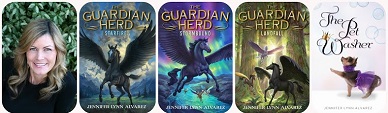
    Readers, literary agents, publishers—they respond to authenticity no matter how outrageous the tale. Personally, I wrote and queried four novels before I sold my first book, The Guardian Herd, to HarperCollins. In hindsight, it makes perfect sense that this fifth book is the one that broke through because it’s the book I was born to write. I’m a lifelong horse-lover, I’m fascinated by politics, and I love reading fantasy. My book series is about five herds of flying horses at war with one another and the special black pegasus foal who will inherit the power to either unite or destroy them. As you can imagine, this upsets the leaders who stand to lose their power. It’s politics, horses, and fantasy all rolled into one.

    But what do I really know about pegasi: Very little. What do I know about horses: A lot. I grew up riding and I own a horse now. I applied my knowledge of stallion behavior to all my pegasi, male and female, making them fierce, protective, and territorial. But I also used my imagination to give them ninety-year lifespans, emotions, speech, and strict rules of power. It’s an imaginary world, but it’s informed by my real experiences with horses, my studies of politics, and my formative years of reading animal fantasy novels.

    This brings me to my last point, which is about genre. I believe that the book we’re born to write is also the book we’re born to read. When you hit the sweet spot of combining your passions with your knowledge and adding that to your favorite book genre, you will write something truly magical. I can’t promise it will become a bestseller, but I do believe it will find a devoted audience of like-minded readers.

    How about you? What are your areas of expertise, your passions? What type of book are you dying to read? Well, don’t wait for someone else to write it, that’s your book.

    Here are some equations to help you get started (in honor of Mr. Weir who loves math):

                                       Knowledge + Passion + Genre = Book You Were Born to Write

                                      Computer Science + Traveling to Mars + Science Fiction = The Martian (Weir)

                                      Horses + Politics + Fantasy = The Guardian Herd Book Series (Alvarez)

    But don’t worry if the book you were born to write doesn’t immediately pop into your head. I loved horses and knew I wanted to write about them long before I tried it. Instead I filled my time writing practice novels, studying the craft of writing, and daydreaming, and so when inspiration struck, I was ready to act! I encourage all writers to set regular hours, don’t judge your first drafts, and to seek feedback. One day, the big idea will come, and when it does, you’ll be ready.

    Note from Marlene:  Figure out your equation and just write! Jennifer will be the Writers Forum presenter in Petaluma on Sept. 17, 2015. Join us, if you can. Jennifer will talk about World Building: How to Create Fiction That Feels Real. The Guardian Herd Series Starfire and Stormbound will be available for purchase.

    Jennifer Lynn Alvarez is the author of The Pet Washer and The Guardian Herd Series: Starfire and Stormbound and the soon to be released, Landfall.

    Jennifer is an active horsewoman and volunteer with U.S. Pony Club. She draws on her love of animals for inspiration when writing her books. Jennifer graduated from U.C. Berkeley with a B.A. degree in English Literature. Jennifer lives on a small ranch in Northern California with her husband, three children, and more than her fair share of pets. Please visit her website for more information.

    Follow Jennifer on Twitter @JenniferDiaries
    Visit her Facebook page: Jennifer Lynn Alvarez

    Alvarez + books

  • Suffering from a creativity dry spell? Look to your nighttime dreams.

    Guest Blogger Susan Audrey writes:

    I didn’t begin paying attention to my nighttime dreams until my dreamscapes started showing up in my waking life.

    The first instance was fairly benign: I dreamt of a man with dark hair, wearing a white, button-down shirt, standing to my right and talking on a pay phone (yes, this was awhile ago). And the next morning, after I dropped my kids off at daycare, I saw this exact scene: the same man, same hair, shirt, and pay phone. This really got my attention!

    I found out later that these are called precognitive or premonition dreams –– they show you the future. I wasn’t sure why this was happening at this time in my life. I was in my thirties and a single mom of two grade schoolers. It wasn’t until years later that I learned that our nighttime dreams are more abundant and more easily remembered during difficult and transitional times.

    Curiosity inspired me to read about, research, and train in dreamwork in the upcoming years, and most importantly, to keep a dream journal. I discovered that by exploring the images, metaphors, and feelings that emerged through my dreams, I had access to a wondrous, self-revealing and self-empowering stream of wisdom. One that’s always there –– and free! And, using this simple approach to cultivating “inner knowing” has helped me to better navigate my life and to get my creative juices flowing for all kinds of creative endeavors, including writing.

    Dreamwork helps us to jumpstart our creativity and keep it flowing in several ways. One is by providing a sort of emotional and physical house cleaning. The messages from our dreams can give us clues about how to work through emotional baggage we may be carrying, remedies that can heal our physical ailments, and ways we can let go of beliefs that may no longer serve us –– freeing us up to give our full attention and energy to embracing our creative sides. If we’re not obsessing about a love we lost or worrying about what to try next to soothe a backache then we’re more present when we sit down at our computer to write or in front of a canvas to paint.

    Our nighttime dreams also offer us an amazing resource for creating –– both as actual themes to work with or, metaphorically, as clues for how to proceed with our work. When we take actual images from our dreamscapes and write about or draw them, they come to life in ways we could never have imagined, revealing things about us we may have never considered. Yet, as we dive in to explore further, either with words or through visual art, what emerges can often feel quite familiar, like switching the light on in a forgotten room of a home we’ve always known. And rather quickly, we can find ourselves in that delightful and precious flow state from which our best creative work emerges.

    Viewed metaphorically, our dream images can also guide us in choosing subjects and approaches for our business writing and projects. We just need to do a little more digging to unearth these gems. For example, if you need to write a promotional piece or an article, you can “seed” your dreams the night before to discover how to start. This is an exercise in which you clearly ask for the information you are seeking by writing your request on a piece of paper and placing it under your pillow before you go to sleep.

    I know that to some, this may sound like an exercise in wishful thinking (one you might share with a child), but through years of experience working with dreams and much research in the approaches of renowned philosophers, psychologists, and authors, including pioneering dream analyst, Carl Jung, I’ve come to trust this process whole-heartedly and have seen amazing results transpire for clients and dreamwork circle participants as well as for myself. The answers to these nighttime inquiries will come, and they arrive in the form of metaphors, symbols, and, sometimes, strong emotions.

    For example, perhaps you’ve asked your dreams to tell you which approach you should take in writing a piece for a client, and a tiger walks through your dreamscape, slowly and methodically circling you. As you learn to work with your dream images and to trust the insights your dreams bring, you’ll learn to view such a scene as a clue, a suggestion as to how to proceed with your writing… slowly, methodically and going around and around your subject to see it at all angles. Or, the tiger itself could suggest the tone of your piece –– should it be colorful, lean, and wild? Should it be written from a hunter’s point of view (metaphorically, of course). You’ll know. Your gut and an inner aha! will be your guides.

    Dream images have led me to the best remedies for physical and emotional challenges; they’ve helped me to change my perspective about a situation to one that is more beneficial for all involved; they’ve provided a heads-up on future traumatic events, so that I could handle them with greater ease and skill, and they’ve kept my enthusiasm for life (and it’s many dimensions) alive. And, they continue to provide me with access to the infinite flow of creativity hidden in my unconscious and just waiting to break free.

    You can learn much more about dreamwork and how it can jumpstart your creativity at Susan’s Writers Forum presentation, “Learn How to Access Your Infinite Creative Flow Through Dreamwork,” on June 18, 2015, in Petaluma.

    Susan Audrey Susan Audrey is a multi-disciplined Dreamwork Practitioner who specializes in guiding individuals and groups through the fascinating and transformative journey of discovering the wisdom of their dreams. She has also worked as a writer and editor for various forms of media for over 20 years and is currently a writer for The Shift Network located at The Institute of Noetic Sciences in Petaluma.

    You can find out more about dreamwork at Susan’s Blog, The Night Is Jung.


  • Let’s Ban ‘Of Course’ by Guest Blogger Elaine Silver

    Guest Blogger Elaine Silver writes about why writers should reconsider using “of course.”

    With growing concern I am noticing sentences in my clients’ books that begin with the words “Of course.” These sentences sound like this: “Of course, I was devastated that I had to move.” Or, “Of course, I knew I shouldn’t look but I did.” Or “Of course, he was overjoyed to see her again.” As a developmental editor, it is my job to serve as the eyes and heart of the author’s future readers and to make sure that those readers get the most bang for their reading buck.

    So, loudly and emphatically (and with a lot of hand gesturing) I let these authors know that each time they use the words “of course” they are essentially cheating the reader out of a full exploration of the experience of the book’s character (this goes for fiction as well as memoir). “Of course” implies that the author assumes the reader understands the emotional life of the character and probably feels the same way. We can never make that assumption as writers, nor should we. One of the more delicious pleasures of reading is to experience the inner lives of others. To use “of course” is to diminish the uniqueness in the way we each meet the world.

    Let me give you an example. A client of mine is writing a memoir about her short marriage to a sociopath (it’s actually a very funny book!). In one pivotal scene, she accidentally discovers a box of papers that provides all the proof she needs to confirm her suspicions that he has lied to her about pretty much everything. Her original line in the book was “Of course, I should have just closed up the box and not looked, but I am not that virtuous.” In our discussion about this chapter, I pointed out to her that assuming that the reader would share her point of view both diminishes her particular experience and she loses out on an opportunity to enrich the story.

    She could, instead be sharing her particular truth: how she was very timid even in the face of all the misery her husband had caused her.  She still felt like it was wrong to look through his personal papers.  She considered sacrificing her own sanity in order not violate his privacy. There is no “of course” about this.

    This is a very specific response to a specific situation by a unique individual. It is the author’s obligation to unpack and explain these emotions with no mitigating phrase like “of course.”

    When you are writing, claim and proclaim your characters’ interior experiences. They are the jewels of your writing. And whether it is actually written or just implied, of course, please ban ‘of course!’

    Elaine SilverElaine Silver, Conceptual/Developmental Editor, AKA: Book Midwife

    Elaine S. Silver is a writer, editor, journalist, playwright, storyteller and performer.  She has written for The New York Times, BusinessWeek Magazine and a bevy of design and construction magazines and newsletters for worthy not-for-profit organizations.  One of her most unusual and fun gigs was ghostwriting for the media sex therapist Dr. Ruth Westheimer. Click here to find out more about Elaine.

    Elaine Silver She will be on a panel of editors at Writers Forum in Petaluma on May 21, 2015.

  • Your Story Is Buried Treasure.

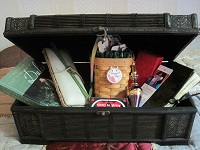
    Chest box“Writing is therapeutic. It saves lives. Your truths are eager to come out. Let them spill onto the page, and see what doors writing opens for you. Your story is buried treasure.

    One of the simplest, most private places to write is in a journal. It allows you to vent, delve into issues, and untangle messes. It lets you analyze or celebrate. It allows you to finish a thought without interruption. The journal validates your right to be who you are.” — B. Lynn Goodwin, “Celebrate Your Uniqueness” in Inspire Me Today.

    B. Lynn Goodwin is the owner of Writer Advice, which is currently holding its 10th Flash Prose Contest. She’s the author of You Want Me to Do WHAT? Journaling for Caregivers, and a YA called Talent, which Eternal Press will be publishing this year. Her short pieces have been published in local and regional publications.

    Lynn will be on a panel of editors at Writers Forum in Petaluma, California on May 21, 2015.

  • Guest Blogger Amanda McTigue talks about marketing your book

    So, you’ve got your book written, or almost written, or you have an idea for a book, but you’re stuck dead in your tracks because you detest the marketing aspect of the book business

    Amanda McTigue says, “No doubt about it: we writers love to write, hate to sell. How could it be otherwise? We’re the odd balls who’d rather spend vast quantities of time alone in our imaginations. And yet these days, we’re told not only must we craft (and sometimes publish) our works, but also find readers to read them: a daunting challenge compounded by our own dread. What’s a writer to do?”

    Amanda shares resources on one of our least favorite challenges: marketing yourself and your book.

    “The Psychology of Writer Promotion. How to Promote Yourself,” Chuck Wendig

    “Book Marketing 101,” Jane Friedman

    “Five Mistakes You’ll Make on the Way to Publishing Success,” Carmen Amato via Jane Friedman

    71 Ways to Promote and Market Your Book,” Kimberley Grabas

    15 DIY Tools to Promote Your Book,” Writer’s Store

    Amanda McTigueAuthor, playwright, stage director and storyteller, Amanda McTigue has also worked for decades as a creative marketing consultant for such clients as Walt Disney Entertainment, Paramount Entertainment and design firms such as Thinkwell and The Hettema Group in Los Angeles. Her novel, “Going to Solace,” was cited by public radio KRCB’s “Word by Word” as a Best Read of 2012. She also makes regular appearances at Petaluma’s “West Side Stories” and “Get Lit.” She’s busy completing short stories and a second novel. Click here for Amanda’s Resource page.

    Amanda will be the March 19, 2015 Writers Forum presenter.

  • The Miracle of Language: Reminders from 50,000 Feet by Daniel Ari

    Guest Blogger Daniel Ari talks about The Miracle of Language: Reminders from 50,000 Feet

    Chin.

    An alien from another galaxy encountering those four written characters or the sound we as English speakers make reading them would have no idea what we were writing or talking about. The markings or sounds alone would give the alien no inkling that they even possess a corresponding meaning in the physical world.

    We write using a complex system of symbols that are almost entirely abstracted from the physical phenomena they indicate. The alien might stand a chance at understanding spoken onomatopoeias, perhaps fetching a connection between the shouted words bang, boom or screech with the aural phenomena they represent. And perhaps the written article a might indicate to the alien the spirit of its meaning as something singular. Yet wouldn’t you be impressed with an alien that could intuit even those connections from our abstract language? I would.

    The miracle is that we learn to associate a huge range of phenomena with a huge range of symbols. For example, you can read the word candy as it appears here on screen and know it’s the same word as the one built out of plastic, foot-tall, block letters above the entryway of a candy store. The two symbol sets are vastly different in appearance, yet we decode and access related bodies of meaning from both.

    At the same time, the range of meanings we associate with the symbols is enormous. Where does your mind go when you read candy? Cellophane-wrapped hard candies? A bag of Halloween spoils? Or a sudden, unspecific craving? Or that song “I Want Candy” by Bow Wow Wow?

    It awes me that I can write chin—never mind the font—and you can visualize the chin that makes the most sense for you. If I want to guide your mind, then I can add prominent, clean-shaven, Caucasian, famous. Or I can write about meeting Jay Leno backstage before a live concert a few months before he took over The Tonight Show from Johnny Carson.

    My brother Phil was one of three comedians opening for Jay that night. I went backstage to meet Leno, and he joked amiably with my brother and I and about five others from the campus comedy club, including our friend Mike Chin. I could see Mike was thinking about cracking his joke about also being a “chin” comedian, but before he could, Leno handed me a Coke from the table of refreshments—cubes of cheese, cut vegetables, a bowl of M&Ms candy, green ones included—and Mike’s moment was lost. I recall feeling jealous of my brother and the other two comics who had opening slots that night. I also had mixed feelings about Leno beneath my celebrity-awe. In the comedy club at that time, we regarded David Letterman as the better comic, the one who should have taken Carson’s throne.

    I think it’s a miracle that you can make sense of what I’ve written. And to honor the miracle, I’ve done my best to aid your understanding by choosing my words consciously, with the intention of making my meanings clear—even the unspoken ones.

    I like to assume an atmospheric view of language sometimes because it reminds me of the magnitude of the project and helps me accept the processes of writing as gradual and incredibly grand. It helps me remember that it’s taken me 47 years—and counting—to learn the abstract symbolic system of contemporary North American English.

    When you interpret the rows of abstracted symbols I have chosen, you get an indication of my experience. That’s why I revisit and rework my strings of symbols so meticulously—adding, subtracting and swapping; changing handwritten to digital to printed; translating writing into voice.

    We attempt to share experience. Remembering that writing means communicating through a complex system of abstraction reminds me that results are guaranteed to be inexact. But if perfection is impossible, connection isn’t. That’s what we as writers strive toward, and when we experience that others are moved by what we’ve strung together, that is the greatest satisfaction a writer can feel. Do you know what I mean?

    DANIEL ARI writes, teaches and publishes poetry. He lives in Richmond, California, where he leads a monthly writing jam, thriving since 2011; and he has taught and led writing sessions and workshops since the 1980s. Daniel has recently placed creative work in Poet’s Market (2014 and 2015 editions), Writer’s Digest, carte blanche, Cardinal Sins, Flapperhouse, Gold Dust Magazine and McSweeney’s. Daniel also works as a professional copywriter and performs improvisation with the troupe Wing It in Oakland, CA. His blogs are Fights with poems and IMUNRI = I am you and you are I.

    Daniel AriRead Daniel’s tongue-in-cheek, “Reject A Hit” about e.e. cummings in the July/August 2014 issue of Writer’s Digest magazine.

    Daniel will be the July 17, 2014 Writers Forum Presenter in Petaluma, California


  • The Kathy Myers “Book in a Box” Method (patent pending)

    Guest Blogger Kathy Myers writes:

    Computers are great and all— without them, this blog wouldn’t exist and then what would I do? But when I was younger, my image of a writing life was less technical and more romantic: Jo in Little Women, writing her books in a drafty attic wearing fingerless gloves against the winter chill, or Jane Austen dipping her nib and contemplating her next chapter, while her parents plan a ball where she can meet eligible bachelors. Ah, the good old days.

    At a Jumpstart Writing Workshop in May, I wrote a fictional scene on the prompt “It happened because . . . ”  Marlene Cullen, always benevolent and encouraging to writers said, “That would be a good beginning for a romance novel.”

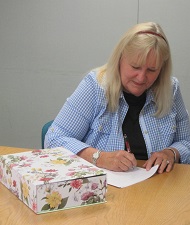
    Jumpstart was on hiatus for the month of June, and this coincided with a flirtation I’d been having about trying the fabled “sit-your-ass-in-a-chair-and-write-a–thousand-words-a-day” method I’d heard so much about— a discipline that so many writers (who actually have books published) swear by. So I thought what the heck, if Marlene can drag herself to her exercise boot camp, I can drag myself into the kitchen: make some toast and coffee, go back to bed with my fully charged laptop, and write until it runs out of juice. This averages about three hours and about a thousand words. I am no worse for wear for the effort, and I have the rest of the day ahead of me—fully charged with a great sense of accomplishment. I press print, and then put my day’s work into a lovely flowered document box (Home Goods $7.98). My box is fancy and romantic—much nicer than poor Jo’s manuscript—wrapped with brown paper and twine. It might not be as nice as Jane’s satin lined box inlaid with elephant ivory, but hey—now I’ve got something to buy with my future royalties.

    It’s July now and I’m thirty thousand words into my first novel. I have to tell you: The ass in a chair/ book in a box method works. You are free to do as you wish with your writing, of course. Do it on a whim or when the muse strikes. But get a fancy box to put it in. Remember that everything you write is a legacy of sorts. You can have a time capsule where your stories, journals, or Jumpstart notebooks can be collected—honoring your efforts with a neat and lovely testament to your creativity. Your voice in the form of your words can reside there in style.

    Kathy M. + boxKathy Myers is a big fan of Jumpstart and Writers Forum. She has waded into the submission pool this past year and been published by Every Day Fiction, Petaluma Readers Theater and Redwood Writers Anthology. She has done several guest book reviews on The Write Spot Blog and is an advocate for fancy boxes everywhere.